 Bellingham
 Roof Repair in Birchwood: Built for What This Climate Does to a Roof
Birchwood sits close enough to Bellingham Bay and the Sound to catch salt-laden air on top of the driving rain and long, gray moss season that defines roofing work across Whatcom County. That combination is harder on a roof than most homeowners realize. It's not one dramatic storm that wears a roof out here — it's months of low-grade moisture, wind-driven rain finding its way under laps and flashing, and moss quietly working into granules and seams while nobody's looking. A roof repair in this neighborhood has to account for all of that, not just patch the spot that's dripping into the attic.
We work on homes throughout Birchwood and the surrounding Bellingham area regularly, which means we're not guessing at how local roofs age. We see the same failure points over and over: valleys that collect debris and hold water too long, north-facing slopes that never fully dry out, and flashing around chimneys and skylights that was installed for a drier climate than this one actually delivers.
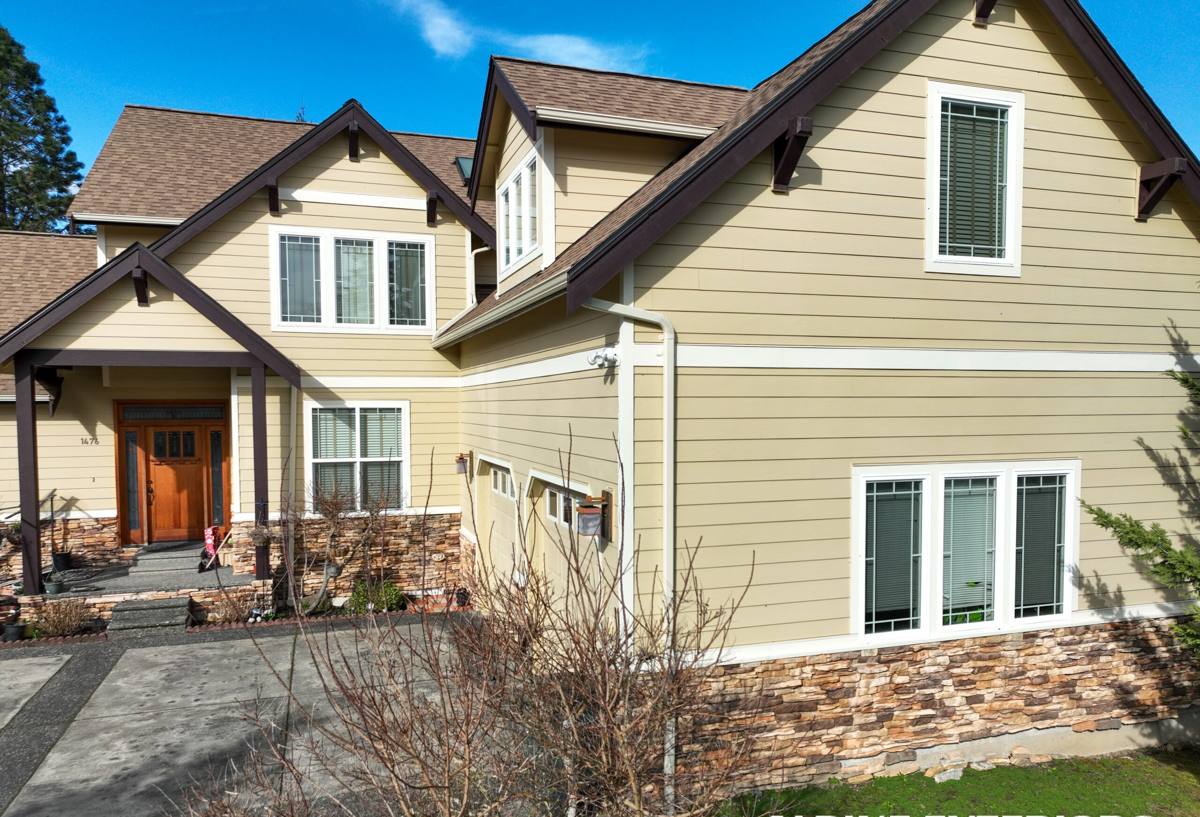
Signs Your Birchwood Roof Needs a Repair, Not Just a Watch-and-Wait
Roof problems in this climate rarely announce themselves with a sudden collapse. They show up as small, easy-to-dismiss signs that get worse every wet season they're ignored. Here's what we tell Birchwood homeowners to actually pay attention to:
- Dark streaking or greenish-black staining on shingles, especially on north- or west-facing slopes that stay shaded and damp
- Visible moss growth, even a thin carpet of it, along ridges, valleys, or the lower edge of the roof
- Granules collecting in gutters or at downspout outlets — a sign the shingle surface is wearing thin
- Water stains or discoloration on interior ceilings, especially after a stretch of heavy rain
- Soft or spongy spots when walking the roof, which usually mean the decking underneath has absorbed moisture
- Daylight visible through the roof deck from inside the attic
- Curling, cracking, or lifted shingle edges, particularly around vents, chimneys, and skylights
- Rust streaks or gaps around metal flashing and roof penetrations
Any one of these on its own might not be urgent. Two or three together, especially heading into fall, usually means it's time for a closer look before the wet season turns a small repair into a bigger one.
Moss and Salt Air: The Slow Damage That Drives Most of Our Repair Calls
Moss is the most visible problem, but it's rarely the only one. Moss holds moisture directly against the roofing surface for weeks at a time, which softens asphalt shingles, accelerates granule loss, and — on wood or older composition roofs — can work its way under the surface layer entirely. Left alone through a full Bellingham winter, a moss mat can lift shingle edges just enough to let wind-driven rain track underneath.
Salt air adds a second, quieter pressure. It accelerates corrosion on exposed metal — flashing, fasteners, gutter hardware, and any exposed nail heads — faster than it would inland. A flashing detail that would hold up for fifteen years in a drier, salt-free climate can start failing years earlier here if it wasn't installed or sealed with that exposure in mind. That's why we pay close attention to metal condition and fastener corrosion on every repair inspection, not just the shingle surface itself.
Driving rain is the third factor, and it's the one that turns small gaps into active leaks. Wind-driven rain doesn't just fall straight down — it pushes sideways and upward under laps, around chimney step-flashing, and through any seam that isn't properly lapped and sealed for the direction our storms typically come from. A repair that only addresses the visible damage without correcting the underlying lap or flashing detail tends to fail again in the next hard rain.
Common Roof Repair Issues We See in Birchwood Homes
Flashing Failures
Flashing around chimneys, skylights, vent stacks, and roof-to-wall transitions is one of the most common repair points. It's a small area of the roof, but it does most of the work of keeping water out at the roof's most vulnerable transitions. Corrosion, poor original installation, or sealant that's dried out and cracked are the usual culprits.
Valley Deterioration
Valleys carry more water than any other part of the roof, and in a neighborhood with mature trees and regular debris, they're also where moss and organic buildup collect fastest. A valley that isn't clear or properly lined will hold water longer than the roofing material was designed to tolerate.
Damaged or Missing Shingles
Wind events, falling limbs, and simple age all take a toll. A missing or cracked shingle isn't just a cosmetic issue — it's an open door for water to reach the underlayment and decking below.
Soft or Rotted Decking
Once water gets past the roofing surface consistently, the plywood or board decking underneath starts to absorb it. This is the kind of damage that isn't visible from the ground and often isn't found until a repair crew is actually up on the roof.
Gutter and Edge Failures
Roofing and gutters work as a system. A gutter that's clogged with moss and debris, or an edge detail (drip edge, fascia flashing) that's failed, will send water back up under the roofing material instead of away from the house — even if the shingles themselves are in decent shape.
What a Correct Roof Repair Actually Involves
A roof repair that's done right starts with figuring out where the water is actually getting in, which is not always directly above the stain or drip you can see inside the house. Water travels along decking and framing before it shows itself, so tracing a leak back to its real source is the first and most important step.
From there, a proper repair means:
- Removing and replacing any damaged or saturated decking, not just covering over it
- Installing new underlayment in the repaired section, lapped correctly for water shedding in our prevailing wind and rain direction
- Re-flashing any penetration or transition in the repair area with new, corrosion-resistant material rather than resealing old flashing
- Matching shingle type, color, and exposure as closely as possible so the repair blends into the existing roof
- Clearing moss and treating the surrounding area to reduce regrowth pressure on the repaired section
- Checking and correcting attic ventilation in the area, since poor airflow contributes to moisture buildup from the inside as well as the outside
Skipping any of these steps tends to produce a repair that looks fine for a season or two and then fails again, often in the same spot.
Repair or Replace? How We Help Birchwood Homeowners Decide
Not every leak means a full new roof, and not every roof is worth continuing to patch. The honest answer depends on the roof's age, how widespread the damage is, and how much of the underlying structure has been affected by moisture over time.
| Factor | Usually Points to Repair | Usually Points to Replacement |
|---|---|---|
| Roof age | Under 15-18 years, asphalt shingle | Approaching or past manufacturer's expected lifespan |
| Extent of damage | Isolated to one section, flashing detail, or valley | Widespread granule loss, curling, or moss across multiple slopes |
| Decking condition | Localized soft spots | Multiple areas of soft or rotted decking |
| Repair history | First or second repair in this area | Same section has been repaired more than once already |
| Interior damage | Minor staining, caught early | Ongoing moisture affecting insulation, framing, or interior finishes |
When we inspect a roof, we'll tell you plainly which category it falls into, and why — including when a repair is genuinely the right, cost-effective call rather than pushing toward a full replacement it doesn't need yet.
Our Roof Repair Process, Start to Finish
1. Inspection and Diagnosis
We get up on the roof, not just look at it from the ground. That means checking flashing, decking firmness, ventilation, and the attic side of the roof where accessible, in addition to the visible shingle surface.
2. Clear Explanation and Written Estimate
Before any work starts, you'll know what we found, what we recommend, and why — including photos of the actual problem areas and a written scope so there's no ambiguity about what the repair covers.
3. The Repair Itself
We remove damaged material back to sound decking, address the root cause (not just the symptom), and rebuild the affected area with matching materials and correct flashing and underlayment detailing.
4. Site Cleanup
Nails, debris, and old material are cleared from the roof, gutters, and ground before we consider the job finished.
5. Final Walkthrough
We walk the completed repair with you when possible, and point out anything worth keeping an eye on going forward, including maintenance that will extend the life of the repair.
Why a Crew That Already Works Birchwood Matters
Roofing generalists who mostly work drier inland climates, or crews unfamiliar with this specific stretch of Bellingham and Whatcom County, often underestimate how aggressively moss and salt-air corrosion move here. That shows up as repairs that address the visible symptom but not the underlying moisture or corrosion pattern, which means a callback within a year or two.
Working this area regularly means we already know which roof styles, ages, and orientations tend to have trouble first, which flashing details hold up and which don't, and how aggressively to treat moss so it doesn't just come back in a few months. That local pattern recognition shortens the diagnosis process and helps us catch related issues — a failing valley near a flashing leak, for example — before they turn into a second service call.
Keeping a Repaired Roof in Good Shape
A repair is only as durable as the maintenance around it. In a climate like ours, a few simple habits go a long way toward protecting both the repaired section and the rest of the roof:
- Keep gutters and valleys clear of debris, especially heading into fall
- Trim back overhanging branches that shade the roof and slow drying after rain
- Address new moss growth early rather than letting it establish for a full season
- Schedule a roof check after any significant windstorm
- Have the roof looked at every couple of years even without an obvious problem, since small issues are far cheaper to fix than the water damage they eventually cause
If you're seeing signs of a leak, moss buildup, or damaged flashing on a home in Birchwood, we're happy to take a look and give you a straight answer about what it needs. Reach out for a free, no-pressure estimate using the form below.