 Bellingham
 Roof Repair in Sehome: Built for Bellingham's Climate, Not a Generic Fix
Sehome sits close enough to Bellingham Bay that roofs here deal with a specific combination of stresses: salt-laden air off the water, long stretches of driving rain through fall and winter, and a moss season that can run eight months or more thanks to the shade and moisture retention common on Sehome's tree-lined lots. A roof repair that works fine in a drier inland climate can fail here within a season or two if it doesn't account for those conditions. Our approach to roof repair in this neighborhood starts with understanding what Bellingham weather actually does to a roof over time, not just patching whatever is visibly wrong today.
Whatcom County's marine climate means roofs rarely get a long dry stretch to fully shed moisture. Once water or organic debris gets trapped under shingles, in a valley, or around a flashing detail, it stays wet far longer than it would in a drier region. That's the core reason so many "small" roof problems in Sehome turn into deck rot or interior leaks if they're not repaired correctly the first time.
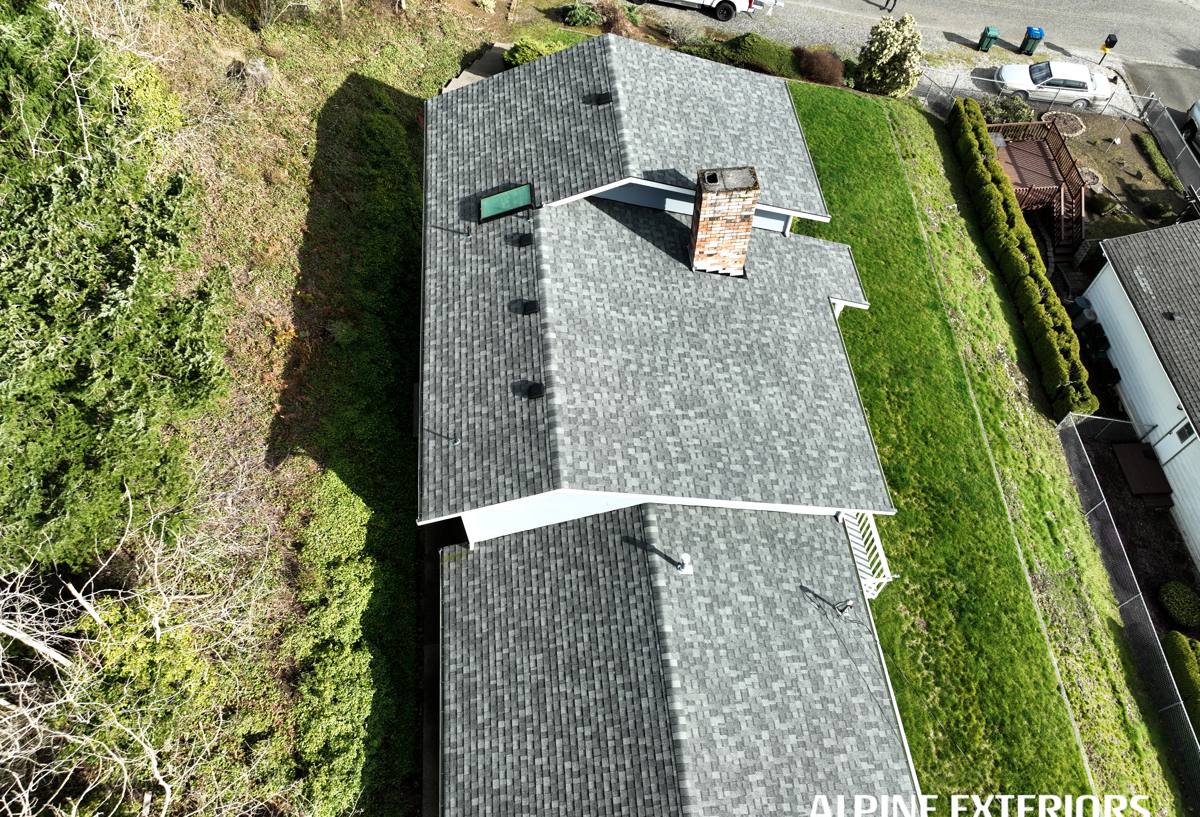
Signs a Sehome Roof Needs Repair — Not Full Replacement
Most roofs don't need to be torn off and replaced when a leak shows up. In our experience working on homes in this neighborhood, the majority of service calls are legitimate repairs: a failed flashing detail, a handful of damaged shingles, or a valley that's been collecting moss and debris. Knowing the difference matters, because a repair done right can add a decade or more of service life to an otherwise sound roof.
Moss, Algae, and Trapped Moisture
Moss is the most visible sign of a roof under stress in this climate, but it's rarely the actual problem — it's a symptom of shade, moisture, and organic debris (needles, leaf litter, moss spores carried on the wind) sitting on the roof longer than the material was designed to tolerate. Left alone, moss lifts shingle edges, holds water against the roof deck, and accelerates granule loss on asphalt shingles. A repair that just pressure-washes moss off the surface without addressing what's underneath the affected shingles is a cosmetic fix, not a real one.
Flashing and Valley Failures
Flashing — the metal or membrane detail around chimneys, skylights, roof-to-wall transitions, and valleys — is the single most common source of leaks we find on repair calls in Sehome. Flashing takes the brunt of driving rain because wind off the bay frequently pushes water sideways into these transitions rather than letting it run straight down and off. When flashing was installed poorly, has corroded, or has been disturbed by a prior repair, it's often the actual source of a leak that looks like it's coming from somewhere else entirely, like a stained ceiling several feet away from the real entry point.
Other Common Repair Triggers
- Cracked, curling, or missing shingles after a windstorm
- Granule buildup in gutters, signaling accelerated shingle wear
- Soft spots or sagging in the roof deck, usually from long-term trapped moisture
- Nail pops or exposed fasteners that let water track underneath the shingle
- Interior water stains that appear only during heavy rain, not year-round
- Visible daylight or gaps around chimney, vent, or skylight flashing
What a Correct Repair Actually Involves
There's a real difference between a quick patch and a repair that actually solves the problem. The table below outlines what we consider the minimum standard for a repair on a Sehome home, compared to a shortcut approach that's common but doesn't hold up to this climate over time.
| Step | Quick Patch Approach | Correct Repair Approach |
|---|---|---|
| Diagnosis | Fixes the visible symptom only | Traces the leak to its actual source, which may be feet away |
| Underlayment | Left in place even if saturated | Replaced if wet, torn, or degraded |
| Flashing | Caulked over existing metal | Reformed or replaced, then properly integrated with shingles |
| Decking | Assumed sound, not checked | Inspected and replaced if soft or rotted |
| Shingle matching | Closest available color, wrong profile | Matched for profile and exposure, blended where needed |
| Follow-up | None | Verified in the next rain event or with a hose test |
Caulk and sealant have a place in roofing, but they're a short-term measure, not a repair strategy on their own. Bellingham's rain volume and duration will find any gap that sealant alone is being asked to cover permanently.
Our Sehome Roof Repair Process
We keep the process straightforward because homeowners deserve to know exactly what's happening on their roof and why.
- Inspection and diagnosis. We get on the roof (not just a ground-level look) and trace the actual source of the problem, checking flashing, valleys, penetrations, and the surrounding shingle field.
- Written scope and honest recommendation. We tell you plainly whether this is a repair situation or whether the roof's age and condition mean a repair would just be delaying a replacement. We'd rather lose a repair job than sell you one that won't hold.
- Repair the cause, not just the symptom. That means correcting flashing geometry, replacing wet or damaged decking, and properly reintegrating new material with what's already there — not layering a patch on top of a failure point.
- Debris and moss removal where it matters. We clear moss and organic buildup from the repair area and surrounding roof plane so the fix isn't undermined by the same conditions that caused the original problem.
- Cleanup and walkthrough. We walk you through what was found, what was repaired, and what to watch for going forward, including any maintenance that will extend the life of the rest of the roof.
Repair Costs: What Actually Drives the Price
Every roof repair is priced based on the actual scope of damage, not a flat rate — a small flashing repair and a repair involving rotted decking are very different jobs. The factors below are what typically move the price up or down on Sehome repairs.
| Cost Factor | Why It Matters |
|---|---|
| Extent of decking damage | Rotted plywood or boards must be replaced before new material goes down; this is the single biggest cost swing |
| Roof pitch and access | Steeper roofs and limited access (tight lots, mature trees) take longer and require more safety setup |
| Number of penetrations involved | Chimneys, skylights, and multiple vents each add flashing complexity |
| Shingle age and availability | Older or discontinued shingle lines are harder to match, which can affect material sourcing |
| How the leak was previously handled | Undoing a prior improper patch job sometimes adds labor before the real repair can begin |
We give a written, itemized estimate before any work starts. If we find additional damage once we open up the affected area, we'll show it to you and get approval before doing anything beyond the original scope.
Roofing Materials Common on Sehome Homes
Sehome has a mix of older established homes and newer construction, which means we regularly repair several different roofing types. Asphalt composition shingles are the most common and generally the most straightforward to repair, provided a reasonably close match can be sourced. Wood shake and older cedar roofing require more specialized repair knowledge, since moss and moisture damage tends to be more advanced by the time it's visible on this material, and matching weathered cedar is more art than science. Metal roofing repairs are less frequent but require correct fastener and seam technique specific to the panel profile installed — improvising with the wrong approach on a metal roof usually creates a worse leak than the original problem.
Regardless of material, our standard is the same: repair the actual failure point, use materials rated for sustained wet exposure, and don't cut corners on flashing, since flashing failures are what bring most Sehome homeowners to us in the first place.
After the Repair: Reducing Moss and Moisture Buildup
A good repair can still be undermined by the same conditions that caused it if nothing changes afterward. These are the maintenance habits that make the biggest difference for homes in this part of Bellingham:
- Keep gutters and valleys clear of needles and leaf litter, especially under overhanging trees
- Trim back branches that keep sections of roof shaded and slow to dry
- Schedule a roof check after major windstorms, since that's when flashing and shingles most often get disturbed
- Address moss early with an appropriate roof-safe treatment rather than letting it establish and lift shingles
- Have the roof looked at every couple of years even without an active leak — small issues are far cheaper to catch early in a climate this wet
Why a Crew That Already Works in Sehome Matters
Roof repair is very location-dependent. A crew that regularly works Sehome and the surrounding Bellingham neighborhoods already understands how the tree cover, hillside drainage patterns, and bay-driven wind and rain typically affect roofs in this specific area. That familiarity shows up in faster, more accurate diagnosis — knowing which flashing details tend to fail first on homes built during certain eras, or which roof orientations catch the worst of the driving rain off the water. It also means we're not guessing at material availability or local permitting quirks; we've already navigated them on other homes nearby.
Whatcom County's climate isn't forgiving of shortcuts, and a roof repair that isn't done correctly the first time tends to resurface as a bigger, more expensive problem within a year or two. We'd rather do the diagnosis right, tell you honestly what the roof needs, and stand behind the work.
If you're dealing with a leak, visible moss buildup, or storm damage on a Sehome roof, we're happy to take a look and give you a straightforward, no-pressure estimate — just fill out the form below to get started.