 Bellingham
 Why South Hill Siding Takes a Different Kind of Beating
South Hill sits up above downtown Bellingham, which means homes here catch weather that lower, more sheltered neighborhoods don't deal with in the same way. Wind-driven rain off Bellingham Bay hits elevated, exposed walls harder. Mature tree cover that makes the neighborhood attractive also means a lot of siding sits in shade for much of the day, and shaded siding stays wet longer after every storm. Add in the salt content that comes off the water and settles into the air across Whatcom County, and you've got three separate stresses working on your siding at once: moisture that won't dry out quickly, salt that accelerates corrosion of anything metal, and a moss season that can run from early fall through late spring.
None of that is unusual for the Pacific Northwest. But it does mean siding installed to a "national average" standard, rather than one built for this specific combination of exposure, shade, and salt air, tends to show problems years earlier than it should — swelling at seams, fastener staining, moss establishing in shaded corners, paint failing on south and west faces first. Getting siding installation right in South Hill isn't about using a fancier product. It's about installing the right product the right way, with water management as the priority from the first step.
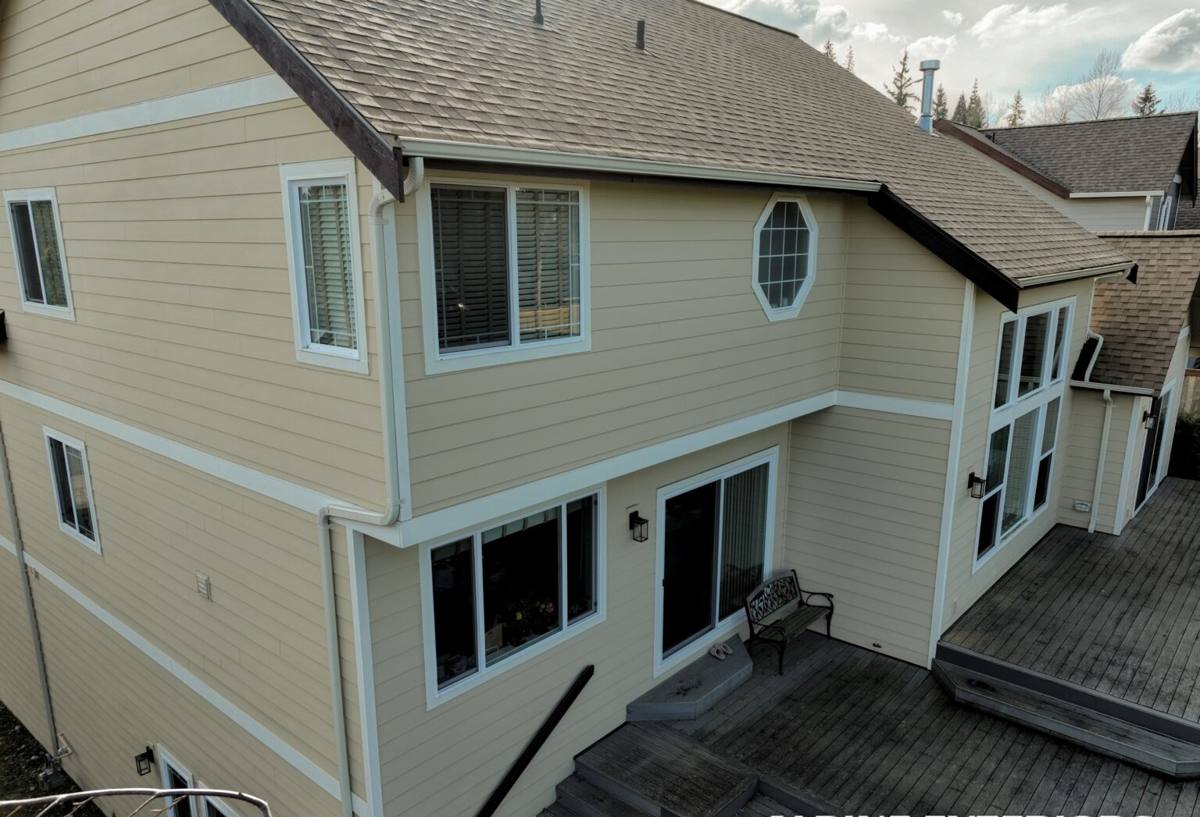
What Correct Siding Installation Actually Involves
Water Management Starts Before Any Siding Goes On
The siding itself is the least important part of keeping water out of a wall — the water-resistive barrier (WRB) underneath it does most of the real work. On a South Hill home, that means a continuous, properly lapped WRB with every seam taped, every window and door opening flashed correctly, and every penetration (hose bibs, vents, electrical) sealed before the first piece of siding is hung. Skipping or rushing this step is the single most common reason siding fails early in wet climates, and it's invisible once the job is "done" — which is exactly why it matters who's doing the work.
Fastening and Clearances Matter More Here
In a climate this wet, small installation details compound over time. Siding needs proper ground clearance so splashback doesn't sit against the bottom edge. Fasteners need to be corrosion-resistant and driven correctly — not overdriven, which crushes the material and opens a path for water. Expansion gaps at butt joints and trim need to be sized and, where the manufacturer specifies it, left uncaulked so the assembly can manage moisture instead of trapping it.
Factory Finish Has to Stay Intact
Factory-applied finishes are engineered to resist moisture and moss far better than field-applied paint. That protection only holds up if every cut edge is primed and sealed on-site, since a raw, unsealed edge is the fastest way for water to get into the material itself.
Why We Install Only James Hardie Fiber Cement
We don't install vinyl, LP SmartSide, primed spruce, cedar, or other fiber cement brands. That's a deliberate standard, not a sales pitch. James Hardie's HZ5 product line is specifically engineered for climates like ours — it's a fiber cement formulation designed around freeze-thaw cycling and sustained moisture exposure, which is exactly what a hillside home in Whatcom County deals with nine months out of the year. It's non-combustible, which matters more each year given regional wildfire smoke and ember exposure during dry summer stretches. The ColorPlus factory finish resists fading and moss adhesion better than field-painted alternatives, and it comes with a strong, transferable warranty when installed to Hardie's specifications.
Other products aren't bad products — vinyl is affordable and low-maintenance in the right setting, engineered wood has real strengths, and cedar has genuine appeal. But each comes with a trade-off that shows up specifically in a climate like this one: vinyl can warp and doesn't hold up structurally the way fiber cement does; engineered wood and cedar are organic materials that require more diligent moisture management and maintenance to avoid rot in a place that rarely dries out. We standardized on Hardie because it's the product we're comfortable standing behind on every roof in this county, not just the easy ones.
How the Materials Compare in a Wet Coastal Climate
Every siding material performs differently once you factor in sustained moisture, shade, and salt air rather than a generic national climate average. Here's how the common options stack up on the factors that actually matter in South Hill conditions.
| Factor | Vinyl | Cedar / Wood | Engineered Wood (LP SmartSide) | James Hardie Fiber Cement |
|---|---|---|---|---|
| Moisture tolerance | Doesn't absorb, but can trap moisture behind it | Absorbs moisture; needs consistent upkeep | Better than raw wood, still moisture-sensitive at edges | Engineered for wet climates (HZ5) |
| Moss / algae resistance | Moderate; surface growth common in shade | Low; organic surface encourages growth | Moderate | High with ColorPlus finish |
| Maintenance needs | Low, but repairs are hard to match | High — regular sealing/staining | Moderate — edge sealing is critical | Low — periodic gentle washing |
| Non-combustible | No | No | No | Yes |
| Typical warranty structure | Prorated | Manufacturer/installer dependent | Prorated, moisture exclusions common | Strong, transferable |
Our Installation Process for South Hill Homes
Every project follows the same sequence, whether it's a full re-side or a section replacement after storm damage.
- Inspection and tear-off. We remove existing siding and inspect the sheathing underneath for rot, soft spots, or prior water damage before anything new goes on — this is the step that gets skipped when jobs are rushed, and it's the one that matters most.
- Sheathing repair. Any compromised sheathing gets replaced. Installing new siding over damaged sheathing just hides a problem that will resurface.
- Water-resistive barrier and flashing. A continuous WRB goes on with taped seams, followed by correct flashing at every window, door, and penetration.
- Rain screen application where called for. On exposed or shaded elevations, a furring strip rain screen gives the wall assembly an air gap to dry out rather than staying saturated against the WRB.
- Siding installation to Hardie's specification. Correct fastener type, spacing, and clearance, with cut edges primed on-site before installation.
- Trim, caulking, and touch-up. Sealant is applied only where the manufacturer specifies it, and any field-cut edges receive matching ColorPlus touch-up.
- Final walkthrough and cleanup. We review the completed work with the homeowner and clear the site of debris and old material.
Moss, Shade, and Long-Term Maintenance
South Hill's tree-lined streets are part of what makes the neighborhood pleasant to live in, but shade is also the single biggest driver of moss and algae growth on siding. North-facing walls and anything shaded by mature trees stay damp far longer after rain than sun-exposed walls, which gives moss and mildew time to establish. A few habits go a long way toward protecting a correctly installed siding job:
- Keep gutters and downspouts clear so water isn't overflowing onto siding below the roofline
- Trim back plantings and low branches so they aren't holding moisture against exterior walls
- Confirm soffit and attic ventilation is working — trapped interior moisture pushes outward through the wall assembly over time
- Rinse siding periodically with a garden hose rather than a pressure washer, which can force water behind panels and strip the factory finish
- Have caulking and trim checked every few years, since sealant is usually the first thing to wear out, long before the siding itself does
Signs Your Current Siding Needs Attention
Before deciding whether you need a full replacement or a repair, it helps to know what to look for. These are the signs we get called out for most often on homes in this area:
- Dark streaking or green growth concentrated on shaded or north-facing walls
- Soft or spongy spots when you press on siding near the bottom edge or around windows
- Visible gaps or separation at seams and corner trim
- Paint that's peeling or bubbling in patches rather than fading evenly
- Rust staining running down from fastener heads or metal trim
- A musty smell or visible staining on interior walls that share an exterior wall with problem siding
Choosing a Contractor Who Already Works in South Hill
Elevation, exposure, and shade patterns vary block to block in a hillside neighborhood like this one — a wall that stays wet for hours after a storm on one side of the street might dry out quickly on the other, depending on tree cover and which direction it faces. A crew that already works in South Hill regularly has a feel for which elevations need extra flashing attention, where rain screens make the most sense, and how local drainage and grading tend to behave around foundations. That local pattern recognition is hard to substitute for, no matter how good a crew is on paper.
When vetting any siding contractor in Bellingham, ask directly about their licensing and insurance, whether they're a certified installer for the specific product they're proposing, and whether they'll put their installation warranty in writing. A contractor confident in their work won't hesitate on any of those questions.
Permits and Timing
Most full siding replacements in the City of Bellingham require a building permit, and any work touching structural sheathing repairs falls under that same requirement. We handle the permitting process as part of the job rather than leaving it to the homeowner. On timing: the driest, most workable stretches in Whatcom County tend to run late spring through early fall, though siding work can be scheduled outside that window with the right weather planning — it just requires more attention to protecting an open wall assembly between steps. A typical single-family home installation runs from several days to a couple of weeks depending on the size of the home and how much sheathing repair is needed underneath the old siding.
If your South Hill home's siding is showing its age, or you're planning ahead for a project, we're happy to take a look and walk you through what we're seeing — no pressure, no obligation. Request a free estimate using the form below and we'll get back to you to schedule a time.