 Bellingham
 Siding Repair in Cordata: Built for Bellingham's Climate, Not Just Patched
Cordata sits in one of the more mixed housing pockets in Bellingham — a blend of established single-family homes, newer construction near the Cordata Parkway corridor, and townhomes and multi-family buildings that went up as the neighborhood grew. That mix means we see a wide range of siding conditions on repair calls here: original builder-grade material reaching the end of its service life, newer homes with a single flashing or caulking mistake causing an isolated problem, and everything in between.
What almost all of it has in common is exposure to the same regional weather pattern. Whatcom County sits close enough to the water that homes deal with salt-laden air moving in off Bellingham Bay and the Strait of Georgia, on top of the long, wet Pacific Northwest rain season and the shaded, damp conditions that let moss and mildew take hold on north-facing walls and anything near tree cover. None of that is unique to Cordata, but it's the backdrop for every siding repair job we do in this part of Bellingham, and it's why a "quick patch" approach often doesn't hold up here the way it might in a drier climate.
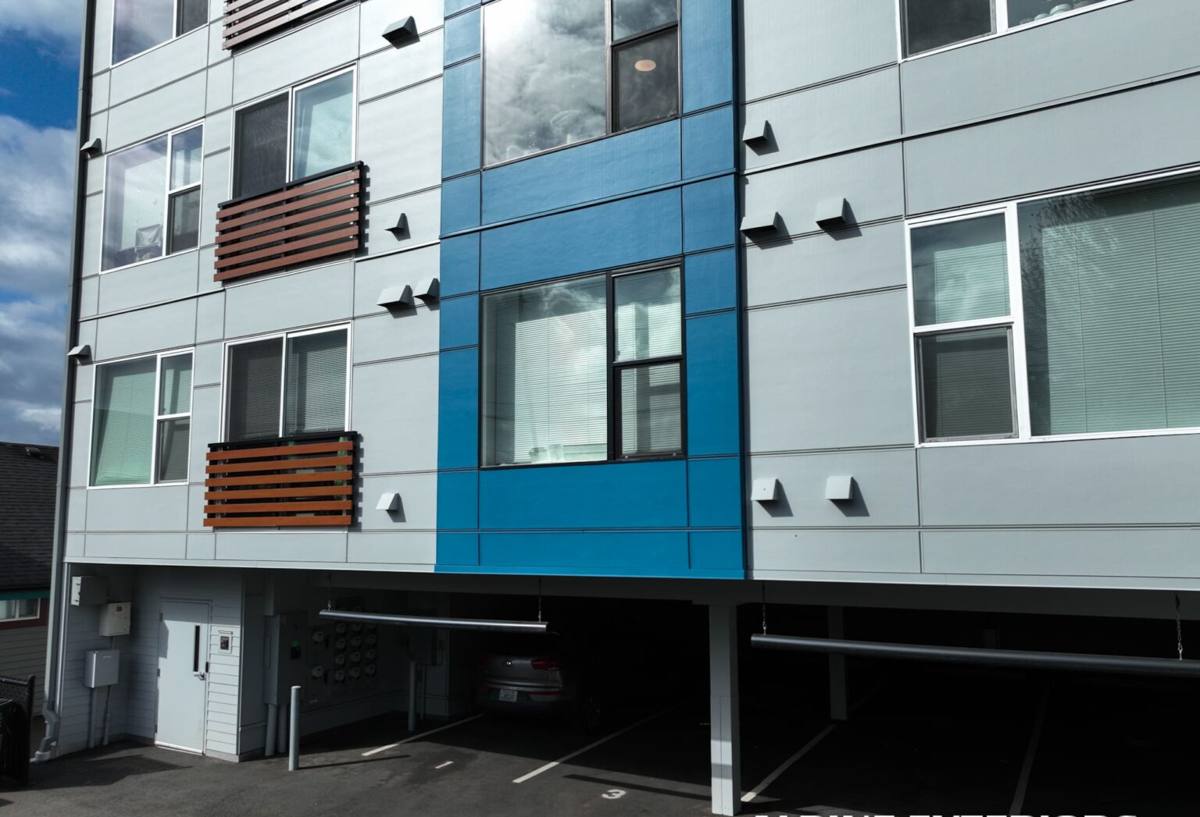
Common Siding Damage We See in Cordata
Moisture Intrusion and Rot
The single most common reason we get called out isn't storm damage — it's slow water intrusion that's been going on for months or years before anyone notices. Water finds its way behind siding through failed caulk joints, poorly flashed windows and doors, or siding installed too close to grade or a roofline, and then it just sits there. In a climate with Bellingham's rainfall totals, that hidden moisture doesn't dry out between storms the way it might in a drier region — it keeps accumulating, and wood-based siding products are especially vulnerable to soft, rotted sections around butt joints, corners, and penetrations.
Moss, Algae, and Mildew Staining
Cordata's tree cover and the region's long damp season create ideal conditions for moss and algae growth on siding, especially on shaded north- and west-facing walls. Beyond the cosmetic issue, moss holds moisture directly against the siding surface, which accelerates whatever underlying material breakdown is already happening. On some products, years of green or black staining also signals a finish that's no longer shedding water the way it should.
Impact and Physical Damage
Cracked panels, dented sections, and popped fasteners come from more ordinary causes — wind-driven debris, ladder contact, landscaping equipment, settling. These are usually more straightforward repairs, but they still need to be addressed properly so the damaged section doesn't become the next entry point for water.
Caulk, Trim, and Flashing Failures
Caulking has a service life, and once it cracks or pulls away at seams, window trim, and corner boards, it stops doing its job. This is one of the most common root causes behind siding problems that look bigger than they are — the siding itself may be fine, but the sealant and flashing details around it have failed.
What a Correct Siding Repair Actually Involves
A repair that only addresses what's visible from the ground usually isn't a repair — it's a delay. Doing it right means understanding why the damage happened in the first place, not just replacing the piece that looks bad.
- Remove the damaged section and inspect what's behind it — sheathing, house wrap, and framing — for hidden rot or moisture staining.
- Identify and correct the underlying cause: a flashing gap, a caulk failure, grade that's too high against the wall, or a drainage path that's directing water where it shouldn't go.
- Let any wet framing or sheathing dry and, if needed, repair or replace it before new siding goes back on — covering wet material just traps the problem.
- Match the replacement siding as closely as possible in profile, reveal, and color, or plan for a full section replacement if a true match isn't available.
- Re-flash and re-seal properly, using materials rated for the exposure the section will see.
- Confirm the repair integrates cleanly with the surrounding drainage plane so water has a path out, not a place to collect.
Skipping the second step is the most common shortcut in this trade, and it's the reason some homeowners end up calling about the "same" repair again a couple of years later.
Repair or Replace? What We Actually Look At
Not every siding problem in Cordata calls for a full re-side, but not every problem is a good candidate for a patch either. We look at scope, age, and material condition together before recommending either path.
| Factor | Favors Repair | Favors Replacement |
|---|---|---|
| Extent of damage | Isolated to one or two sections/walls | Recurring across multiple walls or elevations |
| Underlying material condition | Sound siding elsewhere on the home | Widespread soft spots, delamination, or fading |
| Age of existing siding | Newer install, still within expected life | Near or past the material's typical service life |
| Cause of damage | One-time impact or isolated flashing failure | Systemic moisture intrusion or chronic moss/algae cycle |
| Match availability | Discontinued or close match available | No reasonable match; visible patchwork otherwise |
When a repair is the right call, we'll say so — a smaller, correctly done repair is a better outcome for the homeowner than an unnecessary full re-side. When the damage points to a bigger, systemic problem, we'll walk through why and what replacement would look like, without pressure either way.
Our Process for a Cordata Repair Call
Because Cordata's housing stock varies so much block to block, we don't quote siding repair over the phone from a description alone. Our process is straightforward:
- An in-person inspection of the damaged area and the siding around it, not just the spot you called about.
- A look behind the surface where damage suggests moisture has been present, so we're not guessing at what's underneath.
- A clear explanation of what caused the damage, in plain language, before we talk about fixing it.
- A written scope and price for the repair itself — no vague "we'll figure it out once we start."
- Straight talk if what you're describing is better solved with replacement of a larger section, with the reasoning laid out, not just a bigger number.
Why We Only Work With James Hardie Fiber Cement
When a repair calls for replacing a section of siding and a true match isn't available — or when the underlying damage points toward replacing a full wall or elevation instead of patching around it — we install James Hardie fiber cement exclusively. We don't install LP SmartSide, vinyl, Cemplank, Allura, primed spruce, or cedar, and that's a deliberate standard, not a limitation we work around.
In a climate like Whatcom County's — salt air, sustained wet seasons, and moss pressure on shaded walls — the material itself matters as much as the workmanship. Fiber cement is non-combustible and doesn't rot or delaminate the way wood-based products can when moisture gets behind them repeatedly. Hardie's ColorPlus factory finish is baked on and engineered to hold up against exactly the kind of driving rain and UV exposure this region sees, which matters when a homeowner is comparing repeat repainting costs against a finish that's designed to last. Hardie also builds climate-specific HZ product lines and backs the material with a strong transferable warranty — useful protection in an area where siding takes a real beating over time.
We're not going to tell you every other product is a bad choice everywhere. We are telling you why, for the conditions homes face in this part of Washington, we decided years ago to standardize on one material we trust completely rather than juggle several we have reservations about.
Why Local Experience in Cordata Specifically Matters
Cordata isn't a single housing type — it's a mix of eras and construction styles within a fairly compact area, and that means the failure points aren't uniform. A crew that's worked this neighborhood knows which builder-era homes tend to have thinner original flashing details, which lots sit low enough to have drainage issues at grade, and which sections of the neighborhood get heavier shade and moss pressure because of tree cover and orientation. That local pattern recognition shortens the diagnostic part of a repair call and helps us catch a root cause faster instead of treating symptoms.
It also means we're realistic about what Bellingham's weather does to a repair over time. A patch that would hold up fine in a drier inland climate needs to be detailed differently here, with more attention to flashing laps, sealant selection, and drainage behind the siding — because the next wet season is never far off.
Signs It's Time to Call About a Siding Repair
- Soft, spongy, or crumbling areas when you press on the siding
- Visible cracking, warping, or buckling in one or more panels
- Peeling paint or bubbling finish, especially near seams or trim
- Persistent moss or dark staining that keeps returning after cleaning
- Gaps, cracked caulk, or separation at corners, windows, and trim boards
- Musty odors or visible staining on interior walls near an exterior wall
- Rising utility bills that might point to compromised insulation behind damaged siding
Catching any of these early is almost always cheaper and less invasive than waiting until the damage spreads.
If you're seeing any of these signs on a Cordata home, we're happy to take a look and give you a straight answer on what's going on and what it would take to fix it. Reach out for a free, no-pressure estimate using the form below.