 Bellingham
 New-Construction Windows in Silver Beach: Getting the Envelope Right Before It's Ever Tested
Silver Beach sits along Lake Whatcom in Whatcom County, and new builds going up in this neighborhood — whether it's a lakefront lot or a newer home up the slope with a view over the water — face a different set of conditions than a subdivision on flat, open, inland ground. Homes here deal with lake humidity, wind-driven rain moving across open water, and a steady flow of salt-tinged marine air carried in from Bellingham Bay that settles into the lake basin and lingers. On a new build, that matters more than it might seem, because a new-construction window installation is the one chance to get the flashing, the rough opening, and the weather barrier tie-in exactly right before any siding, trim, or interior finish covers it up.
We handle siding, roofing, windows, and decks throughout Silver Beach and the rest of the Lake Whatcom shoreline, and on new construction specifically we treat window installation as a sequencing problem as much as a product one. The window unit itself is usually the easy part. What actually determines whether a Silver Beach home stays dry for the next thirty years is how well the flashing, the sill pan, and the weather-resistive barrier are integrated at the rough opening — work that's far easier to do correctly during a new build than to correct later once walls are closed up.
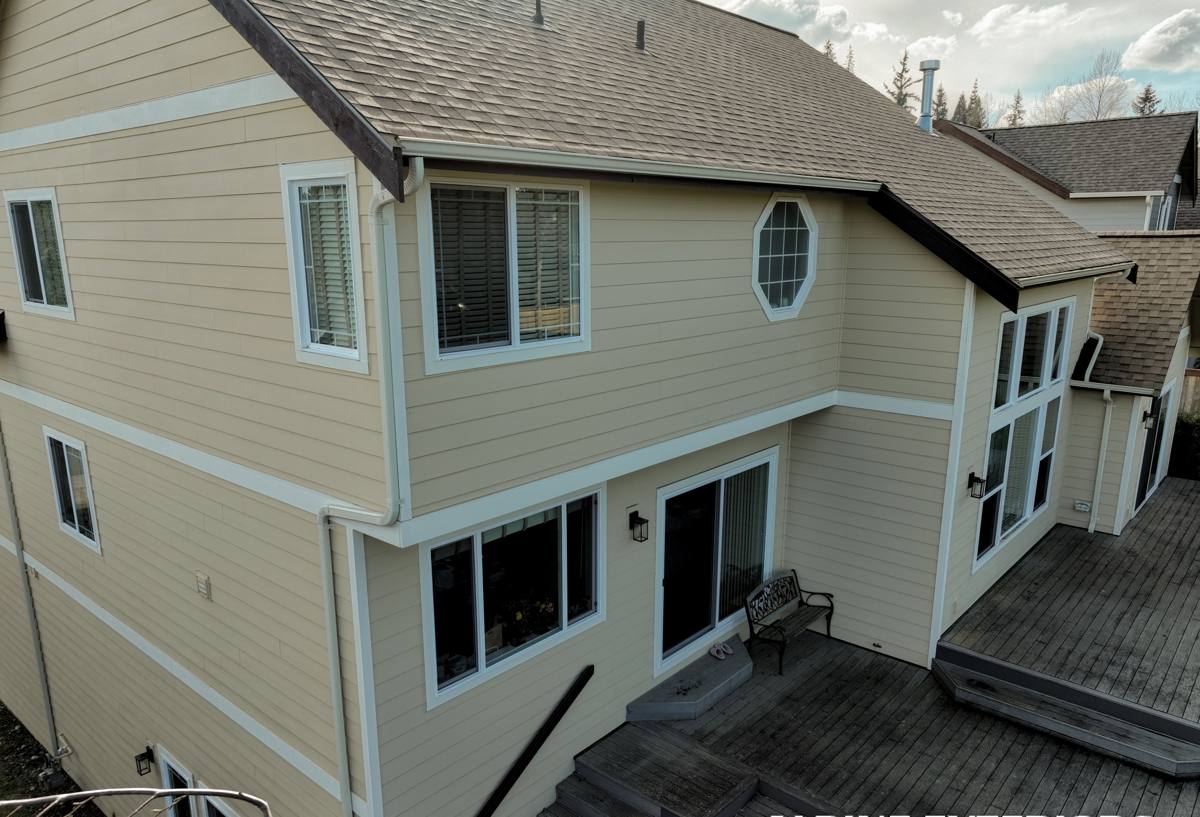
What Silver Beach's Climate Asks of a New Window Installation
Marine Air and Salt-Tinged Moisture
Air moving inland off Bellingham Bay and the Strait of Georgia carries a mild salt content that reaches well past the immediate shoreline, and combined with the lake's own evaporative humidity, Silver Beach sits in air that stays damp and mineral-laden more often than an inland lot. On a new build, that means hardware, fasteners, and sealants around every window opening need to be specified for sustained marine exposure from day one — not upgraded later after a cheaper spec starts showing corrosion.
Driving Rain Off the Lake
Wind crossing open water on Lake Whatcom picks up speed and drives rain into lake-facing walls harder than the same storm would hit a sheltered inland lot. A new build with a direct lake view often takes the brunt of it on one elevation while the uphill or tree-shaded side of the same house stays comparatively dry. That uneven exposure is exactly why flashing details need to be built for the wettest wall on the house, not an average across all four — and on new construction, we know which elevation that is before the first window ever goes in.
A Long Moss and Mildew Season
Whatcom County's mild, wet climate keeps moss and mildew active across most of the year, and window sills, trim, and any horizontal surface where water can sit instead of draining are common places it takes hold first. New-construction detailing that gets drainage and slope right at the sill — rather than relying on caulk to compensate for a flat or poorly sloped sill later — is what keeps a new home from developing that problem in its first few wet seasons.
Condensation From Day One
A well-built, well-insulated new home creates its own condensation pressure — warm, humid interior air meeting cold glass and frames during Whatcom County's damp winters. Getting the glazing package and frame thermal performance right at installation matters more on a new build than a retrofit, since a new home's tighter envelope can actually make condensation on undersized or poorly specified glass more noticeable, not less.
What Correct New-Construction Window Installation Actually Involves
A new-construction window opening gets one real shot at being built correctly. Once siding, trim, and interior finish go on, every flashing detail behind them is hidden — which is exactly why we treat this stage of the build as non-negotiable rather than a place to move fast.
Sill Pan Flashing
Every rough opening gets a sloped sill pan before the window ever sits in it. The pan's job is simple: if water ever gets past the window's own seals, it drains back out to the exterior instead of soaking into the framing below. On a lake-facing wall in Silver Beach, where wind-driven rain puts real pressure on that seal over decades, skipping this step or relying on caulk alone is the single most common reason older homes develop hidden rot around window openings.
Weather-Resistive Barrier Integration
The house wrap or weather-resistive barrier has to be lapped correctly around the opening — over the sill pan, under the head flashing, and shingled so water always moves down and out rather than getting trapped behind the window flange. This sequencing has to happen in the right order during framing and window-setting, which is part of why new-construction window work is a coordination job between trades, not a standalone task.
Head and Jamb Flashing
Flashing above and beside the window ties the opening into the surrounding wall assembly so water is directed around the window rather than into it. Done correctly, this detail is invisible once siding goes on. Done poorly, it's often invisible too — until a leak shows up years later, usually on the interior wall below or beside the window.
Rough Opening Sizing and Shimming
A window that's shimmed unevenly or set into an opening that's slightly out of square will operate poorly and stress its own seals over time, even if every flashing detail around it is done right. Getting the opening square, plumb, and correctly sized for the specific window unit is a basic step that still gets rushed on job sites under schedule pressure.
Choosing a Window System for a New Silver Beach Build
New construction gives more flexibility than a replacement project, since the window can be specified to match the exact rough opening and the builder isn't working around an existing frame. That flexibility is worth using deliberately rather than defaulting to whatever's cheapest or fastest to source.
| Factor | Why It Matters for a Silver Beach New Build |
|---|---|
| Frame material (vinyl vs. fiberglass) | Both resist rot in a way uncladded wood frames don't; fiberglass holds dimensional stability better across temperature swings and takes paint if a custom color is wanted |
| Glazing package | Double or triple-pane with low-E coatings improves energy performance and reduces interior condensation during damp, cold stretches — worth specifying up front on new construction |
| Hardware grade | Corrosion-resistant hardware holds up longer against the marine air reaching Silver Beach off Bellingham Bay than standard-grade hardware |
| Nail fin vs. block frame | Determines how the window integrates with the WRB and siding system, which needs to be decided before framing is finalized, not after |
| U-factor / energy code compliance | Washington's energy code sets minimum performance requirements for new construction glazing, which affects both product selection and long-term utility costs |
New Construction vs. Replacement: A Different Kind of Job
New-construction window work and window replacement look similar from the outside — both end with a window in a wall — but the process and the margin for error are different. On a replacement, we're often working around an existing rough opening, existing siding, and sometimes existing damage that needs to be diagnosed and addressed before a new window goes in. On new construction, the opening, the flashing sequence, and the surrounding wall assembly are all being built at the same time, which means window installation has to be coordinated with the framer and the siding crew rather than handled as an isolated task after the fact.
That coordination is where new-construction jobs go wrong most often — not because any single trade does bad work, but because the sequencing between framing, weather barrier, window setting, and siding gets handled by different crews on different schedules with no one owning the whole envelope. We handle siding, roofing, and windows as one scope specifically so that doesn't happen on our jobs.
Our Process for New-Construction Window Installation
We start by reviewing the plans and rough opening specifications with the builder or homeowner before any windows are ordered, confirming sizing, frame type, and glazing package against the specific exposure of each elevation — lake-facing walls get treated differently than sheltered ones. From there, we coordinate installation timing with the framing and weather-barrier work so sill pans, flashing, and WRB integration happen in the correct sequence rather than being retrofitted around someone else's schedule. Every opening gets a sloped sill pan and properly lapped flashing as standard practice, not an upsell. We check each window for square, level, and proper operation before final fastening, and we document the flashing and drainage details before they're covered by siding or trim, so there's a clear record of what was done at each opening.
A Checklist for Vetting a New-Construction Window Installer
- Ask specifically whether sill pan flashing is standard on every opening, not an option
- Ask how window installation is sequenced with framing and weather-barrier work on the job site
- Confirm current Washington contractor licensing and active liability insurance
- Ask whether they're specifying nail fin or block frame windows and why, given your wall assembly
- Get a written scope that separates the manufacturer's product warranty from the installation warranty
- Ask about lead times — new-construction window orders are often sized custom to the opening and can take several weeks
Why a Crew That Already Works Silver Beach Matters
A contractor who works this stretch of Lake Whatcom regularly already knows which elevations on a given lot take the worst of the wind-driven rain, how far inland the marine air's effects actually reach, and how long moisture tends to sit on a shaded, tree-covered slope versus an open lake-facing wall. On new construction, that knowledge shows up in decisions made before a single window is ordered — how the sill pan is detailed, which elevations get extra attention on flashing laps, what hardware grade actually makes sense for the site. Those are the decisions that determine whether a new Silver Beach home's windows perform for one wet winter or for decades.
If you're building new in Silver Beach and want a window installation done right the first time — correctly flashed, properly sequenced with your other trades, and specified for this specific stretch of Lake Whatcom — we're happy to review your plans and walk through the details. Reach out below for a free, no-pressure estimate.