 Bellingham
 Why Silver Beach Siding Wears Differently Than the Rest of Bellingham
Silver Beach sits close enough to Bellingham Bay that homes here deal with a combination of stresses most inland Whatcom County neighborhoods don't face in the same intensity: salt-laden air off the water, wind-driven rain that hits siding at an angle instead of falling straight down, and a moss season that can stretch from October well into spring. None of these factors is unusual on its own for Western Washington. Together, and applied to the same walls year after year, they add up to a faster failure timeline for the wrong siding product and a much slower one for the right system installed correctly.
Salt air is corrosive to exposed fasteners and hard on any paint film that isn't formulated to hold a seal against airborne moisture. Driving rain finds every gap in flashing, trim, and butt joints that a calmer climate would never test. And moss doesn't just look bad — it holds moisture against the siding surface for weeks at a time, which is exactly the condition that rots wood-based products and delaminates weaker composites. A siding replacement in Silver Beach isn't just a cosmetic upgrade. It's a decision about how well your home's envelope will hold up against a specific, sustained coastal exposure.
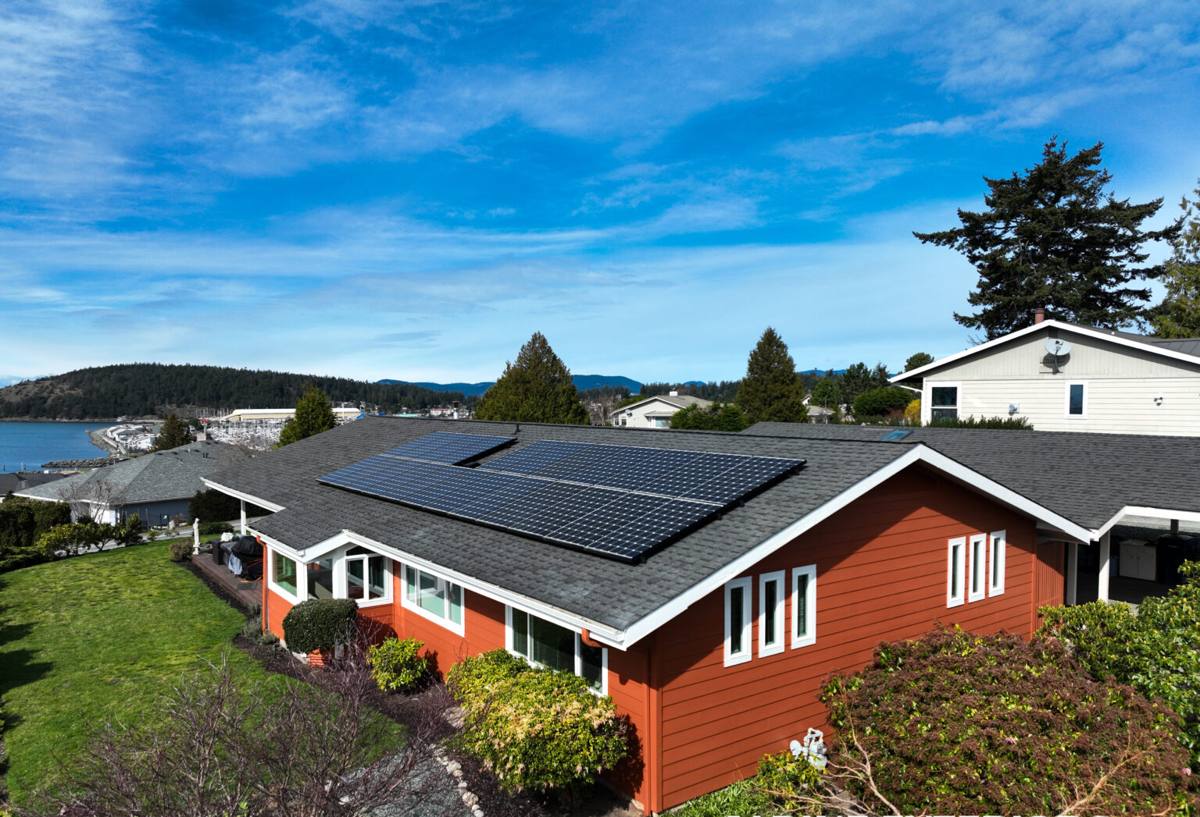
What Silver Beach Homes Actually Need From Their Siding
Moisture Management First
Any siding job here has to assume water will reach the wall plane at some point — the question is what happens next. Good siding sheds water quickly and dries out fast between rain events. Poor siding, or siding installed without proper drainage behind it, traps moisture against the sheathing and framing, where damage happens out of sight until it's expensive.
A Finish That Doesn't Chalk or Fade in Salt Air
Field-applied paint on wood or fiber cement has to be maintained on a schedule, and salt air shortens that schedule. A factory-cured finish designed to resist fading and chalking under coastal UV and salt exposure holds its look and its protective function far longer with far less homeowner upkeep.
Resistance to Sustained Dampness
With moss season running long in this part of Whatcom County, siding needs to tolerate weeks of damp, shaded conditions on the north and west-facing walls without swelling, softening, or feeding fungal growth. This is where wood-based and lower-grade composite products tend to show their age first.
Why We Only Install James Hardie Fiber Cement
We made the decision years ago to stop installing vinyl, LP SmartSide, primed spruce, cedar, and composite panel products like Cemplank or Allura — not because those products can't be installed correctly by someone, but because we couldn't stand behind them on homes facing Bellingham's coastal exposure and still sleep well at night. Each has a real trade-off that matters here specifically:
- Vinyl expands and contracts more than fiber cement in temperature swings, and it can't be painted a dark, dramatic color without risk of warping in direct afternoon sun — a real limitation on view-facing homes near the water.
- LP SmartSide is an engineered wood product, and wood-based substrates are inherently more moisture-sensitive than fiber cement, which matters most in exactly the kind of sustained damp conditions Silver Beach sees every winter.
- Primed spruce and cedar are wood, full stop. They look good the day they're installed and require the most ongoing maintenance of any option to keep looking that way against salt air and rain.
- Cemplank and Allura are also fiber cement, and reasonable alternatives in general — but we've standardized our crews, flashing details, and warranty process around one manufacturer's system so that every job we do meets the same standard, with one point of accountability if something goes wrong.
James Hardie fiber cement is non-combustible, dimensionally stable across our temperature range, and available in a factory-applied ColorPlus finish engineered to resist fading, chipping, and cracking — including in coastal, salt-exposed environments. Hardie's HZ5 product line in particular is engineered for regions with more moisture and freeze-thaw cycling, which fits Bellingham's climate better than a one-size-fits-all national product spec.
What a Correct Siding Replacement Involves
Replacing siding well is mostly about what happens before the new siding ever goes up. A rushed tear-off and reinstall over questionable sheathing is how homeowners end up paying for the same problem twice.
Tear-Off and Inspection
We remove the old siding and inspect the sheathing, framing, and existing flashing underneath. This is the only point in the project where hidden rot, moisture staining, or past water intrusion around windows and corners is actually visible — and in a Silver Beach home with any age on it, finding and addressing this now is non-negotiable.
Weather-Resistive Barrier and Drainage Plane
A correctly installed water-resistive barrier, with a drainage gap where conditions call for it, gives any bulk water that gets past the siding surface a path to drain and dry out rather than sit against the wall. This step matters more on a home exposed to driving rain than it does on a sheltered inland lot.
Flashing at Every Penetration
Windows, doors, hose bibs, vents, and light fixtures are where siding jobs fail first. Proper flashing and sealant at every penetration, not just at the obvious ones, is what actually keeps wind-driven rain out over the long run.
Hardie Installation to Manufacturer Spec
Correct fastener spacing, proper clearance at grade and roof lines, and manufacturer-specified gaps at butt joints all affect both the warranty and the real-world performance of the siding. This is also where corrosion-resistant fasteners matter — in salt air, the wrong fastener corrodes and stains the siding face long before the panel itself would ever fail.
Trim, Caulking, and Final Detailing
The finish details — corner trim, caulking joints, touch-up paint at cut edges — are what a homeowner sees every day, and they're also small moisture-entry points if rushed.
Our Process for a Silver Beach Project
- On-site assessment. We walk the exterior with you, note problem areas (moss buildup, staining, soft spots), and discuss which sides of the home take the worst weather exposure.
- Written scope and product selection. We spec the Hardie product line and profile that fits the home's style and exposure, and put the full scope of work in writing before anything is scheduled.
- Tear-off and sheathing inspection. Old siding comes off, and we address any framing or sheathing issues we find before covering them back up.
- Barrier, flashing, and Hardie installation. Installed to manufacturer spec by crews who work this product regularly, not occasionally.
- Final walkthrough. We review the completed work with you and go over basic care so the finish holds up as long as it's designed to.
Why Local Experience in This Neighborhood Matters
A crew that's replaced siding elsewhere in Bellingham but hasn't worked near the bay can still do competent general carpentry — but they may not think to flag the specific things that matter here: which walls get hit hardest by driving rain off the water, where moss buildup tends to accumulate fastest given the tree cover and shade patterns typical of this area, or how much more attention fastener corrosion resistance deserves this close to salt air. Experience with the specific microclimate of a neighborhood shows up in the small decisions — flashing details, fastener choice, product line selection — that a generic siding job often skips.
Cost Factors for Silver Beach Siding Replacement
Every home is different, but the factors that move the price on a Silver Beach project tend to follow a consistent pattern. Use this as a guide for what to ask about when getting quotes, not as a fixed price list.
| Factor | Why It Matters Here |
|---|---|
| Extent of hidden damage found at tear-off | Coastal moisture exposure and moss season increase the odds of finding rot or staining that needs repair before new siding goes on |
| Home size and wall complexity | More corners, gables, and penetrations mean more flashing detail work, which takes time to do correctly |
| Hardie product line and profile chosen | HZ5 and premium ColorPlus finishes cost more upfront but are engineered for wetter, harsher exposure |
| Fastener and flashing material upgrades | Corrosion-resistant hardware near salt air adds modest cost but avoids premature staining and failure |
| Access and site conditions | Grade changes, landscaping, and proximity to the water can affect staging and scaffolding needs |
Signs Your Silver Beach Home Needs Siding Replacement Now
- Persistent moss or algae growth that returns within weeks of cleaning
- Soft spots, bubbling paint, or visible warping, especially on north- and west-facing walls
- Staining streaks running down from fasteners or trim, often a sign of corrosion
- Gaps opening up at butt joints, corners, or around window and door trim
- A noticeable increase in how often you're repainting or caulking just to keep the exterior looking presentable
- Visible rot or soft sheathing discovered during any other exterior repair
What Homeowners Can Do Between Now and a Replacement
If a full replacement isn't imminent but you're seeing early wear, a few habits slow the clock. Keep gutters clear so water isn't overflowing directly onto siding below. Trim back vegetation and tree cover where practical to reduce shade and moisture retention on affected walls. Address any moss buildup promptly rather than letting it sit through an entire winter. None of this replaces siding that's already failing, but it buys time and protects the investment once new siding is in place.
If you're seeing any of these signs on a Silver Beach home, or you're simply planning ahead for a siding replacement done right the first time, we're happy to take a look and walk you through what we'd recommend. Fill out the form below for a free, no-pressure estimate.