 Bellingham
 South Hill's Look Calls for Board & Batten — the Climate Makes It Harder to Get Right
Board and batten siding shows up all over South Hill: on older craftsman homes getting a facelift, on newer builds going for a farmhouse or modern look, and on additions where a homeowner wants a vertical accent against horizontal lap siding elsewhere on the house. It's a strong look — clean vertical lines, deep shadow lines from the battens, a style that reads as both traditional and current depending on trim and color choice.
What most homeowners don't think about until later is that board and batten is less forgiving than standard lap siding once it's up against Whatcom County weather. The vertical seams, the batten strips, and the way water moves down a wall all behave differently than they do on horizontal siding. Bellingham's combination of salt-laden air off the bay, driving rain that comes in sideways during fall and winter storms, and a moss season that can run most of the year on shaded walls means a board and batten installation that's slightly off spec will show it — usually within a few years, not a few decades.
This page is about doing board and batten correctly on a South Hill home: what the climate actually does to this siding style, what a correct installation involves, and why we install only James Hardie fiber cement to do it.
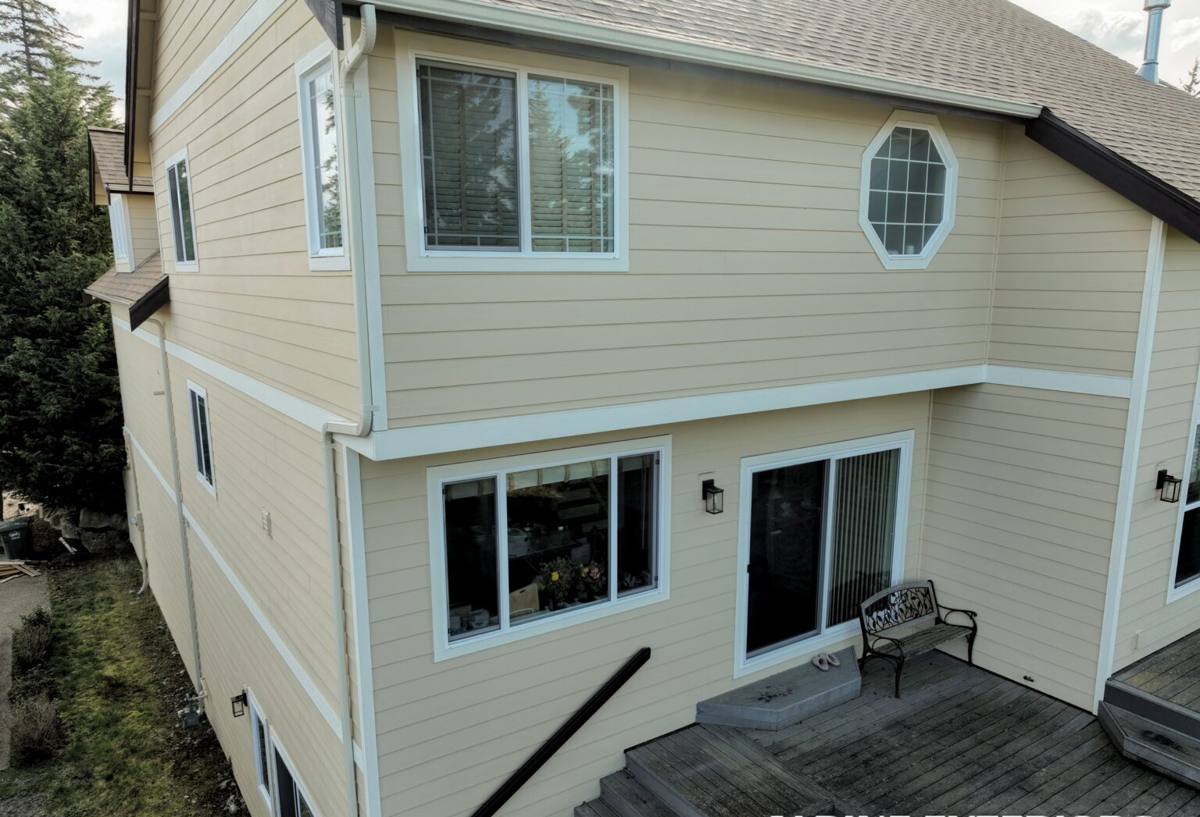
What Salt Air, Driving Rain, and Moss Season Do to Vertical Siding
The Seam Problem
Board and batten siding works by covering the vertical seam between two boards with a narrow strip — the "batten." That seam is the single most important detail on the whole wall. If it's not flashed and fastened correctly, wind-driven rain gets pushed under the batten and behind the boards instead of running off the face of the wall. On a standard lap siding wall, gravity does most of the work moving water down and off. On a vertical wall, water has fewer places to shed and more opportunities to find a gap, especially during the kind of sideways, wind-pushed rain that's common in Whatcom County storms coming off the Strait.
Moss and Shaded Walls
South Hill has plenty of tree cover and hillside lots where north- and east-facing walls stay damp and shaded for long stretches of the year. That's exactly the condition moss and mildew need. On wood-based sidings, moss holds moisture directly against the material and accelerates rot at the exact spots — batten edges, board bottoms, seams — that are already the most vulnerable part of the assembly. A siding material that doesn't feed moss growth, and a factory finish that doesn't give moss spores something to grip, matters more here than it does on a wide-open, sunny lot.
Salt Air and Fasteners
Bellingham Bay puts a steady trace of salt into the air across the whole city, South Hill included. Over years, that salt air corrodes exposed or undersized fasteners, degrades cheap caulk faster than the manufacturer's warranty assumes, and speeds up the breakdown of unfinished or field-painted wood surfaces. None of this is dramatic on any single day — it's a slow, cumulative effect that shows up as rust streaks, failed caulk joints, and soft spots five to ten years earlier than it would in a drier, inland climate.
What a Correct Board & Batten Installation Actually Involves
Board and batten siding is simple in concept and unforgiving in execution. The style forgives almost nothing when it comes to the details underneath the finish. A correct install includes:
- A drainage gap (rainscreen) between the siding and the weather-resistive barrier, so any water that does get past the face of the siding has somewhere to go besides your sheathing
- Weather-resistive barrier installed and lapped correctly, with all penetrations (outlets, hose bibs, vents) properly flashed before the first board goes up
- Battens fastened through the underlying board into framing or proper backing — not just face-nailed into the panel — so the seam stays tight over time
- Correct fastener spacing and setback, matched to the manufacturer's specification for the wind and exposure conditions in this region
- Flashing at every horizontal transition: window and door heads, the base of the wall, roof-to-wall intersections, and any spot where a horizontal band interrupts the vertical run
- Factory-finished boards and battens wherever possible, so field-cut edges are the only places that need sealing — not every seam on the wall
Skip any one of these and the siding can still look right for the first year or two. The problems that show up later — soft trim, streaking, moss creeping in at seams, paint failing on battens before the field of the wall — almost always trace back to one of these steps being rushed or skipped.
James Hardie Board & Batten: The System We Install
We install James Hardie fiber cement exclusively, and for vertical siding that means HardiePanel vertical siding paired with HardieTrim battens. It's a system, not a single product — the panel, the battens, and the trim are engineered to work together, which matters more on a vertical application than almost any other siding style.
A few specifics that matter for a South Hill home:
- HZ5 engineered formulation. James Hardie makes climate-specific product lines, and the HZ5 line is engineered for the wetter, cooler Pacific Northwest — a different formulation than what gets shipped to a dry, hot climate.
- Non-combustible fiber cement core. Board and batten doesn't warp, cup, or feed rot the way wood-based battens can when they stay damp against a shaded wall.
- ColorPlus factory finish. The color is baked on at the factory under controlled conditions, with a finish designed to resist fading, chipping, and the kind of moss-friendly surface texture that raw or field-painted wood develops over time. Fewer field-painted surfaces means fewer places for the finish to fail first.
- Transferable, backed warranty. Hardie's warranty structure is one of the reasons we standardized on it — it holds up when the installation is done to spec, which is the whole point of the process below.
We don't install LP SmartSide, vinyl board and batten, primed spruce, or cedar battens. Each of those has a place in the market and each does something well, but none of them hold up to Bellingham's combination of salt air, wind-driven rain, and long damp shade the way HZ5 fiber cement does, and we'd rather stand behind one system we trust completely than offer several we'd have to caveat.
How the Common Board & Batten Materials Compare in This Climate
| Material | Moisture behavior in wet, salt-air climate | Maintenance burden | Typical field lifespan here |
|---|---|---|---|
| James Hardie fiber cement (HZ5) | Does not absorb water or feed rot; engineered for this climate zone | Occasional wash; no repainting with ColorPlus finish | Decades, with correct install and normal upkeep |
| Cedar or primed spruce | Natural material; absorbs moisture at seams and end grain, especially in shade | Regular repainting/resealing, more frequent in damp, shaded areas | Shorter without consistent maintenance |
| Vinyl board and batten | Doesn't rot, but seams and fasteners can allow water behind the panel with no way to dry | Low, but panels can fade, warp, or crack over time | Variable; appearance often degrades before function fails |
| LP SmartSide / engineered wood | Treated to resist moisture, but still wood-based and dependent on unbroken factory coating | Moderate; edge sealing and touch-up matter more in wet climates | Depends heavily on installation quality and coating integrity |
Our Process on South Hill Jobs
Because we've worked on South Hill before, we already know what to look for before a bid ever turns into a work order:
- Assessment. We look at wall orientation, tree cover, and existing moisture damage — shaded, north-facing walls and hillside lots get a closer look than sun-exposed sides.
- Tear-off and inspection. Once the old siding comes off, we check the sheathing and framing underneath for rot or soft spots before anything new goes up. This is the point where a rushed job cuts corners and a correct one doesn't.
- Barrier and drainage plane. Weather-resistive barrier, flashing at every penetration, and a proper rainscreen gap go in before the first board is set.
- Install to spec. HardiePanel and HardieTrim go up following James Hardie's fastening, flashing, and clearance requirements — not a generalized "board and batten" approach borrowed from a different product.
- Final walk-through. We check seams, batten fastening, flashing details, and clearances (grade, roofline, decks) before calling the job done.
Why a Crew That Already Works South Hill Matters
Vertical siding is more sensitive to installation quality than lap siding, and it's more sensitive to the specific conditions of the wall it's going on. A crew that's worked South Hill's hillside lots, tree-lined streets, and mixed-age housing stock already has a feel for where moss builds up fastest, which orientations catch the worst of the driving rain, and how older framing on this side of Bellingham tends to be built. That's not something you get from a general-market crew doing one job in the neighborhood and moving on.
It also matters for accountability. A crew that plans to keep working this neighborhood has a reason to get the flashing and fastening right the first time — not just to pass a final walk-through, but because callbacks and word of mouth follow you when you're local.
Maintenance Checklist for Board & Batten in This Climate
Even a correctly installed system benefits from a little seasonal attention in a climate like this one:
- Rinse siding once or twice a year, especially shaded north- and east-facing walls where moss and algae build up fastest
- Keep gutters clear so overflow doesn't run down the face of the wall behind battens
- Trim back branches and shrubs that keep a wall shaded and damp longer than it needs to be
- Check caulking at trim, window, and door transitions once a year — factory-finished ColorPlus panels reduce how much of this you need, but field-cut edges and trim joints still need an eye kept on them
- Walk the base of the wall after major storms and check for standing water, debris buildup, or splashback near grade
If you're planning a board and batten project on South Hill, or replacing existing siding that's showing moss, soft spots, or failing paint, we're happy to come take a look and give you a straightforward, no-pressure estimate — no obligation, just an honest read on what your home actually needs.