 Bellingham
 South Hill's Older Homes Face a Specific Kind of Weather
South Hill sits up on the bluff above downtown Bellingham and Bellingham Bay, and that elevation cuts both ways. The views are part of what makes the neighborhood desirable, but that same exposure means homes up there catch wind-driven rain and salt-laden air coming off the water more directly than houses tucked into lower, more sheltered parts of the city. Add in the tree cover common on many South Hill streets and you get the third piece of the puzzle: shade, damp air, and organic debris that keep siding wet longer after every storm.
A lot of the housing stock on South Hill was built decades ago, which means much of it has already gone through one or more rounds of exterior siding. If you're looking at your home's siding today and seeing moss creeping up from the bottom edge, paint that won't hold, or trim that's gone soft, you're seeing the accumulated effect of years of this exact climate pattern. It's not a sign anyone did anything wrong — it's just what Whatcom County weather does to siding materials that aren't built to handle it long-term.
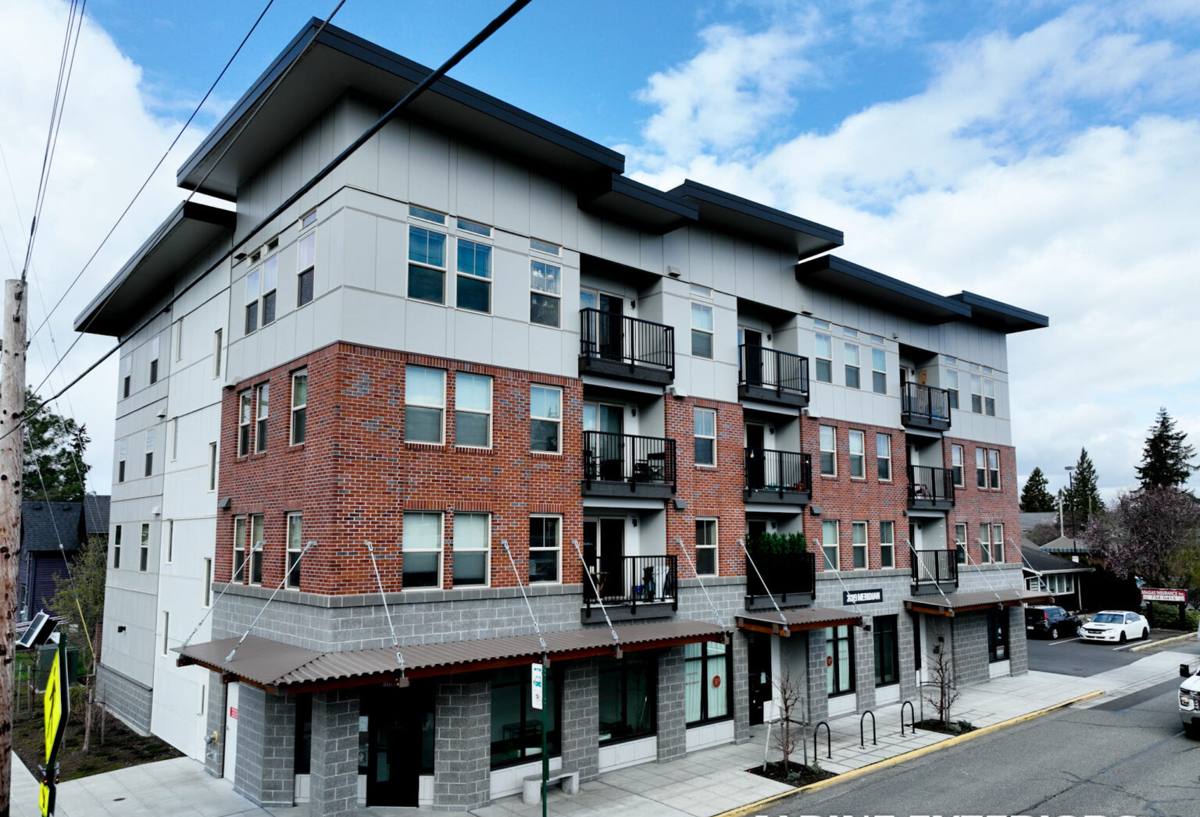
What Salt Air, Driving Rain, and Moss Season Actually Do
Three separate stressors are working on South Hill siding at the same time, and each one attacks a different weakness.
Salt Air
Proximity to Bellingham Bay means airborne salt settles on exterior surfaces, especially on the sides of a house that face the water and catch prevailing wind. Salt is corrosive to fasteners and trim hardware, and it can accelerate the breakdown of paint films and lower-grade composite materials over time.
Driving Rain
Bellingham doesn't get the heaviest rainfall totals in the state, but it gets a lot of wind-driven rain — the kind that hits siding at an angle instead of falling straight down. That matters because driving rain finds every gap, seam, and undersized overlap. Siding that's fine in a gentle straight-down rain can still let water in when it's coming sideways.
Moss Season
Western Washington's long, mild, wet stretch from fall through spring is prime moss and algae growing weather, especially on shaded, north-facing walls and anywhere siding stays damp for extended periods. Moss holds moisture directly against the siding surface, which is exactly the condition that causes rot, delamination, and coating failure in materials that aren't moisture-stable.
Why We Only Install James Hardie Siding Here
We standardized on James Hardie fiber cement for every home we side, and South Hill is a good example of why. Hardie's HZ5 product line is engineered specifically for climates like ours — cold, wet, humid, with real freeze-thaw cycling — and it's built around the fact that fiber cement doesn't absorb and swell with moisture the way wood-based and some engineered wood products can. That matters enormously in a neighborhood where siding stays damp for days at a stretch during moss season.
Fiber cement is also non-combustible, which is a genuine, meaningful advantage regardless of climate. And the factory-applied ColorPlus finish is baked on under controlled conditions rather than field-applied, which gives it better adhesion and color retention than a job-site paint job exposed to salt air and UV before it's even had time to fully cure.
We're not going to tell you every other siding product is worthless — that's not honest and it's not our call to make about someone else's product. What we will tell you is that after years of installing and repairing siding in this exact climate, we made a professional decision to stop installing vinyl, LP SmartSide, and other composite or wood-based options, because we were tired of watching them fail early in conditions exactly like South Hill's. Hardie is what we're willing to put our name behind here.
| Factor | James Hardie Fiber Cement | Vinyl | Wood / Engineered Wood |
|---|---|---|---|
| Moisture absorption | Very low — doesn't swell or rot | Doesn't absorb, but can trap moisture behind panels | Absorbs moisture; prone to swelling if coating fails |
| Salt air / coastal exposure | Engineered coastal-grade lines available | Can become brittle and discolor over time | Coating breaks down faster; more frequent recoating |
| Moss and algae resistance | Stable surface, resists organic growth better long-term | Surface can support growth in shaded, damp areas | Porous surfaces hold moisture, feed growth |
| Fire resistance | Non-combustible | Combustible; can melt or deform near heat | Combustible |
| Finish durability | Factory-baked ColorPlus finish | Color molded through material, can fade/chalk | Field-applied paint or stain, needs recoating |
What a Correct James Hardie Installation Actually Involves
The siding material only performs as well as the installation behind it. A lot of siding failures we see on older South Hill homes trace back to shortcuts in the original install, not the material itself. A correct James Hardie job includes:
- A properly lapped and sealed weather-resistive barrier behind the siding, not just tar paper stapled up quickly
- Correct flashing at every window, door, and roofline intersection so driving rain has nowhere to get behind the siding
- Proper fastener type, spacing, and depth — Hardie specifies this closely, and getting it wrong voids warranty coverage and causes premature failure
- Correct clearance between siding and grade, decks, patios, and roofing to prevent wicking and standing moisture contact
- Manufacturer-approved caulking and sealants at joints, sized and placed to actually shed water rather than trap it
- Proper panel and trim overlaps sized for our rainfall and wind exposure, not the minimum allowed in a drier climate
None of this is visible once the job is finished and painted, which is exactly why it matters who does the work. Two houses can look identical from the sidewalk and have completely different lifespans based on what's happening underneath the surface.
Our Process on a South Hill Home
We start with an on-site assessment of the existing siding and the specific exposure of your home — which walls face prevailing wind and rain, how much shade and moss pressure the property has, and what condition the sheathing and trim are in underneath the current siding. That assessment shapes the plan, because a south-facing wall on an open lot and a shaded north wall under mature trees don't need to be treated the same way.
From there, we remove the old siding, inspect and repair any damaged sheathing or framing we find (this is common on older homes and is not something to skip past), install a correct weather barrier and flashing package, and then install Hardie panels or lap siding to spec — right fasteners, right spacing, right clearances. We clean up thoroughly and walk the finished job with you before we register your manufacturer warranty.
We don't treat South Hill as just another stop on the route. A crew that's worked this neighborhood before already knows what the wind exposure looks like on the bluff, what moss pressure to expect on shaded lots, and what condition to expect from homes of a certain age — which means fewer surprises mid-project and a plan that's built for your specific site from day one.
Signs Your South Hill Home's Siding Needs Attention
- Moss or dark green/black staining building up along the bottom edge of siding or on shaded walls
- Paint that's peeling, bubbling, or chalking heavily instead of just fading evenly
- Soft or spongy spots when you press on siding near the bottom of walls, around windows, or near the foundation
- Visible gaps, warping, or separation at seams and trim joints
- Rising energy bills with no other explanation, which can point to a compromised weather barrier
- Siding that's original to a home built more than 20-25 years ago and has never been replaced
Warranty and Long-Term Value
James Hardie backs its siding with a strong, transferable non-prorated warranty on the product itself, and the ColorPlus finish carries its own separate finish warranty. Transferability matters in a neighborhood like South Hill where homes change hands regularly — it's a real selling point if you list the house down the road, not just a homeowner benefit. Correct installation is part of what keeps that warranty valid, which is one more reason the installation details matter as much as the product choice.
Siding is one of the more expensive exterior investments a homeowner makes, and it's also one of the most visible. Done right, with the right product and the right install, it should be one of the last siding decisions you have to make for this house.
If your South Hill home's siding is showing its age, or you just want an honest read on its current condition, we're happy to come take a look. Fill out the form below for a free, no-pressure estimate.