 Bellingham
 Why New Roof Installation in Sudden Valley Takes a Different Approach
Sudden Valley sits in a pocket of Whatcom County that puts extra demands on a roof. Homes here are tucked among mature evergreens near Lake Whatcom, on lots with more shade, more slope, and more standing tree cover than you'll find on an open subdivision closer to town. That's part of what makes the neighborhood attractive to live in, but it's also exactly the combination that ages a roof faster than the manufacturer's warranty label suggests. A new roof installed without accounting for that reality is a roof that will need attention again sooner than it should.
We approach a Sudden Valley re-roof differently than a straightforward tear-off on a sunny, open lot. The material choice, the underlayment detailing, the ventilation plan, and even the timing of the job all get adjusted for a property that spends more of the year damp and shaded than most.
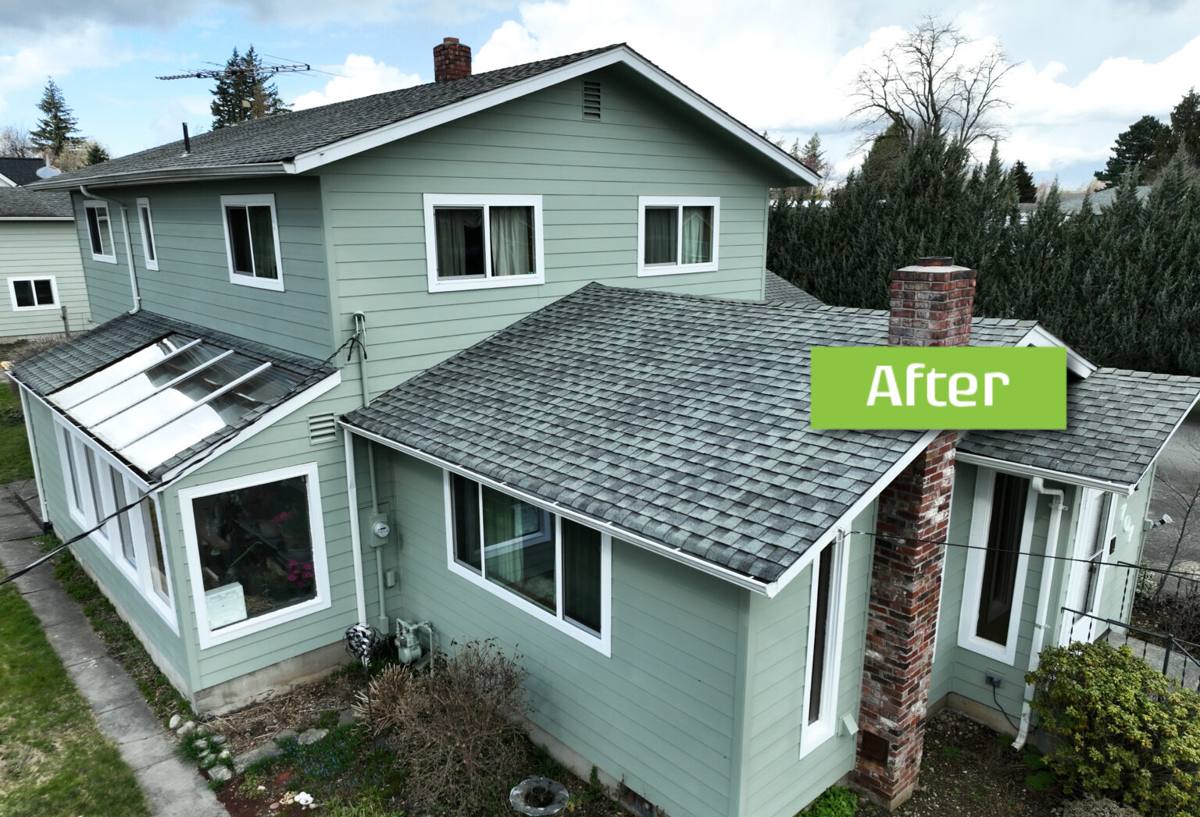
The Climate Factors That Shorten a Sudden Valley Roof's Life
Moss and Organic Debris
Shade from surrounding trees keeps roof surfaces cooler and slower to dry after rain, which is exactly what moss needs to establish. Once moss gets a foothold in shingle laps, it holds moisture against the roofing material long after the rest of the neighborhood has dried out, and it physically lifts shingle edges as it grows. Needles and leaf litter compound the problem by damming water in valleys and clogging gutters, so water backs up under the roofline instead of draining off it.
Wind-Driven Rain and Marine Air
Whatcom County's weather moves in off the water, and driving rain during winter storms doesn't fall straight down — it gets pushed sideways into laps, vents, and flashing details that were never designed to shed rain from an angle. Over time, the moisture-laden marine air common to this part of Washington also speeds up corrosion on exposed fasteners, drip edge, and flashing that isn't properly protected or coated.
Freeze-Thaw and Shaded Valleys
Shaded sections of a Sudden Valley roof hold onto frost and ice longer after a cold snap than sun-exposed sections do. That uneven freeze-thaw cycle stresses shingles and sealant at a different rate across the same roof, which is part of why problems often show up first in the shaded north- or east-facing slopes.
Signs a Sudden Valley Roof Needs Full Replacement, Not Another Repair
Homeowners often ask us to patch a problem area, and sometimes a repair really is the right call. But certain conditions tell us the roof as a whole has reached the end of its useful service life, especially on homes that have dealt with years of shade and moss pressure.
- Moss mats thick enough to lift shingle tabs, not just surface staining
- Granule loss heavy enough to expose the asphalt mat underneath
- Shingles that are curling, cupping, or cracking across multiple slopes
- Soft or spongy spots when walking the roof, indicating deck damage
- Daylight or water stains visible from inside the attic
- Rusted, lifted, or missing flashing around chimneys, skylights, and valleys
- A roof approaching or past 20–25 years old with repeated repair calls
If you're only seeing one or two of these on an otherwise sound roof, a targeted repair can still make sense. When several show up together, replacement is almost always the more honest recommendation.
What a Correct New Roof Installation Involves
Tear-Off and Deck Inspection
We remove existing roofing down to the deck rather than layering over it. That's the only way to actually see the plywood or plank sheathing underneath, which matters a great deal on a shaded, moss-prone roof where hidden moisture damage is common. Any soft, delaminated, or rotted decking gets replaced before anything new goes down — installing new roofing over a compromised deck just hides the problem for another owner to find later.
Underlayment and Ice-and-Water Barrier
Given how much wind-driven rain this area sees, we pay particular attention to self-adhered ice-and-water membrane at eaves, valleys, and around penetrations, backed by a full synthetic underlayment across the rest of the deck. This is the layer that protects the house if wind pushes rain up under the shingles, and it's not optional on a property with this much tree cover and moisture exposure.
Ventilation Balance
A roof needs balanced intake at the eaves and exhaust at the ridge to actually dry out between rain events. On shaded lots where roofs already stay damp longer, poor ventilation compounds the moss and rot problem instead of helping the roof recover. We check and correct intake/exhaust balance as part of every installation, not as an upsell.
Flashing and Penetrations
Chimneys, skylights, plumbing vents, and valleys are where roofs fail first, almost always before the field shingles do. Proper step flashing, counter-flashing, and sealed penetrations matter more here than the shingle brand chosen to cover the rest of the roof.
Fastening to Manufacturer Specification
Nail placement, pattern, and count affect wind rating and warranty validity. We install to the manufacturer's published specification rather than a faster shortcut pattern, because it's the difference between a roof that holds through a real Whatcom County windstorm and one that doesn't.
Choosing a Roofing Material That Can Handle Sudden Valley's Climate
There isn't one universally "best" material — the right choice depends on how much shade your lot gets, your budget, and how much long-term maintenance you're willing to keep up with.
| Material | Moss Resistance | Typical Lifespan | Maintenance Needs | Relative Upfront Cost |
|---|---|---|---|---|
| Standard 3-tab asphalt shingle | Low without added protection | 15–20 years | Regular moss treatment and gutter clearing | Lowest |
| Architectural/laminate shingle | Moderate; better with algae-resistant granules | 25–30 years | Periodic moss treatment on shaded slopes | Moderate |
| Metal panel roofing | High; sheds moss more easily than shingle | 40+ years | Low; occasional debris clearing | Higher |
On heavily shaded Sudden Valley lots, we often steer clients toward architectural shingles with algae-resistant granules, or metal, over basic 3-tab product — not because 3-tab is a bad shingle, but because the ongoing moss maintenance it requires under this much tree cover adds up over the years and can outweigh the initial savings.
Our Installation Process, Step by Step
- On-site inspection of the existing roof, decking access points, and site conditions specific to your lot
- Written estimate covering material options, scope, and timeline
- Permitting handled through the appropriate Whatcom County process before work begins
- Full tear-off and disposal of old roofing material
- Deck inspection and repair or replacement of any damaged sheathing
- Installation of ice-and-water barrier, underlayment, and flashing
- Installation of the new roofing material to manufacturer specification
- Ventilation check and correction where needed
- Full site cleanup, including a magnetic sweep for stray fasteners
- Final walkthrough and warranty paperwork
Why Hiring a Crew That Already Works in Sudden Valley Matters
Sudden Valley's terrain and tree cover create practical site challenges that a crew unfamiliar with the neighborhood will underestimate. Driveways and lots here are frequently narrower, steeper, or more tree-lined than a typical in-town job, which changes how material gets staged, where a dumpster or trailer can actually fit, and how tear-off debris gets moved off the roof without damaging landscaping below. Crews who haven't worked the neighborhood before often lose a half-day figuring this out on-site; crews who have already worked here plan around it before the trucks arrive.
Local experience also means knowing how weather actually behaves on a shaded lake-adjacent lot versus a forecast for "Bellingham" in general — when a tear-off can safely stay open overnight, when it can't, and how to sequence a job around the wetter stretches of the year. That judgment comes from having done the work here before, not from a general contracting background alone.
After Installation: Keeping Moss and Debris From Cutting a New Roof's Life Short
A correctly installed roof still needs some ongoing attention on a property surrounded by trees. Gutters and valleys collect needles and leaf litter faster here than on an open lot, and that debris holds moisture against the roof surface if it isn't cleared. We recommend a gutter and roof-surface check at least once or twice a year for heavily shaded homes, more often if you're under a dense stand of conifers. Zinc or copper strips near the ridge can help slow moss regrowth between cleanings, and catching a small moss patch early is far cheaper than dealing with lifted shingles later.
Workmanship and manufacturer warranties both depend on the roof being installed and maintained correctly, so we walk every client through what routine care actually looks like for their specific lot and tree cover before the job wraps up.
If your Sudden Valley roof is showing moss, wear, or age, we're happy to take a look and give you a straight, no-pressure estimate — just fill out the form below and we'll get in touch.