 Bellingham
 Decking in Sunnyland Has to Work Around the Bay
Sunnyland sits close enough to Bellingham Bay that homes here deal with a different mix of weather than decks built further inland in Whatcom County. Salt-laden air off the water accelerates corrosion on fasteners and hardware, driving rain off the Sound pushes moisture sideways into places a deck was never designed to shed water from, and the long, wet shoulder seasons that define a Bellingham winter give moss and algae months at a time to take hold on any surface that stays damp. A deck built without those specific stresses in mind will show it early — soft spots, streaking, green film on the boards, corroded screws bleeding rust into the surface.
Composite decking, installed correctly for this climate, is one of the more sensible answers to that combination of problems. It doesn't mean composite is maintenance-free or bulletproof — no decking material is — but it does mean the failure points shift from rot and splintering to things that are easier to manage: surface grime, occasional cleaning, and making sure the substructure underneath is doing its job. This page is about what that looks like specifically for a Sunnyland home, not decking in general.
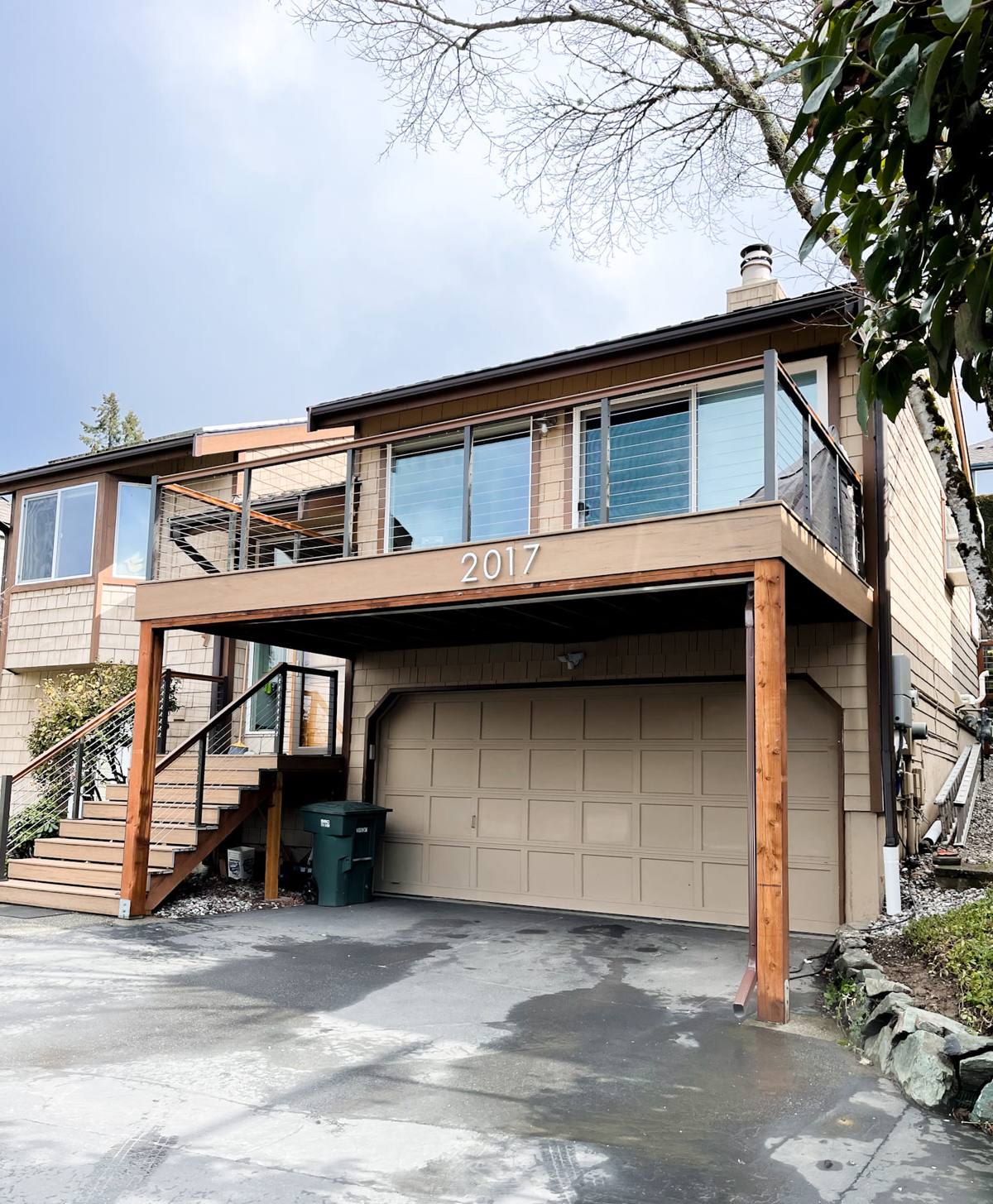
What Sunnyland's Climate Actually Does to a Deck
Salt Air and Metal Fasteners
Proximity to the bay means airborne salt settles on every exterior surface, including screws, joist hangers, and structural brackets. Standard zinc-coated fasteners corrode faster near the water than they would a few miles inland. Over a few seasons that corrosion can weaken connections long before the decking boards themselves show any wear — which is why fastener choice matters as much as board choice on a job like this.
Driving Rain and Wind-Driven Moisture
Storms coming off the water in Bellingham don't always fall straight down. Wind pushes rain sideways and up under rail posts, into end grain, and into any gap where flashing was skipped or done as an afterthought. On a deck attached to the house, this is usually where problems start — not on the open deck surface, but at the ledger board connection where the deck meets the siding.
The Moss Season
Whatcom County's wet season stretches long, and a north-facing or shaded deck in Sunnyland can stay damp for weeks without a real drying window. Moss and algae don't care what the decking is made of — they'll grow on composite just as readily as on wood if the surface stays wet and the boards don't have anywhere for water to go. The difference is that composite doesn't feed the moss the way wood fiber does, and it doesn't soften or rot underneath it while you get around to cleaning it off.
Composite vs. Other Decking Materials for This Climate
There's no perfect material, and we'd rather walk a homeowner through honest trade-offs than oversell one option. Here's how the common choices stack up specifically against Sunnyland's conditions:
| Material | Moisture & Rot Resistance | Moss/Algae Behavior | Ongoing Maintenance | Typical Lifespan |
|---|---|---|---|---|
| Capped composite | Very good — cap layer sheds water, core resists rot | Grows on surface but doesn't feed on the material; cleans off | Occasional wash, no staining or sealing | 25–30+ years |
| Uncapped/early-generation composite | Fair — some older products absorb moisture at cut edges | Can hold moisture near cut ends, encouraging growth there first | Low, but edge sealing at cuts matters | 15–20 years |
| Pressure-treated wood | Moderate — treatment slows rot but doesn't stop it | Feeds moss readily; wood fiber holds moisture | Annual cleaning, periodic staining/sealing | 10–15 years in this climate |
| Cedar | Good naturally, but finish wears fast in coastal rain | Moss takes hold once the finish fails | Frequent refinishing to keep rot at bay | 15–20 years with upkeep |
| PVC/vinyl decking | Excellent — fully synthetic, no organic material to rot | Grows on the surface film same as any material; cleans off easily | Very low | 25–30+ years |
For most Sunnyland homes, capped composite hits the practical middle ground — strong moisture and rot performance without the higher material cost of full PVC systems, and none of the annual refinishing that wood demands. We'll always lay out the real trade-offs for your specific deck rather than push one product line.
What a Correct Composite Deck Installation Involves Here
Substructure First
The decking boards are the part everyone sees, but the framing underneath is what actually determines whether the deck lasts. In a climate this wet, we pay close attention to joist spacing (tighter spacing than the manufacturer's minimum handles moisture-driven expansion better), proper ventilation under the deck so air can move and dry out the framing, and joist tape or flashing on top of every joist to keep water off the wood structure entirely.
Fasteners and Hardware Rated for Coastal Exposure
Given the salt air off the bay, we use stainless steel or coastal-rated hardware for structural connections and hidden fastener systems designed to resist corrosion — not just because the manufacturer's warranty may require it, but because replacing corroded hardware under a finished deck is a miserable job we'd rather avoid altogether.
Ledger Board and Flashing Details
Where the deck attaches to the house, correct flashing is non-negotiable in a climate with this much driving rain. That means proper ledger flashing tied into the home's existing water management, not just caulk at the seam. This is the single most common point of failure we find on older Bellingham-area decks, composite or otherwise.
Drainage and Slope
Composite boards need a slight slope away from the house and gaps sized correctly for the specific board profile, so water actually moves off the deck instead of pooling. Standing water anywhere on the surface is what turns a mild moss problem into algae buildup that gets slippery and genuinely unsafe underfoot.
Our Process for a Sunnyland Deck Project
- On-site assessment — we look at the existing structure (if any), sun/shade exposure, drainage patterns, and how close the deck sits to salt-air exposure from the bay.
- Material walkthrough — we go over composite board tiers, color/texture options, and where PVC or another material might genuinely be a better fit for your situation.
- Structural plan — framing layout, fastener spec, flashing details, and drainage plan specific to your lot.
- Permitting — we handle the paperwork with the City of Bellingham or Whatcom County as required for your project.
- Build — substructure first, inspected before boards go down, then decking, fascia, and railing installed to spec.
- Final walkthrough — we check every board, fastener, and drainage point with you before calling the job done.
Maintaining a Composite Deck Through a Bellingham Winter
Composite decking is low-maintenance, not no-maintenance, especially in a neighborhood that gets this much shade and moisture through the fall and winter. A little seasonal attention keeps a deck looking and performing the way it should for decades.
- Sweep off leaves, needles, and debris regularly — trapped organic matter holds moisture against the boards and is the number one cause of surface staining and moss growth.
- Wash the deck surface a couple of times a year with soap and water or a composite-safe cleaner; a pressure washer on a low setting works but avoid aggressive nozzles that can etch the cap layer.
- Check and clear the gaps between boards each fall — this is where debris builds up and blocks the drainage path the boards are designed to use.
- Rinse off salt spray after storm events if your deck is directly exposed to wind off the bay.
- Inspect railing posts and stair connections once a year for any movement, since these take the most structural stress.
- Keep an eye on any spots that stay shaded and damp longer than the rest of the deck — that's where moss will show up first, and catching it early means a quick scrub instead of a deep clean.
What Actually Drives the Cost
| Factor | Why It Matters |
|---|---|
| Deck size and shape | Square footage and the number of angles/cuts affect both material use and labor time |
| Substructure condition | Replacing rotted or undersized existing framing adds cost but is not optional for a safe, long-lasting deck |
| Board tier | Entry-level capped composite vs. premium composite or PVC changes material cost per square foot noticeably |
| Height and railing requirements | Taller decks or code-required railing add structural and material cost |
| Site access | Sunnyland's mix of lot slopes and mature trees can affect how easily materials and equipment reach the build site |
| Permitting | New decks and many replacements require permits; this is a real cost and timeline factor, not paperwork we skip |
We'd rather walk your specific deck with you and give a straight number than post a generic price range that doesn't reflect your lot, your existing structure, or the board tier you actually want.
Why a Local Crew Matters for This Job
A deck built for a dry inland climate and a deck built for a Sunnyland lot a few blocks from Bellingham Bay are not the same project, even if the board on top looks identical in a showroom. Fastener selection, flashing details, drainage slope, and even where moss is likely to establish itself first are all things that come from having actually built and repaired decks in this specific part of Whatcom County — not from a general contracting playbook written for a different region.
We've seen what happens when those details get skipped: corroded hardware failing years before the boards do, ledger connections that let water into the siding, and decks that stay slick with algae through half the winter because nobody accounted for the shade and moisture on that particular lot. Getting it right the first time costs less than fixing it after a season or two of Bellingham weather has found every shortcut.
Get a Straight Answer for Your Deck
If you're planning a new composite deck or replacing an aging one in Sunnyland, we're happy to take a look and give you an honest assessment — what your lot's exposure and drainage actually call for, which board tier makes sense for your budget, and what the real cost factors are for your specific project. Request a free, no-pressure estimate using the form below.