 Bellingham
 Sunnyland's Climate Is Harder on Siding Than Most Homeowners Realize
Sunnyland is one of Bellingham's older, more established neighborhoods — mature tree canopy, a mix of mid-century homes and newer infill, and a setting close enough to Bellingham Bay that salt-laden air reaches the siding on most houses in the area. That combination is deceptively tough on exterior cladding. The tree cover that makes the neighborhood pleasant to live in also keeps siding shaded and damp longer after every rain, and Whatcom County's rainy season isn't a short event — it's months of low-intensity, driving rain that finds every gap in flashing, trim, and caulk.
None of this is unique to Sunnyland, but the neighborhood's specific mix of shade, moisture, and coastal proximity means siding here works harder than siding on an open, sunbaked lot across town. Homes with poor water management or the wrong cladding material tend to show it first at the bottom courses, around window trim, and on north-facing walls that rarely see direct sun.
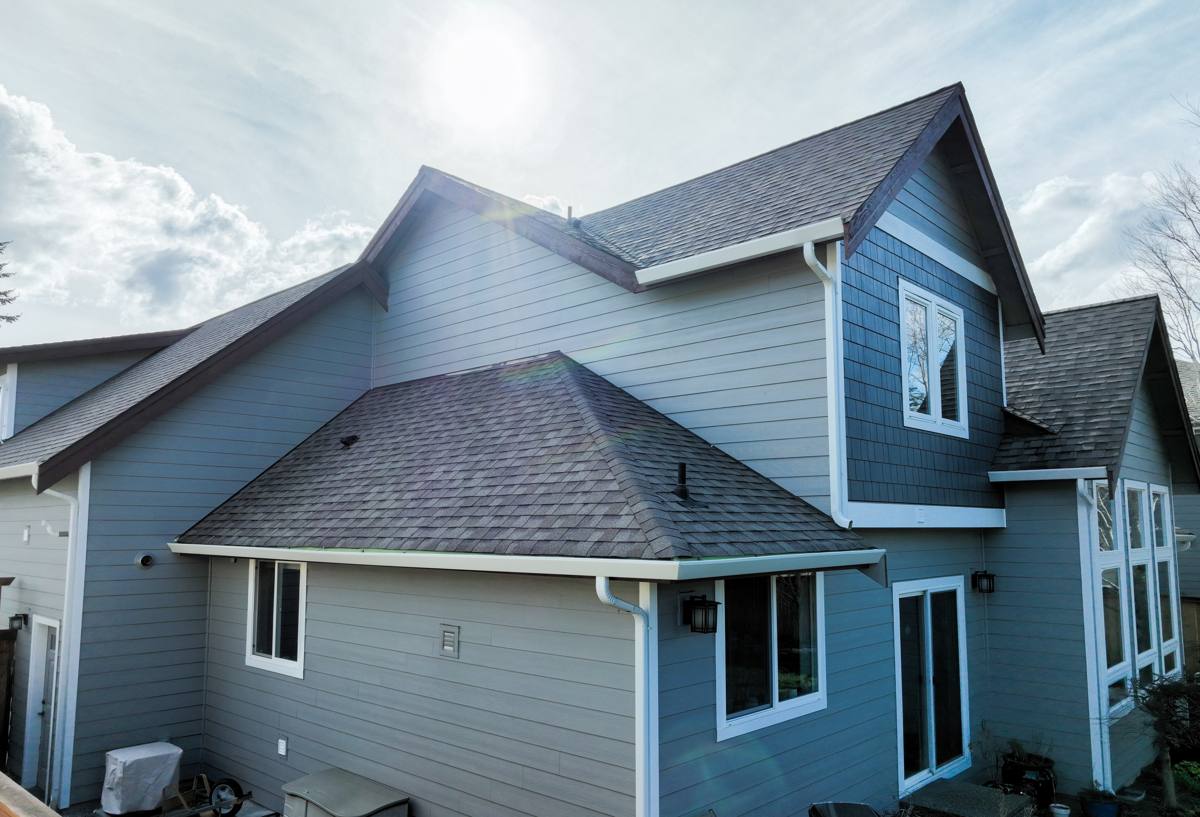
What Sunnyland Homes Are Up Against
Salt Air
Proximity to Bellingham Bay means airborne salt settles on exterior surfaces, accelerates corrosion on fasteners and metal flashing, and speeds up the breakdown of lower-grade coatings and caulk joints. Materials and finishes that aren't rated for coastal exposure age faster here than they would inland.
Driving Rain
Pacific storms in this region rarely come straight down — wind-driven rain hits siding at an angle, working its way behind trim, under laps, and into any seam that isn't properly lapped or sealed. Siding systems and installation details that work fine in drier climates aren't necessarily built for this.
A Long Moss Season
Shade from mature trees plus near-constant moisture from fall through spring gives moss, algae, and mildew a long runway to take hold. Once organic growth gets established on a wall, it holds moisture against the surface, which is exactly the condition that leads to rot, delamination, and coating failure over time.
Signs Your Sunnyland Home's Siding Is Losing the Fight
Most siding failures don't happen overnight. They show up as small, specific symptoms first — and catching them early is a lot cheaper than catching them late.
- Green or black staining that returns within weeks of being cleaned
- Soft, spongy, or bubbled areas, especially near the bottom few courses or under windows
- Visible warping, cupping, or gaps opening up between boards
- Paint that's peeling, chalking heavily, or failing faster than the last time you painted
- Caulk joints that have shrunk, cracked, or pulled away from trim
- Rising interior heating bills with no other explanation — often a sign siding is no longer doing its job as a weather barrier
- Visible rot at corners, butt joints, or anywhere two pieces of siding meet
If you're seeing two or more of these, it's worth having someone look at what's happening behind the surface, not just at the paint.
Why We Install Only James Hardie Fiber Cement
We don't install vinyl, LP SmartSide, primed wood, cedar, or other fiber cement brands. That's a deliberate standard, not a sales pitch, and it comes down to what actually holds up in a climate like Bellingham's.
Wood and wood-based products need consistent maintenance to resist moisture, and in a neighborhood with heavy shade and a long wet season, that maintenance window shrinks. Vinyl is low-maintenance but it's a thin material that expands and contracts with temperature, can warp or crack over time, and doesn't offer the same fire resistance or impact durability as fiber cement. We're not saying these products are worthless — they work fine in the right application — but for the moisture load and salt exposure Sunnyland homes deal with, we don't think they're the right long-term investment, and we'd rather be honest about that upfront than sell something we don't believe in.
James Hardie fiber cement is non-combustible, dimensionally stable, and engineered specifically for wet regional climates through its HZ5 product line, which is built for exactly the moisture and temperature swings the Pacific Northwest sees. The factory-applied ColorPlus finish is baked on under controlled conditions, which gives it better fade and moisture resistance than a field-applied paint job, and it comes with a real transferable warranty — not just on the material, but on the finish itself.
What ColorPlus Actually Buys You
A factory finish means the color and protective coating are cured before the siding ever reaches the jobsite, so you're not relying on weather conditions during installation to get a good paint bond. In a climate where dry installation windows are limited, that matters more than it sounds like it should.
What a Correct Installation Actually Involves
Fiber cement siding is only as good as the details underneath it. Hardie's own installation specs exist for a reason, and skipping them is how homeowners end up with premature failures on a product that's rated to last decades.
Water Management Comes First
Before any siding goes up, the wall needs a correctly lapped weather-resistive barrier, properly integrated flashing at every window, door, and penetration, and drainage capability behind the cladding so any moisture that does get in has somewhere to go. This is the step that's invisible once the job is done — and the one that determines whether the siding lasts 10 years or 40.
Fasteners, Clearances, and Laps
Fiber cement needs to be fastened per manufacturer spec — correct nail type, placement, and depth — and held with proper clearance from grade, roofing, and decks so it isn't sitting in standing water or trapped moisture. Butt joints and laps need to be sized and sealed correctly, especially given how much wind-driven rain this area gets.
Cutting and Finishing
Fiber cement produces silica dust when cut, and it needs to be cut and handled with the right equipment and safety practices. Cut edges and any field-painted areas need to be properly sealed and touched up to match the factory finish, or they become the first place moisture gets in.
Material Comparison for Sunnyland's Conditions
| Factor | James Hardie Fiber Cement | Vinyl | Wood / LP SmartSide |
|---|---|---|---|
| Moisture resistance in wet, shaded lots | Engineered for it (HZ5 line) | Doesn't rot, but can trap moisture behind it | Requires ongoing maintenance to resist rot |
| Salt air / coastal exposure | Stable, factory-sealed finish | Can become brittle over time | Coatings degrade faster near salt air |
| Fire resistance | Non-combustible | Combustible | Combustible |
| Maintenance | Occasional wash, minimal upkeep | Low, but limited repair options | Regular painting/sealing required |
| Warranty | Long-term, transferable | Varies widely by manufacturer | Varies, often shorter |
| Upfront cost | Mid-to-higher | Lower | Lower-to-mid |
Upfront cost is real and we won't pretend otherwise — Hardie siding typically costs more than vinyl or engineered wood at installation. But when you factor in repainting cycles, moisture-related repairs, and how the two other options tend to perform after a decade in this climate, the total cost of ownership usually favors fiber cement for homeowners planning to stay put.
Our Process on Sunnyland Homes
Assessment First
We start by looking at what's actually happening on your home — sun exposure on each elevation, tree cover, drainage patterns around the foundation, and the condition of whatever's currently on the walls. That tells us whether we're dealing with a straightforward re-side or whether there's underlying sheathing or framing damage that needs to be addressed before new siding goes up.
Product and Color Selection
We walk through Hardie's plank, panel, and shingle profiles along with the ColorPlus palette, so you're choosing a look that fits the home and the neighborhood, not just picking off a sample chip.
Installation and Finish
We follow manufacturer spec on water management, fastening, and clearances — the details described above — and we clean up thoroughly at the end of each work day, which matters on a lot with mature landscaping and neighbors close by.
Timeline and What to Expect
Most single-family re-side projects in this size range take a week to two weeks depending on square footage, home complexity, and whether any sheathing repair is needed underneath the old siding. Weather is a real factor in Whatcom County — we plan around dry windows where possible, since correct installation depends on it. We'll walk you through the schedule up front so there aren't surprises once work starts.
Why Hiring a Crew That Already Works Sunnyland Matters
Every neighborhood in Bellingham has its own quirks — lot sizes, tree cover, drainage patterns, HOA or design expectations — and Sunnyland's mature, tree-lined lots and mix of older and newer construction come with their own set of considerations, from working around established landscaping to matching a look that fits the neighborhood's character. A crew that's worked the area knows what conditions to expect and plans for them instead of discovering them mid-project. That familiarity, paired with a single-product standard we can stand behind, is the difference between a siding job that looks good on installation day and one that's still performing correctly in fifteen years.
If your Sunnyland home's siding is showing its age — or you're planning ahead before it becomes a bigger problem — we're happy to take a look and talk through what makes sense for your house. Reach out for a free, no-pressure estimate using the form below.