 Bellingham
 Why Ferndale Windows Wear Out Differently Than Windows Inland
Ferndale sits close enough to Bellingham Bay and the Salish Sea that salt-laden air is a real factor in how exterior materials age, not just a coastal talking point. Salt air accelerates corrosion on window hardware, hinges, and fasteners, and it breaks down cheaper sealants faster than dry inland air does. Add in Whatcom County's driving rain — the kind that comes in sideways during a winter blow — and you've got water testing every seam in a window frame, not just sitting on the sill.
Then there's moss season, which around here isn't really a season so much as most of the year. Constant damp and shade on the north and west sides of a house keep window trim, sills, and the siding around openings wet for long stretches. Wood that stays wet doesn't just look bad — it softens, and once a frame or sill starts to soften, water finds its way past the glass and into the wall.
What this means for Ferndale homeowners
None of this means windows fail overnight. It means the ordinary wear every window experiences — seal breakdown, hardware fatigue, minor gaps around the frame — happens faster here than it would in a drier, calmer climate. A window that might last a couple more years in a sheltered inland location can already be letting in moisture on a Ferndale property that catches wind off the water.
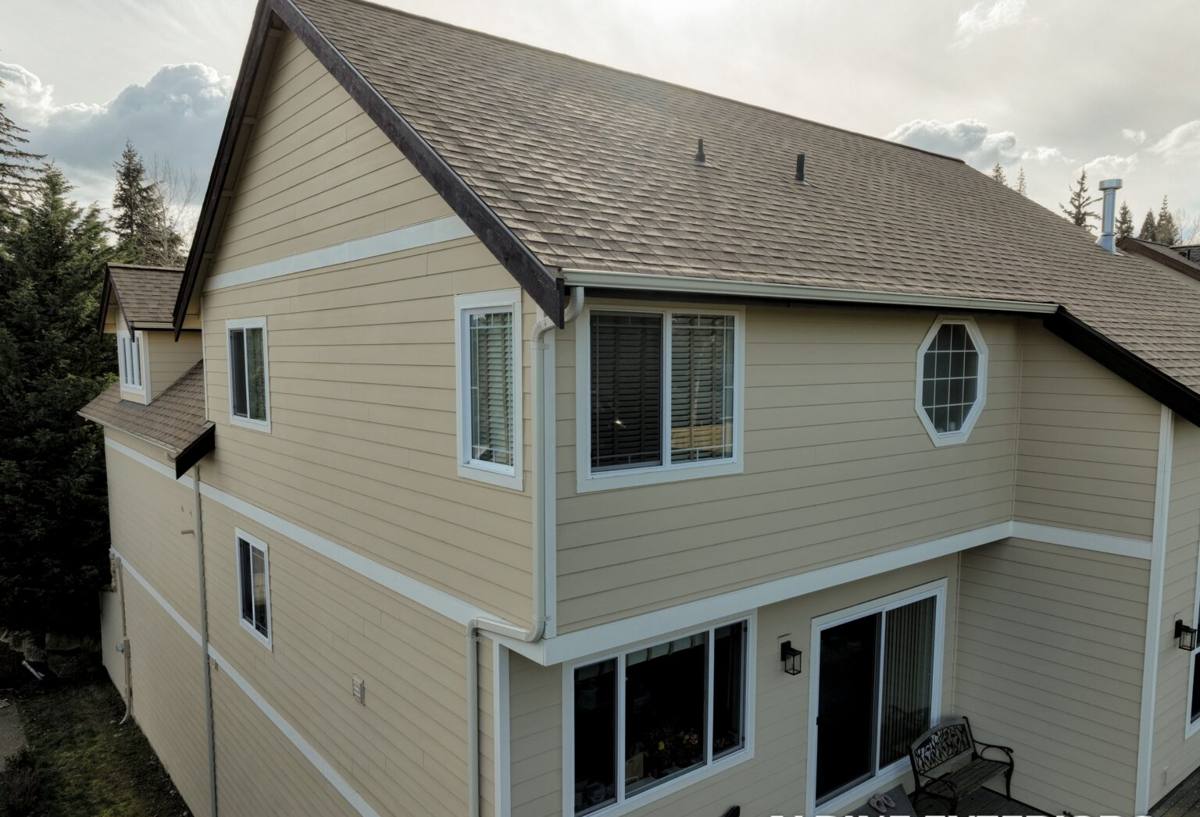
Signs a Ferndale Home Needs Window Replacement
Most homeowners don't notice window failure until it's obvious — but the early signs are worth catching before they turn into a bigger repair.
- Fogging or a milky haze between the panes of double-pane glass — the seal has failed and the insulating gas has escaped
- Windows that feel drafty even when fully latched, especially during a winter storm
- Soft, spongy, or discolored wood at the sill or lower frame corners
- Moss or dark green growth building up in the caulk lines or corner joints
- Windows that stick, won't stay open, or are hard to lock
- Visible daylight or a whistling sound around the frame in wind
- Paint that keeps peeling or bubbling on the interior trim, which usually points to moisture getting in from outside
Any one of these on its own might just need a repair. Several at once, or wood damage that's spreading, usually means it's more cost-effective to replace than to keep patching.
What a Correct Window Replacement Actually Involves
A window replacement is not just swapping the glass unit or dropping a new sash into an old frame. Done right, it addresses everything around the window opening, because that's where most of the real damage — and the real weather protection — lives.
Full removal, not a pocket install
Pocket replacements (installing a new window inside the old frame) are faster and cheaper, but they leave any hidden rot or failed flashing right where it was. On a Ferndale home that's been taking on rain for years, we generally recommend a full-frame removal so we can actually see and address the condition of the rough opening — not just cover it up.
Flashing and the water management layer
The single biggest factor in whether a window leaks isn't the window itself — it's how it's flashed into the wall. Proper installation means integrating the window with the house's weather-resistive barrier in the correct shingle-lap order (so water always sheds outward and downward), sealing the sill pan so any water that does get past the glass has somewhere to drain, and using compatible sealants and flashing tape rather than just caulk around the trim.
Insulation and air sealing
Gaps between the new window frame and the rough opening need to be insulated, not just left open or overstuffed with foam. Too little insulation leaves a cold, drafty gap; too much expanding foam can bow the frame and cause the window to operate poorly. This is a detail that's easy to get wrong and hard to notice until the following winter.
Choosing a Frame Material for Coastal Whatcom County Weather
There isn't one "best" window material for every home — it depends on your budget, the style of the house, and how much upkeep you want to take on. Here's how the common options hold up against Ferndale's salt air, rain, and moss:
| Frame Material | Moisture & Salt Air Resistance | Maintenance | Typical Lifespan |
|---|---|---|---|
| Vinyl | Very good — won't rot or corrode, unaffected by salt air | Low — occasional cleaning | 20–30+ years |
| Fiberglass | Excellent — dimensionally stable, resists moisture and corrosion | Low | 30+ years |
| Wood | Fair — needs a sound exterior finish to keep moisture out | High — periodic refinishing, more in wet, shaded areas | 15–25 years with upkeep |
| Wood-clad (wood interior, metal or vinyl exterior) | Good — exterior shell protects the wood from weather | Moderate — interior wood still needs care | 20–30 years |
| Aluminum | Fair — durable but prone to condensation and corrosion in salt air unless well-coated | Moderate | 20–30 years |
We're honest with clients about trade-offs rather than pushing one product line. For a home exposed to wind and moisture off the bay, we typically steer people toward vinyl or fiberglass for the frame because they don't give moss and moisture anything to work on. If you love the look of natural wood, a wood-clad option can get you that appearance with a lot less maintenance burden than solid wood exposed to our weather.
Our Window Replacement Process
1. On-site assessment
We look at every window being replaced — not just the glass, but the sill, the trim, and the wall around it — so we can flag any hidden rot or drainage issues before ordering anything.
2. Accurate measurement and product selection
We measure each opening individually (older Ferndale homes are rarely perfectly square) and walk you through frame material, glass package, and style options that fit both your budget and the exposure of that particular wall.
3. Installation day
Old windows come out, the opening gets inspected and repaired if needed, and the new window goes in with proper flashing, sill pan drainage, and air sealing — not just caulk around the edges.
4. Final check and cleanup
Every new window gets operated, checked for square and level, and inspected for a clean seal before we consider the job done. We haul away the old windows and clean up the work area.
Why It Matters to Hire a Crew That Already Works in Ferndale
Window replacement isn't a one-size-fits-all job, and a crew that only occasionally works this far north can miss things that are second nature to a local team.
Local exposure conditions
Properties closer to Bellingham Bay or open farmland see different wind loading and rain exposure than a sheltered lot further inland. Knowing which walls on a Ferndale home take the worst of the weather changes how we prioritize flashing detail and sealant choice.
Permitting and county requirements
Depending on the scope of work, window replacement can fall under Whatcom County or City of Ferndale permitting rules, especially if the rough opening size is changing or the work is part of a larger remodel. A crew familiar with local requirements won't leave you guessing about what needs a permit and what doesn't.
A mix of older farmhouses and newer builds
Ferndale has a wide range of housing stock, from older farmhouses with settled, out-of-square openings to newer subdivision homes built to more recent energy codes. Both need careful measurement and the right install approach — there's no universal shortcut.
Cost Factors for Window Replacement in Ferndale
We don't quote a flat per-window price up front because too many variables affect the real cost. Here's what actually moves the number:
| Factor | How It Affects Cost |
|---|---|
| Frame material | Vinyl is generally the most budget-friendly; fiberglass and wood-clad cost more upfront but often less over time in maintenance |
| Window size and style | Larger openings, custom shapes, or operable styles like casements cost more than standard double-hung |
| Full-frame vs. pocket install | Full-frame removal costs more labor but is often necessary where there's hidden moisture damage |
| Existing wall condition | Rot or water damage found once the old window is out adds repair cost, but it's cheaper to fix now than to seal it back up |
| Number of windows | Replacing multiple windows in one project typically lowers the average cost per window |
| Access and height | Second-story or hard-to-reach windows take more time and equipment |
As a general guide, most single-window replacements land in the low-to-mid thousands depending on size and material, with whole-house projects scaling from there. We'll give you real numbers, not a guess, once we've actually looked at your windows.
Keeping New Windows Performing Through the Wet Season
New windows are a big improvement, but a little upkeep keeps them performing well for the long haul in our climate:
- Rinse salt residue and grime off exterior frames a couple of times a year, especially on walls exposed to wind off the water
- Keep gutters and downspouts clear so runoff isn't sheeting down over window heads
- Trim back vegetation that's shading a window and keeping it perpetually damp
- Check caulk lines annually and touch up any that have cracked or pulled away
- Operate each window a few times through the year so hardware doesn't seize up
- Wipe condensation off interior glass promptly during cold snaps to protect sills and trim
None of this is complicated, but skipping it is how a good installation slowly turns into a maintenance headache.
Get a Straight Answer on Your Windows
If your windows are fogging, drafty, or showing soft wood at the sills, it's worth having a second set of eyes on them before another wet season goes by. We'll take a look, tell you honestly what needs replacing and what doesn't, and put together a free, no-pressure estimate using the form below.