 Bellingham
 Siding That Has to Work Year-Round in York
York is one of Bellingham's older, established in-town neighborhoods, with a mix of early-to-mid-century homes, mature street trees, and lots that have had decades for the landscaping to close in around the house. That's part of what gives the neighborhood its character, but it also means the siding on a York home is doing its job under conditions that a lot of newer subdivisions don't deal with: heavier shade from mature canopy, tighter lot lines, and exterior walls that don't always get a full afternoon of sun to dry out between storms.
Layer Whatcom County's climate on top of that and you get a real stress test for exterior materials. Bellingham sits close enough to the water that homes across the city pick up salt-tinged air off Bellingham Bay, the wind-driven rain here doesn't just fall straight down, it gets pushed sideways into walls and joints, and the moss season runs long — often eight or nine months out of the year on shaded or north-facing surfaces. Older wood, aluminum, and early composite sidings that were fine when they went up are, in a lot of York homes, now showing exactly what that combination does over enough winters.
We install James Hardie fiber cement siding exclusively, and this page is about what that looks like specifically for a York home: what the neighborhood's housing stock and tree cover mean for a siding job here, what a correct installation actually involves, and how our process runs from first look to finished wall.
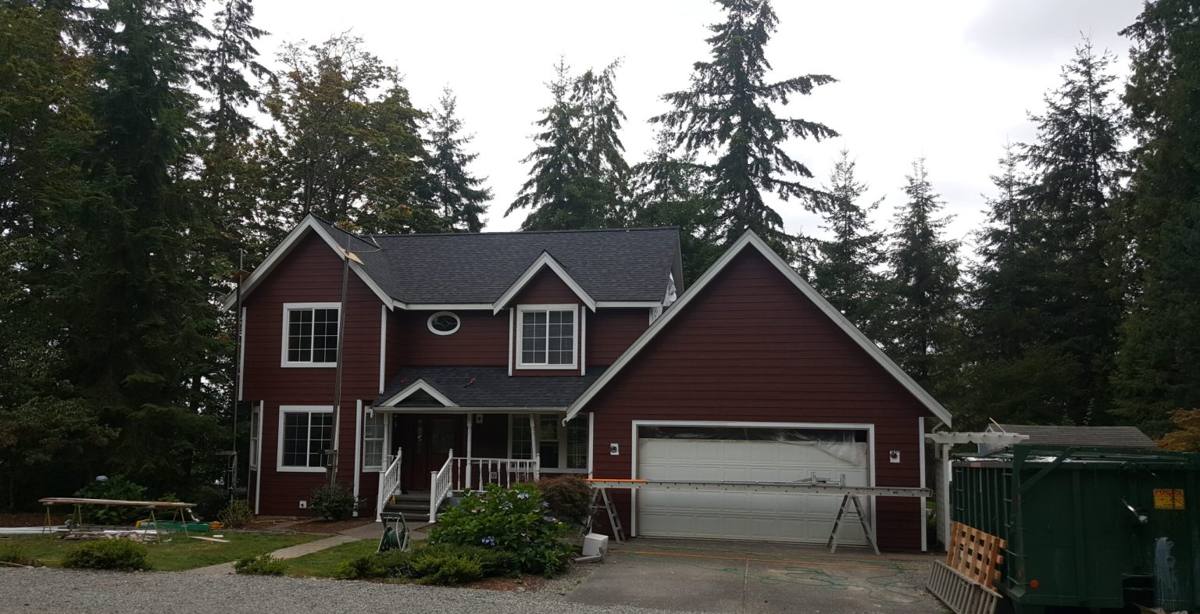
Why York's Older Homes Have Different Siding Needs
A lot of what we see on York service calls traces back to the age of the housing stock rather than anything specific to the original builder's workmanship. Homes from that era were sided with whatever was standard at the time — often wood lap siding, sometimes an aluminum or early vinyl re-side layered on top of it, sometimes composite products that have since been discontinued. None of those materials were built with today's understanding of moisture management, and decades of Whatcom County winters have a way of finding every weak point.
Shade and Moisture Retention
Mature trees are one of the best things about an older neighborhood and one of the harder things for siding to live with. A wall that's shaded most of the day dries out slower after rain, which is exactly the condition moss, algae, and mildew need to take hold. On a lot of York homes we've looked at, the north- and east-facing walls tucked under tree cover are visibly further along in wear than the sunnier sides of the same house.
Tight Lots and Access
Older in-town lots tend to be narrower and closer together than newer construction, with less clearance around the house for scaffolding, material staging, and equipment. That's a planning problem more than a technical one, but it's a real factor in how a York project gets scoped and sequenced compared to a job on a larger, more open lot.
Layered or Deferred Repairs
It's common on older homes to find a siding system that's been patched, partially re-sided, or had trim replaced piecemeal over the years. That history matters when we're scoping a new install, because it usually tells us where moisture has already gotten into the wall assembly, even if it isn't visible from the outside yet.
What the Local Climate Actually Does to Siding
It helps to be specific about the three things that do the most damage here, because they call for different responses in the installation.
Salt Air
Bellingham Bay puts a steady, low-level dose of salt-laden air into the atmosphere across much of the city, and York isn't far enough inland to be exempt from it. Salt exposure accelerates corrosion on unprotected metal fasteners and trim, and it speeds up fading and chalking on lower-quality or field-applied paint finishes over time.
Driving Rain
Whatcom County rain frequently comes in sideways on a west or southwest wind, which means it's hitting siding joints, window and door trim, and butt seams at an angle rather than sheeting straight down and off. Any gap in the weather-resistive barrier or flashing detail that would be a non-issue in a drier, calmer climate becomes a real entry point for water here.
A Long Moss Season
Cool temperatures, persistent moisture, and shaded surfaces add up to a moss and algae season that, on the wrong wall, barely stops. Moss holds moisture directly against the siding surface and, on materials that aren't dimensionally stable, can contribute to swelling, cracking, and paint failure over time.
Why James Hardie Is the Product We Put on These Homes
We made the decision some time ago to install James Hardie fiber cement exclusively rather than offering it alongside vinyl, LP SmartSide, or other engineered wood products, and a climate like Bellingham's is a big part of why. Hardie siding is non-combustible fiber cement, which doesn't warp, swell, or rot the way wood-based products can when they take on repeated moisture cycling. For the Pacific Northwest we install Hardie's HZ5 product line specifically, which is engineered for colder, wetter climate zones rather than a one-size-fits-all formulation.
Most Hardie siding we install comes with the factory-applied ColorPlus finish rather than a field-painted primed board. That finish is cured under controlled factory conditions instead of on a jobsite at the mercy of whatever the weather happens to be doing that week, which matters enormously in a region where a fully dry, calm painting window can be hard to find for weeks at a stretch. ColorPlus finishes are backed by their own finish warranty, separate from the substrate warranty on the board itself, and that combination is a big part of why we consider Hardie the right long-term investment rather than a product we'd need to caveat.
That's a standard we hold to based on what we've seen fail and what we've seen hold up over years of installs and repair calls in this exact climate — not a claim that no other product can ever perform adequately.
What a Correct Installation Involves
The material is only half the equation. A Hardie install done to spec in a climate like this has to get the details right, because the wall assembly behind the siding is what actually keeps water out.
Weather-Resistive Barrier and Flashing
A continuous, properly lapped weather-resistive barrier goes on before any siding, with flashing at every window, door, and horizontal trim transition installed to shed water down and out rather than trapping it behind the cladding. Given how much of Bellingham's rain arrives at an angle, flashing details around openings are one of the most common places we find problems on older homes we're asked to evaluate.
Fastening and Joint Treatment
Hardie specifies fastener type, spacing, and placement, and following that spec is what keeps the board performing as engineered rather than just as "siding that's nailed up." Butt joints get treated correctly rather than just caulked and hoped for, and corrosion-resistant fasteners matter more here than in a drier inland climate given the salt air exposure.
Clearances and Ventilation
Hardie siding needs proper clearance from grade, roof lines, decks, and other transitions, along with a drainage plane behind the siding that lets any moisture that does get in find its way back out rather than sitting against the wall. On older York lots where grading and landscaping have shifted over the decades, checking and correcting these clearances is often part of the job, not an afterthought.
Caulking Discipline
Caulk is a maintenance item, not a substitute for correct flashing and lap details. A wall that depends on a bead of caulk to stay dry is a wall that's going to leak the day that caulk fails, so we treat sealant as the last line of defense rather than the plan.
How We Approach a York Project
- On-site assessment: we look at the existing siding, trim, flashing, and any signs of past moisture intrusion, plus the site conditions specific to the lot — tree cover, grading, access.
- Scope and product selection: we walk through HZ5 lap, panel, or shingle profile options and ColorPlus color families, matched to the home's style and the wall orientations that get the most weather exposure.
- Tear-off and prep: old siding comes off, the sheathing underneath gets inspected for hidden rot or damage, and any necessary repairs happen before a single new board goes up.
- Weather barrier and flashing installation: the moisture-management layer goes in first, correctly lapped and sealed at every penetration.
- Hardie installation to manufacturer spec: fastening, joint treatment, and clearances installed to the standard Hardie's warranty actually requires, not just what's fast.
- Final inspection and walkthrough: we go over the finished job with the homeowner before calling it done.
Cost Factors on a York Siding Project
Every home is different, but a few factors consistently move the scope and cost of a Hardie project in an older, tree-covered neighborhood like York.
| Factor | Why It Matters Here |
|---|---|
| Existing siding and sheathing condition | Hidden moisture damage behind old wood or aluminum siding, common on older homes, adds repair scope before new siding goes on |
| Access and lot size | Tighter, tree-lined lots typical of York can affect staging, scaffolding, and how a project sequences around landscaping |
| Trim and detail complexity | Older architectural styles often have more window and trim detail than a simple modern facade, which adds labor |
| Product line and profile | HZ5 lap, panel, and shingle profiles carry different material costs and install time |
| ColorPlus vs. field-painted | Factory-finished ColorPlus boards typically cost more upfront than primed boards but remove field-painting labor and weather risk |
| Wall orientation and exposure | Walls with heavy shade or direct salt-air exposure may warrant extra attention to flashing and drainage detail |
Living With Hardie Siding in a Moss-Prone Neighborhood
Even the right material still needs basic upkeep, and in a neighborhood like York that's worth setting expectations on up front. Shaded, north-facing walls under mature trees will still collect moss and surface grime faster than sun-exposed walls, regardless of what siding is on the house. Hardie fiber cement doesn't rot or swell the way older wood siding did under that same buildup, but a gentle periodic wash — a soft-bristle brush and low-pressure rinse, not a pressure washer aimed point-blank at the boards — keeps the ColorPlus finish looking like it did on install day and keeps moss from getting a long-term foothold.
It's also worth keeping an eye on gutters, downspouts, and any spots where landscaping has grown in close enough to hold moisture against the wall, since those are the conditions that put the most sustained stress on any siding system, Hardie included.
A Quick Checklist Before You Hire
- Confirm the contractor is licensed and bonded to work in Washington and pulls the required City of Bellingham permit
- Ask whether they're a certified James Hardie installer, not just someone who occasionally installs it
- Ask how they handle flashing and the weather-resistive barrier, not just the visible siding
- Get specifics on which HZ5 profile and ColorPlus color or finish they're proposing and why
- Ask how they'll handle tree cover, tight access, and landscaping on your specific lot
- Get a clear, written scope that includes sheathing inspection and repair contingencies, not just a per-square-foot siding number
Why a Crew That Already Works York Matters
A contractor who's spent real time on York's older homes has already seen how this specific housing stock ages, what tends to be hiding behind the original siding, and how to plan around narrow lots and mature landscaping without it turning into a change order. They also know the practical side of working in an established Bellingham neighborhood — coordinating with neighbors on tight lots, protecting landscaping that's been growing for decades, and sequencing a job so a house isn't sitting open to Whatcom County weather any longer than it has to be.
None of that replaces getting the technical details right, but it does mean fewer surprises mid-project and a scope that reflects what your specific home actually needs rather than a generic estimate written without ever walking the lot.
If you're weighing a siding replacement on a York home, we're happy to walk the property, take a real look at what's currently on the walls, and put together a free, no-pressure estimate for a James Hardie install built for this exact climate.