 Bellingham
 Why South Hill Roofs Take a Different Kind of Beating
South Hill sits up above downtown Bellingham with views of the bay and Lummi Island, and that elevation and tree cover come with a trade-off: roofs up here deal with more shade, more standing moisture, and more wind exposure than roofs down in the flats. Add in the salt air drifting off Bellingham Bay, the long stretches of driving rain that come through Whatcom County from fall through spring, and a moss season that can run eight or nine months out of the year, and you've got a climate that is genuinely hard on asphalt shingles if the roof underneath them isn't built right.
None of this means asphalt shingle roofing is a bad choice for South Hill — it's still the most practical, cost-effective option for the vast majority of homes here. It means the installation details matter more in this neighborhood than they do in a drier climate, and cutting corners on underlayment, ventilation, or flashing shows up faster here than almost anywhere else in the county.
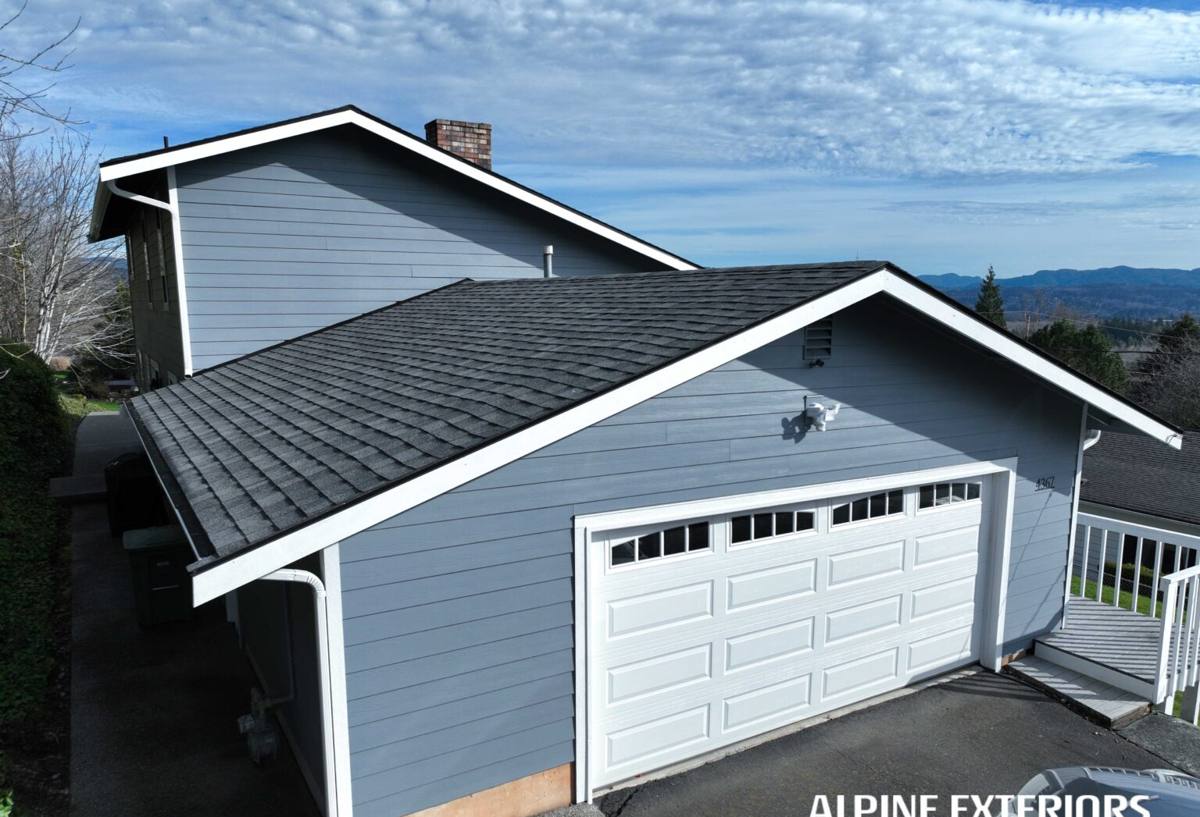
What a Correct Shingle Roof Needs in This Climate
Underlayment That Actually Sheds Water
A shingle roof is a system, not a single layer. Underneath the visible shingles, the underlayment and flashing are what actually keep a house dry during a hard, sideways Bellingham rainstorm. In areas prone to wind-driven rain and ice damming at the eaves, we use synthetic underlayment as the field material and self-adhered membrane at vulnerable points — eaves, valleys, and around penetrations — rather than relying on shingles alone to do the work.
Ventilation That Fights Moisture, Not Just Heat
Most homeowners think roof ventilation is about summer heat. In Whatcom County, it's just as much about controlling moisture. A poorly vented attic traps humid air against the underside of the roof deck, which accelerates rot, encourages moss and algae growth on the shingles above, and shortens the life of the roof from below while it still looks fine from the street. Balanced intake and exhaust ventilation is a basic requirement on every roof we install, not an upgrade.
Flashing at Every Transition
Chimneys, skylights, dormers, sidewall intersections, and roof valleys are where the majority of leaks actually start — not in the open field of shingles. Correctly formed and properly lapped metal flashing at each of these points is what separates a roof that holds up through a wet Whatcom County winter from one that starts showing stains on the ceiling by year three.
Moss: The South Hill-Specific Problem
Moss deserves its own section because it's the single biggest complaint we hear from South Hill homeowners, more than from clients in sunnier, more open parts of Bellingham. The combination of shade from mature trees, north-facing slopes, and near-constant moisture gives moss exactly what it needs to take hold. Left alone, moss doesn't just look bad — it lifts shingle edges, holds water against the roof deck, and works its way under the shingle tabs over a few seasons, which is how a cosmetic issue turns into a structural one.
A correct installation reduces how fast moss comes back, but it doesn't eliminate the need for maintenance on a shaded South Hill lot. We talk homeowners through realistic expectations up front rather than promising a moss-free roof, because that promise wouldn't be honest in this climate.
Signs Your South Hill Roof Needs a Look
- Moss or dark streaking concentrated on the shaded, north-facing slopes of the roof
- Granules collecting in gutters or at the base of downspouts
- Shingle tabs that are curling, cupping, or lifting at the edges
- Soft spots or sagging when walked on, or visible dips from the ground
- Daylight visible through the roof deck from inside the attic
- Water stains on interior ceilings, especially near chimneys, skylights, or valleys
- Missing or damaged shingles after a windstorm
- Flashing that's rusted, cracked, or pulling away from a chimney or wall
Shingle Options and What We Recommend for This Climate
Not every shingle product is built the same way, and in a wet, moss-prone climate like South Hill's, the differences matter more than they would somewhere drier. Here's how the common tiers compare for a Whatcom County home.
| Shingle Type | Typical Lifespan Here | Moss/Algae Resistance | Best Fit |
|---|---|---|---|
| 3-tab (economy) | 15–20 years | Lower unless AR-rated | Budget-driven projects, rentals |
| Architectural / dimensional | 25–30 years | Good with algae-resistant (AR) granules | Most South Hill homes — best balance of cost and durability |
| Premium / designer | 30+ years | Very good with AR granules | Higher-visibility homes, steeper or more complex rooflines |
For most South Hill homes, we recommend a mid-to-upper architectural shingle with algae-resistant (AR) granules as the honest middle ground: meaningfully better moss and streak resistance than an economy 3-tab, without paying premium prices for features a typical roofline doesn't need. We'll walk through the real trade-offs — upfront cost, expected lifespan, and warranty terms — for your specific roof rather than defaulting to the most expensive option.
How We Approach a South Hill Roofing Project
Inspection and Honest Assessment
Every project starts with a real inspection of the roof deck, ventilation, flashing, and existing shingle condition — not just a drive-by estimate. If your roof only needs isolated repair rather than a full replacement, we'll tell you that.
Tear-Off Done Right
We remove old shingles down to the deck rather than layering new shingles over old, which lets us check the deck itself for rot or soft spots before anything new goes down — a step that's easy to skip and hard to catch once the new roof is on.
Deck Repair Before Cover-Up
Any soft or damaged decking gets replaced before underlayment goes down. Installing new shingles over a compromised deck is one of the most common shortcuts in this trade, and it's one we won't take.
Weather-Timed Scheduling
Whatcom County's wet season means timing matters. We schedule tear-offs around forecasted dry windows and keep the roof deck protected with underlayment as soon as it's exposed, so an open roof is never left unprotected overnight.
Cleanup and Final Walkthrough
We clear debris and stray nails from the yard and gutters, and walk the finished roof with you before calling the job done.
Repair, Overlay, or Full Replacement?
Not every South Hill roof needs a full tear-off. The right call depends on the age of the roof, how widespread the damage is, and what's happening at the deck level underneath.
| Situation | Likely Approach | Why |
|---|---|---|
| Isolated leak, roof under 10–12 years old | Targeted repair | Deck and shingle field are typically still sound |
| Widespread granule loss, curling, moss damage | Full replacement | Underlayment has likely reached the end of its useful life |
| Roof deck shows rot or soft spots | Full replacement with deck repair | Covering damaged decking doesn't fix the underlying problem |
| Cosmetic wear only, structure sound | Repair or partial re-shingle | No need to replace a roof that's still doing its job |
Why a Crew That Already Works South Hill Matters
Roofing looks straightforward from the ground, but the details that actually determine how long a roof lasts — how much ventilation a given attic layout needs, how to flash a valley that channels heavy runoff, how a north-facing slope under mature trees will behave differently than a south-facing one on the same house — come from doing this work repeatedly in this specific neighborhood, not from a generic install checklist. A crew that already knows South Hill's rooflines, tree cover, and drainage patterns catches problems a one-time crew from outside the area might miss.
Local also means accountability. We're not driving in from out of town for one job and disappearing — we're a Bellingham-based crew, and if something needs a follow-up look after the next storm, we're close enough to actually show up.
Permits, Code, and Doing It the Right Way
Roof replacement in Bellingham and unincorporated Whatcom County typically requires a permit, along with compliance with current building code for ventilation, ice barrier placement, and fastening schedules. We handle the permitting process as part of the job rather than treating it as optional paperwork, because a roof installed outside code can create real problems at resale or insurance claim time down the road.
Get a Straight Answer for Your South Hill Roof
If you're not sure whether your roof needs a repair, a partial re-shingle, or a full replacement, that's exactly the kind of question worth getting answered in person rather than guessing from the ground. We offer free, no-pressure estimates for South Hill homeowners — use the form below and we'll take a look and give you an honest read on where your roof actually stands.