 Bellingham
 Composite Decking Built for Blaine's Waterfront Climate
Blaine sits right on the water at the northern edge of Whatcom County, and that location shapes everything about how a deck ages here. Homes close to the shoreline deal with salt-laden air, near-constant winter rain blowing in off the water, and long stretches of gray, damp weather that keep everything outdoors wet longer than homeowners further inland ever have to deal with. A deck built without that environment in mind will show it within a few seasons — soft spots, streaking, moss creeping into every shaded corner, and hardware that rusts faster than it should.
Composite decking has become the go-to material for Blaine homeowners who want a deck that holds up to marine exposure without the annual maintenance cycle wood demands. But composite isn't maintenance-free just because the brochure says so, and it isn't installed the same way everywhere. A deck built for a dry inland yard needs different attention to drainage, ventilation, and fastening than one built two blocks from Drayton Harbor or Semiahmoo Bay. This page covers what that actually means for a Blaine install.
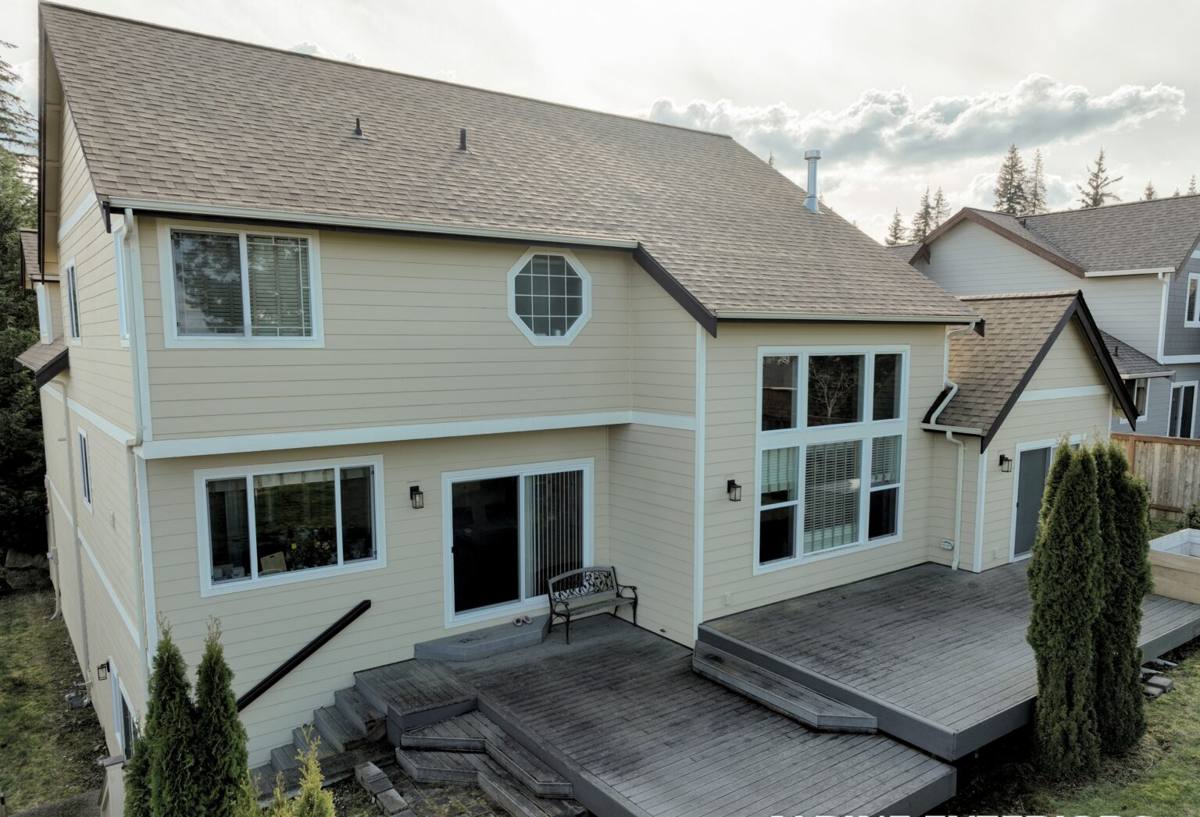
What Blaine's Weather Does to a Deck Over Time
Three things drive most of the deck problems we see in this part of Whatcom County, and they compound each other:
Salt Air
Airborne salt from the bay accelerates corrosion on any exposed metal — screw heads, joist hangers, railing brackets, post bases. Standard zinc-coated fasteners that would last decades in Sumas or Deming can start rusting within a few years on a waterfront lot in Blaine. It also dulls and etches finishes on materials that aren't rated for coastal exposure.
Driving Rain
Whatcom County gets a lot of rain generally, but Blaine's exposure to wind off the water means rain often comes in sideways rather than straight down. That drives moisture into places a typical deck design assumes stay dry — under rail posts, behind fascia boards, into end grain at board cuts. Any gap in flashing or any place water can pool instead of shed becomes a long-term rot or mold risk.
Moss and Algae Season
Shaded, damp surfaces in this climate grow moss for most of the year, not just a few weeks. On a wood deck that means slippery, degrading boards. On composite, it means the surface texture and drainage gaps matter — a board with poor water-shedding grooves holds organic growth longer and needs more scrubbing to keep clean and safe underfoot.
What a Correct Composite Deck Install Involves
Composite boards themselves are engineered to resist rot and don't need staining or sealing, which is exactly why they're popular here. But the composite decking itself is only part of the system. Most of the problems we get called out to fix on "composite decks that failed" actually trace back to the substructure, fasteners, or drainage details underneath — not the boards.
Substructure and Framing
Joists and beams still need to be pressure-treated lumber rated for ground contact where applicable, and in a marine climate we pay extra attention to joist tape or a comparable flashing membrane over the top of every joist. That strip keeps rainwater that gets through the board gaps from sitting directly on cut lumber, which is one of the most common hidden rot points on any coastal deck, composite surface or not.
Fasteners and Hardware
Given the salt exposure, we spec stainless steel or heavy-duty coated fasteners and structural hardware rated for coastal or exterior use rather than standard-grade hardware. It costs more up front. It also means the ledger bolts, joist hangers, and hidden fastener clips holding the deck together aren't the first thing to fail.
Drainage and Airflow
Composite decks need airflow underneath to stay dry, especially low decks close to grade or decks over a patio. We check that the space under the deck can actually vent and shed water — proper joist spacing, gaps at the perimeter, and grading underneath that moves water away rather than trapping it against the underside of the boards. A deck that traps damp air underneath is a deck that grows mold and mildew on the underside of boards year-round in this climate, whether or not it's visible from above.
Ledger and House Connection
Where the deck attaches to the house, proper flashing is non-negotiable in a climate with this much wind-driven rain. A poorly flashed ledger board is one of the most common sources of hidden water intrusion into a home's rim joist and framing — a problem that can go unnoticed for years until there's real structural damage.
Composite vs. Other Decking Materials for a Waterfront Property
| Material | Salt Air Performance | Moss/Algae Resistance | Maintenance |
|---|---|---|---|
| Composite (capped) | Strong — won't corrode or rot; hardware still needs to be coastal-rated | Good; textured boards resist growth better than smooth wood, still needs periodic cleaning | Occasional wash; no staining or sealing |
| Pressure-treated wood | Fair; treatment resists rot but fasteners and finish degrade faster near salt air | Poor; grows moss quickly in shade, needs regular treatment | Annual staining/sealing, regular cleaning |
| Cedar | Fair; natural rot resistance but finish and color fade quickly in marine sun/salt exposure | Poor to fair depending on finish upkeep | Frequent sealing, higher long-term cost |
| PVC decking | Strong; fully synthetic, doesn't corrode | Good, similar to composite | Low; can expand/contract more with temperature swings |
We install composite because for most Blaine homeowners it hits the best balance of low upkeep, coastal durability, and appearance without the cost premium of full PVC systems or the recurring labor of a wood deck. We're honest that it isn't the cheapest option up front compared to treated lumber — but the maintenance savings over a wood deck's life in this climate usually make up the difference within a handful of years.
Our Process
- Site assessment — we look at sun/shade exposure, proximity to the water, existing drainage and grading, and the condition of any structure we're building onto or replacing.
- Framing and structural work — footings, ledger attachment, joists, and hardware sized and rated for the load and the coastal environment.
- Moisture management — joist tape, ledger flashing, and drainage detailing installed before a single composite board goes down.
- Composite installation — board layout planned for drainage and airflow, hidden fastener systems installed to manufacturer spec to protect the warranty.
- Finish and inspection — railing, fascia, stairs, and a final walkthrough so you understand what maintenance the deck actually needs going forward.
Cost Factors for a Composite Deck in This Area
| Factor | Why It Matters Here |
|---|---|
| Deck size and layout | Straightforward rectangular decks cost less per square foot than multi-level or wraparound designs |
| Substructure condition | Waterfront lots more often need footing or framing repair due to age and moisture history |
| Hardware grade | Coastal-rated stainless fasteners and hardware cost more than standard grade but are worth it near the water |
| Railing and stairs | Composite or metal railing systems add cost but reduce long-term upkeep versus wood rail |
| Board tier | Composite lines range from base capped boards to premium multi-tone lines with better fade and stain resistance |
We'll walk through these factors specifically for your property and give you real numbers rather than a vague estimate — every deck and every lot here is a little different.
Maintaining a Composite Deck in a Marine, Moss-Prone Climate
Composite is low-maintenance, not no-maintenance. In Blaine's climate, a little regular attention goes a long way toward keeping the deck looking good and staying safe underfoot:
- Sweep debris and standing organic matter off the boards regularly, especially in shaded areas under trees or overhangs
- Wash the deck surface a few times a year with soap and water or a composite-safe cleaner to keep moss and algae from taking hold
- Check the gap between boards periodically for trapped debris that holds moisture against the board edges
- Inspect railing posts and hardware yearly for any early signs of corrosion, especially on decks closest to the water
- Keep gutters and downspouts near the deck clear so runoff isn't draining directly onto or under the deck surface
- Confirm under-deck ventilation stays clear of stored items, plants, or debris that block airflow
Why Hire a Crew That Already Works Blaine
A lot of the difference between a composite deck that looks good for twenty years and one that needs early repairs comes down to decisions made before the first board is installed — fastener grade, flashing details, framing choices — decisions that depend on understanding the specific conditions a property faces. A crew that regularly works waterfront and near-coastal properties in Whatcom County already knows which details matter here and doesn't have to learn it on your project. We've built decks that deal with this exact combination of salt air, driving rain, and moss, and we bring that experience to every estimate, not just the install.
If you're planning a new composite deck or replacing an aging one, we'd be glad to take a look and put together a straightforward, no-pressure estimate. Fill out the form below and we'll get in touch to schedule a time to assess your property.