 Bellingham
 Storm Damage Roof Repair for Barkley Homes
Barkley sits a little differently than a lot of Bellingham neighborhoods — it's a newer planned community with a mix of single-family homes, townhomes, and mature landscaping close to the greenbelt and golf course area near Lake Whatcom's foothills. That mix of tree cover, open lots, and closer proximity to the hills changes how storms hit a roof here compared to, say, a flat lot downtown or a wind-exposed property closer to Bellingham Bay. Wind funnels differently around the tree lines, shaded roof sections stay wet longer, and debris from taller trees is a bigger factor than it is in more open parts of the city.
When we get called out to Barkley after a wind event or a hard rain stretch, we're usually looking at a specific pattern: wind-lifted shingles or ridge caps on the exposed sides of a roof, granule loss and soft spots where water has been sitting under debris, and moss intrusion at the north-facing slopes that never fully dry out between storms. None of that is unique to Barkley, but the combination — tree debris plus shaded, slow-drying roof sections — shows up here more consistently than in more exposed Bellingham neighborhoods.
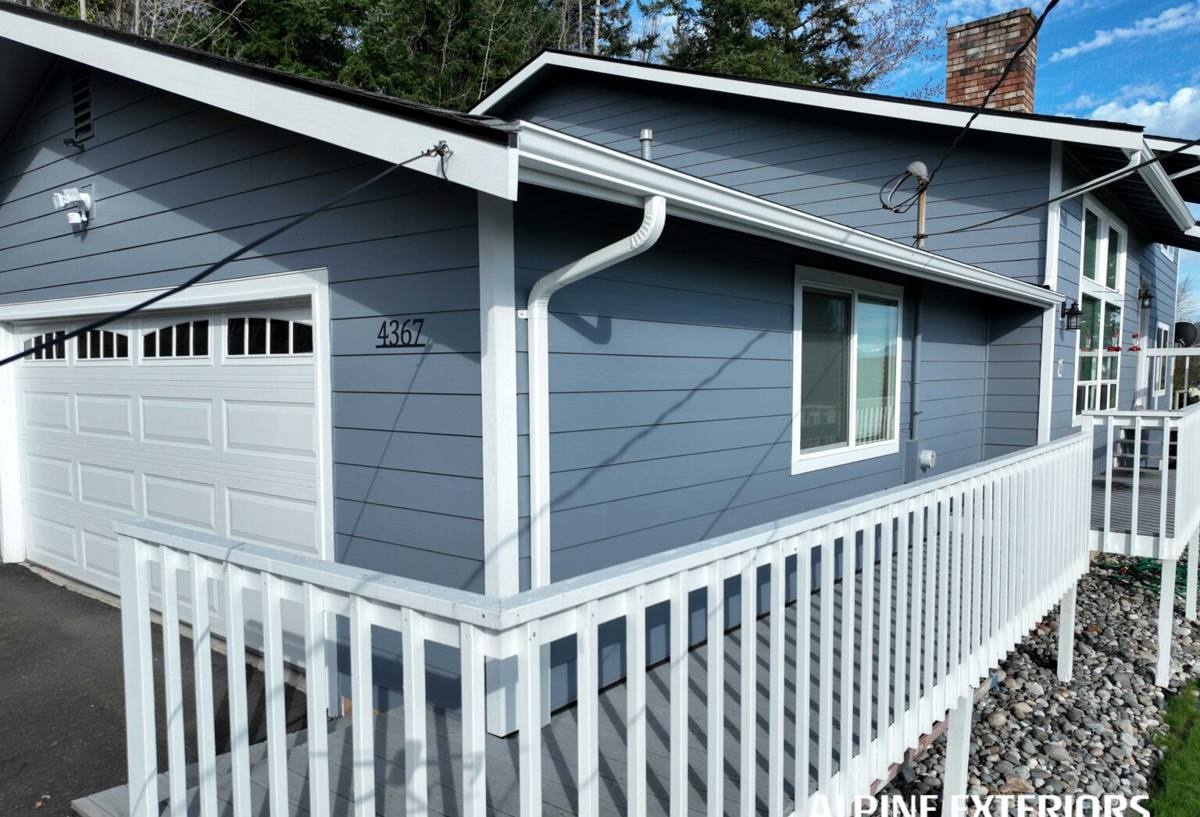
How Whatcom County Weather Wears Down a Roof
Whatcom County roofs deal with a slower, more grinding kind of wear than roofs in drier climates. It's rarely one catastrophic storm that causes the damage — it's the accumulation of several factors working on the roof at once, month after month.
Salt Air
Bellingham's proximity to the bay means metal roofing components, flashing, fasteners, and gutter systems take on slow corrosion over the years, even for homes that aren't right on the water. Barkley isn't waterfront, but it's close enough that salt-influenced air still plays a role in how fast exposed metal ages compared to homes further inland or east of the county.
Driving Rain
Wind-driven rain doesn't behave like a straight-down downpour. It gets pushed sideways under shingle tabs, around flashing edges, and into any gap that a calm-weather rain would never reach. A roof that's been fine for years can suddenly show a leak the first time a storm brings rain in sideways instead of straight down — usually because a weak point (a lifted shingle, aging flashing, a nail that's backed out) was already there, just never tested until that wind direction hit it.
Moss Season
Whatcom County's moss season is long — realistically, most of the fall through spring stretch gives moss the moisture and mild temperatures it needs to establish. Shaded slopes, north-facing sections, and anywhere debris collects are the first spots to show growth. Moss isn't just cosmetic: it holds moisture against the roofing material, works its way under shingle edges as it grows, and can lift tabs enough that wind and rain get underneath far more easily than on a clean roof.
Signs Your Barkley Home May Have Storm Damage
Most storm damage isn't obvious from the ground, and a lot of homeowners don't notice anything until there's an active leak inside. Here's what we'd tell a Barkley neighbor to check after a wind event or a stretch of hard rain:
- Shingles that look curled, lifted at the edges, or visibly out of line with the surrounding roof plane
- Granules collecting in gutters or at the base of downspouts — a sign of accelerated wear on asphalt shingles
- Visible gaps or missing pieces of ridge cap, especially along the roof's highest, most wind-exposed line
- Soft or spongy feeling decking near roof edges or valleys (best checked by a roofer, not by walking the roof yourself)
- New or spreading moss patches, especially on shaded or north-facing slopes
- Water stains on interior ceilings or in the attic, even faint or old-looking ones
- Bent, loose, or disconnected gutters and downspouts after a windy stretch
- Debris — branches, needles, leaf mats — built up in valleys or against chimneys and vents
If you're seeing more than one of these, it's worth having someone look before the next storm rolls through, not after.
What a Correct Storm Damage Repair Actually Involves
A proper storm repair isn't just replacing whatever shingles are obviously missing. That approach leaves the underlying cause — and often a second weak point nearby — unaddressed, and the same section fails again in the next storm. A repair done right includes:
- Full-roof inspection, not just a look at the damaged spot — wind damage rarely stays isolated to one area
- Decking check under any area with soft spots, staining, or missing shingles, since water damage to the deck itself changes the scope of the repair
- Flashing evaluation at chimneys, vents, skylights, and valleys — these are the most common places driving rain finds its way in, even when the shingles themselves look fine
- Matching materials as closely as possible to the existing roof, both for appearance and so the repaired section ages at the same rate as the rest of the roof
- Moss and debris removal from the whole roof, not just the repair area, so growth already established elsewhere doesn't undermine the new work
- Gutter and drainage check, since a roof repair paired with a clogged or damaged gutter system just relocates the water problem
Our Process for Barkley Storm Repairs
- Inspection and documentation. We walk the full roof (not just the reported problem area), photograph findings, and note anything that's a near-term concern even if it's not causing an active leak yet.
- Written scope and honest options. We explain what's storm damage versus what's pre-existing wear, and what a repair covers versus what would need a larger fix. No pressure toward replacement if a repair genuinely solves the problem.
- Insurance-ready paperwork if you're filing a claim — dated photos, a clear description of the damage, and documentation your adjuster can actually use.
- The repair itself — matched materials, proper flashing work, and moss/debris clearing as part of the job, not an upsell.
- Final walkthrough so you can see what was done and ask questions before we consider the job finished.
Repair vs. Replace: What Drives the Decision
Not every storm-damaged roof needs to be replaced, and not every roof can be safely patched. The honest answer depends on a handful of factors:
| Factor | Leans Toward Repair | Leans Toward Replacement |
|---|---|---|
| Roof age | Under 15 years, otherwise healthy | Nearing or past expected lifespan for its material |
| Damage extent | Isolated to one or two sections | Spread across multiple slopes or the whole roof |
| Decking condition | Solid, no rot found | Soft, delaminated, or water-damaged decking |
| Moss/growth history | Recent, surface-level growth | Long-term moss with shingle lifting underneath |
| Material availability | Matching shingles still available | Discontinued color/style, visible patch mismatch |
We'll always tell you which side of that table your roof lands on, and why — including if that means telling you a repair is the right call even though a replacement would be a bigger job for us.
Insurance Claims for Storm Damage
If a storm has caused enough damage that you're considering a claim, documentation is what makes or breaks how smoothly it goes. We provide dated photos, a written description of the damage tied to the storm event, and a repair estimate an adjuster can work from. We're not a public adjuster and we won't promise a claim outcome — but we'll give you paperwork that reflects exactly what we found, which is the best position to be in when you're talking to your insurance company.
Why It Matters That We Already Work in Barkley
A crew that's already familiar with Barkley's layout — the mix of home ages, the tree cover near the greenbelt and golf course, the roof lines common to the neighborhood's newer construction — can move faster and diagnose more accurately than someone seeing the area for the first time. We know which slopes in this part of Bellingham tend to hold moisture longest, which roof styles here are more prone to wind-lift at the ridge, and what "normal wear" looks like on a Barkley roof versus what's genuinely storm damage. That local pattern recognition means fewer surprises once we're up on the roof, and a scope of work that's accurate the first time.
Get a Free Storm Damage Assessment
If a recent storm has you wondering about your roof, or you just want a second set of eyes before the next one hits, we're glad to take a look. The estimate is free, there's no pressure to move forward, and you'll get a straight answer about what — if anything — needs attention. Fill out the form below to get started.