 Bellingham
 Siding Repair Built for Puget's Climate
Homes in the Puget area of Bellingham sit close enough to the water and the tree line that their siding takes a different kind of beating than a house further inland. Salt-laden air off the Sound works into seams and fastener heads. Driving rain off Whatcom County's frequent storms pushes water sideways into laps and trim joints that were never meant to see standing moisture. And the long, damp moss season — stretching from fall through spring here — gives organic growth months to root into anything porous enough to hold it. Siding repair in this neighborhood isn't just patching a hole. It's understanding which failures are cosmetic and which ones are early warnings that water has already found its way behind the cladding.
We've worked on siding across Bellingham long enough to know that a repair approach that works on a dry, sheltered lot on the east side of town doesn't always hold up on a Puget-area home exposed to wind off the water. The materials, the flashing details, and the sequencing all need to account for what this specific microclimate does to a wall system over time.
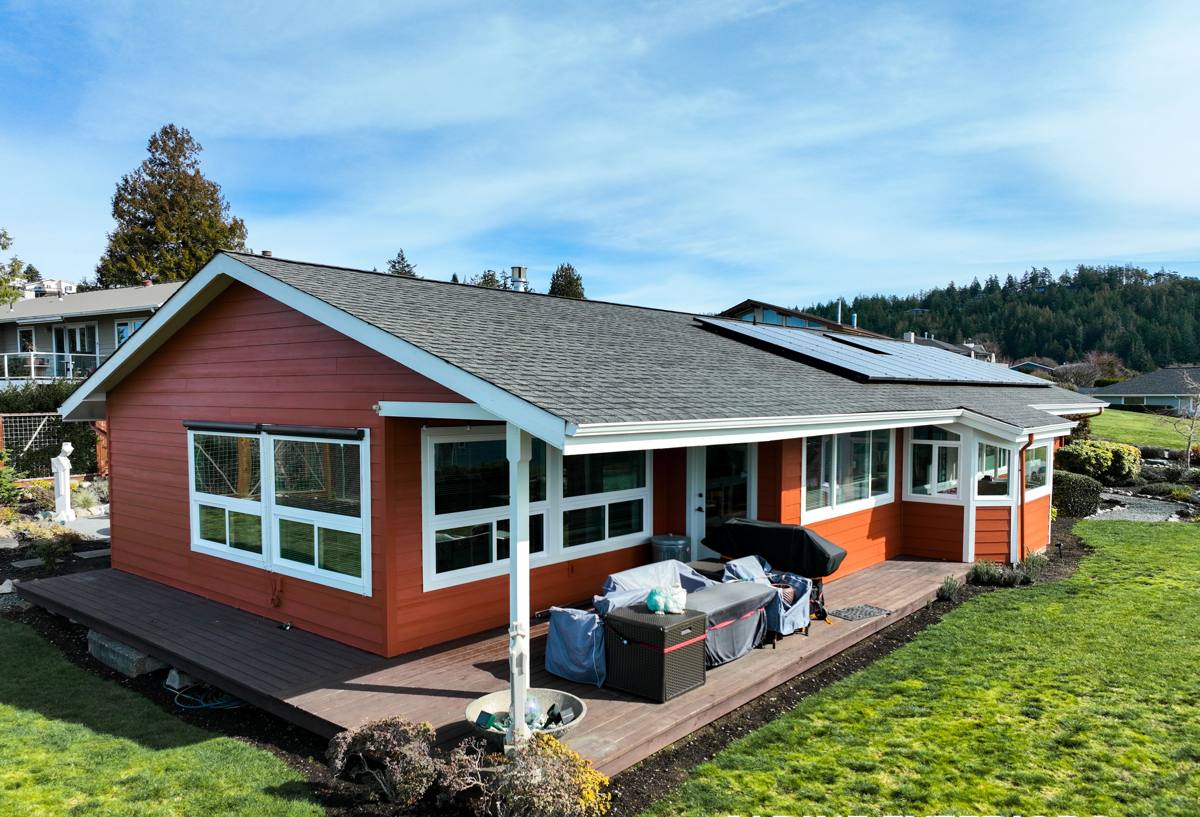
What Salt Air, Rain, and Moss Actually Do to Siding
Salt Air
Airborne salt is corrosive to exposed metal — nail heads, flashing, and any fasteners that weren't set below the surface or properly caulked. Once a fastener starts to corrode, it loses its grip, and a siding panel that was flush and sealed starts to work loose. Salt exposure also accelerates the breakdown of lower-grade paint finishes, which is part of why factory-applied, baked-on finishes hold up better here than field-applied paint that has to fight salt film every season.
Driving Rain
Wind-driven rain doesn't just fall on siding — it gets pushed sideways and upward into laps, corners, and butt joints. A siding system that relies on caulk alone to keep water out, rather than proper lap geometry and flashing, will eventually let moisture in. Once water gets behind the cladding on a Puget-area home, it often doesn't dry out quickly, because the same coastal humidity that brings the rain also slows evaporation.
Moss and Organic Growth
Moss needs shade, moisture, and time — and this neighborhood gives it all three for a good stretch of the year. Moss itself doesn't eat through fiber cement, but it holds water against the surface far longer than bare siding would dry on its own, and it tends to establish first in the gaps, seams, and rough-cut edges where a repair was done sloppily or where caulk has failed. Left unaddressed, chronic moss buildup is usually a sign that a section of siding isn't shedding water the way it should.
Signs Your Puget-Area Home Needs Siding Repair
- Soft, spongy, or visibly swollen panels, especially near the bottom courses or below windows
- Persistent moss or algae staining that comes back within weeks of cleaning
- Cracked, split, or buckled boards, particularly around corners and butt joints
- Nail heads that have backed out, rusted, or left dark streaks running down the panel
- Caulk that has shrunk, cracked, or pulled away from trim and window edges
- Peeling or bubbling paint that keeps recurring in the same spots
- Soft trim or fascia boards where siding meets the roofline or foundation
- Interior signs — musty smell, discoloration on drywall, or bubbling paint on an exterior-facing wall
Any one of these can be minor. Several showing up in the same area of the house, especially on a wall that faces prevailing wind and rain, usually means water has been getting in for a while.
What a Correct Repair Actually Involves
A repair that only replaces the visible damaged board and stops there is a repair that's likely to fail again. Doing it right means treating the damaged area as a window into the wall assembly behind it, not just a cosmetic patch.
Diagnose Before Cutting
We start by figuring out why that section failed — a missing kick-out flashing, a caulk joint that was never sealed correctly, a fastener pattern that left the panel loose enough to flex and crack. Replacing the board without fixing the cause just resets the clock on the same failure.
Check the Water-Resistive Barrier
Once panels come off, we look at the house wrap or building paper underneath. If it's torn, improperly lapped, or missing at a seam, that gets corrected before anything new goes back on. This step matters more on Puget-facing walls than almost anywhere else in Bellingham, because those walls see the most direct, sustained moisture load.
Match Flashing to the Actual Exposure
Window heads, deck ledgers, and horizontal trim all need flashing detailed for driving rain, not just vertical rainfall. A repair that reuses undersized or missing flashing in a high-exposure area is a repair that will need to be redone.
Use Material That Matches the Original — or Upgrade It
Where possible, we match existing siding profile and reveal so a repair blends in rather than standing out as an obvious patch. Where the original material is the reason for the failure — swollen composite trim, cracked vinyl, or checked wood siding — we'll talk through replacing that section with James Hardie fiber cement instead of simply repeating the same product that failed the first time.
Repair vs. Replacement: How We Help You Decide
| Factor | Repair Usually Makes Sense | Replacement Usually Makes Sense |
|---|---|---|
| Extent of damage | Isolated to one or two wall sections | Recurring failures across multiple elevations |
| Age of siding | Siding is within its expected service life | Siding is past its practical lifespan or discontinued |
| Underlying material | Fiber cement or sound wood with a localized failure | Vinyl, LP SmartSide, or wood showing systemic moisture damage |
| Water-resistive barrier condition | Intact aside from the repair area | Torn, degraded, or improperly installed across large sections |
| Moss/algae pattern | Localized to shaded or low-airflow spots | Widespread, chronic regrowth across most elevations |
| Budget timeline | Homeowner wants to extend current siding a few more years | Homeowner is planning a longer-term exterior upgrade |
We'll always give you an honest read on which side of that table your home falls on. Sometimes a targeted repair is the right call and full replacement would be overkill. Other times, the damage pattern tells us the whole system is nearing the end of its useful life, and putting more money into repeated patch jobs isn't the best use of your budget.
Our Repair Process
- On-site inspection. We walk the exterior, focusing on wind- and rain-exposed elevations, and identify every area showing damage or early signs of water intrusion — not just the spot you called about.
- Diagnosis and plan. We explain what we found, what likely caused it, and whether repair or a larger replacement scope makes sense — in plain language, with photos where useful.
- Careful removal. Damaged panels and trim come off without disturbing more of the surrounding assembly than necessary, so we can inspect the barrier and framing underneath.
- Correct the cause. Flashing, house wrap, and fastening issues get fixed before any new material goes back on — this is the step that determines whether the repair actually lasts.
- Reinstall with matched or upgraded material. We restore the wall with product that fits the original look or, where it makes sense, with James Hardie fiber cement in a matching profile and factory finish.
- Final check. We walk the finished area with you, confirm the repair is sealed and finished correctly, and flag anything nearby worth watching.
Why We Repair With James Hardie
When a repair calls for new siding material rather than reusing what's already there, we use James Hardie fiber cement — it's the only siding product we install, on repairs and full replacements alike. In a climate that cycles between salt air, sustained rain, and long stretches of shade and moisture, fiber cement holds its shape and resists moisture-driven swelling and rot better than wood or vinyl-based composites. Hardie's factory-applied ColorPlus finish is baked on rather than field-painted, which matters directly for repair work: a patched section finished with ColorPlus-matched material blends into surrounding siding and weathers at the same rate, instead of aging differently and standing out a year or two later. It's also non-combustible, which is a meaningful, unrelated bonus for homeowners further from hydrant coverage.
We won't tell you every repair needs to become a full Hardie conversion — plenty of jobs are legitimately a targeted fix. But when the existing material is part of the reason a section failed, we'll say so and explain the trade-off honestly rather than just reinstalling the same product.
Why Hiring a Crew That Knows Puget Matters
A siding contractor who mostly works dry, sheltered neighborhoods can still do competent work — but they may not automatically account for wind-driven rain patterns, salt exposure, or the specific spots on a Puget-area home where moss takes hold fastest. Details like where kick-out flashing is non-negotiable, how tight fastener schedules need to be near the water, and which corners of a house need extra attention because of prevailing wind direction come from having actually repaired siding on homes in this exact area — not from a general checklist. Bellingham and Whatcom County's coastal exposure isn't uniform street to street, and a crew that already knows this neighborhood's failure patterns will spend less of your money chasing the wrong cause.
Get an Honest Look at Your Siding
If you're seeing moss that keeps coming back, boards that feel soft, or caulk lines that keep failing, it's worth getting eyes on it before the damage spreads further into the wall. We offer free, no-pressure estimates for siding repair in the Puget area — we'll tell you straight whether it's a simple fix or something bigger, with no obligation either way. Use the form below to get started.