 Bellingham
 Why Birch Bay Windows Wear Out Differently
Birch Bay sits right on the water, and that changes what a window has to survive. Homes a few miles inland in Bellingham deal with plenty of rain, but Birch Bay adds salt-laden air, more direct wind exposure off the bay, and long stretches of damp weather that never fully dry out between storms. Windows here don't just need to look good and keep heat in — they need to shrug off corrosion, resist wind-driven rain at the seams, and keep working season after season without the frame, hardware, or glass seals breaking down early.
A window that performs fine in a sheltered neighborhood can fail years ahead of schedule on a Birch Bay lot with open water views. That's the gap we're addressing on this page: what actually holds up out here, and what a correct installation looks like when the climate isn't being gentle with your house.
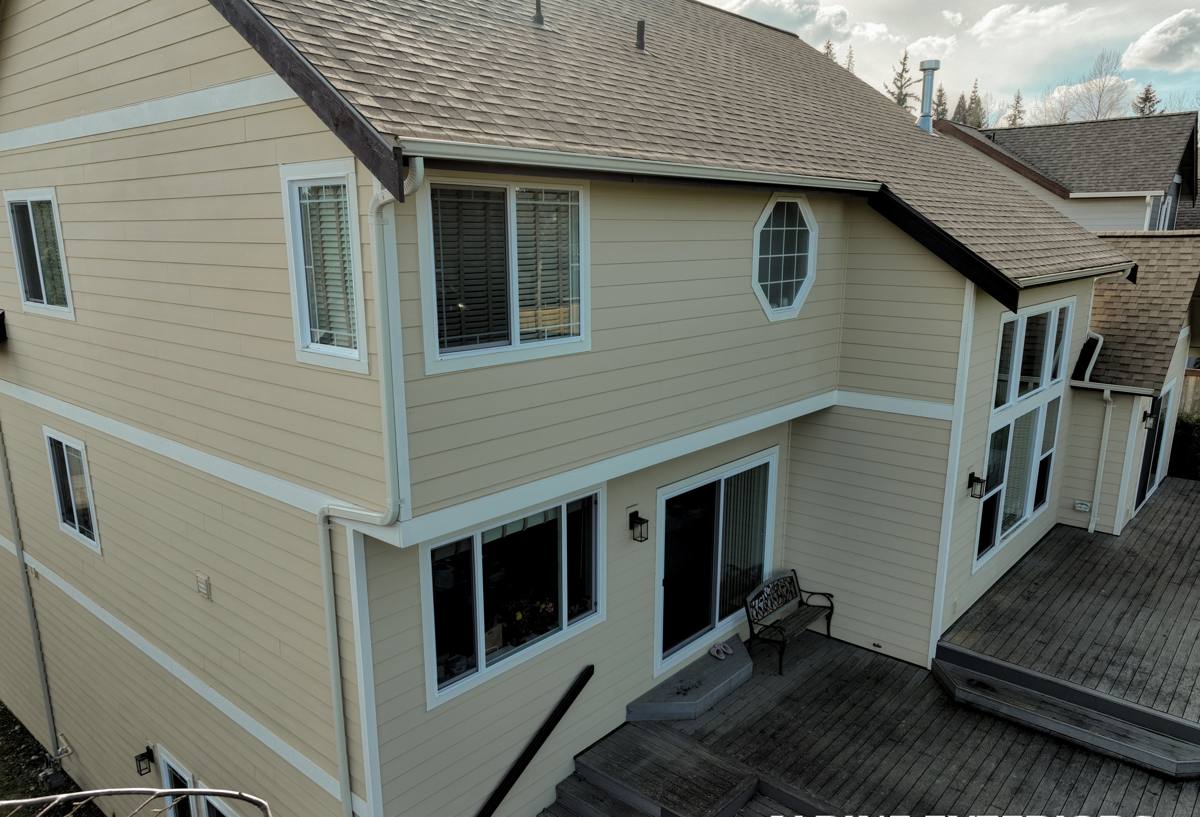
What the Coastal Climate Actually Does to a Window
Salt Air and Hardware Corrosion
Airborne salt accelerates corrosion on anything metal — hinges, locks, balance systems, screws, and even some lower-grade aluminum spacers inside the glass unit. On a standard inland install, cheap hardware might last the life of the window. On a Birch Bay home, it can start pitting, sticking, or seizing years sooner. This is one of the biggest differences between a window that's "rated for coastal use" on paper and one that's actually been detailed for salt exposure with corrosion-resistant hardware and finishes.
Driving Rain and Water Intrusion
Wind off the water pushes rain sideways, not straight down. That matters because most window leaks aren't glass failures — they're flashing failures, where wind-driven water gets behind the trim or siding at the window opening and finds a path inward. A window can be excellent and still leak if it wasn't flashed and sealed correctly for a wall that regularly takes rain at an angle instead of falling straight off the roofline.
Moss, Moisture, and a Long Wet Season
Whatcom County's wet season runs long, and Birch Bay's humidity stays elevated even between storms. That combination feeds moss and mildew growth on trim, sills, and anywhere water sits instead of draining. It also means any gap in a window's air or moisture seal has more months of the year to cause condensation, fogging, or slow rot in the surrounding wood — problems that show up gradually and get expensive if they're ignored.
What "Energy-Efficient" Really Means Here
U-Factor Matters More Than Solar Heat Gain
A lot of window marketing leans on solar heat gain coefficient (SHGC), which is about blocking summer sun — a bigger deal in hot, sunny climates. In Bellingham and Birch Bay, the bigger cost driver is heat loss during our long heating season. That makes U-factor — how well the window resists heat flow overall — the number worth paying attention to. A low U-factor window keeps the heat you're paying for inside the house instead of leaking out through the glass and frame.
Air Infiltration Is a Coastal-Specific Concern
Wind exposure on a bayfront or near-water lot means more sustained pressure against your windows during storms. A window with a poor air infiltration rating will let more of that wind-driven air (and the cold that comes with it) through the frame, even if the glass itself is well-rated. We look at the whole NFRC label — U-factor, air leakage, and condensation resistance — not just one number, because on an exposed Birch Bay wall, all three matter.
Frame and Glass Options for a Salt-Air Climate
There's no single "best" window material for every house — it depends on your home's style, budget, and how exposed the lot is. Here's how the common options actually compare for Birch Bay conditions:
| Frame Type | Salt Air / Corrosion Resistance | Maintenance | Typical Fit |
|---|---|---|---|
| Vinyl | Good — won't corrode, but check hardware quality | Low; occasional cleaning | Most budgets, wide style range |
| Fiberglass | Very good — dimensionally stable, resists pitting | Low | Higher upfront cost, long service life |
| Wood / Wood-clad | Requires diligent upkeep near salt air | Higher — finish maintenance is non-negotiable | Best for homes prioritizing a traditional wood look |
| Aluminum (bare) | Poor without marine-grade coatings | Moderate to high | Generally not our first recommendation this close to the water |
Whatever frame you choose, hardware matters as much as the frame material — locks, hinges, and balance systems should be corrosion-resistant, not just the frame. And gas-filled, dual-pane glass with a good low-E coating is the standard starting point out here; triple-pane is worth discussing for specific rooms with heavy wind exposure or noise concerns, but it's not automatically necessary for every window on every wall.
What a Correct Installation Actually Involves
Flashing and Water Management Come First
The window unit itself is only part of the job. Correct installation means integrating the window with your home's water-resistive barrier — flashing tape or pan flashing at the sill, proper head flashing above the opening, and sealant placed so water is directed out, not trapped in. On a home taking regular wind-driven rain, this detail work is the difference between a window that stays dry for decades and one that leads to hidden rot behind the trim.
Fit, Shimming, and Insulation
A window that's slightly too loose in its opening gets shimmed and insulated properly around the perimeter — not just caulked and left. Gaps packed with the wrong material, or left open, become both an air leak and a moisture trap. This is detail work that doesn't show up in a sales brochure but shows up on your energy bill and in how the window performs during a storm.
Matching the Opening to Your Siding
Birch Bay homes carry a mix of siding types — cedar, vinyl, fiber cement — and each interfaces with a window opening differently. The trim, flashing, and sealant details need to match what's actually on your walls, not a generic one-size approach.
Our Process for a Birch Bay Window Project
- On-site assessment — we look at each window's current condition, exposure to wind and rain, and any signs of existing water damage or rot around the openings.
- Honest recommendation — we tell you which windows need full replacement, which could be repaired, and which frame/glass options make sense for your budget and exposure.
- Written estimate — clear pricing with no surprise add-ons once work begins.
- Proper removal — old units come out carefully to protect surrounding siding and trim, and we check the framing underneath for hidden moisture damage before anything new goes in.
- Correct flashing and installation — sill pans, flashing tape, air-sealing, and insulation done to hold up against coastal wind and rain, not just to pass a quick visual check.
- Final inspection and cleanup — every window is checked for smooth operation, a tight seal, and a clean finish before we consider the job done.
Signs Your Current Windows Are Working Against You
- Visible condensation or fogging between the glass panes (a failed seal, not a cleaning issue)
- Drafts you can feel near the frame on a windy day
- Hardware that's stiff, corroded, or hard to lock
- Soft or discolored trim/sill wood around the window
- Moss or dark staining building up on the sill or lower trim
- Noticeably colder rooms near windows during winter storms
- Rising heating bills without a clear other cause
Any one of these on its own might be minor. Several together, especially on a wall that takes direct wind off the water, usually means it's time for a real assessment rather than another round of caulk.
Why a Local Bellingham Crew Matters for This Job
Window installation looks similar on paper everywhere, but the details that actually matter — how much wind-driven rain a wall takes, how fast salt air corrodes cheap hardware, how long moss season really runs in Whatcom County — are things you learn by working houses in this exact area, not by reading a spec sheet. A crew that regularly works Birch Bay and greater Bellingham already knows which flashing details hold up against this coastline's weather, what siding combinations are common on local homes, and where past installations in the area have failed. That local track record shapes how we detail every opening, not just the parts that are easy to see.
Keeping New Windows Performing Long-Term
Even a well-installed window benefits from basic upkeep in this climate. Rinse accumulated salt residue off frames and glass periodically, especially after storms. Keep weep holes (the small drainage openings in the bottom of the frame) clear of debris and moss so water can escape instead of pooling. Check and lightly lubricate hardware annually if the manufacturer recommends it, and glance at exterior sealant lines each year for cracking or gaps. None of this is intensive, but skipping it is how a good installation loses years off its service life in a place like Birch Bay.
If your windows are drafty, fogged, hard to operate, or you're just planning ahead for a home on the water, we're glad to take a look. We offer free, no-pressure estimates for Birch Bay homeowners — use the form below to get a time on the calendar.