 Bellingham
 Storm Season Takes a Different Toll on Cordata Roofs
Cordata sits in north Bellingham, close enough to the water that salt-laden air is a constant companion to every roof in the neighborhood, and far enough into the Pacific Northwest weather pattern that driving rain off winter storms hits roofs almost sideways instead of straight down. Add in Whatcom County's long, damp moss season — which for many homes runs nearly year-round — and you have a roof that's under a slower, steadier kind of stress than what homeowners in drier climates deal with. Storm damage here rarely looks like a single dramatic event. More often it's a wind-lifted shingle line from a fall storm that nobody notices until a spring rain finds it, or granule loss that's been building for two seasons and finally shows up as a stain on a bedroom ceiling.
That combination — salt air corroding fasteners and flashing, wind-driven rain testing every seam, and moss working its way under shingle tabs — means a roof repair done right in Cordata has to account for more than the storm that triggered the call. We look at what the storm did on top of what the climate was already doing.
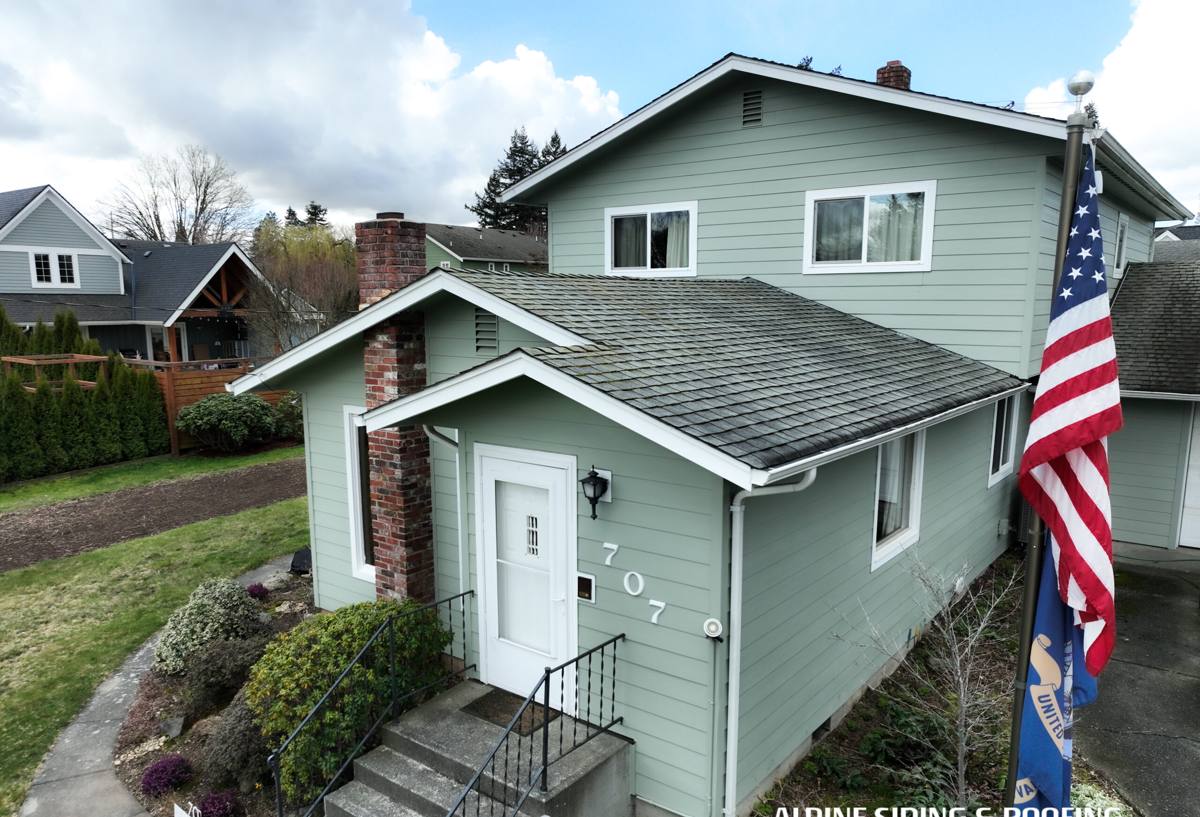
What Storm Damage Actually Looks Like on a Bellingham Roof
Wind-Driven Damage
Sustained coastal wind and gusty storm fronts don't usually rip a roof apart in one obvious way. They lift shingle edges just enough to break the seal underneath, crack ridge caps, and loosen fasteners around chimneys, skylights, and vent boots. The roof can look intact from the ground while dozens of small breach points are already letting water in underneath.
Water Intrusion and Rain
Once wind has broken a seal or cracked a flashing joint, driving rain does the rest. Water doesn't need a hole — it needs a path, and wind-driven rain is very good at finding one along valleys, chimney flashing, and the edges of skylights. Interior signs are often subtle at first: a faint ceiling stain, a musty smell in an attic, or paint bubbling near an exterior wall.
Moss, Debris, and Slow Damage
Moss doesn't cause storm damage directly, but it sets the roof up to fail when a storm hits. Moss mats hold moisture against the shingle surface, lift tabs from underneath, and clog the small channels water is supposed to drain through. A roof carrying a heavy moss load going into storm season is far more likely to leak from wind and rain than a clean one, because the moss has already compromised the seal the manufacturer built in.
Our Storm Damage Repair Process
1. Inspection, Not Guesswork
We walk the roof — not just look at it from the driveway — and check every vulnerable point: shingle seal lines, flashing around penetrations, ridge caps, gutters, and the attic from the inside where accessible. Storm damage hides in places that aren't visible from ground level, and a rushed inspection is how small problems turn into rot.
2. Clear Documentation
We photograph and note what we find before any repair work starts. This matters for two reasons: it gives you an honest record of the roof's actual condition, and it's the documentation an insurance adjuster will want to see if you're filing a storm claim.
3. Repair Scoped to the Actual Damage
We fix what the storm damaged and flag anything else we find, but we don't pad a repair into a bigger job than the roof needs. If three courses of shingles took wind damage around a chimney, that's what gets repaired — with matching materials, proper flashing technique, and a seal that will hold through the next storm, not a patch that just gets you through the season.
Repair or Replace? What Actually Decides It
Homeowners often assume storm damage means a full roof replacement, and just as often assume the opposite — that a quick patch will handle it. Neither assumption is reliable without an inspection. What actually decides the right call is a combination of factors:
| Factor | Points Toward Repair | Points Toward Replacement |
|---|---|---|
| Roof age | Under 12-15 years, especially if maintained | Near or past manufacturer's expected lifespan |
| Damage extent | Isolated to one slope, area, or penetration | Spread across multiple slopes or the whole roof |
| Underlying condition | Deck and underlayment sound where inspected | Soft decking, widespread rot, or repeated past leaks |
| Moss/algae history | Light, recently treated | Heavy, long-term buildup compromising the shingle mat |
| Storm frequency | First significant damage event | Repeated storm damage over recent years |
We'll tell you honestly which side of that table your roof falls on, and why — including when a repair is genuinely the right call, even if a replacement would be a bigger job for us.
Materials and Methods That Hold Up to This Climate
Not every fix is created equal in a marine climate. We match repair materials to what's already on the roof and to the demands of Whatcom County weather:
- Shingle repairs use matching-profile materials sealed with proper adhesive and fastener technique, not just surface caulk over a gap
- Flashing replacement in valleys, around chimneys, and at wall intersections — the highest-failure points in wind-driven rain — uses corrosion-resistant materials suited to salt-air exposure
- Ventilation is checked as part of any repair, since a roof deck that can't breathe traps moisture and shortens the life of everything above it
- Where moss has caused damage, we address the moss itself, not just the shingle it damaged, so the repair doesn't fail again next season
We're straightforward about why we do things a certain way even if it's not the cheapest option in the moment — a flashing repair that skips proper step-flashing technique to save an hour of labor is a callback waiting to happen, and we'd rather not sell you that.
Working With Your Insurance Company
Many storm-damage repairs in this area are at least partially covered by homeowner's insurance, particularly when wind or a specific storm event caused the damage. Our documentation — photos, notes on cause and extent, and a clear scope of repair — is written to support that process, not to inflate it. We can walk you through what we found and answer an adjuster's questions about the scope of work, but the claim itself is between you and your insurer. We're not going to tell you what to say to your adjuster or push a claim you're not comfortable filing; we just make sure the roof side of the paperwork is accurate.
What To Do Right After a Storm
If you suspect storm damage, a few simple steps protect both your home and your ability to get it fixed properly:
- Check your attic (if safely accessible) for damp insulation, staining, or daylight through the roof deck
- Look at ceilings and walls on the top floor for new stains, bubbling paint, or soft spots
- From the ground, scan for missing or curled shingles, displaced ridge caps, or debris caught on the roof
- Clear downspouts and gutters if safe to do so — a clogged gutter turns a minor leak into standing water against the fascia
- Avoid climbing onto the roof yourself, especially after rain — wet shingles and moss are genuinely slippery
- Call for an inspection before the next storm system arrives, not after a second one adds to the damage
Why It Matters to Hire a Crew That Already Works in Cordata
A roof repair crew that regularly works Bellingham neighborhoods like Cordata has already seen how local conditions play out over years, not just in a single visit. We know what a moss-compromised shingle mat looks like versus straightforward wind damage, how salt air accelerates fastener corrosion around chimneys and vents, and which flashing details actually hold up through a full Whatcom County winter versus which ones fail after one hard storm season. That local pattern recognition is the difference between a repair that solves the problem and one that just covers it up until the next storm finds the same weak point.
It also means faster response. When a storm moves through the area, we're not driving in from across the region to look at a roof we've never assessed before — we understand the housing stock, the common roof ages, and the typical trouble spots in this part of Bellingham, which lets us move from inspection to an honest repair plan quickly.
If you've had a recent storm come through, or you're noticing signs that one left behind more damage than you first thought, we're happy to take a look. The estimate is free, there's no pressure to act on it immediately, and you'll get a straight answer about whether you're looking at a repair or something bigger — just fill out the form below to get started.