 Bellingham
 Birch Bay's Climate Puts Real Stress on Exterior Siding
Birch Bay sits right on the water, and that location cuts both ways. The same waterfront exposure that makes the area desirable also means homes here take a harder beating than siding just a few miles inland. Wind off the water drives rain sideways into wall assemblies instead of letting it run straight down. Salt-laden air settles on painted and metal surfaces and slowly works on anything not built to resist it. And because much of Whatcom County sits under a marine layer for a good stretch of the year, shaded and tree-covered lots stay damp long after a storm has passed — which is exactly the condition moss and algae need to take hold.
None of this is unique to one street or one subdivision in Birch Bay. It's a function of being a coastal community in the Pacific Northwest, and it means siding decisions that work fine in a drier inland town can fail early here. A siding job that looks correct on install day but wasn't built for this specific exposure tends to show its problems within a few winters — not decades.
Why We Standardized on James Hardie for Homes Like Yours
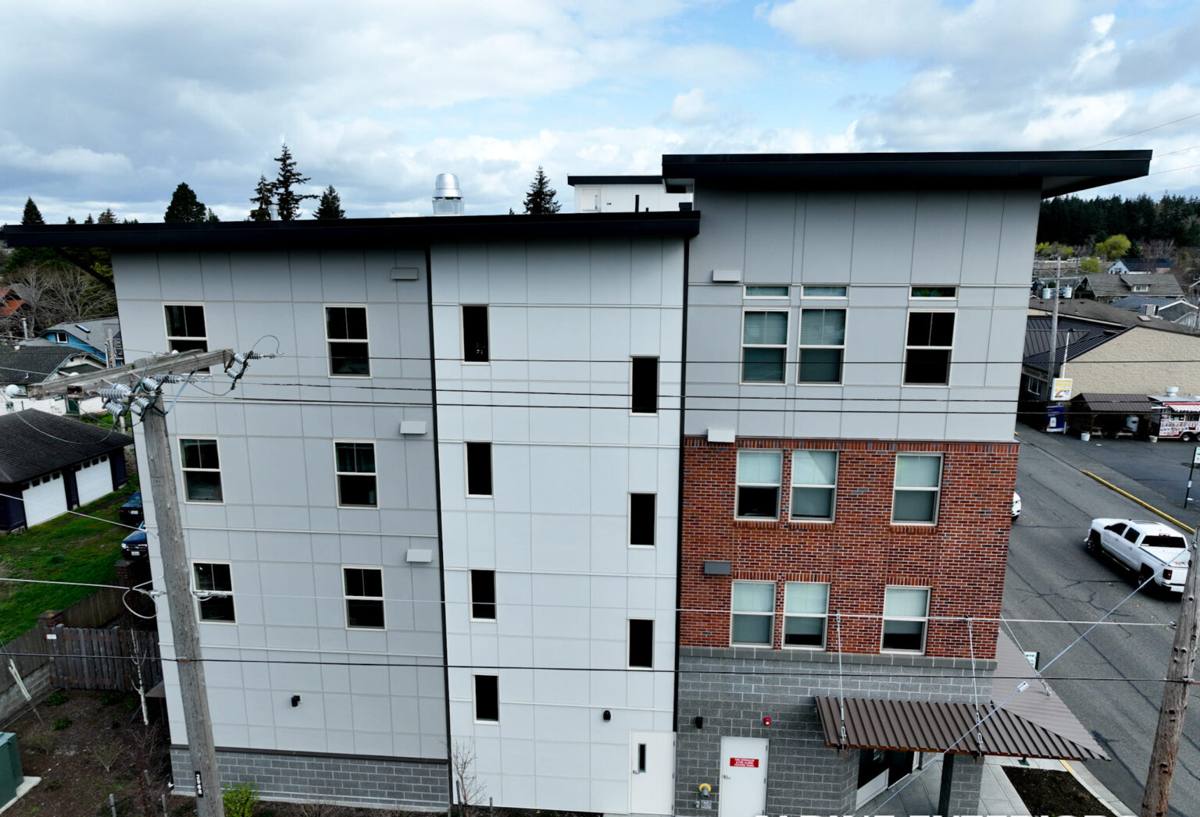
We only install James Hardie fiber cement siding. We don't install vinyl, LP SmartSide, Cemplank, Allura, primed spruce, or cedar, and in a place like Birch Bay that standard matters more than in most markets. Fiber cement doesn't absorb moisture and swell the way wood-based products can, it doesn't provide the organic surface that moss and algae feed on the way raw or painted wood does, and its factory-applied ColorPlus finish is baked on under controlled conditions rather than field-applied over a substrate that's already been exposed to salt air and rain during construction.
James Hardie also engineers its product formulations by climate zone. The HZ formulations sold in the Pacific Northwest are built around our specific combination of moisture exposure and temperature swings, rather than a one-size-fits-all national formula. Combined with a non-combustible fiber cement core and a warranty that's transferable if you sell the home, it's the product we're willing to put our name behind on a coastal job. That's the whole reason we standardized on one product line instead of offering a menu of siding options — we'd rather do one thing right for this climate than several things adequately.
What This Means Day to Day
In practice, a correctly installed Hardie system on a Birch Bay home should not need repainting for a very long time thanks to the factory finish, should shed wind-driven rain without letting it track behind the panels, and should resist the surface moss and algae growth that shows up on shaded, wood-sided homes near the water within a season or two of a cleaning.
What a Correct Install Actually Involves
James Hardie siding is only as good as the installation behind it. The product is engineered for this climate, but the details of how it's put on the house determine whether that engineering actually protects the home.
Moisture Management Behind the Siding
A weather-resistant barrier goes on the sheathing before any siding, and on a wind-exposed lot near the water, how that barrier is lapped and sealed at seams, windows, and penetrations matters as much as the siding itself. A drainage plane behind the panels lets any moisture that does get past the siding find its way back out instead of sitting against the wall assembly.
Fastening and Clearances
Hardie panels and lap siding have specific fastener spacing, nail set depth, and clearance requirements — including keeping the bottom edge of the siding a set distance above grade, decks, and roof lines. Over-driven nails crack the board's fastening zone; under-driven ones leave the panel loose. Both are common shortcuts on crews that don't work with fiber cement regularly.
Trim, Joints, and Flashing
Kickout flashing where a roofline meets a wall, correct flashing above windows and doors, and butt joints that are either flashed or left with the factory-recommended gap rather than caulked solid — these are the details that keep wind-driven rain from finding its way behind the cladding. On a Birch Bay home, getting these wrong doesn't just risk a cosmetic problem down the road; it risks moisture sitting inside a wall cavity in a climate that rarely dries out fast.
How James Hardie Compares for This Climate
We get asked why we won't install the alternatives, so here's an honest look at how the common siding materials hold up against the specific conditions Birch Bay throws at a house:
| Material | Moisture / Rot Resistance | Salt Air Durability | Moss & Algae Resistance | Typical Maintenance |
|---|---|---|---|---|
| James Hardie fiber cement | High — doesn't absorb and swell | Strong; factory finish resists fading and chalking | Good — surface doesn't feed organic growth | Occasional rinsing; caulk checks |
| Cedar / primed spruce | Moderate — needs an intact paint film to stay protected | Salt air accelerates finish breakdown | Poor in shaded, damp spots without upkeep | Repainting/staining cycle, moss treatment |
| Vinyl | High resistance to rot, but can warp/distort with heat and impact | Can chalk and become brittle over time | Moderate; grime and algae film build on the surface | Washing; panels can't be spot-repainted |
| LP SmartSide (engineered wood) | Depends heavily on unbroken factory coating and correct sealing of cut edges | Vulnerable if coating is compromised near salt exposure | Moderate to poor if moisture gets into the wood substrate | Edge sealing, coating inspection |
This isn't a claim that the other products are defective — it's a summary of the trade-offs. Every one of them can perform reasonably well in the right setting with diligent upkeep. On a shaded, salt-exposed, wind-driven-rain lot in Birch Bay, we've made the professional call that fiber cement gives homeowners the best combination of low maintenance and long-term performance, which is why it's the only product we put our name on.
Our Process for a Birch Bay Installation
- On-site assessment — we look at wall exposure, existing siding condition, moisture damage, and how the lot's tree cover and orientation affect drying time.
- Tear-off and sheathing check — old siding comes off and the sheathing underneath gets inspected before anything new goes on. Rot or soft sheathing gets addressed, not covered up.
- Weather barrier and drainage plane — installed and detailed around every window, door, and penetration before the first piece of siding is hung.
- Hardie installation — panels or lap siding installed to manufacturer fastening and clearance specs, with flashing at every roof-wall intersection and horizontal joint.
- Trim and finish work — corners, fascia, and joints finished and sealed only where Hardie's specifications call for sealant, not everywhere as a blanket habit.
- Final walkthrough — we go over the finished job with you before calling it done.
What Affects the Cost of a Birch Bay Hardie Siding Job
There's no single number that applies to every home, but the same handful of factors drive most of the variation we see on coastal Whatcom County jobs:
| Cost Factor | Why It Matters |
|---|---|
| Home size and wall complexity | More corners, gables, and dormers mean more cutting, trim, and labor time |
| Siding profile and texture | Lap width, panel style, and textures like cedar-look shingle siding vary in material and install time |
| Existing damage or rot | Compromised sheathing found during tear-off has to be repaired before new siding goes on |
| Trim and flashing detail | Homes with more windows, roof intersections, and architectural trim need more flashing and finish work |
| Site access | Waterfront lots, steep grades, and limited staging space can add time to material handling and equipment setup |
We'll walk your specific home and give you a real number based on what we actually find, not a rough estimate based on square footage alone.
Living With Hardie Siding in a Salt Air, Moss-Prone Environment
Correctly installed Hardie siding is genuinely low-maintenance, but "low-maintenance" isn't "zero-maintenance," especially this close to the water. A short annual routine keeps it performing the way it's designed to:
- Rinse the siding with a garden hose once or twice a year to clear salt residue and general grime, especially on walls facing the water
- Keep shrubs, trees, and vines trimmed back from the siding so air can circulate and walls can dry out between rain events
- Check caulking at trim joints, windows, and doors annually and have any cracked or missing sections redone
- Watch shaded, north-facing walls under tree cover for early moss or algae film and clean it before it builds up
- After major windstorms, do a quick visual check for loose trim or displaced flashing rather than waiting for the next scheduled look
Why a Crew That Already Works Birch Bay Matters
Fiber cement installation isn't forgiving of guesswork, and a crew that only occasionally handles Hardie siding tends to treat it like any other cladding — same flashing habits, same caulking instincts, same clearances they'd use on vinyl. In a climate this demanding, those shortcuts show up as callbacks a few winters later.
Working Birch Bay and the surrounding Bellingham area regularly means we already know what wind-driven rain does to a poorly flashed joint here, what a shaded lot under evergreen cover does to siding that isn't given room to dry, and what the local permitting and inspection expectations look like in Whatcom County. That's not something a crew based somewhere with a drier, calmer climate picks up on their first job in the area.
If you're planning a siding project on a Birch Bay home, we're happy to take a look and give you a straightforward, no-pressure estimate — including an honest read on what your home's exposure actually needs. Use the form below to get started.