 Bellingham
 Siding Replacement in Columbia: A Different Job Than Siding Replacement Inland
Columbia sits close to Bellingham Bay, and that changes what siding replacement actually needs to accomplish. A few miles inland, siding mostly has to shed rain and survive UV exposure. Here, siding also has to stand up to salt-laden air rolling off the water, near-constant humidity, and a moss season that can run from fall through spring. We've replaced siding across Whatcom County long enough to know that a product and installation approach that works fine in a drier neighborhood can fail early in a spot like this if it isn't matched to these conditions.
This page covers siding replacement specifically for Columbia homes — what salt air and driving rain actually do to different materials over time, what a correctly done replacement job involves, and why we install only James Hardie fiber cement siding rather than the vinyl, LP SmartSide, or cedar products offered elsewhere in Bellingham.
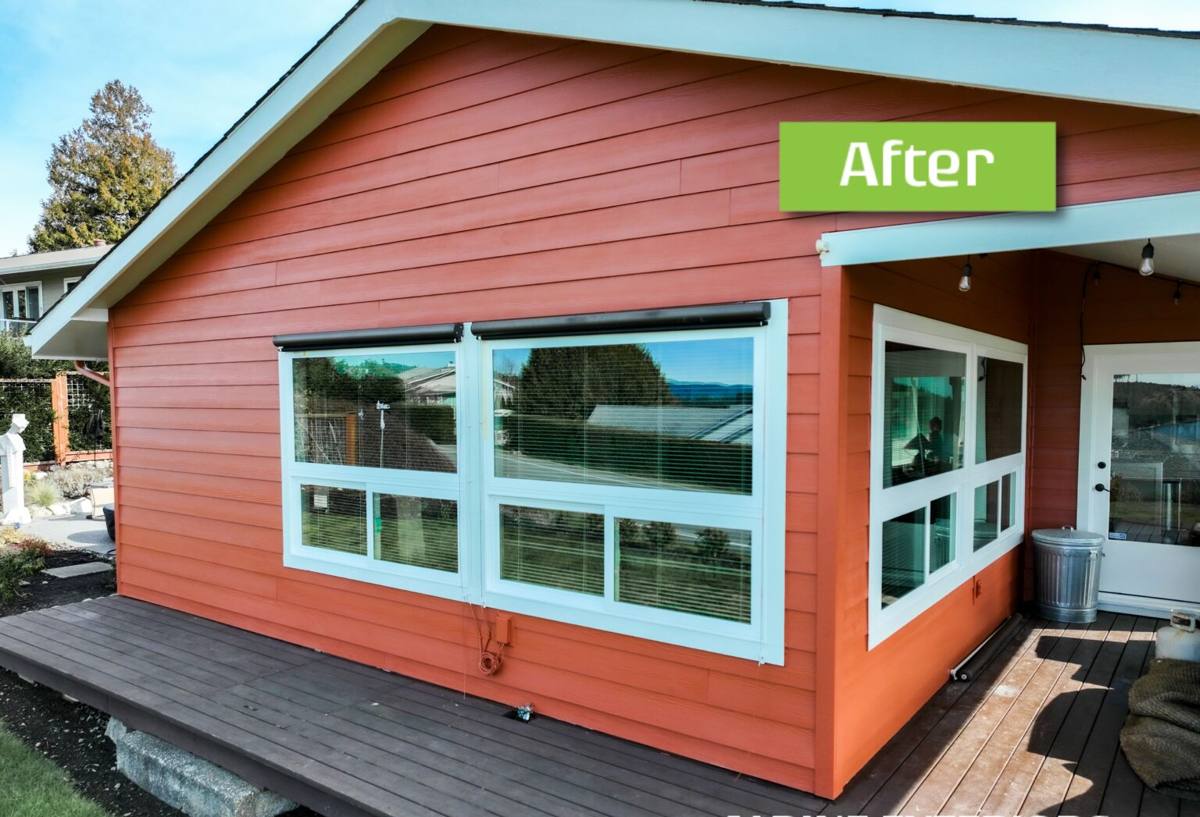
What Salt Air, Driving Rain, and Moss Do to Siding Over Time
Salt Air
Homes near Bellingham Bay take on airborne salt that settles on exterior surfaces and works into seams, fastener heads, and any gap in a coating. Salt is corrosive to exposed metal trim and fasteners, and it accelerates the breakdown of paint films and coatings that aren't formulated to resist it. Over the years, this shows up as pitting on hardware, chalking or early fading on lower-grade finishes, and premature wear concentrated on the elevations facing the water and prevailing wind.
Driving Rain
Rain in this part of Whatcom County rarely falls straight down. Wind off the bay pushes it sideways into wall assemblies, which means siding here does double duty — shedding bulk water and resisting wind-driven moisture at every lap, seam, and penetration. A siding system with weak water management, whether that's thin flashing details, insufficient overlap, or a house wrap that isn't taped and lapped correctly, will let moisture behind the cladding long before the siding itself starts to look worn from the outside.
Moss and Sustained Moisture
Whatcom County's moss season runs long, and Columbia's tree cover combined with coastal humidity keeps north-facing and shaded walls damp for extended stretches most years. Moss and algae growth on siding isn't only a cosmetic problem — it holds moisture directly against the surface, which is exactly the condition that rots wood-based products and delaminates lower-quality composite siding over time.
Signs a Columbia Home Needs Siding Replacement, Not Just Repair
Not every problem calls for a full tear-off. But a few signs tell us siding has reached the end of its useful life rather than needing a patch or a cleaning:
- Soft, spongy, or crumbling siding when pressed, especially near the bottom courses or under windows
- Persistent moss or dark staining that returns within a season of being cleaned
- Paint that won't hold — recoats fail within a couple of years instead of lasting as expected
- Visible gaps, warping, or cupping at panel edges and seams
- Interior warning signs like peeling paint, musty odors, or soft drywall near exterior walls, which point to moisture already tracking behind the cladding
- Original siding on a home built more than 20-25 years ago, particularly an older wood or composite product never designed for this level of coastal exposure
When a home shows more than one of these at once, replacement is usually more cost-effective than continued patching — repeated repairs on failing siding rarely add up to less, in the long run, than doing a full replacement once and doing it correctly.
Why We Install Only James Hardie Fiber Cement
Homeowners in Columbia sometimes ask why we don't offer vinyl, LP SmartSide, or cedar as options. It's a fair question, and the honest answer is that we've standardized on one product because of what this specific climate demands — not because the alternatives are bad products everywhere they're used.
| Material | How it performs near the bay | Where it tends to fall short here |
|---|---|---|
| Vinyl siding | Low material cost, low maintenance in mild conditions | Can warp or grow brittle with temperature swings; panel seams and J-channels give wind-driven rain a path behind the cladding; not a non-combustible product |
| LP SmartSide (engineered wood) | Workable, budget-conscious wood-based option | Wood-strand core is vulnerable to sustained moisture and moss; cut edges and fastener penetrations demand meticulous, ongoing sealing to prevent swelling |
| Cedar or primed spruce | Traditional appearance, a renewable material | Needs regular refinishing to resist moisture and decay; the humidity and shaded exposures common around Columbia shorten the interval between recoats |
| James Hardie fiber cement | Non-combustible and dimensionally stable; factory-baked ColorPlus finish resists fading and holds up under salt and sustained moisture exposure | Higher upfront material and installation cost than vinyl |
Fiber cement has no organic core for moisture to feed on, so it doesn't rot and doesn't support the kind of sustained moss growth that damages wood-based siding over time. James Hardie's HZ5 product line is engineered specifically for wetter, harsher climates like the Pacific Northwest coast, and the ColorPlus factory finish is baked on in a controlled process rather than applied on site, which gives it noticeably better resistance to the fading and chalking that salt air and UV exposure cause on field-painted surfaces. It also carries a strong transferable warranty, which matters more on a coastal property where the siding is working harder than it would a few miles inland.
What a Correct Siding Replacement Job Actually Involves
The siding panels are only part of the system. Most of the premature siding failures we see around Columbia trace back to what's behind the panels, not the panels themselves.
Tear-Off and Sheathing Inspection
We remove the old siding down to the sheathing and inspect for rot, soft spots, or existing moisture damage before anything new goes up. Covering over a compromised wall assembly just hides a problem that resurfaces later, usually as a bigger repair.
Water-Resistive Barrier and Flashing
A weather-resistant barrier goes on and gets properly lapped, upper courses over lower, with every seam and penetration taped or flashed so water is directed out and down instead of trapped behind the cladding. Windows, doors, and any wall penetration are flashed individually — this is where wind-driven rain finds its way in when installation is rushed.
Fastening and Fit
James Hardie siding has specific fastening patterns, nail spacing, and clearance requirements — from grade, from roof lines, from other transitions — that are part of the manufacturer's published installation instructions. Getting these details right isn't optional; it's what the product warranty is actually based on, and it's what keeps water from tracking behind panels at the exact spots this climate targets hardest: bottom edges, corners, and butt joints.
Trim, Caulking, and Paint
Corner boards, trim, and caulking at transitions need materials compatible with the fiber cement system and with the moisture conditions here. Skipping a compatible caulk or under-sealing a trim joint is a small shortcut on installation day that shows up as a stain or a soft spot within a few years.
Our Process for Columbia Homeowners
- On-site assessment: We walk the exterior, check the most exposed elevations, typically those facing the bay and prevailing weather, and look for any existing moisture or rot before quoting anything.
- Written estimate: A clear scope covering tear-off, sheathing repair if needed, water barrier, James Hardie product and profile selection, trim, and finish — no vague allowances left to figure out later.
- Product and color selection: We help match a HardiePlank, HardieShingle, or HardiePanel profile and ColorPlus finish to the home, factoring in sun exposure and how each elevation faces the weather.
- Tear-off and prep: Old siding comes off, sheathing is inspected and repaired as needed, and the wall is prepped for a correctly lapped water-resistive barrier.
- Installation to manufacturer spec: Fastening, clearances, and flashing details follow James Hardie's published instructions, which is also what keeps the manufacturer warranty intact.
- Final walkthrough: We review the finished work with the homeowner before calling the job complete.
Cost Factors for Siding Replacement in Columbia
Every home is different, but the same handful of factors drive most of the cost difference from one Columbia siding replacement to the next:
| Factor | Why it matters |
|---|---|
| Home size and number of stories | More square footage and greater wall height mean more material, more labor hours, and more staging or access equipment |
| Condition of existing sheathing | Rot or moisture damage discovered during tear-off requires repair before new siding goes on — this is the most common source of a mid-project cost adjustment |
| Siding profile and trim complexity | Lap siding generally installs more efficiently than shingle-style siding or a home with heavy trim and multiple roofline transitions |
| Number of exterior penetrations | Windows, doors, vents, and fixtures each require individual flashing and trim work |
| Access and site conditions | Tight lots, mature landscaping, or difficult staging near the water can add labor time |
We don't publish blanket per-square-foot pricing because these factors shift the total too much from one house to the next. The on-site assessment is what actually produces an accurate number for your home.
Why It Matters That We Already Work in Columbia
A crew that has replaced siding on other homes in this neighborhood already understands which elevations take the worst of the weather off the bay, how the local moisture and moss patterns behave through the seasons, and what permitting and inspection expectations look like in Bellingham. That track record shows up in small decisions on the job — where extra flashing attention pays off, which trim details are worth upgrading versus matching to what's already there — the kind of judgment calls a crew unfamiliar with this specific coastal exposure might not think to make.
It also means the workmanship standing behind the job comes from a company with a reputation to protect in Whatcom County, not a crew passing through the area for one project.
If your Columbia home's siding is showing its age, or you're simply planning ahead for a project down the road, we're happy to take a look and provide a straightforward, no-pressure estimate — use the form below to get started.