 Bellingham
 Why Birch Bay Is a Different Job Than a Typical Window Install
Birch Bay sits right on the water, and that changes what a window has to survive. Homes a few blocks inland in Bellingham deal with a wet climate. Homes in Birch Bay deal with wet climate plus salt-laden air coming straight off the water, wind-driven rain that hits siding and window openings at an angle instead of straight down, and a long stretch of the year where surfaces stay damp enough for moss and mildew to take hold. None of that is dramatic on its own, but stacked together over years, it's exactly the combination that finds every weak point in a window installation.
We're not talking about hurricane-force conditions. It's the steady, unglamorous wear — salt air working on hardware and finishes, water finding its way behind trim that wasn't flashed quite right, moss holding moisture against wood sills longer than it should sit there. A window that's a good product but poorly installed will show problems in Birch Bay years before the same window would show problems in a drier, more sheltered location.
Salt Air and Corrosion
Salt air accelerates corrosion on anything metal — hinges, cranks, locks, screws, and unprotected aluminum components. It also degrades certain finishes faster than manufacturers' standard warranty testing accounts for, since that testing is rarely done in a marine environment. The practical effect for a homeowner is hardware that sticks or seizes sooner, and finishes that chalk or pit ahead of schedule if the wrong materials were chosen.
Wind-Driven Rain and Water Intrusion
Rain that comes in sideways off the bay puts pressure on window openings that a lot of standard installation practices weren't really designed for. Flashing, sealant, and the water-shedding path behind the trim all matter more here than they would on a wall that only ever gets rain falling straight down. Cut corners on any of that and you get moisture working its way into the wall cavity long before you'd ever see a stain on the interior drywall.
Moss, Mildew, and Prolonged Moisture
Whatcom County's long damp season means anything that holds moisture — moss on a roofline, mildew in a shaded corner, standing water on a sill that doesn't drain properly — gets extended contact time with wood and trim. Wood sills or trim that aren't detailed to shed water quickly, or that sit in a spot with poor airflow, are more prone to rot in this kind of environment than in a drier climate where the same detail might never cause a problem.
What "Custom" Actually Means for a Birch Bay Window Project
Custom doesn't mean expensive or elaborate — it means the window is sized, specified, and detailed for the actual opening and the actual conditions at your house, instead of forcing a stock size to fit. That distinction matters a lot in Birch Bay's older housing stock and in the mix of cottages, remodels, and newer waterfront-influenced builds you find in the area.
Matching Older and Irregular Openings
A lot of homes in this area have openings that were framed decades ago, sometimes with slight settling or irregularities that stock replacement windows don't account for cleanly. Custom sizing means we measure the actual opening, account for any out-of-square condition, and either size the window to fit correctly or plan the trim and flashing work needed to make it fit right — rather than caulking around a gap and calling it done.
View-Oriented and Waterfront-Influenced Homes
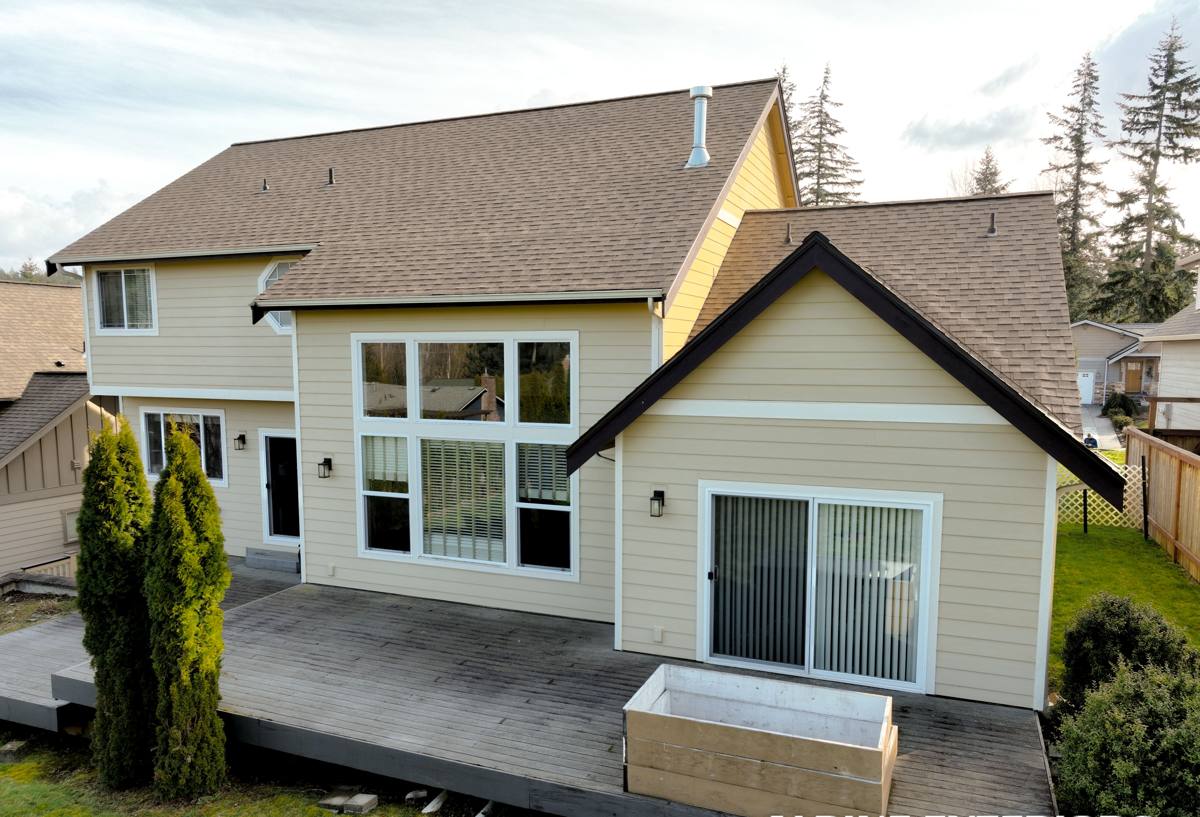
Many Birch Bay properties are built or renovated with the water view as a priority — larger glass units, picture windows, or combinations of fixed and operable panels. Larger glass units carry more wind load and need frames and anchoring specified to handle that, plus glass options suited to a bright, glare-prone waterfront exposure. This is a case where "custom" is about performance and safety, not just looks.
Frame Materials: What Holds Up in a Marine Climate
There's no single "best" frame material for every house — it depends on your home's style, your budget, and how much upkeep you want to take on. What we won't do is put a frame material in a job where we know it's a poor match for salt air and constant moisture without being upfront about the trade-off. Here's how the common options generally compare for this climate:
| Frame Material | Salt Air Behavior | Maintenance | Typical Fit |
|---|---|---|---|
| Vinyl | Doesn't corrode; UV-stable finishes hold up well | Low — occasional cleaning | Budget-conscious remodels, rentals, most standard replacements |
| Fiberglass | Excellent — dimensionally stable, resists pitting and corrosion | Low | Larger openings, higher-performance needs, long-term ownership |
| Aluminum-clad wood | Good on the exterior face if the cladding is properly sealed at joints; interior wood adds warmth | Moderate — watch for finish wear on exposed metal, and any exposed wood needs monitoring | Homes wanting a wood interior look with better weather resistance outside |
| Solid wood | Weakest option for this environment unless finish is maintained diligently and details keep water off it | High — regular repainting/resealing | Historic-style restorations where appearance is the priority |
| Bare aluminum | Prone to pitting and corrosion in salt air over time unless marine-grade and properly finished | Moderate to high | Generally not our first recommendation this close to the water |
Our default recommendation for most Birch Bay homes is vinyl or fiberglass because they hold up with the least upkeep. If you want a wood interior for the look, aluminum-clad wood is a reasonable middle ground — we'll walk through what that means for long-term maintenance so there are no surprises later.
Glass and Performance Options Worth Considering
The frame is only half the equation. Glass choice affects comfort, condensation, and how the window handles this area's mix of bright water-reflected light and long grey stretches.
- Low-E coatings: Help manage heat gain from reflected water light in summer and reduce heat loss in winter — a reasonable upgrade almost everywhere on the coast.
- Argon or krypton gas fill: Improves insulating performance between panes; worth it on most double- or triple-pane units.
- Tempered glass: Required by code near doors, low sills, and other hazard locations — we'll flag where it applies on your project.
- Laminated glass: An option to consider for sound reduction or added impact resistance on more exposed elevations.
- Warm-edge spacers: Reduce condensation risk at the glass edge, which matters in a consistently humid climate.
What a Correct Installation Actually Involves
Most window failures we get called out to inspect in this area aren't a bad product — they're an installation that skipped a step that doesn't show up until years later. In a climate like Birch Bay's, those shortcuts show up faster than they would somewhere drier.
Installation Checklist We Follow
- Inspect and repair the framing and sheathing before the new window goes in — never install over hidden rot or damage
- Install a proper sill pan to direct any water that gets past the window back outside, not into the wall
- Flash the opening in the correct shingle-lap order so water is always directed outward and downward
- Use sealants and tapes rated for the exposure, not just whatever's on the truck
- Leave the correct shim and gap spacing so the frame isn't stressed and can perform as designed
- Integrate the new flashing correctly with the existing siding or house wrap — this is where a lot of leaks actually start
- Confirm the unit operates smoothly and seals tight before final trim goes on
- Clean up and haul away the old windows and debris
If any one of these steps is skipped, the window can look fine for a year or two before a problem shows up — usually as a soft spot in the sill, a musty smell, or paint failing on the interior trim. That delayed failure is exactly why installation quality matters more than brand name.
Our Process, Start to Finish
We keep this straightforward because homeowners deserve to know what's happening at each step, not just when it's done.
- On-site assessment: We look at your existing windows, framing condition, and the specific exposure your home has to wind and rain off the bay.
- Honest recommendation: We'll tell you what frame material, glass package, and detailing make sense for your house and budget — including where a cheaper option is genuinely fine and where it isn't.
- Clear estimate: Written, itemized, no pressure to decide on the spot.
- Installation: Following the flashing and sealing sequence above, with attention to how the new opening ties into your existing siding and trim.
- Final walkthrough: We test every window with you before we consider the job finished.
Signs Your Current Windows Are Losing the Fight
A few things worth checking before they turn into a bigger repair:
- Hardware that's stiff, gritty, or corroded when it used to operate smoothly
- Visible pitting or a chalky, uneven finish on metal frames or cladding
- Soft or discolored wood at the sill or bottom corners of the frame
- Condensation building up between panes, which usually means a failed seal
- Drafts or a noticeable temperature difference near the window on windy days
- Moss or dark staining building up on the trim or sill and not drying out between rains
Why Local Experience in Whatcom County Matters
A window installer who mostly works inland jobs doesn't necessarily think about sill pan drainage the same way, or about how far the flashing needs to lap given the wind patterns off the bay. Working regularly in Bellingham and the surrounding Whatcom County coastline — including Birch Bay — means we've seen how different frame materials and installation details actually hold up here over time, not just how they're rated in a lab. That experience shapes the recommendations we make, and it's part of why we won't push a frame material or install method we know is a poor fit for this specific exposure, even if it would be an easier sell.
Protecting Your Investment After Installation
A correctly installed, well-chosen window is close to maintenance-free, but a little upkeep goes a long way in this climate. Rinse salt residue off frames and hardware periodically, especially after storms. Keep weep holes and drainage paths clear of moss, leaves, and debris. Check exterior sealant joints once a year for cracking or separation, and address it before water gets behind the trim. If you have any wood components, keep the finish maintained rather than waiting for visible damage.
If your windows are original to the house, showing wear, or you're planning a renovation that includes larger glass for the view, we're glad to take a look and give you a straightforward assessment — no pressure, no upsell. Reach out for a free estimate using the form below, and we'll talk through what your home actually needs.