 Bellingham
 Deck Repair Built for Lynden's Climate
A deck in Lynden works harder than most homeowners realize. Whatcom County sees a long wet season, heavy dew, and stretches of low sun that keep horizontal wood surfaces damp for days at a time. Add in the moss and algae that thrive in our mild, moist climate, and you've got conditions that quietly break down decking, fasteners, and framing long before the deck looks obviously bad. By the time boards feel spongy or railings wobble, the damage is usually further along than it appears from the surface.
We repair decks across Whatcom County, and Lynden's mix of older established homes and newer builds means we see everything from decades-old cedar structures to decks that are only a few years old but were built or finished in a way that doesn't hold up to our driving rain and long moss season. Repair work here isn't one-size-fits-all — it depends on the deck's age, framing material, orientation, and how much shade and moisture it deals with year-round.
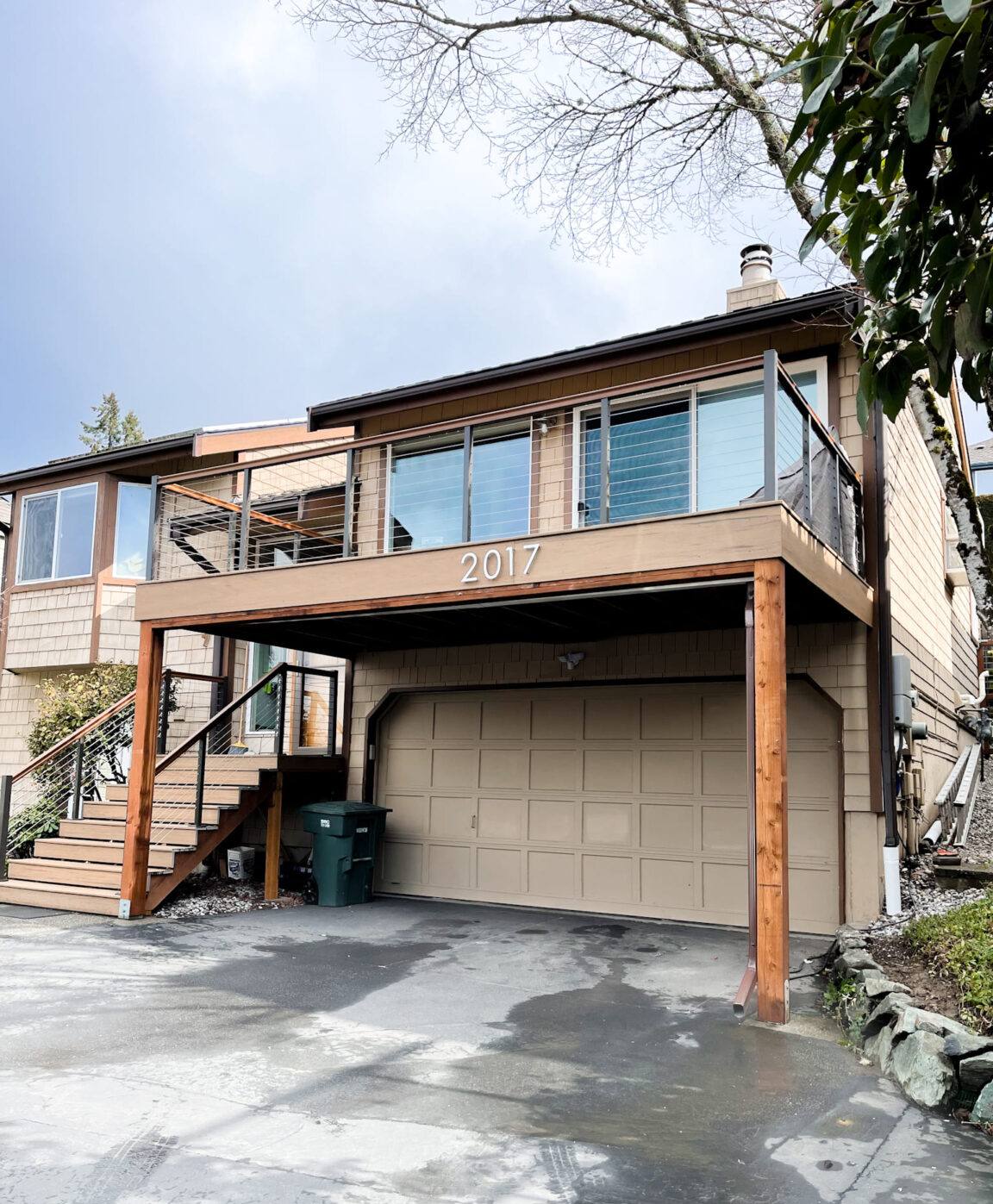
What Whatcom County Weather Does to a Deck
Understanding the failure pattern is the first step to fixing it correctly instead of just patching the symptom.
Moisture Cycling
Wood that gets wet and dries repeatedly — which is exactly what happens through a Whatcom County fall, winter, and spring — swells and shrinks over and over. That cycling loosens fasteners, opens joints between boards, and eventually cracks or cups the wood itself. It's slow, and it's the single biggest reason decks in this region need repair years before a homeowner expects.
Moss and Algae Growth
Our long moss season isn't just cosmetic. Moss holds moisture directly against the decking surface, which accelerates rot in wood and can degrade the surface layer of composite boards over time. Moss on stairs and ramps is also a real slip hazard, especially on shaded, north-facing decks that never fully dry out.
Driving Rain and Wind-Driven Wetting
Storms here don't just fall straight down — wind pushes rain sideways into ledger boards, under railings, and into any gap where flashing or caulking has failed. This is how water gets into places a homeowner never sees until there's a soft spot or a stain on the siding below the deck.
Salt-Influenced Air Near the Water
For homes closer to the Whatcom County coastline, salt-laden air adds another layer of stress, accelerating corrosion on fasteners, hardware, and any exposed metal connectors. Even inland, humidity keeps hardware more vulnerable to rust than in a drier climate.
Common Deck Problems We Fix in Lynden
- Soft, spongy, or visibly rotted decking boards
- Loose, wobbly, or leaning railings and posts
- Rusted, corroded, or failing fasteners and structural connectors
- Rotted or compromised ledger board connections at the house
- Sagging or bouncy sections indicating joist or beam damage
- Moss and algae buildup creating slip hazards on stairs and walking surfaces
- Failed or missing flashing where the deck meets the house
- Cracked, split, or checked boards from repeated moisture cycling
- Stairs with loose stringers or uneven, unsafe steps
How We Diagnose a Deck Before We Touch It
A deck repair is only as good as the assessment behind it. We don't just replace the boards that look bad and call it done — because in this climate, the wood or connectors underneath a damaged board are often compromised too, and replacing the visible problem without addressing the cause means you're back to another repair in a year or two.
What a Proper Assessment Includes
- Checking the ledger board connection — the single most important structural point on most decks, and the one most prone to hidden rot from wall moisture
- Probing joists and beams for soft spots, especially near the ledger and at any point where water tends to pool
- Inspecting all fasteners and connector hardware for rust, corrosion, or loosening
- Checking post bases and footings for movement, rot, or inadequate original construction
- Evaluating railing posts for solid attachment, since these take direct lateral load and are a common safety issue
- Looking at drainage — does water pool anywhere on the deck surface or against the house?
We tell you honestly what we find, including if a "repair" isn't the right call anymore. A deck with widespread structural rot in the framing is usually a rebuild candidate, not a patch job — and we'd rather tell you that upfront than sell you a repair that won't hold.
Repair vs. Rebuild: How We Help You Decide
| Factor | Leans Toward Repair | Leans Toward Rebuild |
|---|---|---|
| Framing condition | Solid, dry, no soft spots | Widespread rot in joists or beams |
| Ledger board | Sound connection, no water damage | Rotted or improperly flashed ledger |
| Deck age | Under 15-20 years, well-built originally | Older deck nearing end of service life |
| Extent of damage | Isolated boards, posts, or hardware | Damage spread across multiple structural areas |
| Code compliance | Meets current railing and structural standards | Original build predates current safety code |
| Footings | Stable, properly sized and set | Undersized, shifting, or frost-heaved |
Our Repair Process
1. On-Site Inspection and Honest Estimate
We walk the deck with you, explain what we're seeing, and put together a clear, itemized estimate — no pressure, no guesswork pricing.
2. Sourcing the Right Materials
Depending on the deck, that might mean matching existing cedar or pressure-treated lumber, or discussing composite options for high-moisture areas where wood keeps failing. We use fasteners and hardware rated for our wet climate — standard interior-grade hardware corrodes too fast here to be worth the short-term savings.
3. Structural Repairs First
Anything load-bearing — joists, beams, posts, ledger connections — gets addressed before cosmetic work. A deck that looks great but sits on compromised framing is a safety problem waiting to happen.
4. Surface and Railing Work
Board replacement, railing repair or replacement, and stair work happen once the structure underneath is solid.
5. Final Walkthrough
We check the repair together, confirm everything is solid underfoot and at the railings, and talk through any maintenance that will extend the life of the work — like keeping moss under control and re-sealing exposed wood on a reasonable schedule.
Cost Factors for Lynden Deck Repair
Every deck is different, so we won't quote a number without seeing it, but here's what tends to move the price:
| Factor | Why It Matters |
|---|---|
| Extent of structural damage | Framing and ledger repairs cost more than surface board swaps |
| Decking material | Matching existing wood or upgrading to composite affects material cost |
| Deck size and height | Larger and elevated decks take more labor and access equipment |
| Railing scope | Full railing replacement costs more than isolated post repair |
| Accessibility | Tight side-yard access or landscaping can add labor time |
| Code updates needed | Bringing an older deck up to current railing/guard standards adds scope |
Most straightforward repairs — a handful of boards, a railing section, hardware upgrades — are a modest, contained cost. Anything involving the ledger board or framing is a bigger job, and a full rebuild is its own category. We'll always break this down clearly before any work starts.
Why Hire a Crew That Already Works in Lynden
A contractor who works Whatcom County regularly knows what to expect from a deck here before they even pull up the boards — where moisture tends to collect, how fast moss comes back without maintenance, and which fastener and framing shortcuts show up in older local construction. That's the difference between a repair that lasts one season and one that lasts a decade.
We also stand behind the work. If something we repaired doesn't hold up the way it should, we want to hear about it and make it right — that's a straightforward part of doing business honestly in a community we keep coming back to.
Maintenance That Extends a Repair's Life
- Sweep debris and standing water off the deck surface regularly, especially in fall
- Treat moss and algae early — don't let it establish and hold moisture against the wood
- Reseal or restain exposed wood decking on a regular schedule appropriate to the product used
- Keep gutters and downspouts clear so runoff isn't dumping extra water onto or near the deck
- Check railings and stair connections periodically for looseness, especially after winter
- Trim back vegetation that keeps the deck surface shaded and slow to dry
If your Lynden deck has soft boards, a wobbly railing, or you're just not sure whether it needs a repair or something bigger, we're happy to take a look. Request a free, no-pressure estimate using the form below and we'll give you a straight answer about what your deck actually needs.