 Bellingham
 Fiber Cement Siding for Edgemoor Homes
Edgemoor is one of the more distinct pockets of Bellingham to side a house in — wooded, bluff-facing lots with real exposure to the water, mature tree canopy that shades large sections of most properties, and a mix of older character homes and newer builds that all have to hold up to the same marine weather. Whatever a home's age or style, the exterior on an Edgemoor property deals with salt-tinged air moving off the bay, rain that comes in sideways more often than straight down, and a moss season that, thanks to all that shade, tends to run longer here than it does on more open, sun-exposed lots elsewhere in the city.
We install James Hardie fiber cement siding exclusively, on every job we take on in Edgemoor and the rest of Whatcom County. That's not a marketing line — it's a standard we set because of the exact conditions this neighborhood's siding has to survive, year after year.
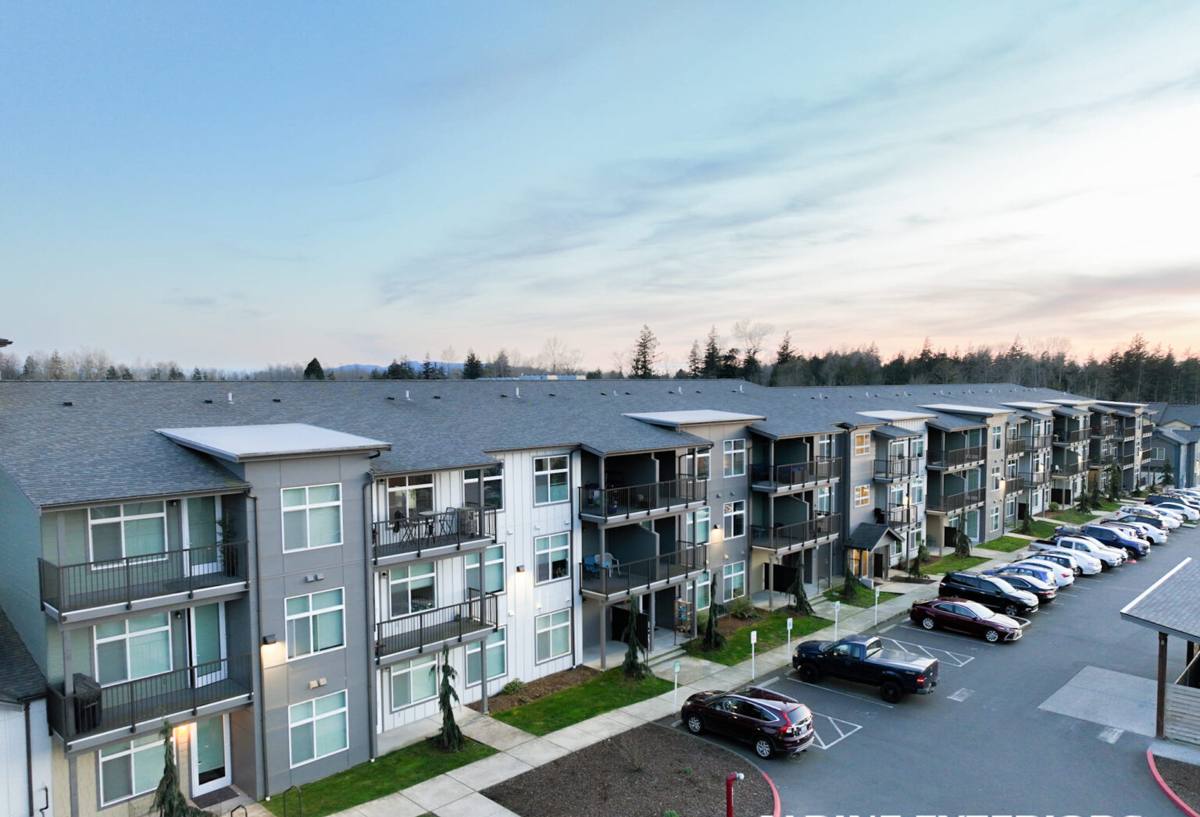
What Edgemoor's Climate Asks of Your Siding
Salt Air Off the Water
Homes with direct or partial water exposure take in a steady dose of salt-laden air, and that air is hard on anything metal — fasteners, flashing, trim. Once a fastener starts to corrode, it loses grip and can open a small gap right where the siding is nailed, which is a direct path for water to start working its way in behind the panel or board.
Driving Rain
Rain in this part of Whatcom County rarely falls straight down for long. Wind pushes it sideways into walls, testing every seam, corner, and joint in the siding rather than just the horizontal surfaces a straight-down rain would hit. Walls facing the prevailing weather off the bay take a disproportionate share of this exposure and are usually where problems show up first if a joint or flashing detail was rushed.
A Long Moss Season Under the Canopy
Edgemoor's mature trees are part of what makes the neighborhood distinctive, but they also mean a lot of wall area stays shaded and slow to dry for much of the year. That's exactly the condition moss and mildew need to take hold, and once established, organic growth holds moisture against the siding surface longer than it would otherwise sit there — extending every wet cycle the material has to absorb and shed.
Why We Install Only James Hardie Fiber Cement
We don't install vinyl, LP SmartSide, Cemplank, Allura, primed spruce, or cedar. That's a professional standard, not a reflection of what our crews are capable of installing — plenty of contractors put these products on Bellingham homes competently. We made a deliberate choice to stand behind one system in a climate that punishes materials that absorb moisture, rely on a coating to keep water out over decades, or expand and contract enough to work joints loose over time.
James Hardie fiber cement is built from cement, sand, and cellulose fiber rather than a wood-based core, so it doesn't swell, cup, or wick moisture the way wood and engineered-wood siding can. It's non-combustible, which matters increasingly to homeowners and insurers alike. Hardie's ColorPlus finish is a factory-applied, baked-on coating warrantied to resist the fading and chalking that constant moisture and UV exposure cause over years on an exterior wall — a real advantage over field-painted siding, where the whole finish depends on paint holding up outdoors rather than being cured under controlled conditions. Hardie also engineers climate-specific HZ product lines for regions like ours, and backs the material with a strong, transferable warranty. Installed to spec, it's the product we trust to perform through an Edgemoor winter, not just look good on the day the crew packs up.
| Material | Moisture Behavior | Maintenance in This Climate | Realistic Lifespan |
|---|---|---|---|
| James Hardie fiber cement | Dimensionally stable; doesn't swell, cup, or wick at seams | Low; factory finish resists moss and fading | 30+ years with proper install |
| LP SmartSide (engineered wood) | Wood-fiber core absorbs moisture at cut edges and fastener holes | Moderate; edge sealing needs upkeep | 15-25 years, climate-dependent |
| Vinyl | Doesn't absorb water but distorts with heat and cold; seams can loosen | Low, but hidden moisture problems are hard to spot | 20-30 years, variable |
| Cedar / primed spruce | Absorbs and releases moisture continuously with humidity swings | High; recurring painting or sealing | 15-25 years with consistent upkeep |
What a Correct Fiber Cement Install Actually Involves
Fiber cement is only as good as the installation behind it. A rushed or underspecified job can fail years before it should, and the mistakes usually aren't visible until a wet season or two has passed. A correct install on an Edgemoor home includes:
- A continuous, properly lapped water-resistive barrier installed before any siding goes up, with no gaps or reversed laps
- A drainage gap or rainscreen detail so incidental moisture behind the siding can dry out instead of sitting against the sheathing
- Corrosion-resistant fasteners at the spacing and depth James Hardie specifies, not a generic fastening pattern
- Primed, sealed cut edges wherever a board is field-cut, since the factory ColorPlus finish only protects the faces it was applied to
- Correctly sequenced flashing at windows, doors, corners, and any wall penetration, shedding water outward and down
- Proper clearance between the bottom of the siding and grade, decks, or roof lines, especially important on shaded, slower-drying walls
Skip any one of these and the wall can still look right for a season or two. The problems that follow — staining at seams, soft trim, paint or finish failure at joints — take time to surface, which is exactly why they're easy to miss during a walkthrough right after the job wraps up.
Our Process for an Edgemoor Fiber Cement Project
Walkthrough and Assessment
We start by looking at the specific walls involved — which ones face the water directly, which sit under tree cover and stay damp longer, and whether the existing wall assembly already has moisture or rot issues that need addressing before new siding goes up. Installing new fiber cement over a wall with hidden damage just buries the same problem under new material.
Planning the Details Before Install Day
We work out fastening pattern, corner details, and how the siding will meet windows, trim, and rooflines before crews start cutting board. Sorting this out on paper first avoids the kind of field improvisation that's usually where corners get cut on a job.
Installation to Manufacturer Spec
Every fastener, gap, and flashing lap follows James Hardie's published installation requirements for this climate zone, not a generic national standard. That's what keeps the manufacturer's warranty intact, and it's what keeps the wall performing the way it's supposed to for decades rather than years.
Final Walkthrough
We walk the finished job with you, cover what little maintenance fiber cement actually needs, and make sure you know what a properly installed joint and flashing detail looks like if you ever want to check the wall yourself down the road.
Why Hire a Crew That Already Works Edgemoor
A lot of what makes siding hold up on an Edgemoor property comes down to judgment calls that a generic, one-size-fits-all install doesn't account for: how much direct rain exposure a given wall gets based on its orientation to the water, where the tree canopy keeps a wall shaded and slow to dry, how much clearance siding needs above grade and hardscaping given how wet the ground stays under a mature canopy, and how flashing needs to be sequenced so a wall sheds water correctly through an entire wet season rather than just passing a dry-day inspection.
Crews who've worked exteriors across Edgemoor and the rest of Whatcom County see these patterns repeat from house to house. That familiarity shows up in decisions homeowners rarely see on-site — fastener placement, where a drainage gap actually earns its keep, how much extra clearance a shaded wall needs versus one that gets full sun — and it's the difference between a fiber cement wall that still looks and performs the same in twenty years and one that's already showing seam staining by year five.
Cost Factors for Fiber Cement Siding in Edgemoor
Every Edgemoor property is a little different, and a few things move the price on a fiber cement project beyond simple square footage:
| Factor | Why It Matters |
|---|---|
| Existing wall condition | Rot or moisture damage found during tear-off needs repair before new siding goes up |
| Wall height, grade, and access | Bluff-side and sloped lots can add scaffolding, staging, and labor time |
| Siding profile and reveal | Lap, shingle, and panel profiles differ in material use and installation labor |
| Trim and window detailing | More openings and architectural detail mean more flashing and finish work |
| Tree cover and site protection | Wooded lots may need extra care and protection for landscaping during install |
We walk your specific home and give you real numbers based on what we actually see, rather than a rough estimate off square footage alone — two Edgemoor homes with similar footprints can land in very different places depending on how many of these factors are in play.
What to Expect Once the Siding Is On
Properly installed James Hardie fiber cement asks very little of an Edgemoor homeowner after the crew leaves. There's no recurring painting or sealing cycle the way there is with cedar or primed wood, and the ColorPlus finish is built to hold its color for years without touch-up. What we do recommend is an occasional visual check — especially on shaded, tree-covered walls — for any buildup of moss or debris at the base of the siding or in corners, since keeping that area clear helps the wall keep drying the way it's designed to. Beyond that, this is a low-maintenance exterior by design, which matters on a property where the climate is already asking a lot of every material on the wall.
If you're planning a re-side or just want a straight look at what your Edgemoor home's exterior is dealing with, we're happy to walk the property and give you a clear, no-pressure assessment. Reach out using the form below to set up a free estimate.