 Bellingham
 Why Columbia Homeowners Are Rethinking Their Windows
Columbia is one of Bellingham's older, established neighborhoods, and a lot of the housing stock still carries its original windows or a first-generation replacement from decades back. Those windows were built for a different set of expectations — before energy codes tightened, before homeowners cared much about heating bills, and often before anyone thought hard about how a window holds up against decades of Pacific Northwest weather. If your windows are original to the house or older than about fifteen to twenty years, there's a good chance they're costing you more in lost heat and moisture headaches than they're worth.
Energy-efficient window replacement isn't just about a lower utility bill, though that's real. It's about comfort — no more cold drafts near the glass in January, no more condensation pooling on the sill every morning, no more rooms that never quite feel right. For Columbia's mix of older bungalows, mid-century homes, and newer infill construction, the right window package depends on the house, its orientation, and how exposed it is to the elements.
What Bellingham's Climate Actually Does to Windows
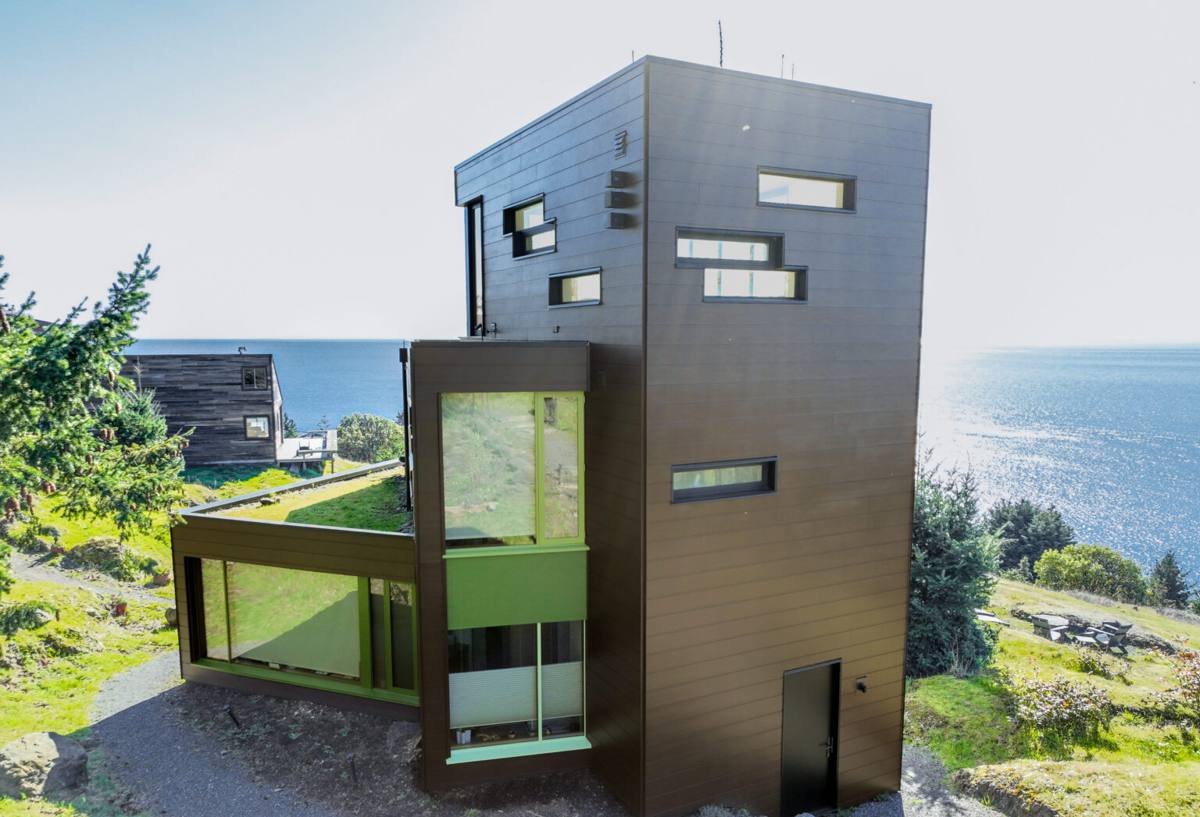
Whatcom County sits close enough to Bellingham Bay and the Salish Sea that salt-laden air is a real factor, not a coastal cliché. Salt air accelerates corrosion on hardware, fasteners, and lower-grade metal components — locks, hinges, and cranks that look fine for a few years and then start seizing or pitting. It also breaks down cheap seals and finishes faster than an inland climate would.
Then there's the rain. Bellingham doesn't just get a lot of rain — it gets driving, wind-pushed rain that hits windows at an angle, especially on west- and south-facing walls. That kind of exposure finds every weakness in flashing, caulking, and sill design. A window that would perform fine in a drier climate can leak here within a few seasons if it wasn't installed with real attention to water management.
And then there's moss. Whatcom County's moss season runs long — shaded north sides of houses, roof lines, and window trim can stay damp for months at a stretch. Moss and algae hold moisture against wood trim and sills, which accelerates rot around window openings that aren't properly sealed and flashed. This is less about the window unit itself and more about what's happening in the four inches of assembly around it — which is exactly where a lot of window jobs go wrong.
What "Energy-Efficient" Actually Means Here
A lot of window marketing leans on "double-pane" or "Energy Star" as if that settles the question. In a marine climate like Bellingham's, the more useful numbers are U-factor and Solar Heat Gain Coefficient (SHGC):
- U-factor measures how well the window resists heat loss — lower is better for our cool, wet winters.
- SHGC measures how much solar heat passes through — this matters less here than in sunnier climates, but it still affects how a south-facing room feels on the rare bright day.
- Air infiltration rating matters more in Bellingham than in drier regions, because wind-driven rain will find any gap that also lets air through.
- Condensation resistance is worth asking about directly — it tells you how well a window will handle our humidity without fogging or sweating.
Double-pane windows with a quality low-E coating and argon fill cover most homes in Columbia well. Triple-pane is available and does perform better on paper, but for our climate the marginal energy gain often doesn't justify the added cost and weight unless you're dealing with a north-facing wall of glass or an unusually exposed lot.
Frame Material Comparison
| Frame Material | How It Handles Our Climate | Maintenance | Typical Lifespan |
|---|---|---|---|
| Vinyl | Won't rot or corrode; handles salt air well; can expand/contract with temperature swings | Low — occasional cleaning | 20–30+ years |
| Fiberglass | Very stable, resists warping, holds paint well, strong against wind-driven rain | Low | 30–40+ years |
| Wood-clad | Good insulator, classic look for older Columbia homes, but exterior cladding must be properly sealed against moisture | Moderate — watch cladding seams | 20–30 years with upkeep |
| Aluminum | Prone to corrosion in salt air unless marine-grade; poor insulator unless thermally broken | Moderate to high | Varies widely |
We steer most Columbia homeowners toward vinyl or fiberglass for straightforward energy performance and low upkeep, and toward wood-clad when matching the character of an older home matters more than pure maintenance-free operation. We don't push uninsulated aluminum replacements in this climate — the corrosion and heat-loss trade-offs just aren't worth it for a window meant to last decades here.
What a Correct Installation Actually Involves
The window unit itself is maybe half the equation. The other half is the installation detail work that determines whether that window stays watertight through twenty Bellingham winters. Given our rain exposure, this is where we spend the most care:
- Removing the old window and inspecting the framing and sill for hidden rot before anything new goes in
- Installing a proper sill pan to direct any water that gets past the window back outside, not into the wall cavity
- Flashing the head, jambs, and sill in the correct shingle-lap order so water sheds downward and outward
- Using compatible sealants and housewrap integration rather than relying on caulk alone
- Shimming and leveling the unit so it operates smoothly and seals evenly for its full life
- Insulating the gap between the frame and the rough opening without overpacking, which can bow the frame
Skipping any one of these steps is how a brand-new, expensive window ends up with a moisture problem inside three or four years — and by the time you see staining or soft trim, the damage is already in the wall.
Signs Your Columbia Home's Windows Need Attention
- Visible condensation or fogging between the panes (a failed seal, not a cleaning issue)
- Cold drafts near the glass or frame even with the window fully latched
- Sticking, hard-to-operate hardware — often an early sign of salt-air corrosion
- Soft or discolored trim and sills, especially on shaded, moss-prone sides of the house
- Noticeably higher heating bills compared to similar-sized homes nearby
- Rattling in wind or noticeable outside noise transfer
- Paint or finish peeling from the inside frame, which usually points to trapped moisture
Our Process for Columbia Window Projects
We start with an on-site walkthrough — not a sales pitch, an actual assessment of your windows, framing condition, and exposure on each side of the house. Different elevations often need different answers; a west-facing wall catching the worst of the driving rain may call for more attention to flashing detail than a sheltered east side. From there we talk through frame material and glass package options that fit your home's age, style, and budget, with straightforward numbers, not upsell pressure.
Installation is scheduled around weather windows where possible, since opening up a wall in the middle of a downpour is never ideal. We remove and inspect as we go, flag anything unexpected — rot, prior water damage, undersized flashing — before covering it back up, and finish with cleanup and a walkthrough of how the new hardware operates. If something isn't sealing or operating right, we come back and fix it.
Cost Factors to Expect
| Factor | Why It Moves the Price |
|---|---|
| Frame material | Vinyl is typically the most affordable; fiberglass and wood-clad cost more upfront but often less over the window's life |
| Glass package | Standard double-pane low-E vs. upgraded coatings or triple-pane |
| Number and size of openings | Larger or custom-shaped windows cost more per unit |
| Condition of existing framing | Hidden rot or water damage found during removal adds repair time before the new window goes in |
| Access and site conditions | Second-story or hard-to-reach windows take more labor |
We give honest, itemized numbers up front rather than a vague ballpark, so you know what you're paying for and why.
Why a Crew That Already Works in Columbia Matters
Window replacement done wrong doesn't usually fail on day one — it fails two or three winters later, when a poorly flashed sill finally lets water into the wall. A crew that regularly works Columbia and the surrounding Bellingham neighborhoods has already seen how this specific combination of salt air, driving rain, and moss-season dampness plays out on real houses in this area, including the older homes with original framing that needs extra care during removal. That's not something you get from a general contractor passing through, and it's not something a big-box installer crew — often working from a generic checklist — tends to prioritize. Local experience means fewer surprises during the job and windows that are actually built to handle the next twenty winters here, not just the showroom demo.
If your Columbia home's windows are drafty, foggy, hard to operate, or just older than you'd like to admit, we're happy to take a look and give you a straight assessment — no pressure, no sales script. Reach out for a free estimate using the form below.