 Bellingham
 Fairhaven's Climate Is Harder on a Deck Than People Expect
Fairhaven sits close to Bellingham Bay, tucked under mature evergreen cover on hillside lots that get less direct sun than most people assume when they picture "the Pacific Northwest." That combination — salt-laden air coming off the water, heavy rain concentrated in the fall-through-spring stretch, and shaded ground that rarely dries out completely — is a genuinely tough environment for an outdoor structure. A deck built with generic, one-size-fits-all methods can look perfectly fine through its first summer and still start showing real problems by year three or four: rust bleeding through fastener heads, a soft spot where the deck meets the house, moss creeping across boards that never see a full afternoon of sun.
None of that is mysterious. It's simply what a marine climate does to wood, fasteners, and framing over time in Whatcom County, and it's entirely manageable when a deck is designed and built around that reality from the first conversation, rather than treated as an afterthought once the framing is already up.
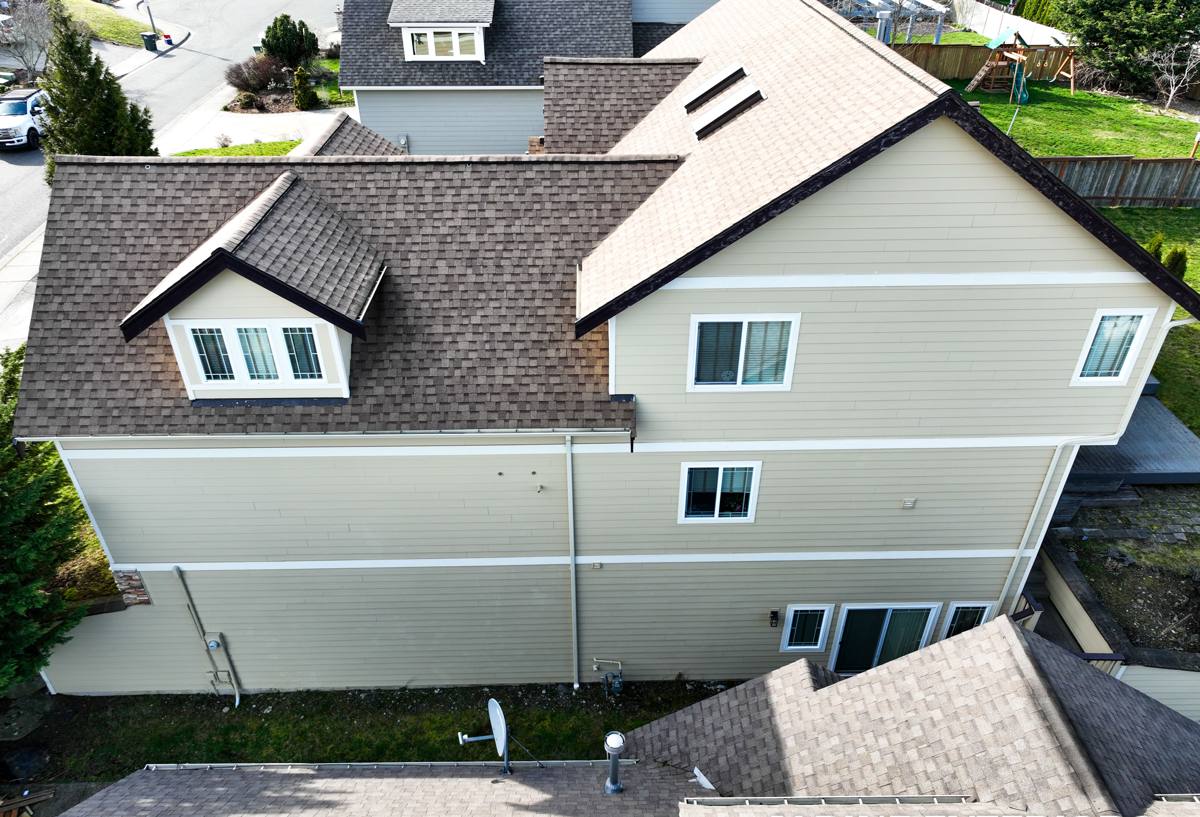
What a Deck in This Neighborhood Actually Needs
Drainage and airflow first, appearance second
Standing water is the enemy of every deck, but it's a bigger enemy on a shaded, hillside lot than on an open, sunny one. Boards that hold moisture between rains — because the underside never gets airflow, or because the deck sits low and tight to the ground — start to break down from underneath long before the surface shows any wear. A correctly built deck accounts for board spacing, joist ventilation, and a slight pitch away from the house so water actually leaves instead of sitting.
Fasteners and hardware that can take salt air
Proximity to Bellingham Bay means airborne salt reaches structures well back from the shoreline, and it's brutal on the wrong grade of screw, bracket, or joist hanger. Standard zinc-coated hardware can start showing surface rust within a couple of seasons in this environment. Stainless steel fasteners and connectors, or hardware specifically rated for coastal and treated-lumber exposure, cost more upfront and are worth it — this is one of the few places on a deck build where cutting corners shows up as a visible, ugly problem within a few years rather than a slow, invisible one.
Ledger flashing where the deck meets the house
The single most common failure point on decks in wet climates isn't the decking itself — it's the ledger board connection, where the deck attaches to the house. Without proper flashing, water works its way behind the ledger and into the house's rim joist and framing, and that damage is hidden until it's serious. Correct flashing detail here is non-negotiable, and it's worth asking any contractor directly how they handle it.
Footings for sloped, older lots
A lot of Fairhaven's housing stock sits on hillside or sloped ground, sometimes with older foundations that weren't built with a deck addition in mind. That usually means footings need to be engineered for the actual slope and soil conditions on site rather than poured to a generic depth, and in some cases a deck needs its own independent support structure rather than leaning partly on the house.
Choosing a Decking Material for Shade, Salt Air, and Long Wet Winters
There's no single "best" decking material — there's a best material for a given lot, budget, and how much upkeep an owner actually wants to do. For a shaded, damp, salt-exposed setting like Fairhaven, the trade-offs look different than they would on a dry, sunny lot elsewhere in the county.
| Material | Moisture & moss behavior | Maintenance | Relative upfront cost |
|---|---|---|---|
| Pressure-treated wood | Absorbs moisture; needs sealing to shed water and resist moss in shade | Annual cleaning and periodic sealing/staining | Low |
| Cedar | Naturally moisture-resistant but still needs care in constant shade | Regular cleaning, occasional oil or stain | Medium |
| Capped composite | Wood-fiber core with a polymer shell; sheds water well, resists moss better than raw wood | Occasional washing, no sealing or staining | Medium-High |
| PVC / fully synthetic | No wood fiber to absorb moisture at all; best option for perpetually damp, shaded areas | Occasional washing only | High |
We don't push one product over another as a blanket rule — we walk through this table with the actual site conditions in mind. A sunny back deck and a shaded, moss-prone side deck on the same house can reasonably call for different materials.
Permits and Code in Bellingham and Whatcom County
Most custom deck builds in the city or unincorporated Whatcom County require a building permit, particularly once a deck is attached to the house or built above a certain height off grade. Permitting exists to catch exactly the things that fail first in this climate — footing depth, ledger attachment, and railing safety — so it's not a hoop to jump through, it's a second set of eyes on the parts of the job that matter most long-term.
A local crew that already knows the permitting process for the area saves real time here: knowing what the inspector will want to see at footing inspection versus final inspection, and building to that standard the first time, avoids the back-and-forth delays that come from guessing.
Our Process, Start to Finish
- On-site walkthrough. We look at the lot's slope, sun exposure, existing structure (if replacing a deck), and how the space will actually be used before talking materials.
- Design and material selection. We lay out size, layout, and decking/railing options against the site conditions and your budget, with no pressure toward the most expensive option.
- Permit submission and engineering. We handle the paperwork and any engineered footing or ledger detail the site requires.
- Footings and framing. Footings poured to the depth and spec the site needs; framing built with corrosion-resistant hardware throughout.
- Decking, railing, and stairs installed to code, with attention to fastening patterns that hold up over time rather than just looking clean on day one.
- Final inspection and walkthrough with you, so you know what basic maintenance (if any) the material you chose actually needs going forward.
Signs Your Current Deck Is Losing the Fight
If you're not sure whether you need a repair, a partial rebuild, or a full replacement, these are the things worth checking before winter makes the decision for you:
- Soft, spongy, or discolored decking near where the deck attaches to the house
- Rust streaks running down from screw heads or metal brackets
- Persistent moss or green film that comes right back within weeks of cleaning
- Gaps or movement where the ledger board meets the house siding
- Wobbly railings or posts, or stair stringers that flex underfoot
- Standing water that takes more than a day to fully drain after rain
Any one of these on its own might be minor. Two or three together usually mean the underlying structure, not just the surface, needs attention.
Railings, Stairs, and Everyday Safety Details
Railing height, baluster spacing, and stair rise-and-run are all governed by code for good reason — they're the details that prevent an actual injury, not just a paperwork issue. On a hillside lot, stairs and railings also take on outsized importance simply because more decks in this neighborhood have real elevation to manage. We build these to spec as a baseline, not as an upgrade option.
Why Hire a Crew That Already Works Fairhaven
A contractor who mostly builds decks in drier, sunnier parts of the state can still do competent framing and still miss the details that matter here — the ledger flashing detail that keeps water out of a hundred-year-old rim joist, the hardware grade that won't rust out in five years of salt air, the footing approach that actually works on a sloped, older lot. None of that is complicated once you know to look for it, but it's exactly the kind of thing that gets skipped when a crew is unfamiliar with Bellingham's specific mix of terrain, tree cover, and marine weather.
Working regularly in and around Fairhaven and greater Bellingham also means we're not guessing at what the local permitting office expects to see, or what materials actually hold up through a full Whatcom County winter versus what simply looks good on a spec sheet.
Let's Take a Look at Your Deck
Whether you're planning a new custom deck, replacing one that's showing its age, or just want an honest read on whether repair or replacement makes more sense, we're happy to come take a look. There's a free, no-pressure estimate form below — tell us a bit about your project and we'll go from there.