 Bellingham
 Windows in Fairhaven Face a Different Set of Problems
Fairhaven sits close to Bellingham Bay, which means the windows on these homes deal with something most inland Whatcom County properties don't: near-constant exposure to salt-laden air, wind-driven rain coming off the water, and long stretches of shade and dampness that keep moss and algae established most of the year. Add in the age and character of a lot of Fairhaven's housing stock — older wood-frame homes, craftsman and Victorian-era details, converted multi-unit buildings — and window replacement here isn't a one-size-fits-all job. It's a job that has to account for what the site is actually doing to the building.
This page is about one thing: custom window installation and replacement for homes in and around Fairhaven, and what it takes to get it right given the local climate and the local housing stock.
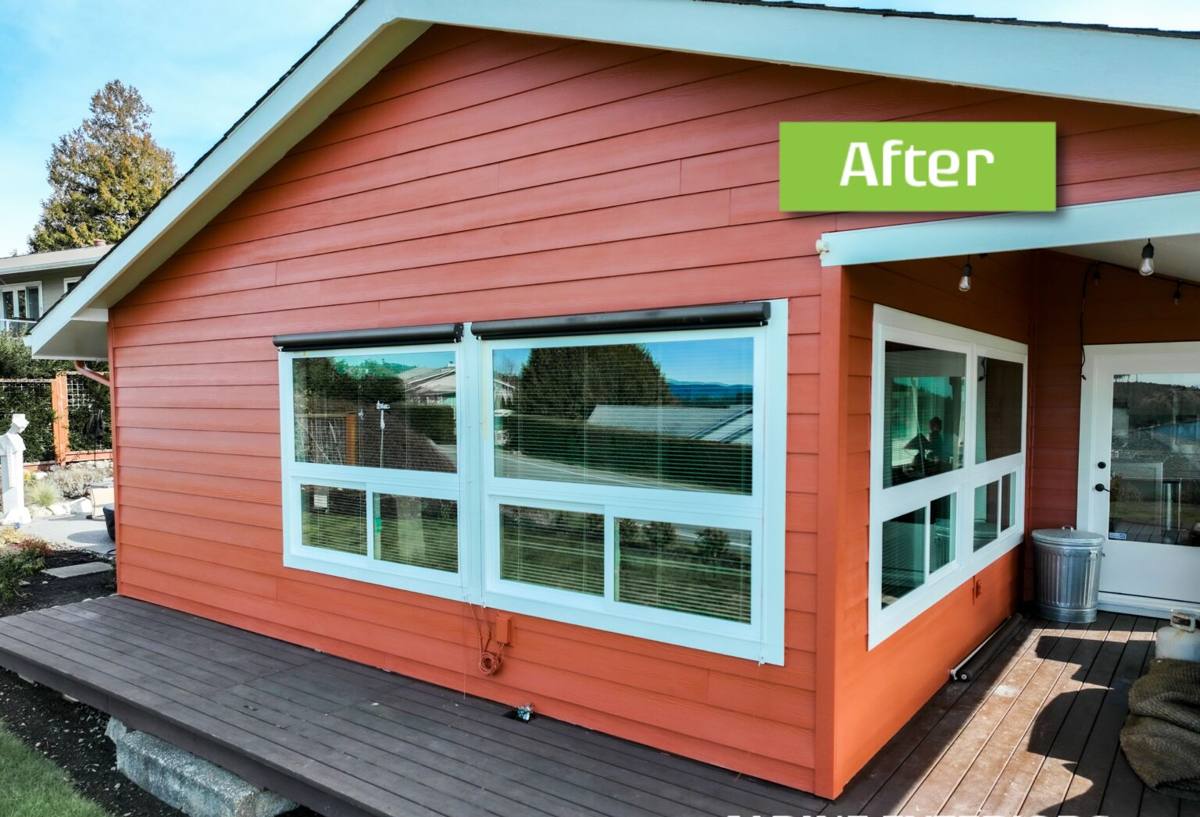
What Bellingham's Marine Climate Does to Windows Over Time
Every coastal Whatcom County neighborhood deals with rain. Fairhaven's position closer to the water adds a few extra stresses that show up in window failures we see repeatedly.
Salt Air and Hardware Corrosion
Salt in the air accelerates corrosion on exposed metal — window hardware, screen frames, aluminum cladding, and fasteners all age faster near the water than they do a few miles inland. Locks that stick, hinges that seize, and cladding that pits or discolors early are common signs that a window's hardware wasn't specified for a marine environment.
Driving Rain and Water Intrusion
Wind off the bay doesn't just drop rain straight down — it pushes it sideways into siding, trim, and window openings. A window that would be fine in a sheltered inland lot can leak in Fairhaven if the flashing, sill pan, and sealant details weren't built for wind-driven water. Most of the rot and interior water staining we find around older windows traces back to water management at the opening, not the window unit itself.
Moss, Algae, and Long Shaded Seasons
Fairhaven's tree cover and marine layer keep a lot of surfaces damp for extended stretches of the year. Moss and algae take hold on horizontal surfaces — sills, exterior trim, and anywhere water sits instead of draining. Left alone, that growth holds moisture against wood trim and finishes and shortens their life considerably.
What "Custom" Actually Means for a Fairhaven Window Job
"Custom windows" doesn't mean upgraded or expensive — it means the window is built and installed to match the actual opening and the actual house, rather than forcing a stock size into a space it doesn't fit. That matters more in Fairhaven than in newer subdivisions because:
- Older homes often have openings that have shifted slightly over decades and are no longer perfectly square or standard-sized.
- Historic and craftsman-style homes have proportions, trim profiles, and grid patterns that stock replacement windows frequently get wrong.
- Some homes have architectural windows — arched tops, unusual widths, or multi-unit combinations — that simply don't come off a shelf.
- Matching sightlines and trim depth to the rest of the house matters for both appearance and resale value in a neighborhood where character homes carry a premium.
Custom fabrication costs more than a stock unit, but forcing an ill-fitting stock window into an out-of-square opening usually costs more in the long run — through air leaks, water intrusion, and a visibly wrong fit.
Choosing Materials for a Salt Air, High-Rain Climate
There's no single "best" window material — each has real trade-offs, and the right call depends on the specific house, its exposure to wind and rain, and the owner's maintenance expectations. Here's how the common options hold up under Fairhaven's conditions:
| Material | How It Handles Salt Air & Rain | Maintenance | Best Fit |
|---|---|---|---|
| Vinyl | Won't corrode; performs well in wet, salty air | Low — occasional cleaning | Budget-conscious replacements, non-historic homes |
| Fiberglass | Very stable in temperature and moisture swings; strong corrosion resistance | Low | Long-term durability, larger or custom openings |
| Wood-clad | Interior wood warmth with exterior cladding protecting from weather, but cladding seams need attention near salt air | Moderate — cladding and seals need periodic inspection | Historic-style homes where interior wood trim matters |
| Aluminum | Strong but prone to corrosion and pitting faster than other materials in salt air unless properly coated | Higher — hardware and finish need monitoring | Specific architectural applications where thin sightlines are required |
For most Fairhaven homes, we steer owners toward vinyl or fiberglass for straightforward replacements, and wood-clad when matching historic trim details is the priority. We're upfront when a material isn't a good match for a given exposure — that's a maintenance conversation, not a sales pitch.
What a Correct Installation Actually Involves
The window unit itself is maybe half the job. The other half — the part that determines whether it leaks in five years or lasts decades — is how the opening is prepared and sealed. A rushed install can make even a good window fail early.
- Remove the old window and inspect the framing, sill, and sheathing for hidden rot or water damage before anything new goes in
- Install or repair a proper sill pan so any water that gets past the window drains outward, not into the wall
- Flash the opening correctly — head flashing that sheds water over the window, not just a bead of caulk
- Use sealants and tapes rated for the exposure, not general-purpose caulk that will fail in a couple of seasons
- Insulate the gap between the frame and rough opening properly — gaps that are too tight or too loose both cause problems
- Reinstall or replace exterior trim so water sheds away from the new unit
- Test operation and check for square, level, and plumb before final fastening
Any one of these steps skipped is where a "new window" starts leaking within a couple of wet seasons. This is also why we don't treat window replacement as a purely cosmetic upgrade — it's water management work first.
Our Process, Start to Finish
- On-site assessment. We look at the existing windows, the openings, signs of water intrusion or rot, and how the house is exposed to wind and rain off the bay.
- Honest material and style recommendation. We walk through the trade-offs for your specific house rather than pushing one product line.
- Custom measurement and fabrication. Openings are measured precisely; nothing is ordered off a generic size chart.
- Removal and opening prep. Old units come out, framing is inspected, and any rot or damage is addressed before the new window goes in.
- Installation with proper flashing and sealing. Sill pans, flashing, and weather-rated sealants go in per the details above.
- Trim and finish work. Interior and exterior trim is reinstalled or matched to the home's existing look.
- Final walkthrough. We test operation, check for gaps or drafts, and confirm the work before we consider the job done.
Working Around Fairhaven's Historic and Older Housing Stock
A lot of Fairhaven's homes predate modern building codes, and some sit within or near areas where exterior changes are subject to additional review. If your home falls under any kind of historic or design-district guideline, that can affect what window styles, materials, and grid patterns are acceptable on street-facing elevations. We don't assume — if there's any question about whether your property has design restrictions, that's something to confirm with the City of Bellingham before ordering custom units, and we're glad to help walk through that step as part of the planning process rather than after windows are already fabricated.
Keeping New Windows Performing in This Climate
Even a correctly installed window benefits from basic upkeep in a marine environment:
- Rinse salt residue off frames and glass periodically, especially after windy weather off the bay
- Keep sills and tracks clear of moss, leaves, and debris so water can drain instead of pooling
- Inspect exterior caulking and sealant lines yearly — coastal UV and moisture cycles break sealants down faster than they do inland
- Operate hardware regularly so locks and hinges don't seize from disuse combined with salt exposure
- Address any moss growth on nearby trim or siding promptly, since it holds moisture against the building
Why Hiring a Crew That Already Works in Fairhaven Matters
Window performance in this neighborhood comes down to details that a crew only learns by working here repeatedly: how wind actually hits a given block, which older homes tend to have out-of-square openings, what moisture problems show up first, and how local permitting and design review works when a home falls under additional guidelines. A contractor unfamiliar with Bellingham's coastal exposure may spec the right window on paper and still get the installation details wrong for this specific climate. Experience with Whatcom County's wet, salt-influenced weather — not just general window installation experience — is what keeps a job performing years after it's done.
If you're considering new or replacement windows for a Fairhaven home, we're happy to take a look and give you a straightforward, no-pressure estimate — including an honest read on what your specific house needs. Use the form below to get started.