 Bellingham
 Why Fairhaven Decks Wear Out Faster Than the Brochure Says
Fairhaven sits close enough to the water that salt-laden air reaches every deck board, every fastener, and every joist in the structure below. Add Bellingham's long stretch of driving rain each fall and winter, plus a moss season that can run from October well into spring, and you have a climate that is genuinely harder on exterior wood structures than most manufacturers' warranty language assumes. A deck built with big-box lumber and standard hardware in a drier inland town simply does not face the same conditions as one built two blocks from Bellingham Bay.
That combination — salt exposure, near-constant moisture, and shade from mature trees common in older Fairhaven lots — is why so many decks in this neighborhood show rot, fastener corrosion, and slick moss growth years before a homeowner expects to be thinking about replacement. Understanding why the damage happens is the first step to building something that actually holds up.
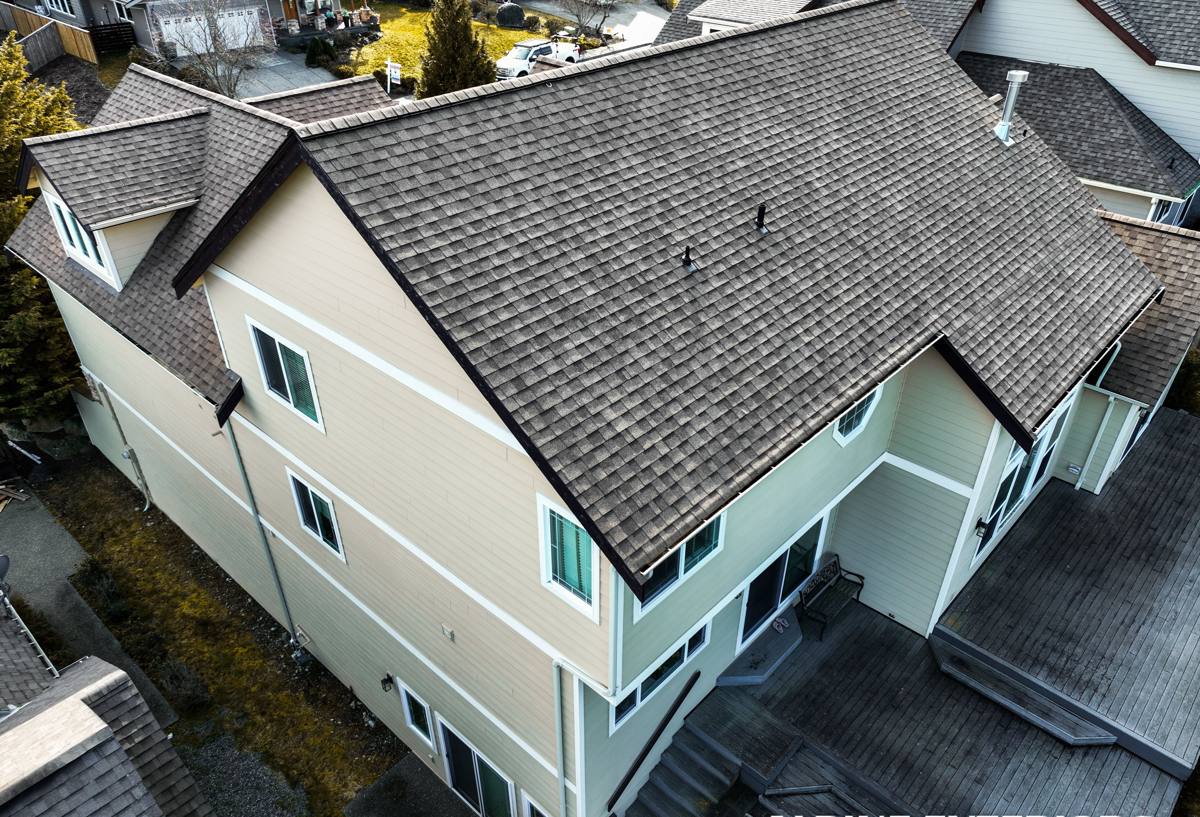
Signs a Fairhaven Deck Needs Replacement, Not Another Repair
Not every tired-looking deck needs to come out. But there's a point where patching boards is throwing money at a structure that's already lost its integrity. In Whatcom County's climate, we look for a specific set of warning signs before recommending full replacement over repair.
- Soft or spongy spots in the decking, especially near the house or in shaded corners where moss holds moisture against the wood
- Rust streaking from fasteners, which usually means the hardware is failing faster than the wood around it
- Ledger board separation or gaps where the deck meets the house — a common entry point for water in heavy rain
- Visible rot or soft wood at post bases and around footings
- Persistent moss or algae film that returns within weeks of cleaning, even after a proper wash
- Railings that flex or feel loose under normal weight
If you're seeing two or more of these, a repair is usually a short-term fix on a structure that's already compromised underneath. Replacement lets us address the whole system — framing, flashing, and surface — rather than chasing symptoms one board at a time.
What a Correct Deck Replacement Actually Involves
Below the Surface
The parts of a deck that fail first in this climate are rarely the visible boards — it's the framing, footings, and the ledger connection to the house. A proper replacement starts with footings sized and set to current code, pressure-treated framing rated for ground or moisture contact where it's needed, and a ledger flashing detail that actually sheds water away from the house rather than trapping it against the rim joist. This last point matters more in Bellingham than in drier climates, because a poorly flashed ledger is one of the most common sources of hidden rot in decks built during rainier stretches of the year.
Fasteners and Hardware
Standard galvanized fasteners can corrode faster than expected in salt-influenced air. We use stainless steel or high-grade coated fasteners and structural hardware rated for coastal or high-moisture exposure, particularly at post bases, joist hangers, and any connection point that stays damp longest after rain.
Drainage and Airflow
Moss and rot both need standing moisture to take hold. Correct joist spacing, gapping between boards, and grading underneath the deck so water actually drains away — rather than pooling under the structure — cuts down significantly on how fast moss re-establishes and how long wood stays wet after a storm.
Choosing Decking Material for Salt Air and Moss
There's no single "best" decking material for every Fairhaven home — the right choice depends on your budget, how much shade the deck gets, and how much upkeep you're willing to do. Here's how the common options actually compare in this specific climate, not in a generic spec sheet.
| Material | Moisture & Moss Behavior | Maintenance | Honest Trade-Offs |
|---|---|---|---|
| Cedar or pressure-treated wood | Absorbs moisture; needs sealing to resist moss and staining | Annual cleaning and re-sealing recommended | Lower upfront cost, natural look, but highest ongoing maintenance in a wet climate |
| Capped composite | Resists moisture absorption; surface sheds water well | Periodic washing; no sealing or staining | Higher upfront cost, but far less maintenance burden over the deck's life |
| PVC decking | Does not absorb moisture at all; very resistant to moss staining | Occasional washing only | Highest upfront cost; some homeowners find the appearance less wood-like than composite |
We're honest with clients about the trade-off: wood costs less to install but demands real annual attention to keep moss and rot at bay in this climate. Composite and PVC cost more up front but shift that maintenance burden way down, which matters if your deck sits in a shaded, moisture-prone spot typical of many Fairhaven lots.
Railings, Stairs, and the Details That Get Skipped
Railings and stair stringers take abuse from the same moisture and salt exposure as the deck surface, but they're often where corners get cut on a rushed job. We build railing posts with the same attention to flashing and fastener quality as the main structure, since a loose or rotting post is both a maintenance headache and a real safety issue. Stair stringers, which sit close to grade and catch splashback and standing water, get treated lumber or composite components suited to that higher exposure, not the same materials used higher up on the deck.
Our Process, Start to Finish
- On-site assessment — we inspect the existing deck, framing, and ledger connection to determine what's salvageable and what isn't, and explain what we find in plain terms
- Written estimate — a clear scope of work and cost breakdown, no vague allowances
- Permit handling — we manage the permit process with the City of Bellingham or Whatcom County as required for your specific project
- Demo and disposal — full removal of the old structure, including proper disposal
- Framing and structural work — footings, posts, joists, and ledger flashing built to code and suited to local exposure
- Decking, railing, and stair installation — using the material you've chosen, installed to the manufacturer's fastening spec
- Final walkthrough — we go over the finished deck with you before calling the job done
Permits and Local Building Considerations
Most deck replacements in Bellingham and surrounding Whatcom County require a permit, particularly when footings, framing, or railing height are involved — which covers nearly every full replacement. Requirements can vary depending on your specific location and the scope of work, including whether the deck is attached to the home and how high it sits above grade. We handle the permit application and inspection scheduling as part of the job, so you're not the one tracking down paperwork or coordinating inspector visits.
Maintaining Your New Deck in Bellingham's Climate
A well-built deck still needs some seasonal attention in this climate — the goal of a correct build is to reduce that burden, not eliminate it entirely. A short, realistic maintenance routine goes a long way toward protecting your investment.
- Sweep debris and standing leaves off the deck regularly, especially in fall when moss growth accelerates
- Wash the surface at least once a year to remove algae film before it becomes established moss
- For wood decking, plan on resealing on a regular schedule rather than waiting until it looks weathered
- Check railings and stair connections periodically for looseness
- Keep gutters and downspouts near the deck clear so runoff isn't draining directly onto or under the structure
- Trim back overhanging branches that keep the deck shaded and slow to dry after rain
Why a Crew That Works Fairhaven Regularly Makes a Difference
A deck replacement is a structural project, and the details that matter most — flashing at the ledger, fastener choice, drainage under the frame — are exactly the details that are easy to underbuild if a crew isn't used to this climate's demands. Contractors who work regularly in Fairhaven and the surrounding Bellingham area see the same moisture and salt-exposure patterns repeat house after house, and build accordingly instead of treating every deck like it's going up in a dry inland subdivision. That familiarity shows up years later in how the deck holds up, not just in how it looks on installation day.
If your deck is showing rot, loose railings, or moss that keeps coming back no matter how often you clean it, we're happy to take a look and give you an honest assessment of repair versus replacement. Reach out for a free, no-pressure estimate using the form below, and we'll walk the property with you and talk through what your deck actually needs.