 Bellingham
 Fairhaven's Setting Puts Real Demands on Siding
Fairhaven is one of the more exposed neighborhoods we work in around Bellingham. Its position near Bellingham Bay means homes here take on salt-laden air, wind-driven rain off the water, and long stretches of shaded, damp weather that keep exterior surfaces wet longer than they would be a few miles inland. None of that is a problem by itself — plenty of siding materials hold up fine in mild, dry climates. The issue is that Whatcom County's marine climate is not mild and dry. It is wet for most of the year, salty near the water, and shaded enough in places that surfaces don't dry out quickly between storms. Siding on a Fairhaven home has to handle all three conditions at once, year after year, without the homeowner having to think about it.
That combination is exactly why we standardized on James Hardie fiber cement and stopped installing anything else. This page walks through what the local climate actually does to siding, what a correct fiber cement installation involves, and how our process is built around the realities of working this specific neighborhood.
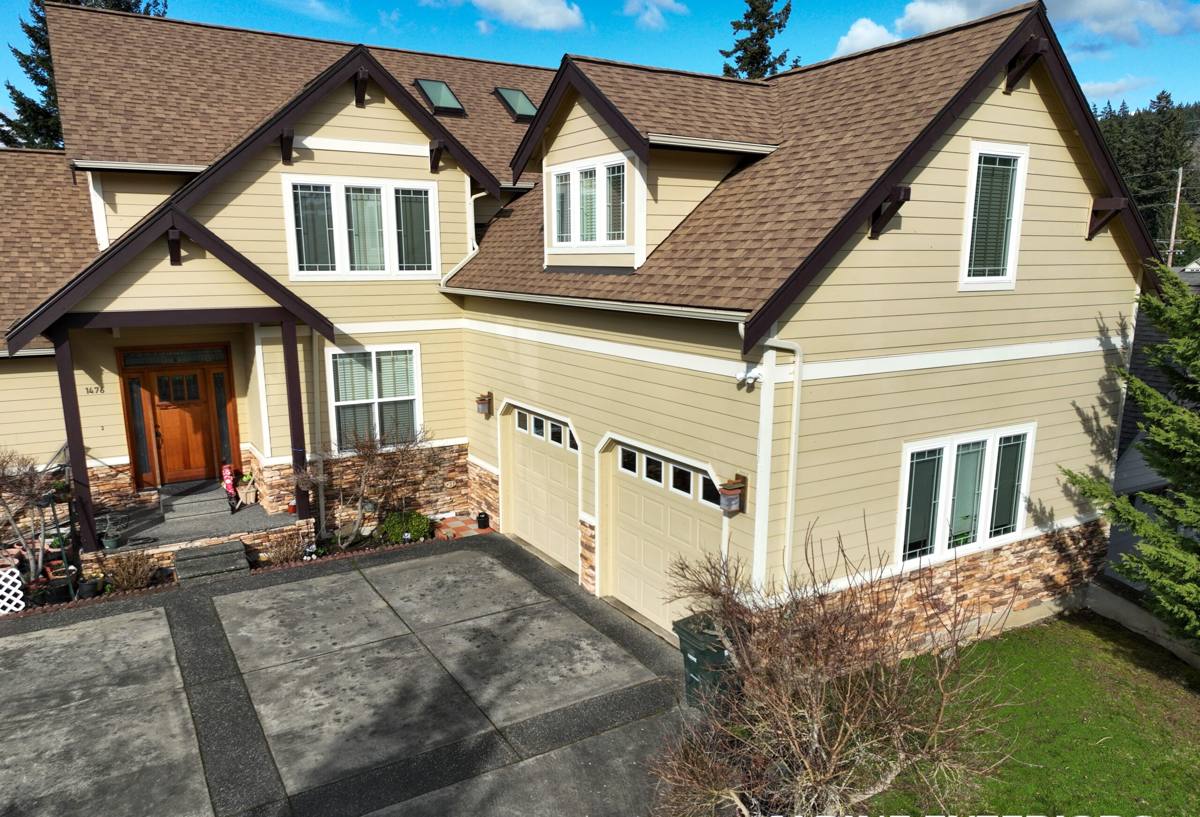
What Salt Air, Wind-Driven Rain, and Moss Actually Do to a House
Salt-Laden Air and Corrosion
Air carrying salt from the bay accelerates corrosion on fasteners, flashing, and trim. Cheaper or improperly coated fasteners can start rusting years before they should, and rust stains bleeding through paint or siding joints are one of the clearest signs that the wrong hardware went into a job. This is a detail most homeowners never think to ask about, but it matters more in Fairhaven than it would twenty miles inland.
Wind-Driven Rain and Water Intrusion
Rain that falls straight down is manageable for almost any siding product. Rain that gets pushed sideways by wind off the water is a different problem — it finds gaps at butt joints, corners, and penetrations that would never see water in a calmer climate. Siding systems that rely on caulk alone to keep water out, rather than proper flashing and drainage behind the cladding, tend to fail first in exactly this kind of weather.
Shade, Moisture, and Moss
Bellingham's moss season runs long, and Fairhaven's tree cover and marine humidity extend it further. Moss and algae don't just look bad — they hold moisture against the siding surface, and on materials that aren't dimensionally stable or well-sealed, that trapped moisture is what eventually leads to swelling, delamination, or paint failure. A siding product's real test isn't a sunny day; it's how it behaves under a layer of wet moss in February.
Why We Install Only James Hardie Fiber Cement
We made a deliberate decision years ago to install James Hardie products exclusively and not offer vinyl, LP SmartSide, cedar, primed spruce, or other fiber cement brands. That's a narrower lineup than most contractors carry, and we think that's the point.
A Non-Combustible, Engineered Material
Fiber cement is made from cement, sand, and cellulose fiber, engineered specifically to resist moisture, pests, and fire in ways that wood-based and vinyl products structurally cannot. It doesn't rot, it doesn't feed insects, and it holds its shape under the wet-dry cycling that defines a Whatcom County winter.
ColorPlus Factory Finish
Hardie's ColorPlus finish is baked on in a controlled factory environment rather than sprayed or brushed on site. In a climate where job-site paint has to cure under unpredictable weather, a factory finish is more consistent and holds its color longer — which matters when a home is going to spend a decade or more in salt air and UV exposure.
HZ5 Climate-Engineered Formulation
James Hardie makes region-specific formulations, and the HZ5 line is engineered for exactly the kind of wet, freeze-prone marine climate found in Western Washington. It's not a marketing label — it's a different product formulation built to handle moisture cycling better than a generic, one-size-fits-all board.
What a Correct Installation Involves on a Fairhaven Home
Fiber cement is only as good as the installation behind it. A large share of the siding failures we get called out to inspect trace back to installation shortcuts, not the material itself.
Water Management Behind the Siding
Correct installation starts with a weather-resistive barrier and proper flashing at every window, door, deck ledger, and penetration — installed so water is directed out and down, not trapped behind the cladding. This matters everywhere, but it matters more where wind-driven rain is a regular event rather than an occasional storm.
Fastening and Clearances
Hardie specifies exact fastener types, spacing, and minimum clearances from grade, roofing, and other surfaces. Skipping the clearance requirements — a common shortcut — traps moisture against the bottom edge of the siding and is one of the fastest ways to undermine an otherwise good product.
Joints, Caulking, and Touch-Up
Cut edges and field-touch-up need to be sealed and painted with Hardie-approved products to maintain the factory finish's protection. Joints should be treated as part of the water management system, not just cosmetically caulked and left.
How James Hardie Compares to the Alternatives
Homeowners often ask why we don't offer a lower-cost alternative alongside Hardie. Here's an honest look at how the common options actually perform under Fairhaven's conditions:
| Material | Salt Air / Corrosion Behavior | Moisture & Moss Resistance | Typical Warranty | Maintenance Burden |
|---|---|---|---|---|
| James Hardie Fiber Cement (HZ5) | Non-combustible, dimensionally stable, holds finish | Engineered for wet marine climates | Long transferable material warranty; factory finish warranty | Low — periodic washing, no repainting for years |
| Vinyl Siding | Can warp or discolor with UV and heat cycling | Doesn't rot, but seams and gaps allow water behind panels | Prorated, often weaker over time | Low upfront, but replacement-only if damaged, not repairable |
| Cedar / Wood Siding | No corrosion risk, but absorbs moisture directly | Prone to rot, checking, and moss growth without diligent upkeep | None from the material; workmanship only | High — regular staining, sealing, and moisture monitoring |
| LP SmartSide (Engineered Wood) | No corrosion risk, but is a wood-strand product | Vulnerable at cut edges and joints if sealing isn't perfect | Manufacturer warranty, installation-sensitive | Moderate — edge sealing and joint maintenance are critical |
None of these are bad products in the abstract. We simply concluded that fiber cement, installed correctly, gives Fairhaven homeowners the best long-term match for this specific climate — which is why it's the only thing we put on a house.
Our Process for a Fairhaven Siding Project
- Site walk and assessment: we look at existing siding condition, moisture damage, moss patterns, sun and shade exposure, and drainage around the foundation.
- Removal and sheathing inspection: old siding comes off and the sheathing underneath gets inspected for rot or water damage before anything new goes on.
- Weather barrier and flashing: a new weather-resistive barrier is installed with flashing detailed at every window, door, and penetration.
- Hardie installation to spec: fastening, spacing, and clearances follow James Hardie's published installation requirements, not shortcuts.
- Finish and touch-up: cut edges and joints are sealed and finished with approved products to maintain the ColorPlus warranty.
- Final walkthrough: we go over the finished work with the homeowner before calling the job done.
Keeping Fiber Cement Siding Looking Right in a Marine Climate
Fiber cement is low-maintenance, not no-maintenance. A little seasonal attention goes a long way in a neighborhood like Fairhaven:
- Rinse siding once or twice a year to remove salt residue and organic buildup before it turns into moss.
- Trim back tree branches and shrubs that keep siding in constant shade and slow drying.
- Check caulked joints annually for cracking or separation, especially around windows and trim.
- Address any moss or algae growth promptly with gentle cleaning rather than pressure-washing, which can damage the finish.
- Watch fastener heads and metal trim for early rust staining — it's cheaper to address early than after it spreads.
Why Hiring a Crew That Already Works in Fairhaven Matters
A contractor who mostly works drier, more sheltered parts of Whatcom County will design and install siding differently than one who works Fairhaven's exposure regularly. Flashing details, fastener choices, and clearance decisions all shift slightly based on how much wind-driven rain and salt air a home actually sees. A crew that already knows this neighborhood isn't guessing at those adjustments — they've made them before, on homes with the same exposure your home has.
It also matters at the estimate stage. A contractor unfamiliar with the area may not flag moisture or moss issues that are already developing, because they're not used to looking for them here. Local experience means fewer surprises during the job and a better chance the siding performs the way it's supposed to for its full service life.
What Affects the Cost of a Fairhaven Siding Job
Every home is different, but a few factors consistently move the price on fiber cement siding projects in this area:
| Cost Factor | Why It Matters |
|---|---|
| Extent of existing damage | Rot or moisture damage found under old siding adds sheathing repair before new siding can go on |
| Home size and complexity | More corners, dormers, and trim details mean more cutting, flashing, and labor time |
| Siding profile and finish chosen | Lap width, texture, and color options affect material cost |
| Access and site conditions | Tight lots, slopes, or limited staging area near the water can affect labor time |
| Trim and accessory scope | Fascia, soffit, and trim replacement alongside siding adds to overall project cost |
We don't publish a flat price because these variables genuinely change the number from house to house — but we'll walk your home with you and explain exactly what's driving your estimate before you commit to anything.
If your Fairhaven home's siding is showing moss, staining, or wear, we're happy to take a look and give you a straightforward, no-pressure estimate — just fill out the form below to get started.