 Bellingham
 Roof Replacement in Lynden: A Different Job Than a Repair
Lynden sits inland in the Nooksack River valley, in the northern reaches of Whatcom County near the Canadian border. It isn't a waterfront town, but it still sits inside the same marine-influenced weather system that shapes exterior work across this whole corner of Washington. Moist air moves up the valley, rain arrives sideways as often as it falls straight down, and mild temperatures give moss and algae a growing season that can stretch across most of the year on shaded roof planes. A roof nearing the end of its life in this climate doesn't fail gracefully — it usually fails at the worst possible time, in the middle of the wettest stretch of the year.
Full roof replacement is a different job than a repair, and it deserves a different level of planning. A repair fixes what's currently broken. A replacement is the one point in a roof's life where everything underneath the surface — deck condition, ventilation, flashing, underlayment — gets addressed at once instead of patched around. Getting that plan right before the first shingle comes off is what determines whether the new roof lasts twenty-five years or shows problems in eight.
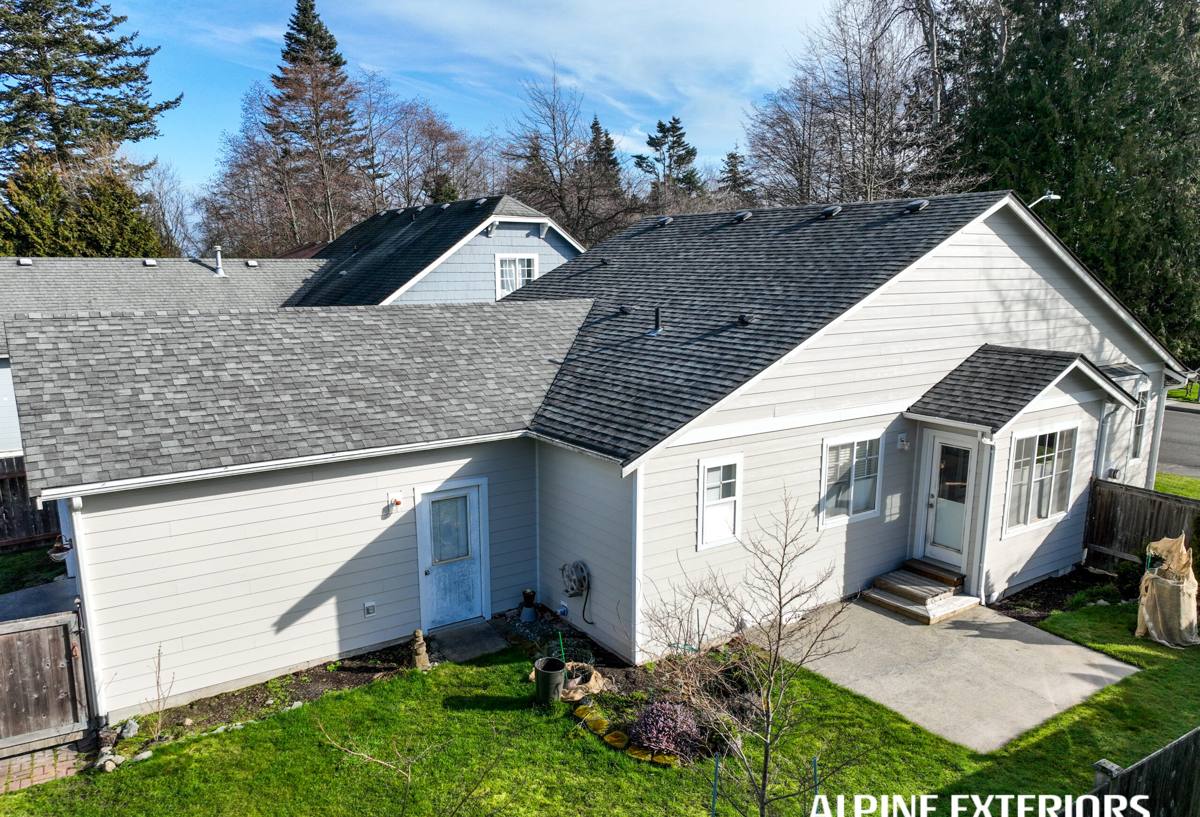
When Repair Stops Making Sense and Replacement Takes Over
We don't default to recommending replacement, and a straightforward leak or a section of wind-damaged shingles on an otherwise sound roof is usually a repair, not a teardown. Replacement becomes the honest answer when several of these are true at once:
- The roof is at or past its material's rated lifespan, regardless of how it looks from the ground
- Moss and moisture damage have spread across multiple slopes rather than staying isolated to one shaded section
- The roof has already had several repairs in recent years and keeps generating new problems elsewhere
- The roof deck shows soft spots, sagging, or staining that suggests moisture has been getting past the surface for a while
- Granule loss, curling, or cracking shingles are widespread rather than limited to one wind event
If only one or two of these apply, we'll usually say so and recommend a repair instead. A full replacement should be the correct answer to the condition of the roof, not the default recommendation because it's the bigger job.
What a Correct Full Roof Replacement Includes
Tear-Off and Deck Inspection
A real replacement starts with removing the old roofing down to the deck, not layering new material over what's already there. That's the only way to actually see the plywood or OSB underneath, which is where hidden problems from long-term moisture usually show up. Any soft, delaminated, or rotted decking gets replaced before anything new goes down — skipping this step is one of the most common reasons a new roof underperforms its expected lifespan.
Underlayment and Ice-and-Water Shield
The underlayment is the roof's backup layer if water gets past the surface material, and in a climate with this much sustained rain, it isn't a place to use the minimum product code allows. Ice-and-water shield at eaves, valleys, and around penetrations adds a self-sealing membrane exactly where water and wind-driven debris tend to collect.
Flashing and Ventilation
Flashing at every valley, chimney, vent pipe, and roof-to-wall transition needs to be lapped and sealed correctly, in sequence with the underlayment, not caulked over as an afterthought. Attic and roof deck ventilation gets checked and corrected at the same time, since a roof that traps moisture underneath will show moss, mildew, and premature aging on the new material no matter how good the shingles are.
New Roofing Material Installation
Only after the deck, underlayment, flashing, and ventilation are right does the new roofing material go down, following the manufacturer's fastening pattern, exposure, and clearance specifications. That's what keeps the manufacturer's warranty intact and what actually determines how the roof performs over the next few decades, not just how it looks the week it's finished.
Choosing a Replacement Material for Lynden's Valley Climate
There's no single correct roofing material for every home — it depends on roof pitch, how much shade the roof gets, budget, and how long you plan to stay in the house. What matters is understanding the real trade-offs before committing to one for a job that's supposed to last decades.
| Material | Moss & Moisture Behavior | Typical Maintenance | Realistic Lifespan Here |
|---|---|---|---|
| Architectural asphalt shingle | Performs well with proper ventilation and underlayment; moss-resistant granule options available | Periodic moss removal and gutter checks | 20-30 years |
| Standing seam metal | Smooth, non-porous surface sheds water and resists moss buildup | Low; occasional fastener and sealant checks | 40-60 years |
| Composite/synthetic shingle | Resists moisture absorption; performance varies by product line | Low to moderate | 30-50 years depending on product |
| Cedar shake | Absorbs moisture readily; needs airflow underneath to dry fully between rains | Higher; regular treatment and moss control | 20-30 years with consistent upkeep |
A steep, sun-exposed roof and a low-slope roof shaded by mature trees or farmland don't call for the same recommendation, which is why we walk the specific roof before suggesting a material rather than quoting off a standard package.
Our Roof Replacement Process, Start to Finish
Homeowners generally want to know two things going in: what actually happens, and in what order. Here's the process we follow on a full replacement:
- On-site inspection: We look at the roof, the attic, and the deck where accessible, and give a straight answer on whether replacement or repair is the right call.
- Material selection and written scope: We walk through the realistic options for that specific roof and put the material, underlayment, flashing plan, and price in writing before any work starts.
- Permitting: A full re-roof typically requires a permit through the local jurisdiction; we handle that as part of the job rather than leaving it to the homeowner.
- Scheduling around weather: We plan tear-off days around forecasted dry windows where possible, since an open roof deck and an unexpected downpour don't mix.
- Tear-off and deck inspection: Old roofing comes off, the deck gets inspected, and any needed repairs are priced and approved before covering it back up.
- Underlayment, flashing, and new material installation: Installed to the sequence and spec described above, not compressed to save a day.
- Final walkthrough and cleanup: We walk the finished roof with you, clean the property of debris and stray fasteners, and go over warranty paperwork.
What Drives the Cost of a Lynden Roof Replacement
| Factor | What It Affects | Why It Matters Here |
|---|---|---|
| Roof size and pitch | Material quantity and labor time | Steeper pitches and larger roof planes take longer to tear off and re-roof safely |
| Number of existing layers | Tear-off labor and disposal volume | Older Lynden homes sometimes have a layer of overlay roofing that adds to removal time |
| Deck condition | Repair or replacement of plywood/OSB sheathing | Long-term moisture exposure in this climate makes deck rot a realistic possibility on aging roofs |
| Material choice | Upfront cost vs. lifespan | Metal and premium shingle lines cost more initially but need less attention over the roof's life |
| Roof complexity | Number of valleys, penetrations, and wall transitions | Each one needs correctly detailed flashing, which adds time regardless of the material chosen |
Exact numbers depend on the specific roof and what we find once tear-off begins, which is why we walk every property in person before giving a real number rather than quoting from a phone call.
Permits, Disposal, and Scheduling Around the Weather
A full roof replacement in Whatcom County typically requires a building permit, and we handle that paperwork as part of the job rather than leaving it for the homeowner to sort out. Tear-off also generates a real volume of debris — old shingles, underlayment, and any replaced decking — that needs a dumpster or haul-away plan arranged before the first day of work, not figured out midway through.
Timing matters more here than in a drier climate. We plan tear-off around the driest stretch of forecast we can find, because an open roof deck is vulnerable if weather turns unexpectedly. On multi-day jobs, that means having a tarping plan ready in case rain moves in before the new system is fully dried in — a detail that matters more in a valley that sees driving rain regularly than it would somewhere with a more predictable dry season.
Why a Crew That Already Works Lynden Matters
We're based in Bellingham and work throughout Whatcom County, and Lynden's inland valley setting is different enough from our coastal service areas that it changes some of the details. Farmland and tree cover around many Lynden properties create their own shade and moisture patterns, and the valley can hold fog and dampness longer on some mornings than a more open, wind-exposed lot near the water would. A crew that drives out to Lynden regularly, rather than treating it as an occasional stop, has a feel for which roof orientations need extra attention and how much ice-and-water shield a given valley actually calls for. It also means familiarity with the local permitting process and the realistic weather windows for tear-off work in this specific part of the county, instead of applying a generic coastal Washington approach to every job.
Before You Sign a Roof Replacement Contract
A roof replacement is a significant investment, and the contract you sign should reflect that. Before agreeing to anything, it's worth confirming:
- Current Washington contractor licensing and active liability insurance, verifiable independently rather than just taken on their word
- A written scope that names the specific underlayment, ice-and-water shield, and flashing approach — not just the shingle brand
- A clear, pre-agreed price for any deck repair found during tear-off, rather than an open-ended change order
- Confirmation that the permit is included and pulled before work begins
- A disposal and cleanup plan, including magnetic sweep for stray roofing nails
- The manufacturer's warranty terms in writing, and whether the installer is certified to offer an extended warranty on top of the standard one
A contractor who answers these plainly, with specifics, is generally worth the extra conversation. One who gets vague about any of them is worth a second opinion before you commit.
If your Lynden roof is showing its age, or you just want a straight answer on whether it needs a full replacement or a repair, we're glad to take a look. Reach out using the form below to schedule a free, no-pressure estimate.