 Bellingham
 Why Lynden Homes Wear Out Siding Faster Than People Expect
Lynden sits inland from Bellingham Bay, but it doesn't escape the marine air that moves through Whatcom County off the Salish Sea. Combine that salt-tinged moisture with the long, low-angle rains that settle over the Nooksack Valley for months at a stretch, and you get a climate that's genuinely hard on exterior building materials. Add the shaded, moisture-holding conditions that let moss and algae take hold on north-facing walls and under eaves, and it's easy to see why siding here fails years before it should in drier parts of the country.
Most siding failure we see in Lynden isn't dramatic. It's slow: paint that stops holding after a few years, seams that start to swell, panels that cup or bow near the ground, and moss creeping up from the soil line. By the time a homeowner notices, moisture has often already been working behind the surface for a season or two. Replacement siding done right in this area has to be chosen and installed with all of that in mind — not just picked for looks.
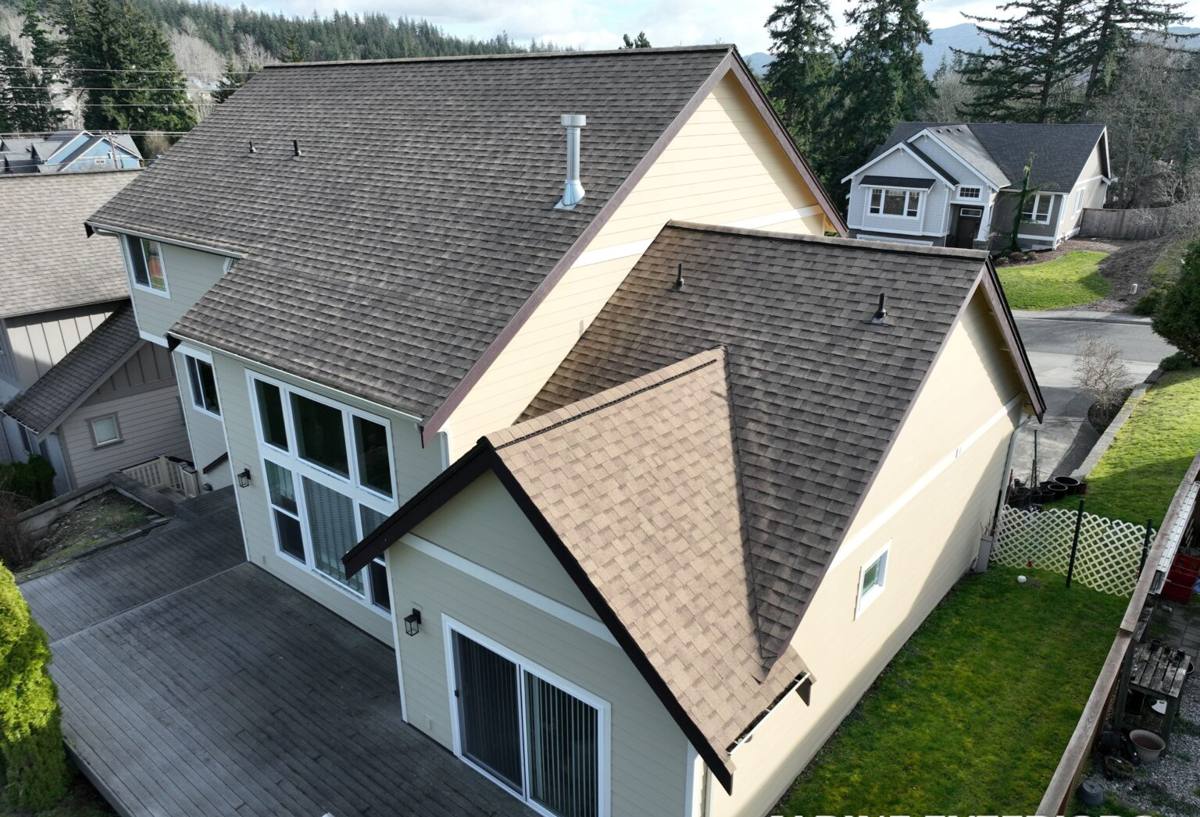
What "Correct" Siding Replacement Actually Involves
Siding replacement is not just pulling off old panels and nailing up new ones. In a climate like Whatcom County's, the work underneath the visible surface matters as much as the product itself. A proper replacement job includes:
- Full removal of old siding down to the sheathing, not installation over existing material
- Inspection of the sheathing and framing for rot, soft spots, or prior water damage before anything new goes up
- Correct water-resistive barrier (house wrap) installation, lapped and taped to shed water downward at every seam
- Properly flashed windows, doors, and penetrations so water can't get behind the cladding at the most common failure points
- Rainscreen or drainage gap detailing where it's warranted, so incidental moisture can drain and the wall can dry
- Correct fastening, gapping, and caulking per the manufacturer's installation instructions — not generic carpentry judgment
- Factory-finished panels installed with the specified reveal and clearance from grade, decks, and roof lines
Skip any one of these steps and the new siding can look fine for a year or two while the underlying problem — trapped moisture, a bad flashing detail, wood-to-ground contact — keeps working. That's the difference between a repaint-in-disguise and an actual replacement.
Why We Only Install James Hardie Fiber Cement
We standardized on James Hardie fiber cement siding for every replacement job we do, including here in Lynden, and we don't install vinyl, LP SmartSide, or cedar as alternatives. That's a deliberate choice, not a default. Fiber cement is non-combustible, holds its shape in freeze-thaw and wet-dry cycling far better than wood-based products, and Hardie's ColorPlus factory finish is baked on under controlled conditions rather than field-applied, which matters enormously in a region where paint has to fight moisture nearly year-round. Hardie's HZ5 product line is specifically engineered for cold, wet climates like ours, and the company backs it with a strong transferable warranty when installation follows their spec. We install to that spec every time, which is also why we control the whole job rather than subcontracting the details out.
Signs Lynden Homeowners Should Not Ignore
Because failure here tends to be gradual, it helps to know what to actually look for before a small problem becomes a full wall rebuild.
| What You See | What It Usually Means |
|---|---|
| Persistent moss or algae streaking, especially on shaded walls | Surface is staying wet too long between rain events — a drainage or exposure issue, not just a cleaning issue |
| Paint peeling or bubbling in patches | Moisture is moving through the panel from behind, often from a missing or failed water-resistive barrier |
| Soft or spongy spots when pressed | Water has reached the sheathing or framing — this needs uncovering, not just resurfacing |
| Visible cupping, warping, or separated seams | Common with wood-based and engineered wood products absorbing moisture over repeated wet seasons |
| Siding that sits close to soil, mulch beds, or deck framing | Chronic wicking point — a leading cause of localized rot even when the rest of the wall is fine |
How Our Process Works
We keep the replacement process straightforward, and every step exists because we've seen what happens when it's skipped.
- On-site assessment. We walk the exterior with you, note problem areas, and check for moisture intrusion at windows, corners, and grade-level details before quoting anything.
- Tear-off and inspection. Old siding comes off completely so we can see the sheathing and framing underneath. Any rot or damage gets addressed before new material goes up — this step is non-negotiable for a real replacement.
- Weather barrier and flashing. House wrap and flashing get installed and lapped correctly at every seam, window, and penetration, since this is what actually keeps water out over the long run, not the siding surface itself.
- Hardie installation to spec. Panels, fastening, gapping, and caulking follow James Hardie's published installation guidelines, which is also what keeps the manufacturer's warranty intact.
- Final walkthrough. We review the finished exterior with you, covering care and what to expect from the ColorPlus finish over time.
What to Ask Before Hiring Anyone for This Kind of Work in Whatcom County
Siding replacement is one of those jobs where a rushed or corner-cutting crew can leave a wall looking fine on installation day and failing within a few wet seasons. Before hiring, it's worth confirming a few things:
- Do they remove old siding completely, or install over it?
- Will they inspect and repair sheathing/framing damage as part of the job, or only note it and move on?
- Do they follow the manufacturer's specific installation instructions for water-resistive barriers and flashing?
- Are they familiar with how the local climate — rain volume, humidity, moss growth — affects detailing choices?
- Is the warranty backed by the manufacturer directly, and does it transfer if you sell the home?
A crew that already works regularly in Lynden and the surrounding Whatcom County towns will have already run into the local failure patterns — wet crawlspaces, north-side moss, wind-driven rain at gable ends — and will detail around them instead of relearning the lesson on your house.
Cost Factors for Siding Replacement
Every home is different, but the factors that move price the most are consistent. We give firm numbers only after walking the actual house, but here's what tends to drive the estimate:
| Factor | Why It Matters |
|---|---|
| Extent of sheathing/framing repair needed | Hidden moisture damage found during tear-off adds labor and material before new siding can go up |
| Home size and wall complexity | More corners, dormers, and trim details mean more cutting, fitting, and flashing work |
| Siding profile and finish selection | Lap width, texture, and color line affect material cost within the Hardie product range |
| Access and site conditions | Multi-story walls, tight lot lines, or landscaping close to the house affect labor time |
| Trim, fascia, and soffit scope | Full exterior refreshes often bundle these in alongside the field siding |
Why the Long Wet Season Changes the Math on Waiting
It's tempting to patch or repaint failing siding rather than replace it, and sometimes that's genuinely the right call. But once moisture has gotten behind the siding surface in a climate that stays damp for months at a time, patching rarely stops the underlying cycle — it just resets the clock on how it looks. Every additional wet season a compromised wall goes through is another chance for rot to spread further into framing that's expensive to access and repair. Homeowners in Lynden and across Whatcom County are often better served by an honest assessment early, even if the answer is "you've got another year or two," than by waiting until a soft spot becomes a structural repair.
What Ownership Looks Like After Installation
James Hardie's factory-applied ColorPlus finish is designed to hold color and resist the fading and chalking that field-applied paint struggles with, especially under the Pacific Northwest's damp, low-sun conditions. That doesn't mean zero maintenance — gutters still need to stay clear, plantings still need to be kept back from the wall, and an annual walk-around to check caulking at trim and penetrations is good practice anywhere it rains as much as it does here. But it does mean homeowners aren't fighting a repaint cycle every few years the way they would with wood-based or field-finished siding.
If you're seeing moss buildup, peeling paint, or soft spots on your Lynden home's exterior, we're happy to take a look and give you a straightforward assessment — no pressure, no obligation. Fill out the form below to request a free estimate.