 Bellingham
 Why Happy Valley Roofs Take a Different Kind of Beating
Happy Valley sits close enough to Bellingham Bay and the surrounding wet lowlands that roofs here deal with a combination most inland Whatcom County neighborhoods don't: salt-laden air moving off the water, long stretches of driving rain pushed sideways by wind, and a moss season that can run nine or ten months out of the year in shaded, tree-heavy yards. None of those three things is unusual on its own in Western Washington. Together, on the same roof, year after year, they wear out cheap materials and expose sloppy installation work faster than almost anywhere else in the county.
A roof that's merely "installed" versus one that's installed correctly for this specific environment shows the difference within a few winters — not decades. Fastener corrosion, trapped moisture under poorly lapped panels, and moss roots working into seams are the failures we see most often on older metal roofs in this part of Bellingham, and every one of them traces back to a shortcut taken during installation, not a flaw in metal roofing as a material.
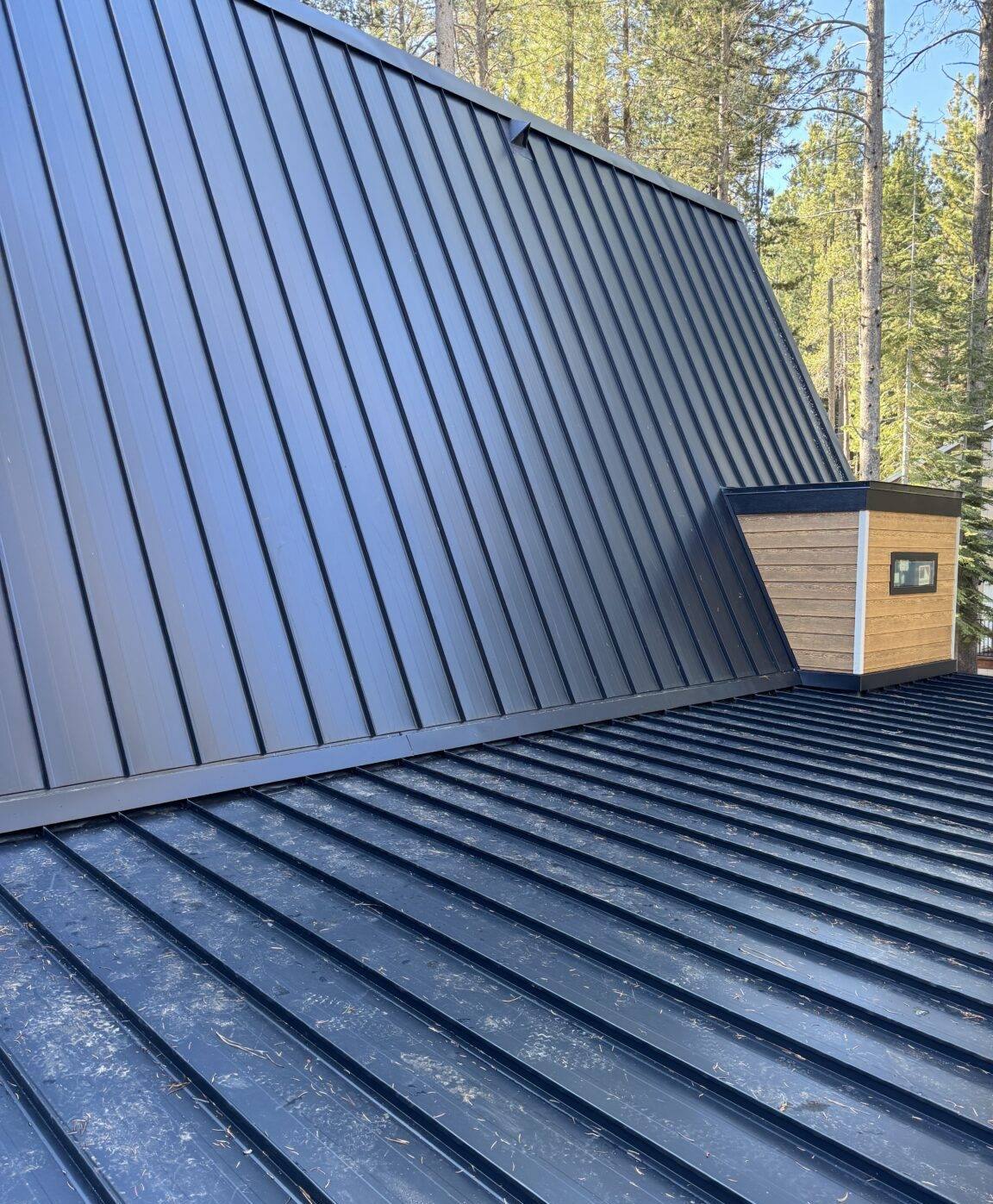
What Metal Roofing Needs to Get Right Here
Corrosion Resistance for Salt Air
Standard steel fasteners and lower-grade coatings degrade faster in coastal air than they would twenty miles inland. For Happy Valley homes we spec fasteners and flashing metals that are rated for coastal or marine-adjacent exposure, and we pay close attention to where dissimilar metals touch — galvanic corrosion between mismatched metals is a slow, quiet failure that's easy to avoid at install time and expensive to fix later.
Panel Laps and Underlayment for Driving Rain
Wind-driven rain doesn't behave like a straight downpour. It can push water uphill under panel laps and around penetrations if the overlap, sealant, and underlayment aren't sized and placed for wind exposure. We treat every seam, valley, and flashing detail as if the rain is coming sideways, because on this roof, some winters, it will be.
Moss and Algae Management
Metal roofing resists moss far better than composition shingles, but it isn't immune, especially in shaded valleys, on north-facing slopes, or wherever overhanging trees keep a section of roof damp. Panel profile, slope, and how debris sheds off the roof all affect how much moss gets a foothold. Getting these details right at installation cuts down dramatically on the moss maintenance a homeowner has to deal with later.
Panel Types We Work With and How to Choose
Not every metal roofing system fits every home. The right choice depends on your roof's pitch, your budget, and how much visual impact you want the roof to have.
| Panel Type | Best For | Trade-offs |
|---|---|---|
| Standing seam | Most Happy Valley homes; concealed fasteners, clean lines | Higher upfront cost; needs a skilled crew for tight seams |
| Exposed-fastener panel | Outbuildings, shops, budget-conscious re-roofs | Fasteners need periodic inspection; more seams to maintain |
| Stone-coated steel | Homeowners who want a shingle or tile look with metal durability | Higher material cost; heavier than bare steel panels |
| Corrugated/ribbed steel | Simple gable roofs, secondary structures | More visible fastener pattern; less premium appearance |
For most primary residences in this neighborhood, we recommend standing seam because the concealed fastener design removes one of the biggest long-term maintenance points — exposed screws that can loosen, back out, or corrode over time in salt air. It costs more upfront but it's the system we'd put on our own roofs in this climate.
How Our Process Works
1. On-Site Assessment
We start by walking the existing roof, checking deck condition, ventilation, and how water currently moves off the structure — including where trees create shade and moss risk. We look at your home's specific exposure to wind and driving rain, not a generic assumption about "coastal Whatcom County."
2. Tear-Off vs. Overlay Decision
Metal roofing can sometimes go over an existing roof, but in a wet, moss-prone environment like Happy Valley, we're conservative about recommending overlays. Trapped moisture under an old roof is one of the fastest ways to shorten the life of a new metal roof. We'll give you an honest answer on whether your existing roof deck and covering are sound enough to build over, or whether tear-off is the right call.
3. Deck Prep and Underlayment
Any soft or water-damaged decking gets replaced before a single panel goes on. We install underlayment rated for the wind and moisture exposure this roof will see, paying particular attention to valleys, eaves, and any low-slope transitions where water lingers longest.
4. Panel Installation
Panels are installed with attention to proper overlap direction relative to prevailing wind and rain, correctly torqued and spaced fasteners (or properly seamed clips for standing seam), and flashing details at every penetration — vents, chimneys, skylights. This is the stage where most installation shortcuts happen on other jobs, and it's the stage we spend the most time getting right.
5. Final Inspection and Cleanup
We walk the finished roof with you, check every seam and flashing point, and make sure the site is cleaned up — no stray fasteners or metal shavings left in gutters or on the lawn, which matter for both safety and avoiding rust staining.
Ventilation Matters as Much as the Panels
A metal roof is only as good as the attic and roof deck underneath it. Without adequate ventilation, moisture from daily living can condense against the underside of the roof deck, especially during the long, damp stretches typical of a Whatcom County winter. Poor ventilation accelerates deck rot and can void manufacturer warranties on the metal itself. As part of any metal roofing job, we check existing ventilation and recommend upgrades — ridge vents, soffit vents, or baffles — when the current setup isn't adequate for the home.
Cost Factors to Understand Before You Get Quotes
| Factor | Why It Affects Price |
|---|---|
| Roof complexity | Valleys, dormers, and multiple planes mean more flashing and labor time |
| Tear-off vs. overlay | Tear-off adds labor and disposal cost but is often the safer long-term choice here |
| Panel type | Standing seam costs more than exposed-fastener panel systems |
| Deck condition | Rotted or soft decking found during tear-off adds repair cost |
| Access and pitch | Steep or hard-to-access roofs require more safety setup and time |
We won't quote a project without seeing the roof in person, because every one of these factors changes the number. What we can tell you upfront: metal roofing costs more than composition shingles at installation, and in a climate like this one, it typically makes that difference back over the life of the roof through lower maintenance and fewer repairs from moss and moisture damage.
Signs of a Correctly Installed Metal Roof
Whether you're evaluating our work or someone else's, here's what to look for:
- Panel seams and laps run in the correct direction for water shedding, not just visual symmetry
- Flashing at every penetration is mechanically fastened and sealed, not just caulked
- Fasteners (where visible) are evenly spaced, properly torqued, and rated for coastal exposure
- Valleys are open enough to shed debris and moss-forming buildup
- Ridge and soffit ventilation are addressed, not ignored
- No stray metal shavings or fasteners left on the roof or in gutters after the job
Why It Matters That We Already Work This Neighborhood
Happy Valley's mix of mature tree cover, proximity to the water, and older housing stock creates a specific set of roofing conditions. A crew that's worked other roofs in this neighborhood already knows which streets sit in heavier shade, which lots catch more wind off the bay, and what kind of moss growth is normal versus a sign of an underlying installation or ventilation problem. That local pattern recognition shortens the assessment phase and helps us catch issues a crew unfamiliar with the area might miss on a first walk-through.
It also means we're not learning on your roof. We've made the adjustments — fastener grade, panel lap direction, ventilation recommendations — that this specific stretch of Bellingham calls for, based on the roofs we've already worked on nearby.
Maintaining a Metal Roof in This Climate
Metal roofing is low-maintenance compared to shingles, but "low" isn't "none." In Happy Valley, we recommend homeowners do a simple visual check once or twice a year: look for moss starting to establish in shaded valleys or under overhanging branches, check that gutters and downspouts are clear so water isn't backing up under the roof edge, and watch for any streaking that might indicate a fastener or flashing issue starting to develop. Catching these things early, while they're still cosmetic, is what keeps a metal roof performing for decades instead of turning into a repair bill.
If you're weighing metal roofing for a Happy Valley home, we're happy to take a look and walk you through what your specific roof needs — no pressure, no obligation. A short on-site visit and a straightforward estimate is the best way to know what you're working with.