 Bellingham
 Building New in Barkley? The Windows Have to Match the Site, Not Just the Plan Set
Barkley sits close enough to the water and the surrounding tree cover that new construction here faces a different set of conditions than a build on the south side of Bellingham or out toward the county line. Salt-laden air off Bellingham Bay, long stretches of driving rain through fall and winter, and a moss season that can run most of the year all put steady stress on a home's exterior envelope. Windows installed during new construction are one of the few components that get a single shot at being done right before siding, trim, and interior finishes close everything up around them. Get the window install wrong at this stage, and you're not looking at a simple repair later — you're looking at cutting back into finished walls.
This page is specifically about installing windows in new-construction homes in the Barkley area — not replacement windows in an existing home, and not a generic overview of window brands. New construction gives us access to the rough opening, the sheathing, and the weather-resistive barrier before anything is covered up, which is exactly the advantage a correct install depends on.
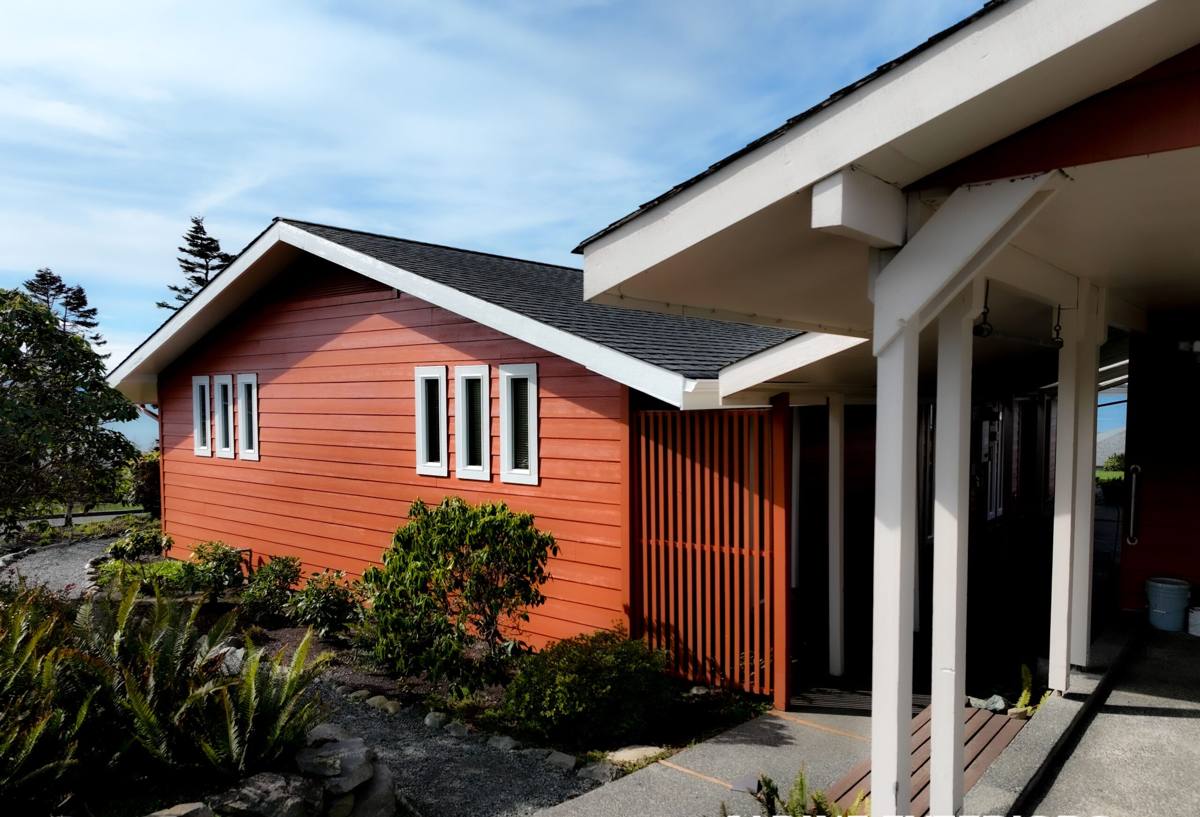
What Bellingham's Climate Actually Does to a New Window Install
Whatcom County gets a lot of rain, but it's not just the volume — it's the direction. Wind-driven rain off the water pushes moisture sideways into wall assemblies, which means flashing details at the window head, jambs, and sill matter more here than they would in a drier inland climate. A window that's simply "caulked in" instead of properly flashed and integrated with the house wrap will often perform fine for a year or two before water starts finding its way behind the trim.
Salt air adds a second layer of wear. It accelerates corrosion on hardware, fasteners, and any exposed metal components, and it can be tougher on certain finishes than most manufacturers' standard warranty testing accounts for. Then there's moss and organic growth — Bellingham's damp, shaded conditions (Barkley has plenty of mature tree cover) mean sills, trim, and low-slope surfaces near windows stay damp longer than they would in a sunnier location, which is exactly the environment moss and mildew need to take hold.
None of this means new-construction windows in Barkley need to be exotic or overbuilt. It means the flashing sequence, sealant choices, and drainage details need to be treated as seriously as the window unit itself.
The Three Climate Factors That Drive Our Approach Here
- Wind-driven rain: requires a shingled, lapped flashing sequence — not just a bead of caulk — at every window opening.
- Salt air: pushes us toward corrosion-resistant fasteners and hardware, and finishes that hold up without heavy maintenance.
- Persistent moisture and moss potential: makes sill pan drainage and a clear path for incidental water to exit the wall assembly non-negotiable.
What a Correct New-Construction Window Install Actually Involves
New-construction window installation is a sequence, and skipping or reordering steps is where most long-term problems start. Done right, it looks roughly like this:
- Rough opening is checked for square, level, and correct sizing before the window ever shows up on site.
- A sill pan flashing is installed at the bottom of the opening, sloped to shed any water that gets past the window back to the exterior — not into the wall.
- The weather-resistive barrier (house wrap) is prepped and integrated with the flashing in the correct shingle-lap order: sill, then jambs, then head, so water is always directed outward and downward at every layer.
- The window unit is set, shimmed plumb and square, and fastened per the manufacturer's structural requirements — not just "however it fits."
- Flashing tape and/or metal head flashing ties the window into the house wrap above the opening, closing off the last entry point for wind-driven rain.
- Interior and exterior sealant is applied at the correct joints only — sealing the wrong joint can trap moisture instead of keeping it out.
- Exterior trim and siding are installed once the flashing integration is confirmed, not before.
Every one of those steps is easy to inspect during new construction and very hard to verify once the siding is on. That's part of why we treat photo documentation of the flashing stage as standard practice on every job, whether the homeowner asks for it or not.
Frame Material: What Holds Up Near Bellingham Bay
There's no single "best" frame material for every project — budget, architectural style, and the builder's spec often decide this before we're even involved. But when a homeowner or builder in Barkley asks us for a recommendation, salt air and moisture exposure are the two factors that matter most.
| Frame Material | Salt Air / Moisture Behavior | Maintenance | Typical Fit |
|---|---|---|---|
| Vinyl | Won't corrode or rot; performs consistently in coastal air | Low — occasional cleaning | Cost-conscious builds, strong all-around value |
| Fiberglass | Very stable in temperature swings and moisture; holds paint well if a custom color is wanted | Low | Higher-end specs, larger openings |
| Wood-clad (exterior clad) | Good if the cladding and flashing details are done correctly; interior wood offers a traditional look | Moderate — cladding needs monitoring at joints and corners over time | Traditional or custom architectural styles |
| Bare wood (uncladded exterior) | Requires the most diligence in this climate — regular refinishing to prevent moisture intrusion at end grain | High | Historic-style renovation more than new coastal construction |
Our default recommendation for new construction in the Barkley area is a clad or vinyl frame with a documented flashing detail, simply because it removes one more maintenance item from a homeowner's list in a climate that already asks a lot of an exterior.
Why the Flashing Detail Matters More Than the Window Brand
Homeowners often spend a lot of time comparing window brands and glass packages, which is reasonable — but in our experience, the flashing and integration detail is a bigger predictor of long-term performance than the brand name on the sticker. A mid-tier window installed with a correct sill pan and shingle-lapped flashing will outperform a premium window installed with shortcuts, especially in a climate that sends rain sideways for months at a time.
This is also where new construction has a real advantage over replacement work: we're not working around existing siding or covering up someone else's flashing decisions. We control the sequence from the sheathing out.
Energy Performance and Local Code
Washington's energy code sets minimum performance requirements for new-construction windows (U-factor and, in some cases, solar heat gain), and those requirements get checked at permitting. Whatcom County's building department reviews new construction against the state code, so window selection isn't purely an aesthetic or budget decision — it needs to meet the compliance path the builder or designer has chosen for the rest of the home's envelope.
Beyond the minimum, Bellingham's marine climate means better-performing glass pays off in comfort as much as energy bills — fewer cold spots near large window walls, less condensation on interior glass during damp winter stretches. We can talk through what performance level makes sense for a given design without pushing an oversized spec that doesn't match the home.
Mistakes We See Most Often on New Builds in This Area
- Caulk used as a substitute for proper flashing at the window head — looks fine at final walkthrough, fails in year two or three.
- Sill pans skipped entirely or installed flat instead of sloped to drain.
- House wrap taped in the wrong order relative to the window flanges, which can direct water into the wall instead of away from it.
- Standard-grade fasteners used near the coast, leading to premature corrosion and staining at the frame.
- Trim and siding installed before the flashing integration was verified, making it impossible to inspect without removing finished work.
Most of these aren't visible at move-in. They show up as a stain on drywall, a soft spot in trim, or a musty smell near a window a couple of winters later — right in the pattern of moisture exposure Bellingham's climate produces.
Our Process for Builders and Homeowners in Barkley
Whether we're working directly for a homeowner building custom or as part of a builder's crew on a spec or custom home, our approach stays the same:
- Review the plans and rough openings before ordering, so window sizes and swing/slide configurations match the design intent.
- Confirm the flashing and weather-resistive barrier sequence with the builder or GC before framing is closed up.
- Install sill pans, flashing, and windows in the correct order, with photo documentation at each stage.
- Coordinate timing with siding and trim crews so nothing gets covered before it's checked.
- Walk the finished openings with the homeowner or builder before final sign-off.
A Practical Checklist Before Your Windows Go In
- Rough openings verified against the actual window order (not just the plan set).
- Sill pan flashing specified and sloped to drain outward.
- Flashing sequence agreed upon with the builder in writing before framing is enclosed.
- Frame material selected with coastal moisture and maintenance in mind.
- Fastener and hardware corrosion resistance confirmed for this climate.
- Photo documentation planned for the flashing stage, before siding covers it.
Why a Crew That Already Works Barkley Is Worth Asking For
Window installation technique doesn't change from neighborhood to neighborhood, but familiarity with a specific area's site conditions — tree cover, wind exposure, typical soil moisture, how a lot drains — helps a crew anticipate problems before they show up in the flashing plan. A contractor who's worked a number of jobs in and around Barkley has already seen how the local wind and rain patterns behave against a new build, which houses need extra attention at north- and west-facing openings, and where moss tends to establish first. That's not a substitute for good technique, but it does mean fewer surprises and fewer callbacks once the home is finished and lived in.
If you're building new in Barkley, or coordinating windows for a spec home in the area, we're glad to walk the plans with you and talk through what makes sense for the site — no pressure, no sales script. Reach out for a free estimate using the form below, and we'll go from there.