 Bellingham
 Roofing Built for Sunnyland's Weather, Not Just Any Roof
Sunnyland is one of Bellingham's older, tree-shaded neighborhoods, and that shade cuts both ways. It keeps homes cool in summer, but it also means roofs here spend more of the year damp, shadowed, and slow to dry out than roofs in open, sun-exposed parts of Whatcom County. Add in the marine air coming off Bellingham Bay and the long, wet winters typical of this part of Washington, and you've got a roofing environment that punishes shortcuts. A roof that would hold up fine in a dry inland climate can fail early here if it's installed without the right materials, ventilation, and moisture detailing.
When we install a new roof in Sunnyland, we're not just matching a shingle color to a house. We're building an assembly meant to shed constant rain, resist moss colonization, and breathe properly in a neighborhood with a lot of mature tree cover. That's a different job than a generic reroof, and it shows in the details.
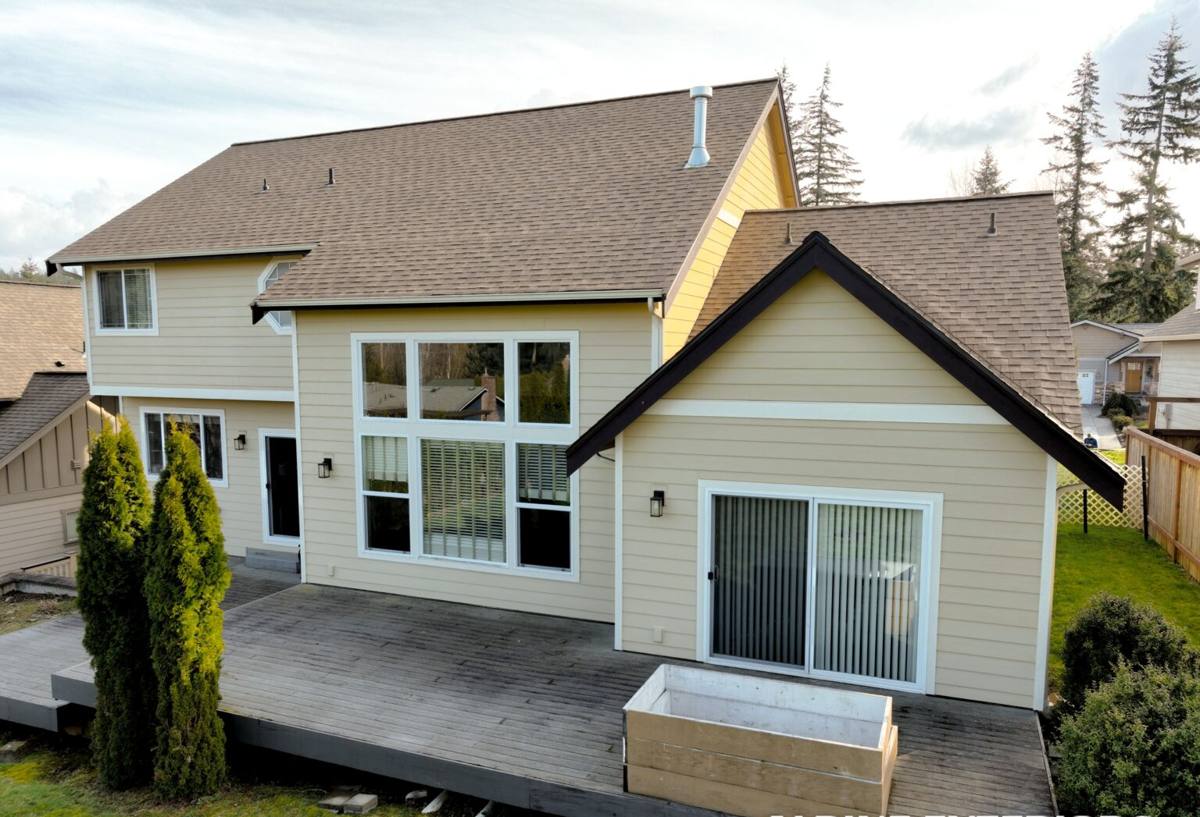
What Sunnyland's Climate Does to a Roof Over Time
Salt Air and Metal Fatigue
Bellingham sits right on the bay, and salt-laden air travels further inland than most homeowners expect. Over years, that air accelerates corrosion on unprotected fasteners, cheap flashing, and lower-grade metal components. It's rarely dramatic — it shows up slowly, as rust streaks at valleys, pipe boots, and drip edges long before the roof itself is old enough to need replacing.
Driving Rain and Wind-Driven Moisture
Whatcom County storms often bring rain sideways off the water, not just straight down. That matters at every seam, valley, and penetration on a roof. A roof that only handles vertical rainfall well can still leak under wind-driven conditions if the underlayment, flashing laps, and fastening pattern weren't built for it.
The Long Moss Season
Between the tree cover common in Sunnyland and Bellingham's extended damp season, moss and algae growth is close to a year-round concern rather than a seasonal one. Moss holds moisture against the roof surface, works into shingle laps and granule beds, and — left unchecked — lifts shingle edges and shortens the life of the roof from underneath, not just on top.
What a Correctly Installed Roof Needs in This Neighborhood
A roof built for Sunnyland isn't fundamentally different in materials from a roof anywhere else in Whatcom County, but the details are non-negotiable here:
- Ice-and-water shield at vulnerable areas — valleys, eaves, and roof-to-wall transitions get a self-adhering waterproof membrane, not just felt, because these are the spots wind-driven rain finds first.
- Corrosion-resistant flashing and fasteners — given the salt-air exposure, we don't cut corners on flashing metal or fastener coatings, since this is where early corrosion shows up first.
- Balanced attic ventilation — intake at the eaves and exhaust at the ridge, sized correctly for the attic volume, so moisture from inside the home doesn't condense on the roof deck from below while rain is hitting it from above.
- Moss-resistant shingle selection or treatment — many modern shingles are available with algae-resistant granules; in heavily shaded Sunnyland lots, this is worth the modest upcharge.
- Proper starter course and nailing pattern — wind uplift resistance starts at the eaves and depends on getting the starter strip and nail placement right, not just "close enough."
- Clean tear-off to a sound deck — layering a new roof over old, moisture-compromised sheathing just traps the problem instead of solving it.
Choosing a Roofing Material for a Shaded, Wet Lot
Most Sunnyland homes land on one of a few common roofing paths. Each has real trade-offs worth understanding before you decide, rather than defaulting to whatever's cheapest up front.
| Material | Performance in Shade/Moss-Prone Areas | Typical Lifespan | Maintenance Reality |
|---|---|---|---|
| Architectural (laminate) asphalt shingles | Good, especially with algae-resistant granules; still needs periodic moss removal in heavy shade | 25–30 years | Moderate — occasional cleaning, watch for granule loss over time |
| 3-tab asphalt shingles | Fair; thinner profile is more prone to moss lifting edges over time | 15–20 years | Higher — earlier moss and edge-curl issues in shaded lots |
| Standing seam metal | Excellent shedding, moss struggles to get purchase on smooth panels | 40–50+ years | Low — periodic gutter and fastener checks, coating maintenance over decades |
| Cedar shake | Traditional PNW look, but shade and moisture accelerate decay and moss growth without diligent upkeep | 20–30 years with upkeep | High — regular treatment, cleaning, and inspection required |
We're honest with Sunnyland homeowners about this table: shaded lots push every material toward its higher-maintenance end. That's not a reason to avoid a particular product, but it is a reason to budget for occasional roof cleaning and inspection regardless of what you choose, and to lean toward algae-resistant options where the shade is heaviest.
Our New Roof Installation Process
1. On-Site Inspection and Honest Assessment
We walk the roof and attic, check the deck for soft spots or moisture damage, evaluate current ventilation, and look at how the tree canopy and lot orientation affect sun and drainage on your specific roof. You get a straight answer about what's actually needed — not an upsell.
2. Material Selection Based on Your Home and Budget
We walk through the trade-offs above in plain terms, factoring in your home's exposure, your budget, and how much ongoing maintenance you want to take on.
3. Tear-Off and Deck Inspection
Old roofing comes off down to the deck. This is the point where hidden moisture damage from years of Bellingham rain gets found and addressed — patching over it isn't an option we offer.
4. Waterproofing, Ventilation, and Flashing
Ice-and-water shield goes down at critical zones, ventilation components are installed or corrected, and all flashing — valleys, walls, chimneys, pipe boots — is replaced with corrosion-resistant material and properly lapped for wind-driven rain.
5. Roofing Installation
Shingles or panels go on to manufacturer specification, with attention to nailing pattern, starter course, and exposure — the details that determine whether the roof performs in a real Whatcom County storm, not just on a calm day.
6. Final Walkthrough and Cleanup
We walk the finished roof and site with you, clean up thoroughly including magnetic sweeps for stray fasteners, and go over care and warranty information.
Cost Factors for a Sunnyland Reroof
Every roof is priced from its own specifics, but the factors that move the number most in this neighborhood are consistent:
| Factor | Why It Matters Here |
|---|---|
| Roof size and pitch | Steeper pitches and larger footprints take more material and labor time |
| Deck condition | Moisture-damaged sheathing found during tear-off adds repair scope |
| Material choice | Metal and cedar cost more upfront than asphalt but shift the maintenance/lifespan equation |
| Tree cover and access | Heavy canopy can mean more cleanup, careful equipment placement, and sometimes limb trimming coordination |
| Ventilation upgrades | Correcting inadequate intake/exhaust ventilation adds a modest cost but pays off in roof longevity |
| Layers to remove | Multiple existing layers mean more tear-off labor and disposal |
We don't quote a number without seeing the roof, but we can tell you honestly that skimping on flashing, ventilation, or deck repair to hit a lower price almost always costs more in the next decade than it saves today — especially in a climate this wet.
Why Local Roofing Experience Matters in Sunnyland
A crew that works Whatcom County roofs regularly already knows how the tree cover in neighborhoods like Sunnyland changes drying time, where wind-driven rain tends to find weak spots on this style of home, and which ventilation setups actually keep pace with our winter moisture load. That local pattern-recognition is worth more than it sounds — it means fewer surprises during tear-off and a roof detailed for the conditions it will actually face, not generic conditions from a manufacturer spec sheet written for a drier climate.
It also matters for accountability. A contractor who works this area regularly has a reputation here to protect and is easy to reach if a warranty question comes up five or ten years down the road — not a crew that did one job in the neighborhood and moved on.
Signs Your Sunnyland Roof May Need Replacement, Not Repair
- Granule loss heavy enough that shingles look patchy or bald in spots, especially on sun-facing slopes
- Persistent moss buildup that returns quickly after cleaning
- Curling, cupping, or cracked shingles, particularly at the roof's edges
- Daylight visible through the roof deck from inside the attic
- Recurring leaks in different spots each season rather than one isolated failure
- Roof is nearing or past the expected lifespan for its material, especially if it's had heavy shade exposure
If you're only seeing one or two of these and the roof is relatively young, a repair may still make sense — we'll tell you that honestly rather than pushing a full replacement you don't need yet.
Let's Take a Look at Your Roof
If you're in Sunnyland and dealing with moss buildup, aging shingles, or a roof that's just never quite kept up with Bellingham's wet stretches, we're happy to take a look. Fill out the form below for a free, no-pressure estimate — we'll walk the roof, tell you honestly what condition it's in, and lay out your real options.