 Bellingham
 Windows Built for Where Puget Sits
Homes in the Puget area sit close enough to Bellingham Bay and the broader Puget Sound to feel the water every day, whether that's a salt-tinged breeze off the water or a storm rolling in sideways off the Sound. That proximity is part of what makes the neighborhood a great place to live, and it's also exactly why window installation here can't be treated the same as it would be twenty miles inland. Salt-laden air corrodes hardware faster, wind-driven rain finds gaps that would never leak in a calmer climate, and the long, damp Whatcom County winters give moss and mildew months to work on anything that stays wet. A window that's a good product but a mediocre install will show all three of those problems within a few years. A window that's correctly installed for this specific exposure won't.
This page is about one job in one place: replacing or installing windows for homes in and around Puget. Not a general overview of window brands, not a citywide pitch — just what this location actually demands and how we approach it.
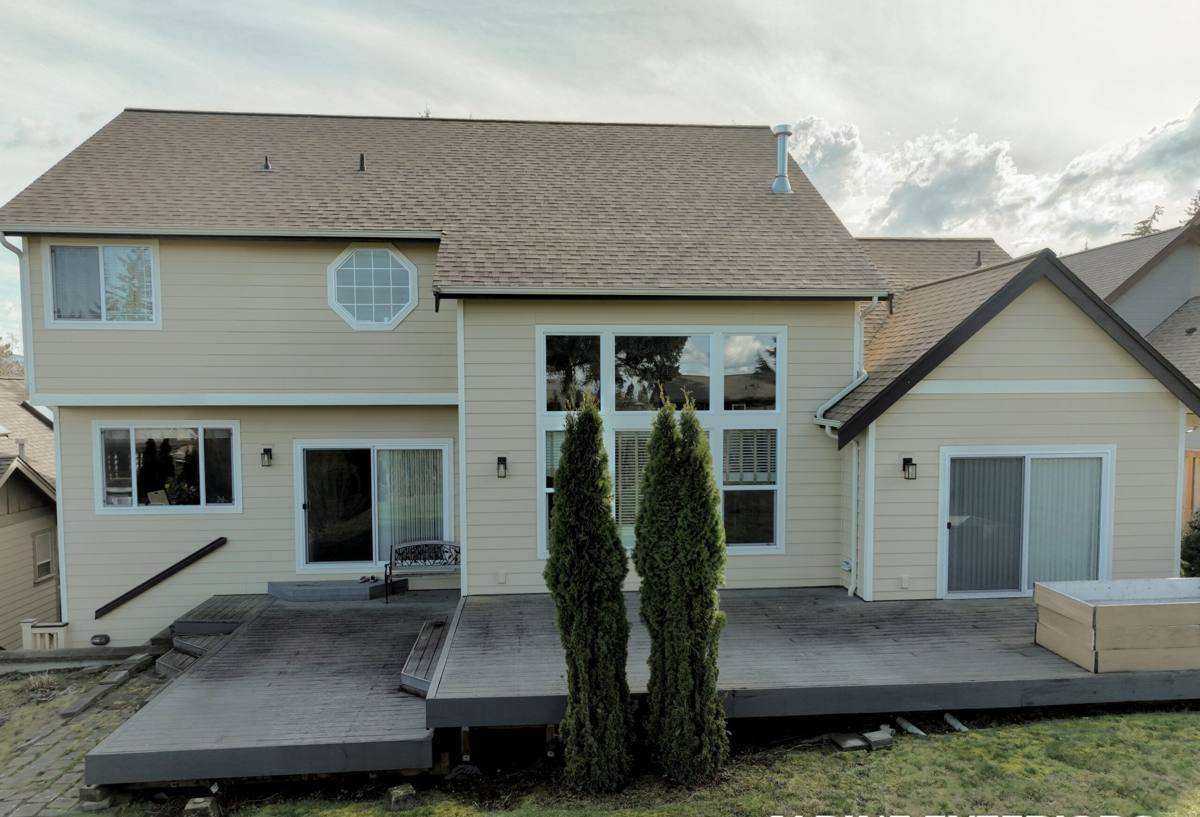
What Bellingham's Climate Does to Windows Over Time
Salt Air and Hardware Corrosion
Even a few miles from open saltwater, airborne salt settles on exterior surfaces and accelerates corrosion on anything metal — hinges, cranks, locks, and unprotected fasteners. Over years, this shows up as stiff or seized operating hardware, streaking on frames, and pitting on lower-grade metal components. It's a slow process, which is exactly why it gets ignored until a window won't open anymore.
Driving, Wind-Driven Rain
Whatcom County doesn't just get rain — it gets rain pushed sideways by wind coming off the water, especially during fall and winter storm systems. Wind-driven rain tests parts of a window installation that a light, straight-down rain never touches: the top of the flashing, the corners of the rough opening, and the seal where the window frame meets the siding. Installations that pass a basic inspection can still fail under this kind of pressure if flashing sequencing wasn't done correctly.
The Long Moss and Moisture Season
Bellingham's moss season runs long — often eight months or more of conditions damp enough to support growth. Moss and mildew don't just grow on roofs; they take hold on window sills, sashes, and trim wherever wood stays wet and doesn't get enough sun or airflow to dry out between rains. North- and west-facing windows in shaded or tree-covered lots are usually the first to show it.
What a Correct Window Installation Actually Involves
A window installation is really a small waterproofing project with a window in the middle of it. The window itself matters, but most leaks and failures we get called out to repair trace back to installation details, not product defects.
- Sill pan flashing — a sloped, sealed pan under the window that directs any water that does get past the frame back outside instead of into the wall cavity.
- Proper flashing sequencing — flashing installed in the correct shingle-lap order (bottom, sides, then top) so water always sheds downward and outward, never into a seam.
- Weather-resistant barrier integration — the window's flashing needs to tie into the house wrap or building paper correctly, not just sit on top of it.
- Square, plumb, and properly shimmed installation — a window that's slightly out of square puts uneven stress on the frame, which leads to premature seal failure and hardware that binds.
- Correct sealant, not excess sealant — sealant is a backup to good flashing, not a substitute for it. Over-caulking a poorly flashed window traps moisture instead of stopping it.
- Insulation at the gap — the space between the window frame and rough opening needs to be filled with a low-expansion foam or backer rod and sealant, not left hollow or overpacked.
Any one of these done wrong won't necessarily cause a visible leak the first year. In a driving-rain, high-moisture climate like this one, it usually shows up in year three to five — which is exactly when it's most expensive to fix, because the damage is already inside the wall.
Choosing the Right Window for a Water-Exposed Lot
Frame material matters more here than it would in a drier inland climate. We look at moisture resistance and hardware durability first, appearance and budget second.
| Frame Material | Moisture & Salt Air Resistance | Maintenance Needs | Typical Lifespan |
|---|---|---|---|
| Vinyl | Good — won't rot or corrode; hardware quality varies by manufacturer | Low | 20–30 years |
| Fiberglass | Very good — dimensionally stable, resists warping in wet/dry cycles | Low | 30–40+ years |
| Wood (unclad) | Poor without diligent upkeep — vulnerable to rot and moss in shaded, damp areas | High | Varies widely with maintenance |
| Wood-clad (aluminum or vinyl exterior) | Good on the exterior face; interior wood still needs some care | Moderate | 25–35 years |
We're not going to tell a homeowner that a product they love is "garbage" — that's not our call to make. What we will say plainly is that on an exposed, water-facing lot, unclad wood exteriors are a real maintenance commitment, and if that's not something you want to keep up with, a clad or fiberglass option will save you the headache. We'll walk through the honest trade-offs — cost, upkeep, appearance, and how each material actually holds up to this specific exposure — so you can pick with your eyes open, not guess.
Hardware Grade Matters as Much as Frame Material
Two windows with identical frames can perform very differently depending on the quality of the locks, hinges, and cranks. In a salt-air environment, we push toward corrosion-resistant hardware finishes rather than the base-grade hardware that ships standard on some entry-level lines. It's a small upcharge that pays for itself in five years of hardware that still opens smoothly.
Our Window Installation Process
- On-site assessment — we check the existing rough openings, look for any hidden water damage around current windows, and note sun/shade exposure and prevailing wind direction for the specific home.
- Product selection — we walk through frame material, glazing, and hardware options suited to the exposure level of your particular lot.
- Removal and opening inspection — when we pull an old window, we inspect the framing and sheathing underneath before anything new goes in. This is where hidden rot or past leaks get caught.
- Sill pan and flashing installation — done in the correct sequence, tied into the existing weather-resistant barrier.
- Window set, shim, and fasten — checked for level, plumb, and square before final fastening.
- Insulation, sealant, and trim — gap filled correctly, sealant applied where it belongs (not everywhere), and exterior trim finished to shed water.
- Final walkthrough — we test operation, check the seal, and go over basic care with you before we leave.
Signs Your Current Windows Are Already Struggling
If your home is in the Puget area and you're noticing any of the following, it's worth having it looked at before it becomes a bigger repair:
- Fogging or moisture trapped between panes of a double-pane window (a sign the seal has failed)
- Noticeable drafts even when the window is fully closed and locked
- Hardware that's stiff, sticky, or hard to turn — a common early sign of salt-air corrosion
- Soft or discolored wood at the sill or lower frame corners
- Moss, algae, or dark staining building up on the frame or trim, especially on shaded sides
- Condensation forming on interior trim or the wall below the window during cold snaps
Why a Crew That Already Works This Area Matters
Window installation done right isn't complicated in theory, but it's easy to get wrong in ways that don't show up until much later — and in a coastal, high-rainfall climate like Whatcom County, "later" tends to arrive faster than people expect. A crew that regularly works waterfront and near-waterfront properties around Bellingham has already seen how flashing details, hardware choices, and sealant decisions actually hold up here over years, not just how they're supposed to work on paper. That experience shows up in fewer callbacks and fewer surprises once the rainy season sets in.
After Installation: Keeping Windows Performing in This Climate
New windows still benefit from a little seasonal attention in a marine climate. Rinsing salt residue off exterior frames a couple of times a year, keeping weep holes clear of debris and moss, and lubricating hardware annually will meaningfully extend the life of both the window and its finish. We're happy to cover this in more detail during the final walkthrough so you know exactly what to check and when.
If you're in Puget or elsewhere around Bellingham and want an honest look at what your windows need — repair, replacement, or just a second opinion — we're glad to come take a look. The estimate is free, there's no pressure, and you'll get a straight answer about what's actually going on with your windows before you decide anything.