 Bellingham
 Why Sehome Siding Wears Out Differently Than Siding Inland
Sehome sits close enough to Bellingham Bay that salt-laden air is a constant, low-grade presence on every exterior surface in the neighborhood, even on homes that aren't waterfront. Add Whatcom County's long, wet fall-through-spring stretch of driving rain, and then the deep shade that mature trees throw over so many Sehome lots, and you get a siding environment that punishes shortcuts. Salt air accelerates corrosion on fasteners and trim metal. Driving rain — rain that comes in sideways, not straight down — pushes water past siding laps and into seams that would stay dry in a calmer climate. And shade plus moisture is exactly what moss, algae, and mildew need to take hold and stay year-round instead of drying out between storms.
None of this means Sehome homes need something exotic. It means they need a siding system and an installation that were actually built to handle sustained moisture exposure, not one that merely looks fine on a dry day at the lumber yard.
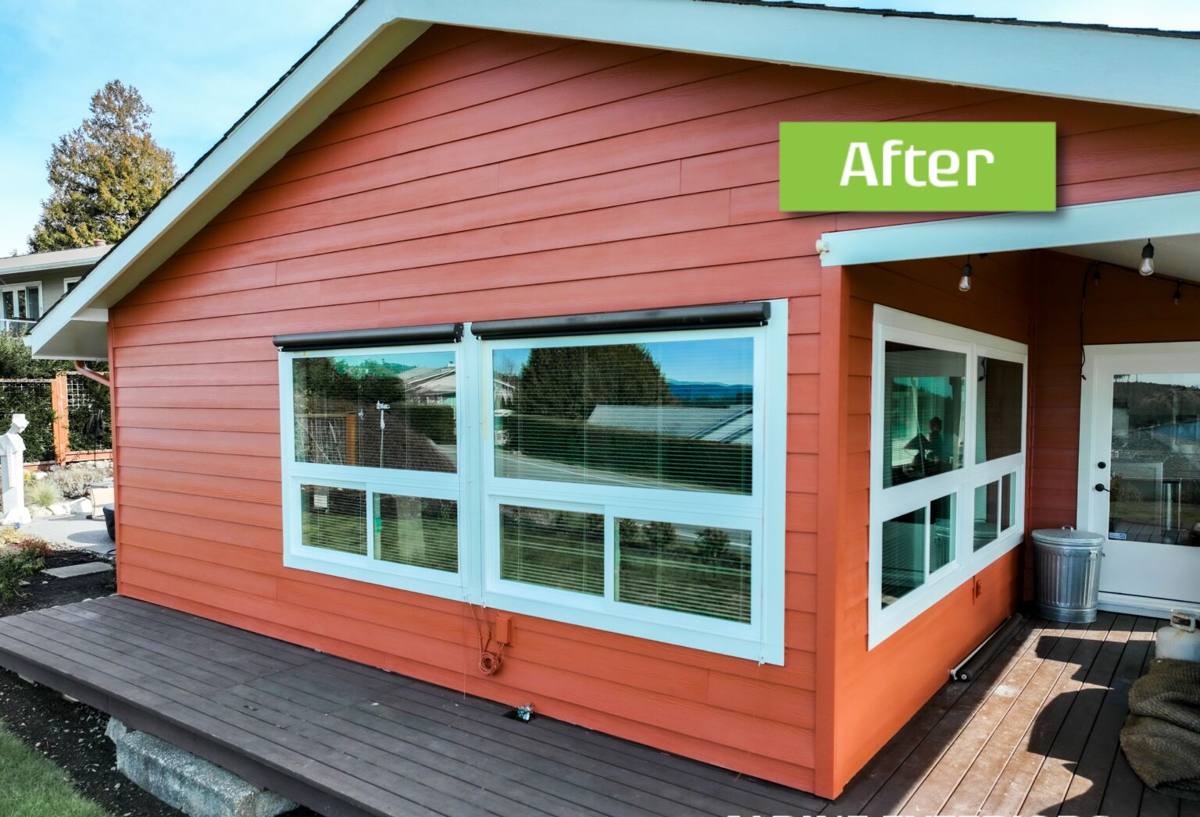
What Sehome's Housing Stock Actually Needs
Sehome has a mix of older craftsman and post-war homes alongside newer infill, many on sloped lots with mature landscaping close to the walls. That combination creates a few recurring conditions we plan around on every siding replacement in this neighborhood:
- Older wall assemblies that were never built with a drainage plane, so water that gets behind the old siding has nowhere to go but into the sheathing.
- Tight setbacks and overgrown plantings that keep walls shaded and slow to dry after rain.
- Hillside grading that concentrates roof and yard runoff against certain elevations more than others.
- Older trim, window flashing, and fascia details that may not meet current best practice even if the siding itself still looks presentable from the street.
A siding replacement that only swaps the visible skin and ignores these underlying conditions is a siding replacement that will show the same moss, staining, and paint failure again in a few years — just on new material.
What a Correct Siding Replacement Involves
Full Tear-Off, Not a Overlay
We remove the existing siding down to the sheathing rather than installing new siding over the old. Covering up old siding hides problems instead of solving them, and on a Bellingham home that's had years of moisture exposure, what's underneath is exactly what needs to be seen and addressed.
Sheathing and Framing Inspection
Once the old siding is off, we inspect the sheathing and framing for soft spots, rot, or prior water damage — common around windows, at deck ledgers, and near ground level on shaded elevations. Any compromised material gets replaced before anything new goes back on the wall.
Weather-Resistive Barrier and Flashing
A new, correctly lapped weather-resistive barrier goes on next, integrated with flashing at every window, door, and penetration so water is directed out and down, never trapped behind the cladding. This is the layer that actually keeps a house dry — the siding itself is the second line of defense, not the first.
Rainscreen Gap
Given how much rain Sehome walls see, we install with a rainscreen gap behind the siding wherever the wall assembly and budget allow. That gap lets any moisture that does get past the cladding drain and dry instead of sitting against the sheathing — a meaningful upgrade over direct-to-sheathing installation on a house exposed to sustained coastal rain.
Fastening and Finish Details
Fasteners, trim, and caulking matter as much as the siding panels themselves. We follow the manufacturer's fastening schedule exactly, use corrosion-resistant fasteners appropriate for a marine-influenced climate, and finish penetrations and joints so water has nowhere to enter.
Signs a Sehome Home Needs Replacement, Not Just Repair
Not every siding problem calls for a full replacement. But in our experience working this neighborhood, these signs usually mean patching won't hold:
- Soft, spongy, or crumbling siding when pressed, especially near the bottom courses or under windows.
- Persistent moss or dark streaking that returns within weeks of cleaning, on shaded or north-facing walls.
- Visible gaps, warping, or cupping in lap siding, which lets wind-driven rain track behind the material.
- Paint that won't hold no matter how often it's redone — often a sign that moisture is moving through the siding from behind.
- Any soft sheathing or musty smell noticed from inside an exterior wall.
- Siding original to a home more than 25-30 years old that has never been fully replaced.
Why We Install Only James Hardie Fiber Cement
We standardized on James Hardie fiber cement for every siding replacement we do, including in Sehome, and we don't install vinyl, LP SmartSide, or other fiber cement or wood-based alternatives. That's a deliberate professional decision, not a sales preference, and it comes down to how each of these products actually performs under sustained Pacific Northwest moisture:
- Non-combustible core. Fiber cement doesn't contribute fuel to a fire the way vinyl or engineered wood products can, which matters to us as a baseline safety standard on every home we work on.
- Built for moisture, not just tolerant of it. Hardie's HZ5 product line is engineered specifically for climates with high moisture exposure like ours, rather than a general-purpose product adapted after the fact.
- Factory-applied ColorPlus finish. The color and finish are baked on in a controlled factory process, which holds up better against UV and salt air than field-applied paint and resists the fading and peeling we see on older painted siding around Bellingham.
- Dimensional stability. Fiber cement doesn't swell, warp, or cup the way wood-based siding can when it takes on repeated moisture cycles through a wet Bellingham winter.
- A warranty structure we can stand behind. Hardie's transferable warranty coverage reflects a product built for long-term performance, not just initial appearance.
We're not going to tell you other products are worthless — they have real uses and real advantages in the right situation. But for a home in Sehome, dealing with salt air, driving rain, and a long moss season every single year, we've concluded that Hardie fiber cement is the material that holds up the way homeowners expect siding to hold up, and it's the only product we'll put our name behind here.
Our Process, Start to Finish
- On-site assessment. We walk the home, look at each elevation's exposure, check for existing moisture damage, and talk through what you're seeing and what's bothering you about the current siding.
- Written estimate. You get a clear, itemized estimate covering tear-off, any sheathing repair contingencies, the Hardie product and profile recommended, and the finish color.
- Scheduling around Bellingham weather. We plan tear-off and dry-in around forecasted rain windows so your walls aren't left exposed longer than necessary during our wet season.
- Tear-off and inspection. Old siding comes off, sheathing and framing get inspected, and we show you anything unexpected before proceeding.
- Weather barrier, flashing, and siding installation. Installed to manufacturer specification, with attention to every window, corner, and penetration.
- Final walkthrough. We review the finished job with you and address anything before calling it complete.
Cost Factors for Sehome Siding Replacement
Every home is different, but these are the main variables that drive cost on a Sehome siding replacement project:
| Factor | Why It Matters in Sehome |
|---|---|
| Extent of sheathing repair needed | Older Sehome homes with years of moisture exposure sometimes need sheathing replaced, which affects labor and material beyond the siding itself |
| Home size and number of stories | More wall area and taller elevations mean more material, more staging or lift access, and more labor hours |
| Siding profile and trim complexity | Homes with more corners, gables, and trim detail take longer to fit and finish correctly |
| Site access and lot slope | Sehome's hillside lots and tight setbacks can affect equipment access and staging |
| Rainscreen assembly vs. direct-applied | Adding a drainage gap improves long-term moisture performance but adds material and labor |
| Color and finish selection | Standard ColorPlus colors versus premium or custom options can shift material cost |
Why It Matters to Hire a Crew That Already Works in Sehome
A siding crew that works Bellingham regularly already understands how differently Sehome's shaded, hillside lots behave compared to an open, sunny site across town, and plans the job accordingly instead of applying a one-size-fits-all approach. We're also already familiar with the City of Bellingham's permitting expectations for exterior work, which keeps your project from stalling on paperwork. And because we're local, we're accountable after the job is done — if a question comes up two years from now about how a detail was flashed, we're not a crew that's moved on to another state.
Whatcom County's climate isn't forgiving of guesswork. A siding replacement done right the first time, with the right product and the right installation details, is what keeps a Sehome home dry, presentable, and low-maintenance through years of Bellingham rain, salt air, and shade.
If you're seeing moss, staining, or aging siding on your Sehome home, we're happy to take a look and give you a straightforward, no-pressure estimate — just fill out the form below to get started.