 Bellingham
 Deck Replacement in Silver Beach: A Different Job Than a New Build
Silver Beach is one of the older neighborhoods along Lake Whatcom, and a lot of the decks here were built years, sometimes decades, before current framing and guardrail standards existed. A deck replacement in this neighborhood isn't the same project as putting up a new deck on a bare lot. It means dealing with an existing structure that's been sitting exposed to lake humidity, shade from surrounding trees, and marine-influenced air moving in from Bellingham Bay for years, and figuring out honestly how much of what's underneath is actually still sound.
We work on decks throughout Silver Beach and the rest of the Lake Whatcom shoreline, and replacement work here follows a pattern: the surface boards usually look worse than the frame, or the frame is worse than the surface suggests, and either way a homeowner needs a straight answer before spending money on the wrong fix. This page is about what a deck replacement actually involves for a Silver Beach property — what the climate does to an aging deck, what we typically find once the old decking comes off, and how we handle the rebuild.
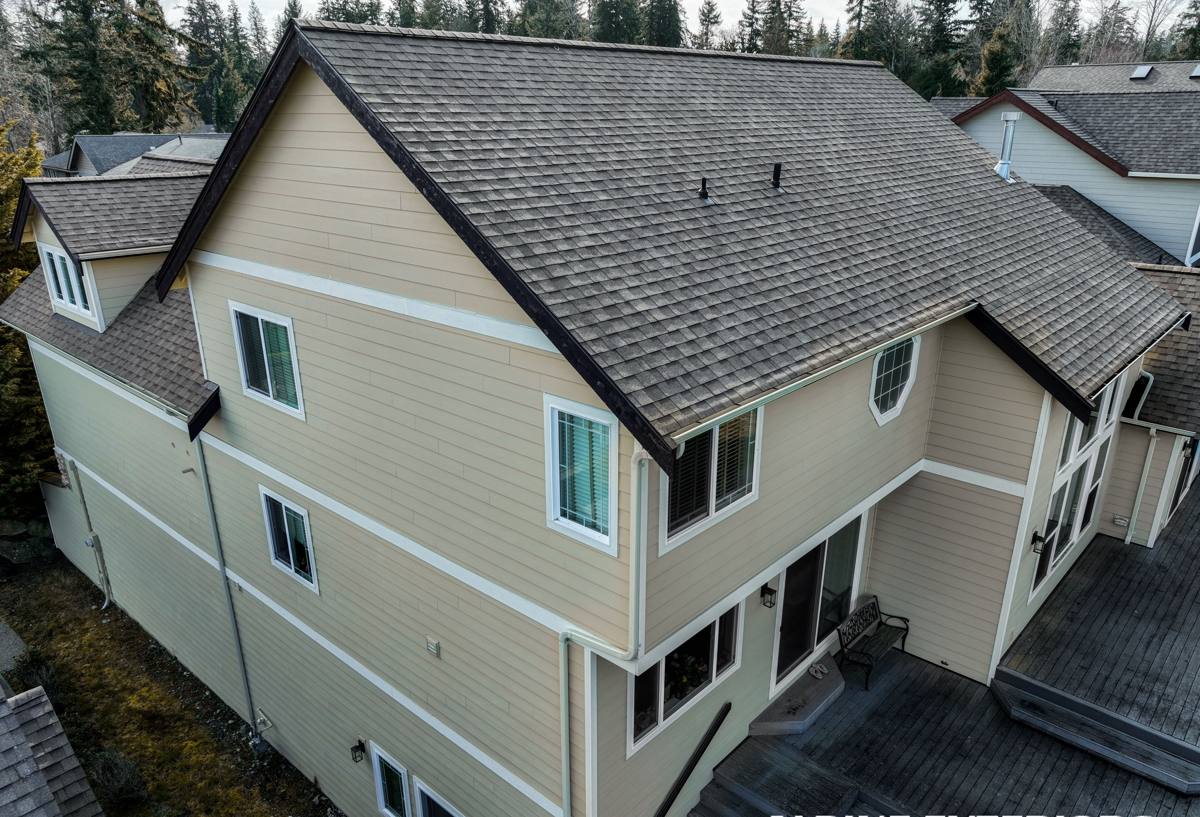
Repair or Full Replacement? How to Tell
Not every tired-looking deck needs to come out completely. Sometimes surface boards are worn but the substructure underneath is still solid, and a resurface or partial board swap is the honest answer. Other times the decking looks fine but the framing, ledger connection, or footings have quietly failed underneath it. The distinction matters because replacing boards on a compromised frame just hides the real problem for another year or two.
| What You See | Usually Means | Typical Fix |
|---|---|---|
| Faded, splintering boards; frame feels solid when walked and pressed | Surface wear only | Resurface or board replacement |
| Soft or spongy spots underfoot, especially near the house | Rotted joists or ledger issue | Full or partial structural replacement |
| Railing posts that flex or wiggle at the base | Post attachment or footing failure | Structural replacement, often code-driven |
| Persistent moss or dark staining on the underside of boards | Poor drainage or airflow beneath the deck | Replacement with corrected gapping and grading |
| Visible gap or movement where the deck meets the house | Ledger board or flashing failure | Full replacement — this is a structural safety issue |
| Corrosion staining around fasteners or hardware | Wrong-grade fasteners for this climate | Replacement with corrosion-resistant hardware |
A short deck inspection before any decision gets made costs nothing and saves homeowners from either overspending on a full rebuild they didn't need or under-spending on a resurface that leaves a real structural problem in place.
What Lake Whatcom's Climate Does to an Aging Deck
Marine Air and Sustained Moisture
Air moving inland off Bellingham Bay carries a mild salt content that settles into the Lake Whatcom basin along with the lake's own evaporative humidity. Over the life of a deck, that steady dampness works on exposed fasteners and hardware well before it becomes visible in the decking itself — by the time corrosion staining shows up on the surface, the fastener underneath has usually already lost some holding strength.
Shade, Slope, and a Long Moss Season
Many Silver Beach lots sit on a slope with tree cover above or around the house, which means a deck can spend long stretches of the year in partial shade even when it isn't raining. Combined with regular Whatcom County rainfall, that shade keeps deck surfaces damp far longer than a deck on an open, sun-exposed lot would stay. Moss doesn't need standing water to take hold — it just needs a surface that stays damp between dry spells, and a shaded lakeside deck offers exactly that for most of the year.
Wind-Driven Rain Off the Water
Homes with a direct lake-facing exposure take wind-driven rain with more force than a sheltered, tree-protected lot nearby. On an older deck, that uneven exposure often shows up as one section — usually the lake-facing rail or the boards nearest an open view — wearing out well before the rest of the structure, simply because it's absorbing more weather than the shaded portion of the same deck.
What We Typically Find When the Old Decking Comes Off
Tearing off old decking on a Silver Beach property usually turns up a few recurring issues, and it's worth knowing about these before starting a project rather than being surprised mid-job:
- Ledger boards fastened to the house without proper flashing, allowing years of moisture to work into the rim joist behind the siding
- Joists and framing sized to older, thinner standards than current span tables call for
- Standard-grade fasteners and hardware showing corrosion well beyond what the visible decking suggested
- Footings that are undersized, frost-heaved, or were never inspected against current depth requirements
- Little or no gap between the ground and the framing, trapping moisture underneath with nowhere to drain or dry
- Railing posts attached with lag bolts into decking rather than properly through-bolted to structural framing
None of this is unusual for a deck built years ago under a different code cycle, and it isn't a reflection on whoever built it originally. It's simply what years of lake humidity, shade, and marine air do to a structure over time, and it's exactly why a full replacement on an older Silver Beach deck is often the more honest recommendation over patching the visible surface.
Choosing Decking Material for the Replacement
Once the substructure decision is settled, material choice for the new decking surface matters more here than it would on a drier, more open lot, because the performance gap between a well-suited product and a poorly-suited one shows up faster in sustained shade and lake humidity.
Wood
Cedar and pressure-treated lumber are the traditional options and can look good initially, but both need regular sealing or staining to hold up, and both show moss and graying fastest in the shaded, damp conditions common on Silver Beach lots.
Capped Composite
Capped composite boards use a plastic shell around a wood-fiber core, which resists moisture absorption and staining far better than wood or uncapped composite. In a lakeside, shaded setting, that cap layer is doing real work rather than adding a marketing claim — it's the difference between occasional washing and ongoing sealing.
Cellular PVC
PVC decking has no wood fiber at all, so it doesn't absorb moisture even at cut edges or fastener holes. It costs more than composite and can flex more under heavy point loads, but for a deck sitting close to the water with heavy shade, some homeowners decide the added moisture resistance is worth it.
What a Correct Deck Replacement Includes
The decking surface is what a homeowner sees day to day, but on a Silver Beach replacement, the details underneath are what actually determine whether the new deck lasts. A replacement done right here includes:
- Full removal and inspection of old framing, ledger, and footings rather than building over what's already there
- Framing and joist sizing matched to current span tables and the new decking product's requirements
- Proper ledger board flashing where the deck ties into the house — the single most common failure point on older decks
- Stainless steel or coastal-grade corrosion-resistant fasteners and hardware throughout
- Correct board gapping for drainage and material movement, so wind-driven rain and lake humidity can actually drain and dry
- Adequate clearance and grading underneath the deck so moisture doesn't sit against the framing between storms
- Railing and post attachment through-bolted into structural framing, sized to current guardrail load requirements
- Footings brought up to current depth and bearing requirements, not just reused from the original build
Permits and Code on an Older Silver Beach Deck
Deck replacement work in the Bellingham and Whatcom County area generally requires a permit once the structure is being rebuilt rather than lightly repaired, and that's usually a good thing for the homeowner, not a hurdle. Guardrail height, baluster spacing, footing depth, and ledger attachment standards have all been updated since many Silver Beach decks were originally built, and a permitted replacement gets inspected against current requirements rather than quietly matching whatever existed before. We handle the permitting process as part of the job rather than leaving it for the homeowner to navigate separately.
Cost Factors in a Deck Replacement
| Factor | Why It Matters |
|---|---|
| Decking material (wood, composite, PVC) | Material cost per square foot varies significantly, and so does long-term maintenance cost |
| Substructure condition | A frame that needs full replacement costs more than one where only the surface is being swapped |
| Ledger and flashing repair | Fixing a failed ledger connection, especially where it ties into siding, adds labor and sometimes minor siding repair |
| Footing work | Bringing footings up to current depth or adding new ones affects excavation and concrete cost |
| Size and layout | Multiple levels, built-in benches, or custom railing designs add labor beyond a simple rectangular deck |
| Demo and haul-away | Old decking, framing, and any embedded hardware need to be removed and disposed of properly |
| Permit and inspection | Required for most full replacements and factored into project timeline and cost |
How Our Deck Replacement Process Works
We start with an on-site inspection of the existing deck — checking the ledger connection, probing framing and footings for soft spots or movement, and getting an honest read on whether the project is a repair, a partial rebuild, or a full replacement. From there we put together a clear, written scope covering material choice, structural work, and permitting before anything gets torn out.
Once work begins, the old decking and framing come off completely so we can see exactly what condition the structure is really in, rather than building a new surface over a frame we haven't verified. Framing, ledger flashing, and footings get addressed first, sized and fastened for what this specific lot's exposure actually requires, followed by the decking surface, railing, and any stairs. We finish with a walkthrough covering what the new material needs going forward, which for most modern decking is minimal but not nothing.
Why It Matters That We Already Work Silver Beach
A crew that mostly builds decks on flat, open, inland lots can still do competent work here, but a Silver Beach replacement has variables that come up more often on this shoreline than elsewhere in Bellingham — corrosion-grade fastener needs from sustained marine and lake exposure, moss pressure that runs longer in shaded, sloped lots, and older decks originally built under standards that have since changed. Working this neighborhood regularly means we're not guessing at those details on your project; we've already seen what tends to be hiding under an older Silver Beach deck before the first board comes off.
A Few Questions Worth Asking Before Hiring for This Kind of Work
- Ask whether they plan to remove the old decking to inspect the framing, or build over what's already there
- Confirm current Washington contractor licensing and active liability insurance
- Ask how they handle ledger flashing where the deck meets the house, since that's the most common failure point
- Ask whether the project will be permitted and inspected, or handled as an off-the-books repair
- Get a written scope covering material, structural work, and timeline before signing anything
If you're not sure whether your Silver Beach deck needs a repair, a partial rebuild, or a full replacement, we're happy to take a look and give you an honest read before you spend a dollar. Reach out below for a free, no-pressure estimate.