 Bellingham
 Silver Beach Roofs Work Harder Than Most
Silver Beach sits in one of the more tree-dense pockets of Bellingham, tucked along the edge of Lake Whatcom with mature evergreen canopy over a lot of the older homes. That canopy is part of what makes the neighborhood pretty, but it's also exactly the setup that shortens a roof's life. Overhanging branches drop needles and debris into valleys year-round, shaded roof planes stay damp far longer than roofs out in the open, and moss gets a running start every fall and doesn't really let go until late spring.
Add in what the rest of Whatcom County deals with — driving rain off the Sound, salt-tinged air drifting in from Bellingham Bay, and long stretches of gray, wet weather — and you've got a roof that's under near-constant moisture pressure for eight or nine months of the year. A roof that would coast along fine in a drier inland climate can start failing early here if it wasn't built for these conditions from the start.
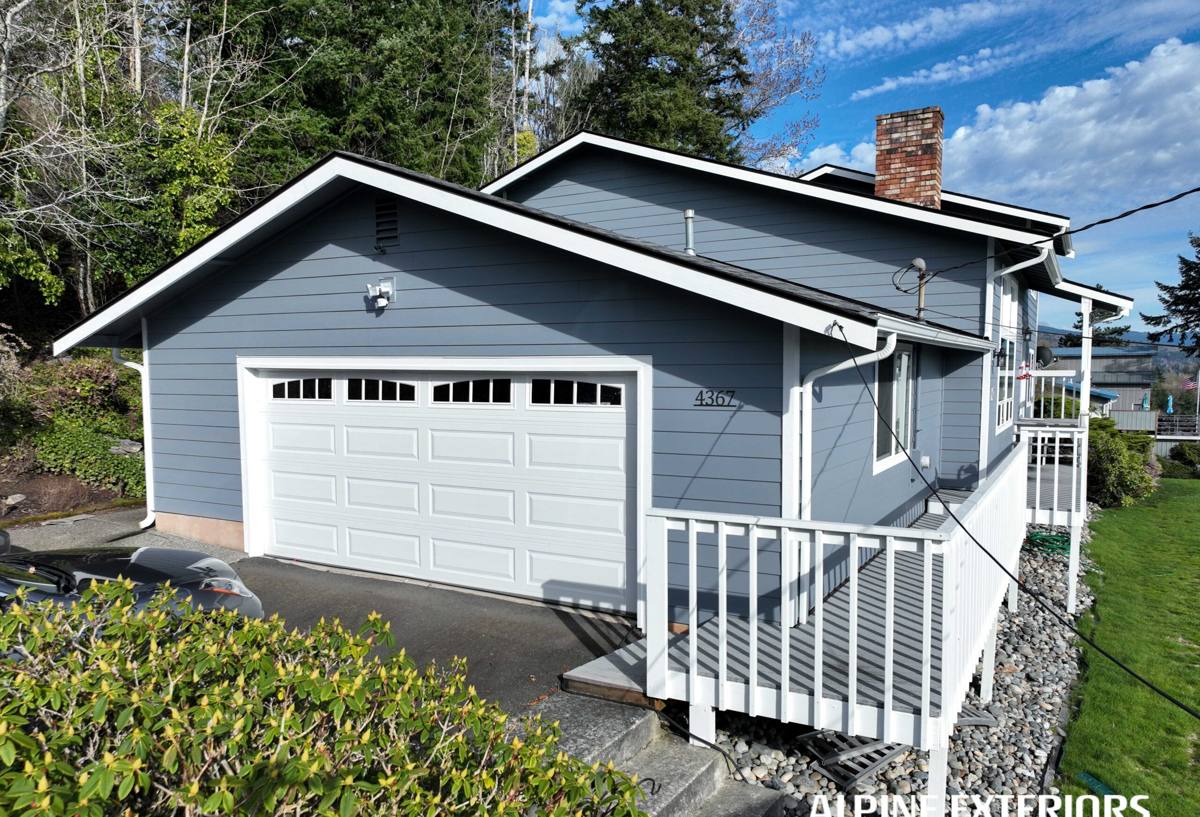
What That Climate Actually Does to a Roof
It's worth being specific about the failure points we see most often on Silver Beach homes, because it shapes how we approach a replacement:
- Moss and organic buildup in shaded valleys and north-facing slopes, which holds moisture against the shingle surface and accelerates granule loss
- Fastener and flashing corrosion from the combination of persistent damp and salt-influenced air, especially on older galvanized flashing
- Trapped attic moisture from undersized or blocked ventilation, which condenses on the underside of the decking and rots it from the inside
- Debris-clogged valleys and gutters from tree cover, which back water up under the shingle edge instead of letting it run off
- UV and wind-driven rain wear on the more exposed slopes facing toward the lake or open sky
None of these are exotic problems — they're standard Pacific Northwest issues — but a roof that ignores them, or was installed with shortcuts that work fine in a dry climate, will show its age in Silver Beach faster than it should.
Repair or Full Replacement? How to Tell
Not every aging roof needs a full tear-off. We look at a few things before recommending replacement rather than repair:
Signs pointing toward replacement
- Granule loss heavy enough that you can see bare asphalt on multiple slopes
- Soft or spongy decking felt underfoot, or visible sagging between rafters
- Moss that keeps returning within a season or two of cleaning, no matter how it's treated
- Multiple layers of old roofing already underneath the current one
- Leaks showing up in more than one location, especially near valleys or penetrations
- The roof is at or past the manufacturer's expected service life for the material
Signs a repair is still reasonable
- Isolated damage — a single damaged flashing detail, a localized wind-lifted section
- The roof is otherwise mid-life with intact granule coverage
- Decking underneath tests solid where we can check it
We'll tell you honestly which category your roof falls into. If a repair will hold for a few more years, we say so — a new roof is a real investment and we're not going to push a full replacement on a roof that doesn't need one yet.
What a Correct New Roof Installation Involves
A roof is only as good as what's underneath the shingles or metal panels. On a full tear-off and replacement, the work that matters most is largely invisible once it's done:
Tear-off and deck inspection
We strip the old roofing down to the decking, not just layer over it. That's the only way to actually see what condition the plywood or plank decking is in and replace any sections that are soft, delaminated, or water-damaged — which is common on shaded Silver Beach roofs where moisture sits longer.
Ice and water shield at vulnerable points
Valleys, eaves, and roof-to-wall transitions get a self-adhering waterproof membrane underneath the primary underlayment. In a climate with this much sustained rain, these are the spots where wind-driven water and ice-dam backup (on the colder, shaded slopes) most often find a way in.
Underlayment across the full deck
Synthetic underlayment goes down over the rest of the roof as the secondary water barrier — the layer that protects the deck if wind or debris ever compromises the surface roofing above it.
Flashing at every penetration and transition
Chimneys, vent pipes, skylights, and wall intersections all get new metal flashing, properly stepped and integrated with the underlayment — not just caulked over old flashing. This is one of the most common places we find prior installations cut corners, and it's usually where leaks start.
Ventilation built for the actual attic
Intake at the eaves, exhaust at the ridge, sized to the attic volume — not just whatever vent happened to be on the truck. Correct ventilation is what keeps moisture from condensing inside the attic in the first place, which matters more here than almost anywhere else in the process.
Roofing material installed to spec
Correct nailing pattern and placement, proper exposure and overlap, starter strip and ridge cap installed per manufacturer instructions — the details that actually determine whether a warranty is valid and whether the roof performs in wind and rain.
Material Options: What Fits a Silver Beach Roof
| Material | Typical Lifespan | How It Handles This Climate | Maintenance Reality |
|---|---|---|---|
| Architectural asphalt shingle | 25–30 years | Good performance when ventilation and underlayment are done right; moss-resistant granule options available for shaded lots | Periodic moss and debris removal, especially under tree canopy |
| Standing seam metal | 40–50+ years | Sheds moss and debris well due to smooth, steep-shed surface; strong wind and rain performance | Low; occasional gutter and valley debris clearing |
| Synthetic/composite shingle | 30–50 years | Resists moisture absorption better than organic materials; holds up well in shaded, damp conditions | Low to moderate |
| Wood shake | 20–30 years with upkeep | Historically common in the PNW but requires diligent maintenance in a moss-heavy, moisture-heavy setting like Silver Beach | High — regular treatment and moss control needed to avoid early rot |
We don't push one material on every house. The right call depends on how much tree cover the specific lot has, the roof pitch, your budget, and how much upkeep you actually want to do. What we won't do is recommend a material or install method that we know struggles in this specific climate just because it's cheaper up front — we'll walk you through the real trade-offs instead.
Our Installation Process
- On-site assessment — we inspect the current roof, attic ventilation, and any visible damage, and take measurements
- Written estimate — clear scope, material options, and pricing, no vague allowances
- Material order and scheduling — timed around Whatcom County's weather windows rather than guessing
- Tear-off and deck inspection — old roofing removed, decking checked and repaired as needed
- Underlayment, flashing, and ventilation installed — the layers that determine long-term performance
- Roofing material installed to manufacturer spec — correct fastening, exposure, and ridge/valley detailing
- Site cleanup and walkthrough — debris and old materials hauled off, magnetic sweep for nails, final inspection with you
Permits, Timing, and Working Around Whatcom County Weather
Bellingham requires a permit for roof replacement, and we handle that as part of the job rather than leaving it on you. On timing: we work around the weather rather than against it. Roofing materials need dry conditions to install and seal correctly, so we plan installs during stretches with a realistic dry window and stage material delivery accordingly. Rushing a roof install into a wet forecast to hit a deadline is how you end up with trapped moisture under new roofing — we'd rather adjust the schedule.
Why a Crew That Already Works Silver Beach Matters
A roofer who mostly works drier, more open properties will treat ventilation and moss resistance as an afterthought. A crew that's regularly up on Silver Beach and similar tree-canopied, lake-adjacent Bellingham neighborhoods builds those details into the plan from the start — because we've seen what happens when they're skipped. That includes knowing which slopes on a given lot are going to stay shaded and damp longest, sizing ventilation for attics that deal with more sustained humidity, and choosing flashing and fastener materials that hold up against the area's moisture and salt-air exposure rather than the cheapest option on the shelf.
It also means we're not learning the neighborhood's permit process or access quirks on your job — narrow driveways, tree-clearance needs for staging equipment, and similar realities of working on tree-lined Silver Beach lots.
Before You Hire Anyone: A Quick Checklist
- Get a written estimate that itemizes materials, not just a lump total
- Confirm they'll inspect and replace bad decking as part of the job, not just re-roof over it
- Ask specifically how they're handling attic ventilation — intake and exhaust, not just "we'll add a vent"
- Confirm ice-and-water shield placement at valleys, eaves, and penetrations
- Check that they carry proper licensing and insurance for roofing work in Washington
- Ask how they schedule around rain — a vague answer here is a red flag in this climate
- Get the manufacturer warranty terms in writing, including what voids it
If your Silver Beach roof is showing its age — moss that keeps coming back, granule loss, soft spots, or leaks — we're happy to take a look and give you a straight answer on repair versus replacement. Reach out below for a free, no-pressure estimate.