 Bellingham
 Siding Repair in Silver Beach: A Different Kind of Wear
Silver Beach is one of the more heavily wooded, water-adjacent neighborhoods in the Bellingham area, and that combination creates a specific kind of siding stress. Homes here sit under mature tree canopy that keeps roofs and walls shaded and slow to dry, while marine air moving through Whatcom County keeps humidity high most of the year. Add in driving rain that comes sideways off frequent winter storms, and you get siding that stays damp longer than it should, in more places than a homeowner usually notices.
That's the backdrop for every siding repair call we take in this neighborhood. It's rarely one big obvious problem. It's usually a handful of smaller ones — a cracked panel here, a failed seam there, a patch of moss holding moisture against the wall — that add up over a few wet seasons into something that needs real attention. Repair work in Silver Beach has to account for that pattern, not just patch the symptom in front of you.
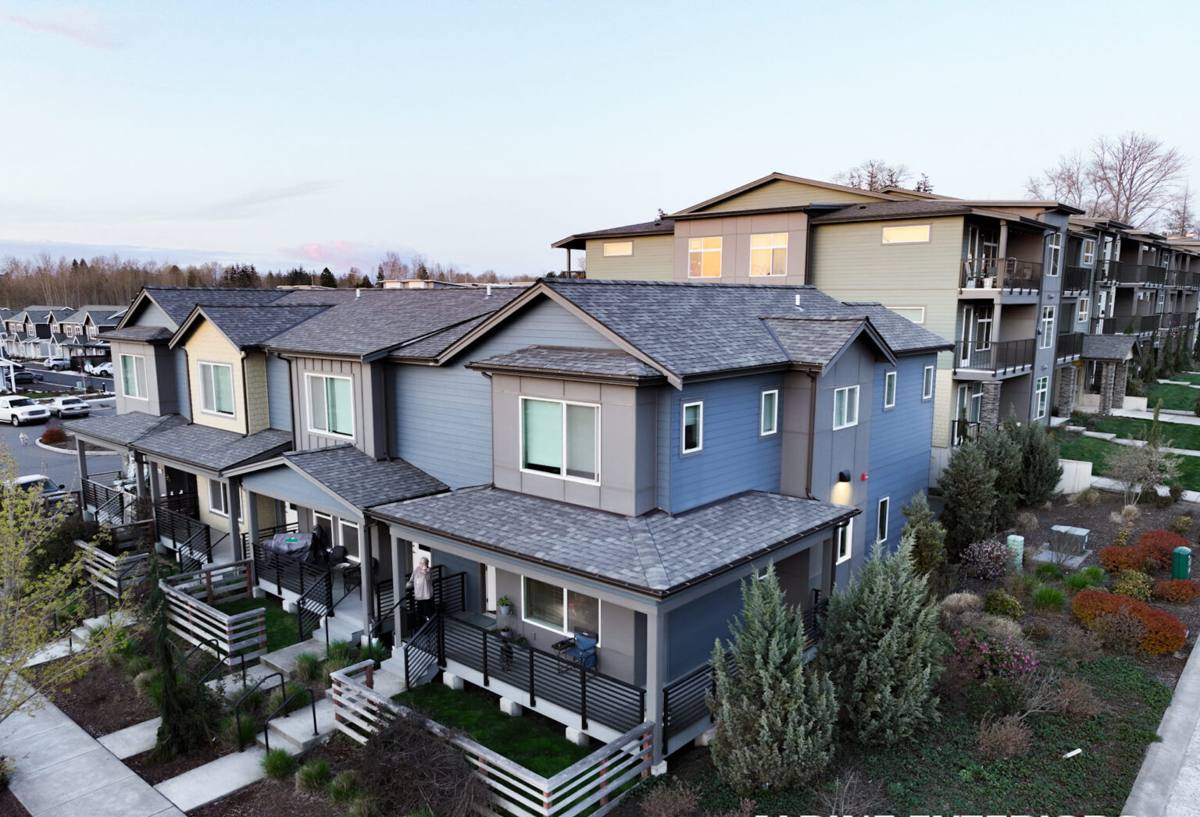
Common Siding Damage We See in Silver Beach
Moss and Algae Growth
Shaded, moisture-retaining lots are ideal moss habitat, and moss doesn't just sit on top of siding — it holds water against the surface and, over time, works into seams, fastener holes, and butt joints. On wood and engineered wood products, that trapped moisture is often the first step toward rot. On fiber cement, moss is mostly a surface and finish issue, but left unaddressed it still traps grime and shortens the life of caulking and paint.
Moisture Intrusion and Rot
This is the damage that matters most, because it's frequently invisible from the ground. Water gets behind siding through failed caulking, poor flashing, or a crack that's been letting rain in for a season or two before anyone notices a soft spot or a stain. By the time it shows on the surface, there's often sheathing or framing damage underneath that needs to be addressed, not just covered over.
Impact Damage and Cracking
Falling branches are a fact of life in a tree-heavy neighborhood like this, and they crack or chip siding more often than most other causes. Impact damage is usually easy to spot and easy to repair correctly, as long as the replacement material and fastening match the original installation.
Caulking and Trim Failure
Caulk and trim take the brunt of driving rain because they're the transition points — around windows, at corners, along the bottom edge of the siding. UV exposure and constant wet-dry cycling break caulk down faster here than in drier parts of the state, and once it fails, water has a direct path behind the siding.
Repair or Replace? How We Make the Call
Not every damaged section needs to come off the wall, and not every crack can be safely left alone. We look at three things: how much of the wall is affected, whether there's evidence of moisture behind the surface, and how old the existing siding is relative to its expected service life. The table below covers the general pattern, though every home gets an actual inspection before we recommend either path.
| What We Find | Usually Means | Typical Approach |
|---|---|---|
| Isolated crack or impact chip, dry behind it | Localized damage only | Cut out and replace the damaged section |
| Failed caulking, siding and sheathing still sound | Maintenance overdue, not yet structural | Re-seal, re-flash as needed, spot repair |
| Soft or discolored sheathing behind siding | Active or past moisture intrusion | Open the wall further, repair sheathing, then re-side that section |
| Widespread cracking, warping, or repeated repairs in one area | Original material or installation reaching its limit | Full replacement of that elevation or the whole exterior |
| Siding is 20+ years old with recurring issues | Diminishing returns on further patching | Replacement, typically with James Hardie fiber cement |
The goal is always to spend your money where it actually solves the problem. Patching over rot, or repeatedly re-caulking a section that keeps failing, just delays a bigger bill later.
What a Correct Siding Repair Actually Involves
A repair that's done right takes more steps than most homeowners expect, mainly because the visible damage is rarely the whole story.
- Inspection beyond the damaged spot. We check the surrounding panels, trim, and flashing, not just the section that's obviously broken.
- Moisture check. If there's any sign the damage has been letting water in, we check the sheathing underneath before doing any cosmetic work.
- Finding the actual cause. A cracked panel might be impact damage, or it might be a symptom of a flashing detail that was never right. We fix the cause, not just the crack.
- Removing damaged material cleanly. Cutting back to sound material and sound framing, not just covering a soft spot with a new panel.
- Correcting flashing and drainage. Any water management detail that failed gets rebuilt, not just resealed.
- Matching the replacement material. On fiber cement, that means matching plank profile, exposure, and finish so the repair doesn't stand out.
- Sealing and finishing. Caulking, painting, or color matching so the repaired section performs and looks like the rest of the wall.
Skipping any of these steps is how a five-year "repair" turns into a fifteen-year headache. Most of the repeat repair calls we get started as a quick patch job that didn't address the underlying cause.
Why We Repair — and Rebuild — With James Hardie Fiber Cement
We install only James Hardie fiber cement siding, and that standard carries into repair work too. When a repair requires new panels rather than a spot patch, we use Hardie product matched to your existing HZ line, and when a section needs full replacement, Hardie is what we recommend and install.
There's a practical reason for that beyond preference. Fiber cement doesn't absorb moisture the way wood-based products do, and it doesn't need repainting on the schedule that wood or primed spruce does. In a neighborhood dealing with moss season and driving rain year after year, that matters more than it does in a drier climate. Hardie's ColorPlus factory finish also holds color and resists the fading and peeling that field-applied paint eventually suffers under constant marine-air humidity cycling.
We're not going to tell you your existing siding is worthless just because it isn't Hardie — plenty of repairs on other materials are legitimate, targeted fixes. But when a home needs enough new siding that it's effectively a partial re-side, we'll be honest that we think fiber cement is the better long-term investment for this climate, and it's the only material we install.
Our Silver Beach Repair Process
Because we work in this neighborhood regularly, our process is built around the conditions here rather than a generic script.
- Estimate and inspection. We look at the whole exterior, not just the spot you called about, since damage in one area often points to a similar risk elsewhere on the same wall.
- Honest scope. You get a clear explanation of what's damage versus what's cosmetic, and what's repair versus what should be replacement.
- Moisture-first repair order. Any wet sheathing or framing gets addressed before cosmetic work starts — there's no point in a clean-looking patch over a wet wall.
- Matched materials. Replacement sections are matched to your existing siding profile and, where applicable, Hardie's ColorPlus palette.
- Cleanup and walkthrough. We show you what was found, what was fixed, and what to keep an eye on going forward.
Checklist: Signs Your Silver Beach Home Needs a Siding Repair Now
- Visible cracking, chipping, or splitting on one or more panels
- Persistent moss, algae, or dark staining that keeps returning after cleaning
- Caulking that's cracked, shrunk, or pulled away from trim and corners
- Soft or spongy siding when pressed, especially near the bottom edges or window trim
- Peeling or bubbling paint, particularly on wood-based or engineered wood siding
- Visible gaps at seams, corners, or where siding meets trim, roofline, or foundation
- Water stains on interior walls near exterior corners after heavy rain
- Any section that's been patched more than once in the past few years
If more than one of these applies, it's worth having someone look before the next wet season rather than after.
Why Local Experience in Silver Beach Matters
Siding repair looks different in a wooded, water-adjacent neighborhood than it does on an open, sunny lot across town. A crew that works Silver Beach regularly already knows to check for moss-related moisture in shaded corners, expects caulking to fail faster than the manufacturer's stated timeline in this exposure, and doesn't treat every repair as an isolated event separate from the tree cover and drainage patterns around it. That local pattern-recognition is the difference between a repair that solves the problem and one that just resets the clock on it for a year or two.
Bellingham's broader marine climate — the combination of salt-tinged air, sustained rain, and a moss season that runs longer than most of the state sees — means siding maintenance here is less optional than it is in drier parts of Washington. Homes in Silver Beach feel that on the shaded and water-facing sides first, which is usually where we find the damage that's furthest along by the time someone calls.
Get a Straight Answer on Your Siding
If you've got a section of siding that looks off, or you're just not sure whether it's a quick fix or something bigger, we're happy to take a look. We'll give you a clear, no-pressure estimate and tell you honestly whether repair makes sense or replacement is the smarter long-term call — no upsell, just what your home actually needs.