 Bellingham
 South Hill's Roofs Work Harder Than Most People Realize
South Hill sits up above the flatter parts of Bellingham, close enough to the bay that salt-laden air reaches the rooflines on windier days, and high enough that homes take a more direct hit from driving rain coming off the water. Add in the mature tree canopy that gives the neighborhood its character — big conifers and maples that drop needles, leaves, and shade year-round — and you've got a roof environment that's noticeably tougher on materials than a roof a few miles inland.
Whatcom County's wet season runs long, and on South Hill's older, steeply pitched homes, moisture that lingers in shaded valleys or behind chimneys doesn't dry out quickly. That combination — salt exposure, wind-driven rain, and shade-fed moss — is exactly the kind of environment where roofing choices and installation details matter more than they would in a drier or more open part of town.
Why Metal Roofing Makes Sense Here
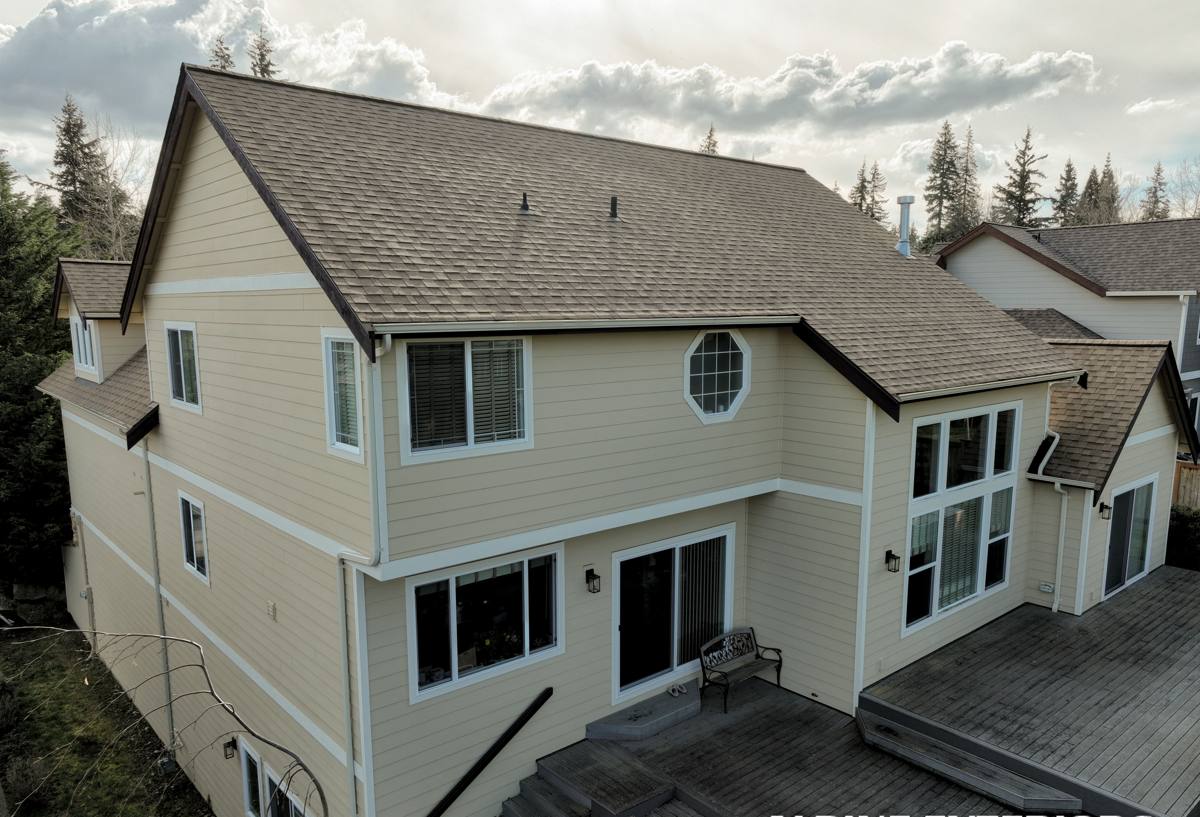
A lot of South Hill's housing stock is older — craftsman, tudor, and mid-century homes with real roof pitch, the kind of steep rooflines that shed water fast and show off a standing seam profile well. Metal roofing suits that architecture, and it suits the climate:
- Smooth, hard panel surfaces give moss far less to grab onto than shingles do, which matters under a tree canopy that keeps roofs shaded and damp
- Properly coated steel and aluminum panels handle salt air exposure without the granule loss or accelerated wear that shortens the life of asphalt shingles in coastal microclimates
- Steep pitches shed driving rain quickly across a metal surface with fewer seams for wind-driven water to work into
- A 40-60+ year service life fits homes people plan to keep long-term, which describes a lot of South Hill
Metal isn't the right call for every roof or every budget, and we'll say so plainly during an inspection if a repair or a different material makes more sense for your situation. But on a shaded, salt-exposed, steep-pitched South Hill roof, it's usually one of the strongest long-term options available.
What a Correct Metal Roof Installation Actually Involves
It's Not Just the Panels
The panels get all the attention, but on a South Hill roof the underlayment, fastening, and flashing details are what actually determine whether the roof performs in this climate. We install a synthetic or self-adhered underlayment rated for high-moisture exposure underneath every panel, because in a neighborhood with this much shade and wind-driven rain, the underlayment is the backup system that has to work if wind ever pushes water past a seam.
Panel Style Matters for Steep, Visible Rooflines
Standing seam panels — with concealed fasteners under raised, interlocking seams — are our default recommendation for South Hill's steep, often street-visible roofs. The concealed fastener design means there are no exposed screw penetrations for salt air and freeze-thaw cycling to work loose over time. Exposed-fastener panel systems cost less up front and can be the right call on outbuildings, garages, or budget-driven projects, but they require more diligent maintenance because every fastener is a potential leak point that needs periodic checking and gasket replacement.
Flashing Is Where Roofs Actually Fail
Chimneys, dormers, valleys, and roof-to-wall transitions are common on South Hill's older homes, and they're also where the vast majority of roof leaks originate — not in the open field of the roof. We custom-fabricate flashing for these details rather than relying on stock trim pieces, because a hillside home with multiple roof planes and an original chimney needs flashing cut to fit that specific roof, not a generic profile.
Ventilation Protects the Roof From the Inside
A metal roof installed over a poorly ventilated attic can trap moisture underneath the deck, which defeats a lot of the climate advantage metal is supposed to provide. We check and correct intake and exhaust ventilation as part of every re-roof, not as an afterthought.
Comparing Metal Panel and Coating Options
Material choice affects both upfront cost and how the roof handles this area's salt air and rain exposure over decades, not just years.
| Option | Best For | Trade-Offs on South Hill |
|---|---|---|
| Steel, standing seam, premium coating | Most South Hill homes — best balance of cost, durability, salt-air resistance | Higher upfront cost than exposed-fastener panels; needs a qualified installer for tight seams |
| Aluminum, standing seam | Homes very close to the water or with heavy salt exposure | Costs more than steel; won't rust even if the coating is eventually scratched |
| Steel, exposed fastener | Garages, shops, budget-conscious projects | Exposed screws need periodic inspection and gasket replacement; shorter realistic service life |
| Standard vs. premium paint coatings | Premium coatings (like high-end PVDF finishes) for main houses | Basic coatings cost less but fade and chalk faster under UV and salt exposure |
We'll walk through these trade-offs against your specific roof and budget rather than defaulting to the most expensive option — the right answer depends on your roof's pitch, exposure, and how long you plan to stay in the home.
Our Process for a South Hill Metal Roof
1. On-Site Assessment
We look at pitch, existing roof condition, decking, ventilation, and the specific exposure your home gets — a west-facing slope catching bay wind is a different job than a shaded, tree-covered roofline on the same street.
2. Tear-Off and Deck Inspection
Old roofing comes off and we inspect the decking underneath for rot or soft spots, which shows up more often on shaded, moss-prone roofs than people expect. Any damaged decking gets replaced before anything goes back on.
3. Underlayment and Flashing First
High-moisture-rated underlayment goes down, followed by custom-fabricated flashing at every valley, chimney, and wall transition — done before a single panel is installed.
4. Panel Installation
Panels are installed to manufacturer spec with attention to expansion allowance, since metal panels move slightly with temperature swings, and a panel installed too tight will eventually oil-can or pull at its fasteners.
5. Site Cleanup and Walkthrough
We clean up debris and fasteners from the property — a real concern on tree-covered lots — and walk the finished roof with you before we consider the job done.
Maintaining a Metal Roof in a Salt Air, Moss-Prone Climate
Metal roofing needs less maintenance than shingles, but "less" isn't "none," especially with South Hill's tree cover and coastal exposure. A simple annual routine goes a long way:
- Clear needles, leaves, and debris from valleys and gutter lines, especially after fall storms
- Check gutters and downspouts are flowing freely — clogged gutters back water up under roof edges
- Look for any moss or algae starting on shaded north-facing slopes and address it early, before it holds moisture against the panel
- Inspect flashing around chimneys and dormers for any lifted edges or sealant that's dried out
- On exposed-fastener roofs, check fastener gaskets periodically — they're the first thing to wear out
- Rinse salt residue off panels near the bay-facing exposures during dry stretches if buildup is visible
Signs an Existing South Hill Roof Needs Attention
If you're not sure whether your current roof — metal or otherwise — is holding up, a few signs are worth a professional look sooner rather than later: moss or algae established on shaded slopes, staining or dark streaks running from valleys or chimneys, granule buildup in gutters on an asphalt roof, or visible rust at fastener heads on an older metal roof. Any of these caught early is a much smaller job than waiting until there's an active leak inside.
Why It Matters That We Already Work in South Hill
South Hill's lots are often steep and tree-covered, with driveway and access challenges that a crew unfamiliar with the neighborhood hasn't planned for. Knowing which streets need extra staging room, how tree cover affects material drying and scheduling, and how the older homes in this part of Bellingham are typically framed all shape how a job actually gets run — not just how it's quoted. A crew that's done this work up the hill isn't guessing at any of it.
We're also familiar with Whatcom County permitting requirements for re-roofing projects, which keeps the paperwork side from slowing down your project once we're ready to start.
Get a Free, No-Pressure Estimate
If you're weighing metal roofing for a South Hill home — whether it's a full re-roof, a replacement after storm damage, or you're just trying to understand your options before your current roof needs attention — we're happy to take a look and walk you through it honestly. Use the form below to request a free estimate.