 Bellingham
 Happy Valley sits close enough to Bellingham Bay that salt-laden wind and driving rain reach every roof in the neighborhood, and the tree cover that makes the area attractive also means shade, damp shingles, and a moss season that runs longer than most homeowners expect. When a windstorm rips off shingles, a falling branch punches through decking, or weeks of standing moisture finally work their way past flashing, you need a repair that accounts for all of that — not just a patch that looks fine until the next atmospheric river rolls through.
What Storm Damage Actually Looks Like on a Happy Valley Roof
Storm damage isn't always a dramatic hole in the roof. In this part of Whatcom County, it's often quieter and easier to miss:
- Shingles lifted or creased by wind, still attached but no longer sealed
- Granule loss around ridges and edges where gusts hit hardest
- Flashing pulled loose around chimneys, skylights, or roof-to-wall transitions
- Small punctures or bruising from wind-driven branches and debris
- Gutters torn off their fascia, redirecting water into siding or soffits instead of away from the house
- Soft or discolored decking discovered only after a leak shows up on the ceiling below
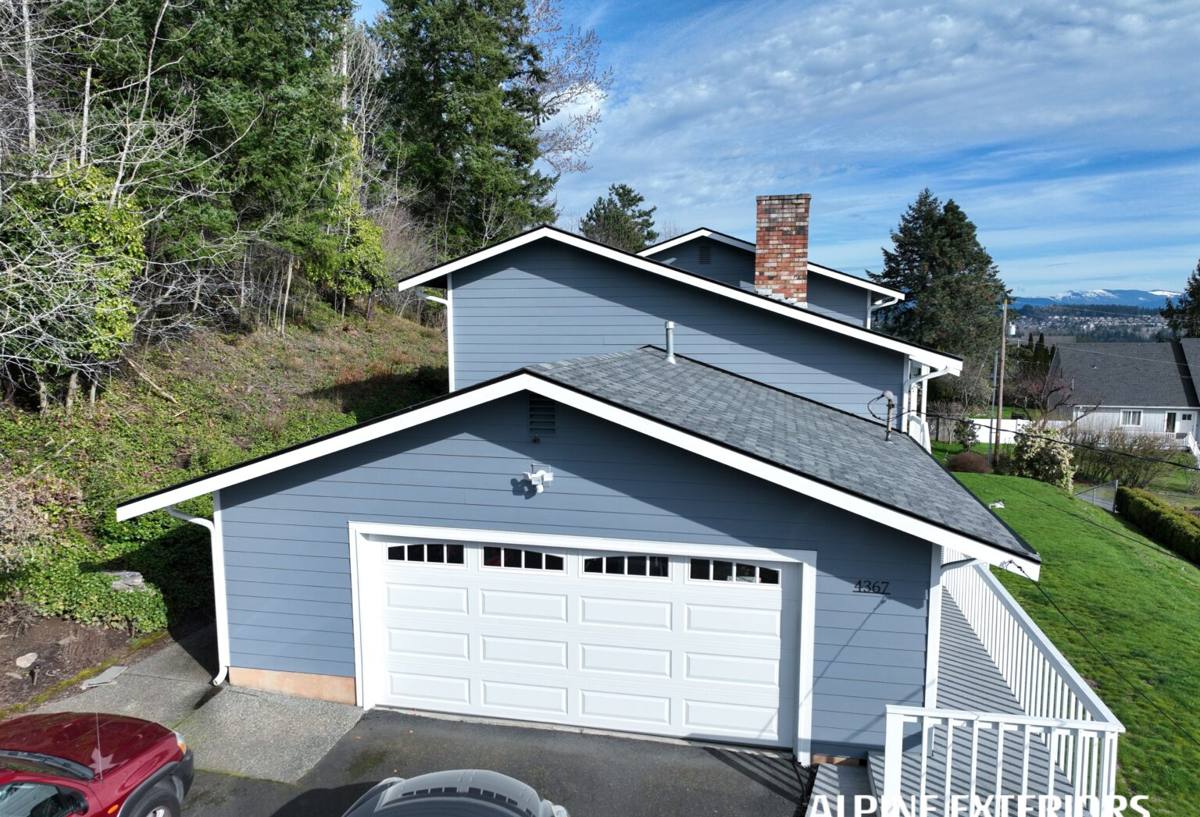
Because Happy Valley's tree canopy holds moisture close to the roofline, a small storm injury that would dry out quickly on an open, sun-exposed roof can stay damp here for days. That damp period is exactly when moss gets a foothold and when minor damage turns into rot underneath the shingles — out of sight until it isn't.
Why the Salt Air and Rain Pattern Change the Repair
Two things make storm repair in this neighborhood different from a drier, inland job. First, salt air off the bay accelerates corrosion on exposed metal — nails, flashing, and fasteners that would last for years elsewhere can start rusting noticeably sooner here. Second, Bellingham's rain doesn't usually come as a single hard downpour; it's persistent, sideways-driven rain over hours or days, which finds any gap that a quick patch left open. A repair that isn't sealed correctly at every edge will eventually leak, even if it looks watertight on a dry afternoon.
That's why we don't treat storm repair as "replace what's obviously missing and move on." We check the surrounding shingles for wind creasing that hasn't fully failed yet, inspect flashing for gaps that salt air has widened, and confirm the decking underneath is dry and sound before anything new goes down.
The Moss Factor
Storm-damaged sections are moss magnets. A cracked or lifted shingle holds water longer than an intact one, and moss spores take advantage of that moisture almost immediately. If we're repairing storm damage on a roof that already has moss elsewhere, we'll flag it — treating the damaged area alone while ignoring active moss growth nearby just means you're back to a repair call in another season or two.
Our Storm Damage Repair Process
1. Emergency Stabilization
If the roof is actively leaking or a hole is exposed to weather, the first priority is stopping water intrusion — tarping, temporary flashing, or board-up as needed. This isn't the fix; it's what buys time to do the fix correctly instead of rushing a permanent repair in bad weather.
2. Full Roof Inspection, Not Just the Obvious Spot
We walk the whole roof, not just the area you called about. Wind damage rarely announces itself in one tidy location — a gust that tore off one section of shingles often stressed the ones next to it too. We check flashing, valleys, vents, and gutter attachment points while we're up there.
3. Documentation for Insurance
We photograph and note the damage in a way that holds up when you file a homeowners insurance claim — clear before-repair images, a written description of what happened and what it affected, and an honest scope of work. We're not adjusters and we won't promise a claim outcome, but we make sure you're not walking into that conversation with weak documentation.
4. The Actual Repair
Depending on scope, this might mean replacing a section of shingles and underlayment, resetting or replacing flashing, repairing or replacing damaged decking, or a combination of all three. We match materials to what's already on the roof where possible and use fasteners and flashing rated to hold up to salt-air exposure, not just whatever is cheapest at the supply house.
5. Post-Repair Check
Once the repair is done, we walk the area again to confirm sealing, flashing laps, and shingle alignment are correct — not just visually acceptable from the ground.
Repair vs. Replacement: How We Make the Call
Not every storm-damaged roof needs a full replacement, and not every roof can be safely patched. The honest answer depends on the age of the roof, how much of it is affected, and what we find once we're actually up there.
| Factor | Leans Toward Repair | Leans Toward Replacement |
|---|---|---|
| Roof age | Under 12-15 years, otherwise sound | Near or past expected lifespan |
| Extent of damage | Isolated section or single slope | Multiple areas or widespread wind lift |
| Decking condition | Dry, solid when probed | Soft, spongy, or delaminating |
| Prior moss/moisture history | Minimal, well-ventilated roof | Recurring moss, poor attic ventilation |
| Matching materials | Shingle style/color still available | Discontinued product, visible patch mismatch |
We'll tell you plainly which category your roof falls into. If a repair will genuinely hold, we recommend the repair — a roof replacement isn't a small expense, and we're not going to push one on a roof that doesn't need it.
What Correct Storm Repair Materials Look Like Here
For fasteners and flashing on a Happy Valley roof, we favor corrosion-resistant materials over standard-grade options given the salt exposure this close to the bay — the small upcharge is worth it when the alternative is fasteners that start rusting within a few years. For shingles, matching the existing product's weight and wind rating matters more than matching color exactly, since a patch that's structurally weaker than the surrounding roof becomes the next failure point in the next windstorm. Where flashing has failed once, we typically upgrade the flashing detail rather than reinstalling the same design that just failed — same principle, better execution.
Why It Matters to Hire a Crew That Already Works This Neighborhood
Storm repair timing matters. When a windstorm moves through Whatcom County, demand for emergency roof work spikes all at once, and crews unfamiliar with the area often can't prioritize based on real urgency — they're working off a phone list, not local knowledge of which streets got hit hardest or which roofs are older and more vulnerable. A crew that's already worked in Happy Valley knows the tree cover, the drainage patterns, and the kind of roofs common to the area, which means faster, more accurate assessments and fewer surprises once the work starts.
It also matters for accountability. A local contractor with a track record in Bellingham and Whatcom County isn't disappearing after the check clears — if something about the repair doesn't hold up, you know where to find us.
A Practical Checklist After a Storm
- Photograph visible damage from the ground before anything is cleaned up, if it's safe to do so
- Check ceilings and attic spaces for water stains, even if the roof looks fine from outside
- Avoid walking on the roof yourself, especially if it's wet or you can see damage — let a professional assess it
- Note the date and approximate time of the storm for your insurance claim
- Call for an inspection promptly — a small leak left unaddressed through another rain event gets worse, not better
- Ask any contractor for written documentation of the damage, not just a verbal estimate
Preventing the Next One
Storm damage repair is also a good moment to address the conditions that made the damage worse than it needed to be. If moss was already established near the damaged area, if gutters were clogged and overflowing during the storm, or if attic ventilation is poor enough to trap moisture year-round, those are worth fixing at the same time. We'll point them out during the inspection — not to upsell unrelated work, but because ignoring them means the next storm does more damage than this one did.
If a recent storm left your Happy Valley roof leaking, missing shingles, or just something you're not sure about, we're happy to take a look. Reach out for a free, no-pressure estimate using the form below — we'll give you a straight answer on what's needed and why.