 Bellingham
 Why Sudden Valley Homes Ask More of Their Windows
Sudden Valley sits in a different microclimate than a lot of the neighborhoods we work in around Bellingham. The tree cover is heavier, the lots are often shaded most of the day, and homes tucked closer to Lake Whatcom stay damp longer after a storm than a house out in the open. Combine that with the driving rain that comes through Whatcom County off and on most of the year, and you get windows that are working harder than they would in a drier, sunnier setting.
Add in the long moss season that hits this part of Washington and the salt-laden air that rolls through the broader Bellingham area, and it's easy to see why window frames, sills, and seals age faster here than the manufacturer's brochure suggests. None of that means custom windows are a bad investment for a Sudden Valley home — it means the material choice, the installation detail, and the ongoing care matter more than they would somewhere drier.
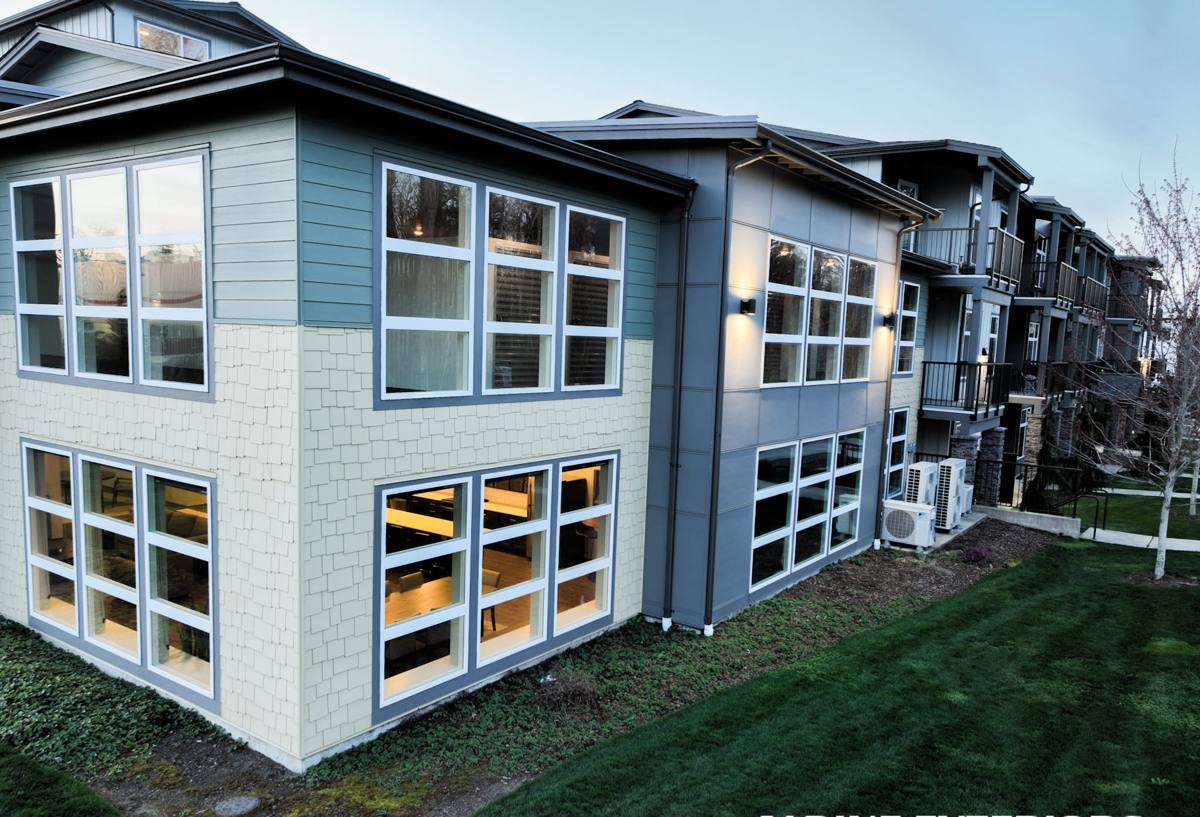
What "Correct" Actually Means on a Window Job
A lot of window problems homeowners deal with a few years after installation aren't a window defect — they're an installation shortcut. In a climate that throws this much moisture at a house, the install has to assume water will find its way to the opening eventually, and it has to give that water somewhere to go.
The details that matter most here
- Proper flashing integration with the existing wall assembly — not just caulk over the gap
- A sloped sill pan so any water that gets past the window drains back outside instead of pooling
- Correct shimming so the frame stays square and the sash doesn't bind or leak air over time
- Sealant chosen for the substrate and rated for our wet-then-dry cycling, not a generic tube from the shelf
- Interior air sealing separate from exterior weatherproofing — the two jobs are not the same and both need to happen
Skip any one of these and a window can look fine for a year or two before rot, fogging, or drafts show up behind the trim where you can't see it starting.
Choosing a Frame Material That Holds Up to Shade and Moisture
There's no single "best" window material — there's a best material for your specific house, exposure, and budget. In a shaded, damp setting like Sudden Valley, we weigh moisture behavior and maintenance load more heavily than we might for a south-facing lot in full sun.
| Frame Material | How It Handles Our Climate | Maintenance | Typical Fit |
|---|---|---|---|
| Vinyl | Won't rot; handles damp shade well; some flex in temperature swings | Low — occasional cleaning | Most Sudden Valley homes, budget-conscious replacements |
| Fiberglass | Very stable in wet-dry cycling; strong seal retention over time | Low | Homes wanting longer service life with minimal upkeep |
| Wood-clad | Good insulator; the exterior cladding protects the wood core, but any breach in the cladding invites moisture into the wood | Moderate — inspect cladding seams periodically | Homes prioritizing a traditional interior wood look |
| Aluminum | Durable but conducts cold and can condense/sweat more in shaded, humid spots | Low | Best reserved for specific architectural needs, not general replacement |
We'll talk through your specific exposure — how much direct sun the wall gets, how close you are to tree cover, and how the house has performed so far — before recommending a material. A window that's perfect for a sunny lot downtown isn't automatically the right call for a shaded lakeside property.
Glass packages worth discussing
Beyond frame material, the glass package is where a lot of real-world performance gets decided. Low-E coatings cut heat loss and UV fading, and the right gas fill (typically argon) improves insulation without adding meaningful cost. In shaded, humid spots, we also pay attention to how a given glass package handles interior condensation — a cold, poorly insulated pane in a damp room is exactly where you'll see fogging on the inside glass during our wetter months.
Moss, Moisture, and What They Do to a Window Over Time
Moss doesn't grow on the glass, but it absolutely grows on sills, trim, and anywhere organic debris collects — and once it's established, it holds moisture against wood and painted surfaces far longer than open air would. On a shaded Sudden Valley lot, that can mean sills and exterior trim staying damp for days after a rain event rather than drying out in an afternoon.
Over a few seasons, that trapped moisture is what actually causes trim rot and seal failure — not the rain itself. It's a slow problem, which is exactly why it's easy to miss until a window is already compromised.
What helps
- Keeping gutters and downspouts clear so runoff isn't sheeting directly across window heads
- Trimming back branches and vegetation that keep a wall in constant shade and dampness
- A quick rinse or brush-off of sills and trim once or twice a year to knock moss and debris loose before it takes hold
- Re-caulking exterior joints proactively every several years rather than waiting for a visible gap
Working With Sudden Valley's Community Guidelines
Many homes in Sudden Valley are part of a homeowners' association with its own architectural review process, and exterior changes — including window replacement in some cases — may need to go through that review before work starts. Requirements and how strictly they're enforced can vary, so we'd rather you check with your association directly than rely on a general answer here. If your project needs documentation for a review — product specs, elevation drawings, or a written scope of work — we can put that together as part of the estimate so you're not scrambling for paperwork after the fact.
Our Process, Start to Finish
- On-site assessment — we look at every window opening individually, not just the house as a whole, since sun exposure and moisture history can vary a lot from one wall to the next
- Material and glass recommendation — based on that specific exposure, your budget, and how the existing windows have actually performed
- Written estimate — clear line items, no vague allowances
- Install — proper flashing, sill pans, shimming, and sealing on every opening, not just the ones that are easy to reach
- Walkthrough and cleanup — we test operation on every window before we consider the job done, and we don't leave debris behind for you to deal with
What Drives Cost on a Custom Window Job
Every house is different, so we won't quote a number here that doesn't mean anything until we've seen your windows. What we can do is tell you what actually moves the price up or down.
| Factor | Why It Matters |
|---|---|
| Frame material | Vinyl is typically the most budget-friendly; fiberglass and wood-clad cost more upfront but may cost less in upkeep over time |
| Window size and shape | Custom or oversized openings, bays, and specialty shapes take more labor and material than standard sizes |
| Condition of the existing opening | Hidden rot or damage found once old windows come out adds repair work before the new unit can go in |
| Access and site conditions | Sloped lots, tree cover, and limited access around the house can add labor time |
| Glass package | Low-E coatings, extra gas fills, or upgraded U-factor glass add cost but improve comfort and efficiency |
| Number of openings | A whole-house replacement typically brings a better per-window price than a single opening done alone |
Signs Your Current Windows Are Due for Replacement
- Fogging or a milky film between the panes of a double-pane window — the seal has failed and it can't be fixed, only replaced
- Visible soft spots, discoloration, or bubbling paint on the frame or sill
- Noticeable draft near the frame even when the window is fully latched
- Windows that are hard to open, close, or lock, or that have started to stick
- Condensation forming on the interior glass regularly during cooler months
- Moss or persistent green buildup on sills or trim that keeps coming back after cleaning
If you're seeing one or two of these, it doesn't always mean full replacement — sometimes it's a repair or a resealing job. We'll tell you honestly which situation you're in rather than pushing a bigger job than you need.
Why a Crew That Already Works Sudden Valley Matters
Window installation is one of those jobs where general competence isn't quite enough — the details that hold up over ten or twenty years are the ones tailored to how a specific property actually behaves through a Whatcom County winter. A crew that's already worked shaded, forested lots around Sudden Valley has a feel for how fast moss builds back, how long a north-facing wall stays wet after a storm, and which materials have actually held up on homes like yours versus which ones just look good on a spec sheet. That's not something you get from a national installer passing through the area once — it comes from doing the work here, on these houses, repeatedly.
If your windows are showing their age, or you're planning ahead for a renovation, we're happy to take a look and give you a straight assessment. Reach out for a free, no-pressure estimate using the form below — we'll walk the property, answer your questions, and give you honest options with no obligation.