 Bellingham
 Siding Repair in Sudden Valley: What This Community Actually Needs
Sudden Valley sits on the south shore of Lake Whatcom, a private, HOA-governed community wrapped in heavy second-growth forest a few miles inland from Bellingham Bay. That setting gives it a repair pattern that's different from what shows up on homes closer to open water or downtown Bellingham. Direct salt exposure is lighter out here, but Sudden Valley makes up for it with dense tree canopy, lake humidity, and walls that stay damp far longer after a storm than a comparable home on an open lot. We repair siding throughout Sudden Valley on a regular basis, and the calls we get tend to trace back to a short list of causes: moisture trapped behind panels that never got a chance to dry, moss and mildew working into seams and fastener heads, and flashing details that were never built for a lot this shaded in the first place.
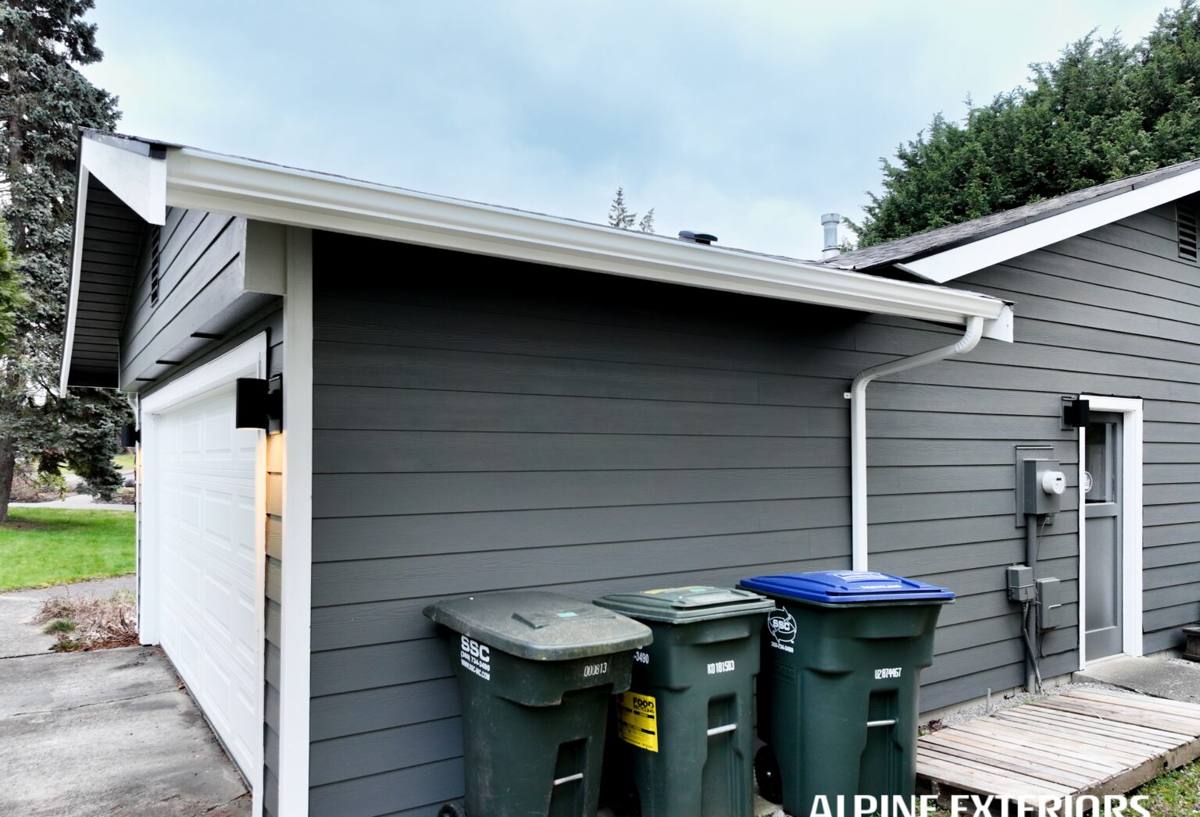
We install and repair James Hardie fiber cement siding exclusively. That standard doesn't just apply to new installs — it shapes how we approach a repair on an existing wall, whether that means matching material and finish to what's already there or telling a homeowner honestly when a patch won't fix what's actually going on.
What This Corner of Whatcom County Does to Siding Over Time
Heavy Shade and Slow Drying
Most Sudden Valley lots sit under significant tree cover, and it's common for at least one or two exterior walls on a given home to get very little direct sun for most of the year. That matters more than it sounds like it should: siding that depends on sun exposure to dry out between storms simply doesn't get that chance here. A wall that stays damp for days instead of hours after a rain is a wall where small problems — a gapped joint, a nail that backed out slightly, caulk that's started to fail — turn into rot and moisture intrusion faster than they would on a sunnier property.
Moss and Trapped Moisture at Seams and Fasteners
Shade, humidity, and Whatcom County's mild temperatures add up to a moss season that runs for most of the year on Sudden Valley's more shaded elevations. Moss itself doesn't destroy siding, but it holds moisture directly against the surface and works into seams, fastener heads, and butt joints, which is exactly where trapped water does the most damage over time. On repair calls, we regularly find moisture problems that started at a joint or seam that had a thin film of moss sitting on it for months before anyone noticed.
Driving Rain Across Uneven, Wooded Terrain
Whatcom County's broader climate carries a fair amount of salt-tinged marine air off the Salish Sea, and even set back from the open water, Sudden Valley still takes plenty of wind-driven rain during fall and winter storms. The community's hilly terrain means that force isn't uniform — a wall facing an open slope can take a very different beating than one tucked behind a rise or a stand of trees, sometimes on the same house. Repairs that don't account for that variability, treating every elevation the same, tend not to hold.
Signs Your Sudden Valley Home Needs Siding Repair
Most siding damage in a shaded, wooded setting like this doesn't announce itself. It shows up as a small visual change long before it becomes a structural one, which is why we tell homeowners to walk their own exterior a couple of times a year rather than waiting for a problem to become obvious from the street.
- Soft spots, bulging, or a slightly different texture when you press on a section of siding
- Persistent staining or dark streaking at seams, corners, or below window sills
- Moss or mildew that keeps returning to the same spot shortly after cleaning
- Paint or finish that's peeling, bubbling, or chalking unevenly across a wall
- Visible gaps, cracks, or separation at butt joints and corner trim
- Musty odor or a cool, damp feel to an interior wall near an exterior siding section
- Warping, cupping, or a section that no longer sits flush against the wall
Repair or Replace? How We Make That Call
When a Targeted Repair Is the Right Call
If damage is limited to a section or two — a cracked panel from impact, a corner that's come loose, a joint that failed while the rest of the wall assembly behind it is sound — a targeted repair is usually the right move. That means removing the damaged material back to solid substrate, checking the house wrap and flashing underneath before anything new goes on, and installing a matched replacement piece correctly rather than just patching over the visible problem.
When Repair Just Delays a Bigger Problem
Sometimes what looks like a small, fixable spot is actually the visible edge of a larger moisture problem working its way through a wall — this comes up more often on Sudden Valley's shaded, slow-drying elevations than on sunnier lots. If we open a section and find rot in the sheathing, a failed weather-resistive barrier, or moisture damage that extends well past what's visible from outside, we'll say so plainly. Patching over that kind of damage doesn't solve anything; it just hides it until the next repair call, usually a more expensive one.
What a Correct Siding Repair Actually Involves
Matching Material and Finish
James Hardie's factory-applied ColorPlus finish is baked on under controlled conditions, which is part of why it holds color and resists moisture so much better than field-applied paint. It also means a repair has to be planned around matching that finish correctly — using the right ColorPlus color match or a compatible touch-up product, and cutting and priming any field-cut edges the way Hardie's installation spec calls for, so the repaired section doesn't become the next weak point.
Fixing the Cause, Not Just the Symptom
A siding repair that only replaces the visible damaged piece without addressing what let moisture in — a missing flashing lap, a drainage gap that got closed off, a fastener pattern that was never right — just resets the clock on the same failure. Every repair we do starts with figuring out why that section failed in the first place, since on a shaded, moisture-retentive lot like a typical Sudden Valley property, the cause is rarely just "old siding."
Repair Approaches by Siding Material
What a repair actually looks like depends heavily on what's on the wall to begin with. We repair Hardie fiber cement as our standard, and while we don't install the materials below, understanding how they behave under repair helps explain why we standardized the way we did.
| Material | Common Repair Trigger Here | Repair Complexity |
|---|---|---|
| James Hardie fiber cement | Impact damage, failed joint or flashing detail | Straightforward when matched to correct HZ line and ColorPlus color |
| Vinyl siding | Warping, cracking, or moisture trapped behind panels in shaded walls | Panel replacement is easy; finding the trapped moisture source is not |
| LP SmartSide / engineered wood | Swelling or delamination at cut edges and seams that stayed damp | Moderate to high; damaged core often extends past the visible spot |
| Cedar | Rot, cupping, or finish failure from repeated wetting without full drying | High; matching weathered wood tone and sealing new material properly |
What Drives Siding Repair Cost in Sudden Valley
Repair costs vary more than most homeowners expect, mainly because the visible damage rarely tells the whole story. A few factors we walk through on every estimate:
| Factor | Why It Matters |
|---|---|
| Extent of hidden moisture damage | Sheathing or framing repair behind the siding adds cost beyond the surface fix |
| Access and elevation | Sudden Valley's hilly lots and tree cover can add setup time on certain walls |
| Color and finish matching | Older ColorPlus runs may need a closer color-match process than a recent install |
| Number and location of affected sections | Scattered repairs across multiple elevations take more time than one concentrated area |
| Underlying cause | A flashing or drainage fix behind the siding is separate labor from the siding itself |
We'll walk the specific sections involved and give you real numbers rather than a rough estimate based on square footage alone, since two homes with similar-looking damage can need very different scopes of work once the wall is actually opened up.
Our Siding Repair Process
- On-site assessment: We look at the damaged section and the surrounding wall, paying attention to shade, tree cover, and drainage patterns specific to that elevation, since those vary more from wall to wall in Sudden Valley than on a typical open lot.
- Opening the wall where needed: If there's any sign the damage extends past the surface, we open the section to check the substrate, house wrap, and flashing before quoting a final scope.
- Written scope before work begins: You'll know what's being repaired, why, and what it costs before any material comes off the wall.
- Repair to manufacturer spec: Fastener pattern, clearance, drainage detailing, and finish matching follow James Hardie's published installation requirements, not a shortcut version.
- Final walkthrough: We show you what was found, what was fixed, and what — if anything — is worth keeping an eye on going forward.
Why a Crew That Already Works Sudden Valley Matters
Sudden Valley is a private community with its own internal roads and an HOA governing exterior work, and a crew that's already spent time here understands the practical side of that — how to schedule around community access, and how much the terrain and tree cover can change exposure from one lot to the next, sometimes within sight of each other. That familiarity shows up directly in repair quality: knowing which elevations in this community tend to hide moisture problems longer, how flashing needs to be lapped on a steep, shaded roof-to-wall transition, and which fastener grade actually holds up in a damp, wooded microclimate rather than just meeting a generic minimum.
- Ask what siding material they repair and install, and whether they can match existing James Hardie ColorPlus finishes
- Confirm current Washington contractor licensing and active liability insurance
- Ask how they determine whether a repair or a full section replacement is the right call, and why
- Ask about experience working within HOA or private-road communities, including access and scheduling
- Get a clear, written scope of the repair before any work begins
If you've spotted a soft spot, staining, or a section of siding that doesn't look right on your Sudden Valley home, we're happy to come take a look and give you an honest read on what it needs. There's a form below — reach out for a free, no-pressure estimate.