 Bellingham
 Windows in Cordata Face a Specific Kind of Weather
Cordata sits on the north side of Bellingham, close enough to the water and the open flats along the I-5 corridor that homes here take a steady beating from wind-driven rain most of the year. Add Whatcom County's damp, low-sun winters and the salt air that rolls in off Bellingham Bay and the Strait, and you've got conditions that punish windows in ways drier climates never do. Wood sashes swell and stick. Aluminum frames pit and corrode. Seals that would last twenty years in eastern Washington fail in twelve here because they're wet more often than they're dry.
Moss is the other quiet problem. It doesn't just grow on roofs — it colonizes window sills, tracks, and the gaps around older trim where organic debris collects and holds moisture against wood and caulk. Once moss and algae get a foothold around a window opening, they hold water directly against the building envelope for weeks at a time. That's a slow leak waiting to happen, not a cosmetic issue.
None of this means Cordata homeowners need exotic products. It means the installation has to be done with this climate in mind — correct flashing, the right sealants, and window products rated for sustained moisture exposure rather than occasional rain.
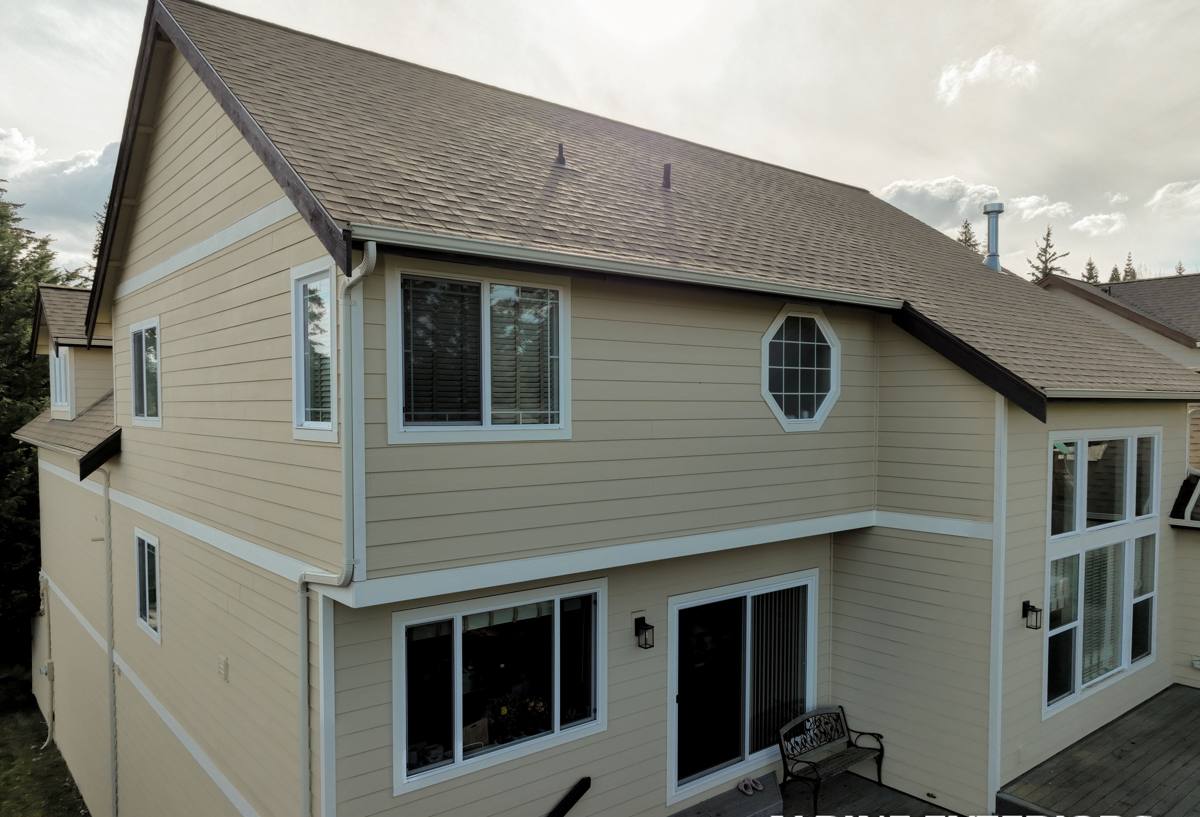
What a Correct Window Installation Actually Involves
Swapping out an old window for a new one looks simple from the inside. Most of the work — and most of the risk — happens in the rough opening, where you can't see it once the trim goes back on.
The Parts That Matter Most
- Removing the old window without damaging the rough opening framing or existing sheathing
- Inspecting the sill and jambs for hidden rot before anything new goes in — a common find on older Whatcom County homes
- Installing a sloped sill pan so any water that gets past the window drains back out, not into the wall
- Flashing tape or building paper integrated correctly with the home's existing weather-resistive barrier, lapped so water sheds downward and outward
- Setting the window level, plumb, and square, then shimming and fastening per the manufacturer's specifications
- Low-expansion foam or backer rod and sealant in the gap between frame and rough opening — never just foam alone
- Exterior caulking at the correct joints only, leaving the bottom of the window able to weep if water does get behind the trim
Skip the sill pan or get the flashing lap sequence backwards, and a brand-new window can leak worse than the one it replaced — you just won't know it until the sheathing underneath has been wet for a couple of winters.
Signs a Cordata Home Needs Window Work
Most window problems here show up gradually, not as a sudden leak. Watch for these:
- Fogging or a permanent haze between the panes — the seal on the insulated glass unit has failed
- Drafts you can feel with your hand along the frame edge on a windy day
- Soft or discolored wood trim at the sill, especially on north- and west-facing walls that catch the most driving rain
- Windows that are difficult to open, close, or lock — frames swelling from moisture intrusion
- Visible moss, black streaking, or algae building up on the sill or lower sash
- A noticeable jump in heating costs without any other explanation
Any one of these on its own might just mean it's time to reseal or repaint. Two or three together, especially on the same window, usually points to a moisture problem in the frame or the wall behind it — worth having someone look at before you commit to a full replacement plan.
Choosing a Window That Fits This Climate
There's no single "best" window material — there's a best fit for the exposure and the budget. Here's how the common options compare for a coastal, high-rainfall climate like Cordata's:
| Material | Moisture Behavior | Maintenance | Typical Lifespan |
|---|---|---|---|
| Vinyl | Won't rot; expands/contracts with temperature swings | Low — occasional cleaning | 20–30 years |
| Fiberglass | Dimensionally stable, handles wet-dry cycling well | Low | 30–40 years |
| Wood (unclad) | Attractive but vulnerable without diligent upkeep | High — repaint/reseal regularly | Varies widely with maintenance |
| Wood-clad (vinyl/aluminum exterior) | Good — exterior shell protects the wood core | Moderate | 25–35 years |
| Aluminum | Prone to condensation and corrosion near salt air | Moderate to high | Varies; older stock often replaced early |
We generally steer clients away from bare, unclad wood on street-facing or west-facing walls in this area — not because wood is a bad material, but because keeping up with the paint and caulk schedule it needs in a climate this wet is a real, ongoing cost most homeowners underestimate. Clad wood or fiberglass gets you the interior look people want with far less upkeep exposure.
Glass Package
Double-pane, argon-filled, low-E glass is the standard for this region — it isn't an upgrade, it's the baseline for anything installed here now. On homes with strong west or waterside exposure, we'll talk through whether a higher-performance low-E coating is worth the difference for that specific elevation.
Our Installation Process
1. On-Site Assessment
We look at each window opening individually — not every window on a house needs the same fix. Some may need full replacement, others just new flashing and sealant around sound existing units.
2. Honest Scope and Pricing
You get a written estimate covering material, labor, and what we expect to find once we open up the opening. If we find rot behind the old trim, we tell you before we proceed, not after the invoice.
3. Removal and Opening Inspection
Old window comes out carefully. We check the sheathing and framing for water damage right then, while it's exposed and easy to fix.
4. Flashing, Sill Pan, and Weather Barrier Integration
This is the step that determines whether the window performs for twenty years or leaks in five. We don't shortcut it.
5. Set, Seal, and Trim
Window is set level and square, sealed correctly at the right joints, and trimmed to match the home.
6. Walkthrough
We test operation, check for square and smooth function, and walk the job with you before we consider it done.
What Affects the Cost
| Factor | Why It Matters |
|---|---|
| Number of openings | More windows means more labor and material, but per-unit cost usually drops slightly on larger jobs |
| Hidden rot or framing repair | The most common reason a quote changes once work starts |
| Window size and configuration | Large picture windows, bays, and custom shapes cost more than standard slider or single-hung sizes |
| Material choice | Vinyl is typically the most budget-friendly; fiberglass and clad wood cost more upfront but less over time |
| Trim and siding tie-in | Matching existing trim profiles or repairing siding disturbed during install adds labor |
| Access and story height | Second-story or hard-to-reach openings take more time and equipment |
We'd rather give you a realistic range up front than a low number that grows once the walls are open. Ask us for the specific range on your project — it depends on all of the above.
Whatcom County Permits and Code
Straight like-for-like window replacement (same size opening, same wall) is often exempt from a building permit in most jurisdictions, but egress requirements for bedroom windows, structural changes to the opening, and energy code minimums for new glass still apply. If your project changes a window's size or adds an opening, expect a permit to be part of the process. We handle that conversation with you up front rather than leaving you to sort it out.
Why a Crew That Already Works Cordata Matters
Window installation done wrong doesn't fail on day one — it fails in year three or four, quietly, inside a wall you can't see. A crew that installs windows regularly in this specific climate has already seen what happens when flashing details get skipped in a place with this much sustained rain, and builds the job around avoiding that outcome rather than learning it the hard way on your house. Familiarity with local framing practices, common rot patterns in homes of a certain age, and the realistic weather window for exterior work in Whatcom County all shape how a job gets scheduled and sequenced — details that matter more here than in a drier region where a sealant mistake might go unnoticed for a decade.
Simple Maintenance That Extends Window Life
- Clear moss and debris from sills and tracks each fall before the wet season sets in
- Check exterior caulk lines once a year and touch up any cracked or peeling sections
- Keep gutters and downspouts clear so roof runoff isn't sheeting down across upper windows
- Operate each window a few times a season so seals and hardware don't seize from disuse
- Wipe condensation from interior sills promptly in winter to keep moisture off wood trim
- Have any fogged or failed glass units addressed early — a failed seal is a glass repair now, a bigger repair later
If you're weighing a repair against a full replacement, or just want a straight answer on what your windows actually need, we're glad to take a look. Fill out the form below for a free, no-pressure estimate on your Cordata home.