 Bellingham
 Windows in a Marine Climate: Why Edgemoor Needs a Different Approach
Edgemoor sits close enough to Bellingham Bay that homes here take a steady diet of salt-laden air, wind-driven rain, and the low, damp light that keeps moss growing most of the year. That combination is harder on windows than most homeowners realize. Salt air accelerates corrosion on hardware and metal components. Driving rain finds any gap in flashing or sealant and pushes water sideways and upward, not just down. And a long moss season means anything shaded by mature trees — a common feature of Edgemoor's wooded lots — stays damp longer between dry spells, which invites rot at sills and trim if the original installation wasn't sealed correctly.
None of this means windows in Edgemoor need to be exotic or expensive. It means the installation details that get skipped on an easier job — flashing sequence, sill pan drainage, sealant choice, fastening pattern — matter more here than they would in a drier inland climate. A window that's a perfect product but installed with shortcuts will fail early in this environment. A modest window installed correctly will outlast it by decades.
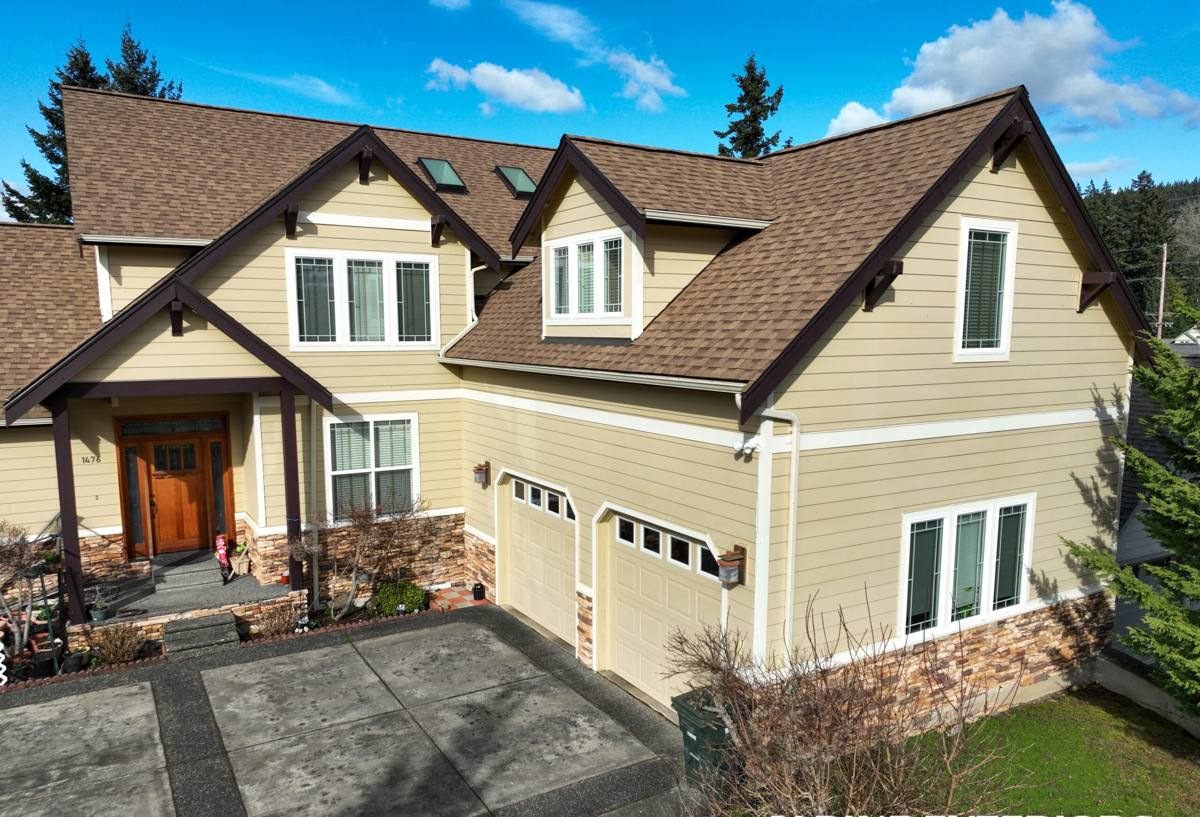
Signs Your Windows Are Ready for Replacement
Homeowners often wait until a window is obviously broken, but in Whatcom County's climate, the damage that matters most is usually happening quietly around the frame, not in the glass. Worth checking for:
- Soft or discolored wood at the sill, jamb, or interior trim
- Fogging or condensation between panes, which means the seal has failed
- Windows that are hard to open, close, or lock — a sign the frame has shifted or swollen
- Visible gaps, cracked caulk, or daylight around the frame from outside
- Persistent moss or algae staining below the window, suggesting water is running down the wall instead of being shed cleanly
- Drafts or a noticeable temperature difference near the window on windy, rainy days
Any one of these on its own isn't necessarily urgent. Several together, especially soft wood combined with staining, usually means water has been getting behind the window for a while and it's worth having someone look before it spreads into the wall framing.
What a Correct Installation Actually Involves
Window installation looks simple from the outside — remove the old unit, set the new one, trim it out. The part that determines whether it lasts is almost entirely hidden once the job is done. A proper installation in a wet, wind-exposed area like Edgemoor includes:
Sill Pan and Drainage
Water that gets past the exterior trim needs somewhere to go besides into the framing. A sloped sill pan with a clear path back outside is standard practice for us, not an upgrade — it's the single detail that most affects whether a window stays dry over time.
Flashing Sequence
Flashing has to be layered so that each piece sheds water onto the one below it, working from the bottom up, so water is always directed outward rather than trapped behind the siding. Getting this sequence backward is one of the most common causes of hidden rot we find when we remove old windows.
Sealant Selection and Placement
Not every gap should be sealed solid. Weep paths and drainage gaps need to stay open, while the structural gaps around the frame need the right sealant for the substrate. Sealing the wrong spots can trap moisture instead of keeping it out.
Fastening and Shimming
A window that isn't shimmed level and square will bind, won't seal against its own weatherstripping correctly, and puts uneven stress on the frame — all of which shorten its working life regardless of how good the window itself is.
Choosing Materials for a Bay-Adjacent Climate
There's no single "best" window material — the right choice depends on the home, its exposure, and how much upkeep you want to take on. In Edgemoor's salt air and shade-heavy lots, here's how the common options generally compare:
| Frame Material | Salt Air / Moisture Behavior | Maintenance |
|---|---|---|
| Vinyl | Doesn't corrode; handles humidity well | Low — occasional cleaning |
| Fiberglass | Very stable in moisture and temperature swings | Low |
| Aluminum | Prone to corrosion and pitting near salt air over time | Moderate — hardware and finish need attention |
| Wood | Classic look but needs a well-sealed, well-drained install to resist rot in shaded, damp spots | Higher — periodic painting/sealing |
| Wood-clad | Exterior clad layer protects the wood; performs well if installed with proper drainage | Moderate |
We'll talk through the trade-offs for your specific home rather than pushing one material across the board. A shaded, north-facing wall that stays damp is a different problem than a wall that takes direct wind and rain off the water — the right answer isn't always the same window on both sides of the same house.
Our Installation Process
The process itself is straightforward, but the order and care matter:
- Assessment: We look at the existing window, the wall assembly around it, and any signs of past water intrusion before recommending anything.
- Careful removal: Old units come out without unnecessary damage to surrounding siding or trim, and we check the opening for hidden rot while it's exposed.
- Repair before install: Any soft framing or damaged sheathing gets addressed first — a new window over a compromised opening just hides the problem.
- Sill pan and flashing: Installed in the correct sequence so water is directed outward at every layer.
- Setting, shimming, and fastening: The window is leveled, squared, and fastened per the manufacturer's specifications, which also keeps the warranty intact.
- Sealing and finishing: Interior and exterior trim work completed, with sealant placed only where it should be.
- Walkthrough: We test operation and locking on every window before we consider the job done.
What Affects the Cost
Every home and job is different, so we won't quote a number without seeing the project, but the main factors that move the price up or down are consistent:
| Factor | Why It Matters |
|---|---|
| Number and size of windows | More units and larger openings mean more material and labor |
| Frame material | Vinyl and fiberglass generally cost less upfront than wood or wood-clad |
| Condition of the opening | Hidden rot or framing repair adds time before the new window can go in |
| Access and height | Second-story or hard-to-reach windows take more setup and time |
| Trim and finish work | Matching existing interior or exterior trim adds labor beyond the window itself |
As a rough range, straightforward vinyl replacements tend to run less per window than larger custom units or jobs that involve real framing repair — but the honest answer is we won't know until we've looked at your specific windows and walls.
Why a Crew That Already Works Edgemoor Matters
Edgemoor's mix of mature tree cover, sloped and wooded lots, and proximity to the bay creates conditions that are noticeably different from installing windows a few miles inland. A crew that regularly works this neighborhood already has a feel for which walls tend to hold moisture, how much wind exposure a given orientation actually gets, and what shows up when older windows come out of homes that have been standing through decades of Whatcom County winters. That familiarity shows up in small decisions — where to be extra careful with flashing, which sealant holds up best in a shaded, slow-drying spot — that don't show up on a spec sheet but do show up in how the window performs five and ten years later.
It also means fewer surprises during the job. We're not guessing at how the local climate behaves; we've already seen what a decade of Bellingham Bay weather does to an installation done right and one done wrong.
Caring for New Windows After Installation
A correct installation is most of the work, but a little upkeep keeps it performing well for the long haul, especially in a climate that stays damp for long stretches:
- Rinse salt residue and grime off exterior glass and frames periodically, especially after storms
- Keep weep holes and drainage paths clear of debris, leaves, and moss
- Check exterior caulking annually and touch up anywhere it's cracked or pulled away
- Trim back branches or vegetation that keep a window shaded and slow-drying
- Operate locks and hardware periodically so they don't seize from disuse
- Watch for condensation between panes, which signals a seal failure worth addressing early
If you're noticing drafts, fogged glass, sticking sashes, or soft trim around your windows, it's worth getting a straightforward, no-pressure look before the problem spreads further into the wall. Use the form below to request a free estimate, and we'll walk through what your Edgemoor home actually needs.