 Bellingham
 Windows in Barkley Face a Different Set of Conditions Than People Expect
Barkley is a newer planned neighborhood by Bellingham standards, and that leads a lot of homeowners to assume their windows should have another decade or two before anything needs attention. In a lot of climates, that would be a fair assumption. In Whatcom County, it isn't always. Even well-built homes from the late 1990s and 2000s are now old enough that their original vinyl seals, aluminum flashing details, and builder-grade glass units are reaching the point where failure starts showing up — fogging between panes, sticking sashes, drafts around the frame, soft trim below the sill.
What makes Bellingham different from a lot of the country isn't extreme heat or brutal winters. It's the combination of near-constant moisture, wind-driven rain off the Sound, and a moss and mildew season that runs longer here than almost anywhere else in Washington. Windows don't just get rained on — they get rained on sideways, for months, with short breaks. That's a very specific kind of stress test, and it's the reason window failures in this area tend to show up first at the seals, the sills, and the flashing rather than in the glass itself.
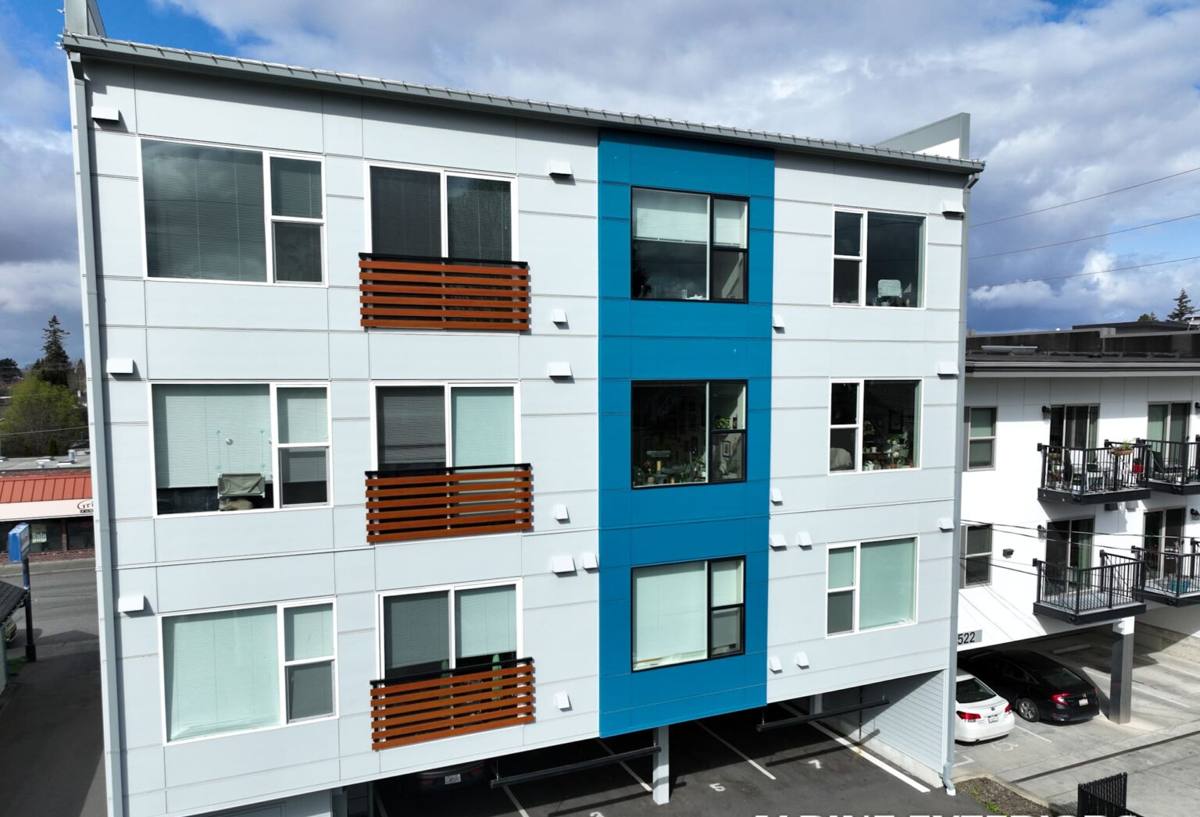
Why Barkley's Housing Stock Needs a Locally-Informed Approach
Barkley includes a mix of single-family homes, townhomes, and condos built over roughly the last twenty-five years, with a fair number of shared walls, HOA-governed exteriors, and consistent architectural styling from block to block. That matters for window replacement in a few practical ways:
- Exterior consistency: Many Barkley properties fall under HOA guidelines on exterior appearance — window color, grid pattern, and trim profile often need to match the existing streetscape, not just fit the opening.
- Shared-wall installations: Townhomes and attached units require extra care with flashing and sealant continuity where one unit's exterior envelope meets a neighbor's.
- Consistent age across a block: Because much of Barkley was built in phases, entire streets of homes tend to hit window end-of-life around the same time. If your seals are failing, it's worth checking — your neighbors' may not be far behind.
None of this is complicated, but it's the kind of thing that gets missed by a crew that doesn't normally work in planned communities with HOA oversight, or that treats every job as a generic swap-and-go.
What Salt Air, Driving Rain, and Moss Season Actually Do to a Window
Salt Air
Bellingham sits close enough to Bellingham Bay and the Salish Sea that airborne salt is a real factor, even inland into neighborhoods like Barkley. Salt accelerates corrosion on window hardware — hinges, cranks, locks, and especially aluminum components — and it degrades certain sealants faster than a dry inland climate would. Over years, that shows up as stiff or seized hardware and premature caulking failure around the frame perimeter.
Driving Rain
Wind-driven rain doesn't just sit on a window — it gets pushed sideways and upward into gaps that would never see water in a calmer climate. This is why flashing and sill pan detailing matter more here than in a lot of the country. A window that's been installed correctly sheds that water back out. One that's been installed with shortcuts — missing sill pan, poor flashing laps, gap-filled-with-caulk-only — will eventually let water track behind the siding and into the wall assembly, and you won't see it until there's already damage.
Long Moss and Mildew Season
Whatcom County's extended wet season means anything organic — moss, algae, mildew — gets a long runway to establish itself. On windows, that shows up as dark streaking on sills and frames, soft or discolored wood trim, and, in bad cases, moss actually growing in frame corners and weep holes. Beyond the cosmetic issue, moss and standing organic debris can block weep holes designed to let water drain out of the frame, which turns a well-designed window into one that traps water instead of shedding it.
Signs a Barkley Home's Windows Are Due for Replacement
- Fogging or a permanent haze between panes — the sealed gas fill has failed and can't be repaired, only replaced
- Sashes that stick, drop, or won't stay up without a prop
- Visible daylight or a draft you can feel around a closed window on a windy day
- Soft, discolored, or moss-streaked trim and sills, especially on the weather side of the house
- Condensation forming on the inside of the glass regularly, even with normal indoor humidity
- Rising heating bills without a clear cause elsewhere in the home
- Locks or cranks that are stiff, corroded, or no longer engage cleanly
Any one of these on its own isn't necessarily an emergency. Several at once, or any sign of soft framing material, usually means it's time to stop patching and start planning a replacement before the surrounding structure gets involved.
What a Correct Window Replacement Involves Here
A window replacement done right for this climate isn't just popping the old unit out and the new one in. The details that matter in Whatcom County are mostly about water management:
- Removing the old unit without damaging the rough opening, and inspecting the sill and framing underneath for hidden rot or water staining before anything new goes in.
- Correcting any water damage found — replacing soft wood, addressing any mold, before it gets sealed behind a new window.
- Installing a proper sill pan flashing so any water that does get past the window has a way to drain back out instead of pooling against the framing.
- Setting the window level, plumb, and properly shimmed so it operates smoothly and seals evenly for its full life, not just the first year.
- Integrating flashing tape and house wrap correctly in the right shingle-lap order, so water sheds down and out rather than getting trapped behind the siding.
- Sealing and insulating the gap around the frame with the right materials — not just caulk gunned around the outside trim.
- Finishing interior and exterior trim to match the home's existing look, which matters more in a neighborhood like Barkley where consistency is often expected.
Choosing Windows That Make Sense for This Climate
There's no single "best" window for every home, but there are trade-offs worth understanding before you decide.
| Factor | What to Consider in Bellingham's Climate |
|---|---|
| Frame Material | Vinyl and fiberglass both hold up well against moisture and salt air; fiberglass generally handles the freeze-thaw and moisture cycling here with less long-term movement. |
| Glass Package | Dual-pane with a good low-E coating is standard for this region; triple-pane adds cost and weight but can be worth it on north- and west-facing walls that take the most weather. |
| Hardware | Corrosion-resistant hardware matters more here than in a dry climate — cheap cranks and locks fail faster with salt air in the mix. |
| Weep Hole Design | Larger, less easily blocked weep systems reduce the risk of moss and debris trapping water in the frame. |
| Warranty Structure | Look closely at what's covered — seal failure, frame discoloration, and hardware are the parts most likely to be tested by this climate. |
We install a range of quality window lines and can walk through the specific options that fit your home's style and budget during an estimate — we'd rather talk through real trade-offs than push one brand as a blanket answer.
Our Process for Barkley Window Replacement Projects
- On-site assessment: We look at the actual condition of your existing windows, sills, and surrounding trim — not just take measurements.
- Straightforward estimate: A clear, itemized quote with no pressure to decide on the spot.
- Scheduling that respects your home: We plan around Bellingham's rain patterns where possible and work efficiently to keep openings covered and protected.
- Correct installation, not just a fast one: Sill pans, flashing, and proper sealing every time — the steps that actually matter in this climate don't get skipped to save an hour.
- Cleanup and walkthrough: We confirm every window operates correctly and the finish work matches your home before we call the job done.
Why Hiring a Crew That Already Works in Barkley Matters
A contractor unfamiliar with Barkley's HOA expectations can end up ordering the wrong trim color or grid pattern, which means delays and rework. A crew unfamiliar with Whatcom County's rain patterns can end up cutting corners on flashing that won't show a problem until a wet winter two or three years down the road, when it's a repair job instead of a five-minute checklist item. Working locally, and working in this neighborhood specifically, means we already understand the exterior standards, the common construction details from Barkley's build era, and the specific weather stresses these homes deal with every winter.
Get a Straightforward, No-Pressure Estimate
If your Barkley home's windows are showing any of the signs above — or you'd just like an honest opinion on whether replacement makes sense yet — we're happy to come take a look. The estimate is free, there's no pressure, and you'll get a clear answer about what your windows actually need. Use the form below to get started.