 Bellingham
 Window Replacement Built for South Hill's Exposure
South Hill sits up above downtown Bellingham with some of the best views in Whatcom County — and views mean exposure. Homes on the hill catch wind and weather coming off Bellingham Bay and the Strait that lower, more sheltered neighborhoods don't get nearly as hard. Salt-laden air corrodes hardware and fasteners faster than it does inland. Driving rain, pushed sideways by wind off the water, finds every weak seal and gap in an old window frame. And the long gray stretch from fall through spring keeps everything damp long enough for moss and mildew to take hold on sills, tracks, and exterior trim. Windows up here simply work harder than windows in a lot of other places, and they wear out accordingly.
We install windows across Bellingham and Whatcom County, and South Hill jobs get treated differently from the start — not because the windows themselves are special, but because the site conditions demand more attention to flashing, drainage, and material choice. This page walks through what that actually means for a homeowner planning a window replacement here.
What South Hill's Housing Stock Tells Us
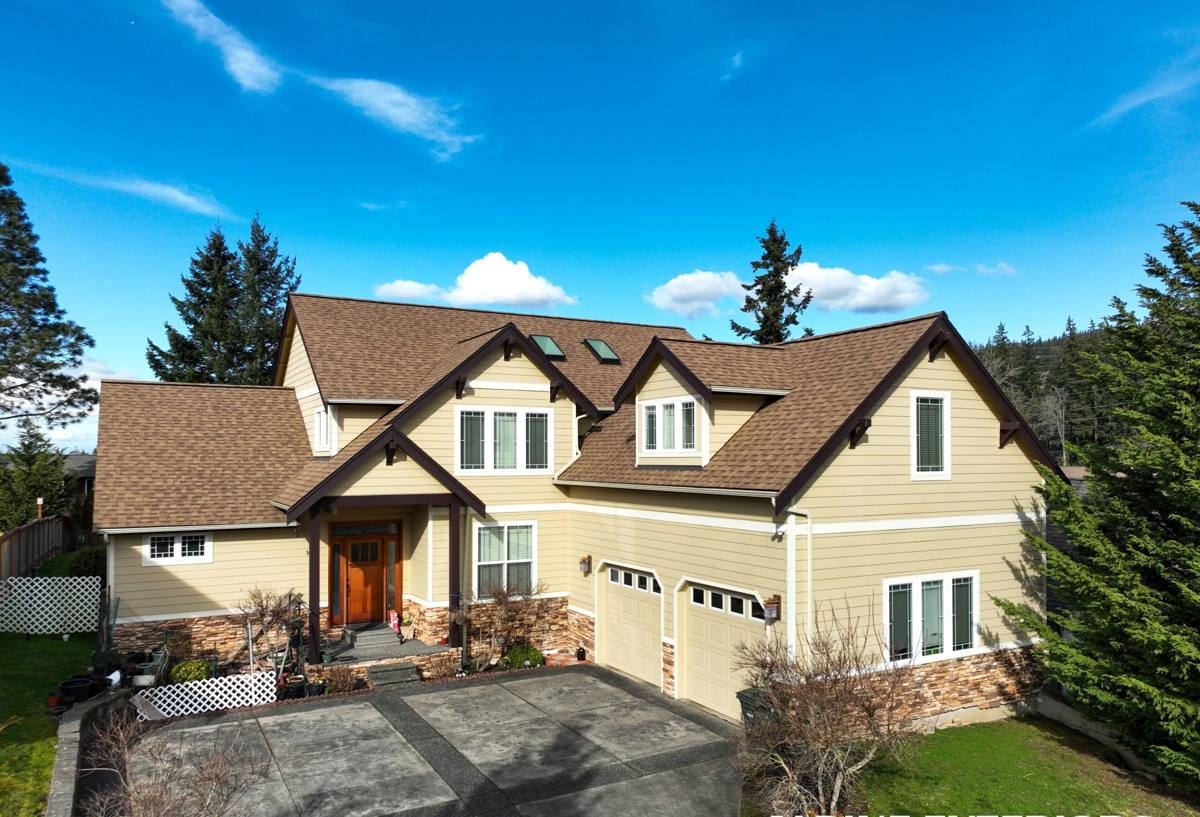
South Hill has a mix of older homes with real architectural character — many built well before modern window flashing standards existed — alongside newer construction and renovated properties taking advantage of the views. That mix matters for window replacement:
- Older homes often have original wood-frame windows, sometimes with storm windows added later as a stopgap. The rough openings were framed to older tolerances and may need correction, not just a like-for-like swap.
- View-oriented homes tend to have larger glass areas and more window surface facing the weather side, which raises the stakes on air and water sealing.
- Elevated and exposed lots see more direct wind-driven rain than homes tucked into lower, tree-sheltered areas of the city.
None of this means South Hill homes need exotic solutions. It means the basics — proper flashing, correct sill pan drainage, and materials that hold up to salt air — can't be skipped or rushed.
Signs Your Windows Have Reached the End of Their Service Life
Not every drafty window needs full replacement, and not every foggy pane means the whole unit is failing. Here's what we actually look for when we assess a South Hill home:
- Fogging or a visible film between panes of double-glazed glass — the seal has failed and the gas fill is gone, which can't be repaired, only replaced
- Wood sills or frames that are soft, discolored, or show active moss/mildew growth
- Visible daylight or a persistent draft around the frame even when the window is latched
- Corroded or seized hardware — cranks, latches, or balance mechanisms that no longer move smoothly
- Paint that keeps failing on the interior sill despite repainting, which usually points to ongoing moisture intrusion behind the trim
- Noticeably higher heating bills relative to similar homes, especially in a house that hasn't had windows touched in 20-plus years
- Warped or swollen sashes that stick, or that no longer close flush against the frame
If you're only seeing one or two of these on a single window, a repair or resealing might buy you more time. If it's showing up across multiple windows on the weather-exposed side of the house, that's usually the frames and seals reaching the end of their functional life together.
What a Correct Window Replacement Actually Involves
The window unit itself is maybe half the job. The other half is everything around it — and on an exposed South Hill lot, that's where most long-term failures actually start.
Removing the Old Window the Right Way
We pull the old sash and frame back to the rough opening and inspect what's underneath. This is often the first time in decades anyone has actually looked at the framing, sheathing, and any existing flashing paper around that opening. If there's rot, soft sheathing, or moisture staining, that gets addressed before a new window ever goes in — installing a new window over a compromised opening just hides the problem behind new trim.
Flashing and Drainage
This is the part that determines whether a window replacement holds up to South Hill's driving rain for the next 20 years or starts leaking again in five. Proper installation includes a sloped sill pan so any water that gets past the exterior seal drains back out instead of pooling against the framing, plus flashing tape integrated correctly with the home's weather-resistive barrier — lapped shingle-style so water sheds downward and outward, never trapped behind the siding.
Air Sealing and Insulation
The gap between the new window frame and the rough opening gets filled with low-expansion foam or backer rod and sealant — not just caulked around the visible trim. A window can have excellent glass and still perform poorly if that perimeter gap is left as a thermal and air leak path.
Exterior Trim and Weatherproofing
Trim gets resealed with an exterior-grade sealant rated for our climate, and any exposed fasteners or trim joints are treated so they don't become the next entry point for moisture once the moss season sets back in.
Choosing Frame Material and Glass for This Climate
There's no single "best" window material — it depends on exposure, budget, and how much upkeep you want to take on. For South Hill's combination of salt air and near-constant winter dampness, here's how the common options generally compare:
| Frame Material | Performance in Salt Air / Wet Climate | Maintenance | General Cost Position |
|---|---|---|---|
| Vinyl | Resists corrosion well; no paint to fail | Low — occasional cleaning | Lower |
| Fiberglass | Very stable dimensionally, holds up well to moisture and temperature swings | Low | Mid to higher |
| Wood (unclad) | Classic look but needs consistent upkeep in damp, salt-exposed conditions | High — regular painting/sealing | Mid to higher |
| Wood with metal/composite cladding | Good moisture resistance on the exterior face if cladding and flashing are installed correctly | Moderate | Higher |
For most South Hill homes we recommend vinyl or fiberglass frames on weather-exposed elevations because they don't require ongoing paint maintenance to resist moisture and salt air. On homes with historic character where wood sightlines matter, clad-wood is a reasonable compromise — as long as the installer pays close attention to how the cladding is detailed at the sill, since that's the spot most prone to trapped moisture if it's rushed.
On glass, a Low-E coating with argon gas fill is standard practice at this point for anything facing the weather side of the house — it cuts heat loss and reduces condensation risk on interior glass during our cold, wet winters. Homeowners closer to the water sometimes ask about upgraded coatings for added UV and glare control given the reflected light off the bay; that's worth discussing case by case rather than assuming it's needed everywhere.
Our Process, Start to Finish
- On-site assessment — we walk the exterior and interior of each window being considered, checking framing condition, current flashing (if any is visible), and how exposed each elevation is to wind-driven rain.
- Written estimate — a clear breakdown of window units, frame material, glass package, and labor, with no vague allowances hiding in the total.
- Scheduling around the weather — we plan South Hill installs for windows of drier weather where possible and use temporary weather protection on open rough openings if conditions turn while a job is in progress, so the house is never left exposed overnight.
- Removal and inspection — old units come out, framing gets inspected, and any necessary repairs are flagged and discussed before moving forward.
- Installation — sill pan, flashing, window unit, air sealing, and trim, done in that order, every time.
- Final walkthrough — we check operation, sealing, and cleanup with you before calling the job done.
Why a Crew That Already Works South Hill Matters
South Hill isn't a large flat subdivision — it's a hillside neighborhood with narrow streets, steep driveways, and lots where staging materials and equipment takes some planning. A crew that's worked the area knows how to get set up efficiently without turning your street into an obstacle course for a week. More importantly, we already understand what the exposure on a given block tends to look like — which elevations take the worst of the driving rain, where moss buildup on north-facing trim tends to be worse, and how the City of Bellingham's permitting process applies to window replacement projects (permit requirements can depend on whether the work changes egress size, structural framing, or is a like-for-like swap — worth confirming for your specific project). That local familiarity translates into fewer surprises during the job, not a different or "special" installation process.
Living With New Windows in a Salt-Air, High-Moss Climate
New windows still need some seasonal attention here — this isn't a climate where you install and forget:
- Rinse exterior frames and sills periodically to clear salt residue, especially on elevations facing the bay
- Keep weep holes (the small drainage openings at the bottom of the frame) clear of debris and moss so water can drain out as designed
- Lubricate hardware — cranks, hinges, locks — on an annual basis to keep salt air from seizing moving parts
- Check exterior caulking at trim joints once a year; sealants degrade with UV and moisture cycling over time and are far cheaper to renew than to let fail
- Trim back vegetation that shades window trim and sills, since prolonged shade is what lets moss and mildew establish in the first place
A properly installed window on South Hill should give you decades of reliable service, but "properly installed" is doing a lot of the work in that sentence — it's the flashing and drainage details, not the window brand, that determine whether that holds true.
What Affects the Cost
We don't post fixed prices because every home and window opening is different, but the main cost drivers on a South Hill job are generally:
| Factor | Why It Matters |
|---|---|
| Number and size of window openings | Larger view windows and more openings mean more material and labor |
| Frame material chosen | Vinyl, fiberglass, and clad-wood carry different unit costs |
| Condition of existing framing | Rot or water damage found during removal adds repair scope before the new window can go in |
| Access and site conditions | Steep lots, upper-story windows, or tight access can affect labor and staging |
| Glass package | Standard Low-E/argon vs. upgraded coatings changes material cost |
The only way to get an accurate number is to have someone look at your actual windows and openings — general per-window averages you'll find online rarely account for what's really going on behind the trim.
If your South Hill home has windows showing their age, we're glad to come take a look and walk you through what we're seeing — no pressure, no obligation. The estimate is free, and you'll get a straight answer about what actually needs replacing versus what can wait. Reach out through the form below to get started.