 Bellingham
 Roofing for Sehome's Specific Conditions
Sehome sits close enough to Bellingham Bay that salt-laden air reaches roofs year-round, and its tree cover and hillside terrain mean shade lingers on north- and east-facing slopes long after the rest of the yard has dried out. That combination — damp shade plus salt air plus Whatcom County's steady rainfall — is exactly the recipe that shortens the life of a poorly installed or poorly maintained asphalt shingle roof. It's also why a roof that would perform fine in a drier, sunnier part of the state can struggle here if it wasn't built for these specific conditions.
Asphalt shingles remain one of the most practical roofing choices for this neighborhood when they're installed correctly, with the right underlayment, ventilation, and detailing for a marine climate. The problems we see aren't usually about the shingle itself — they're about shortcuts taken underneath it.
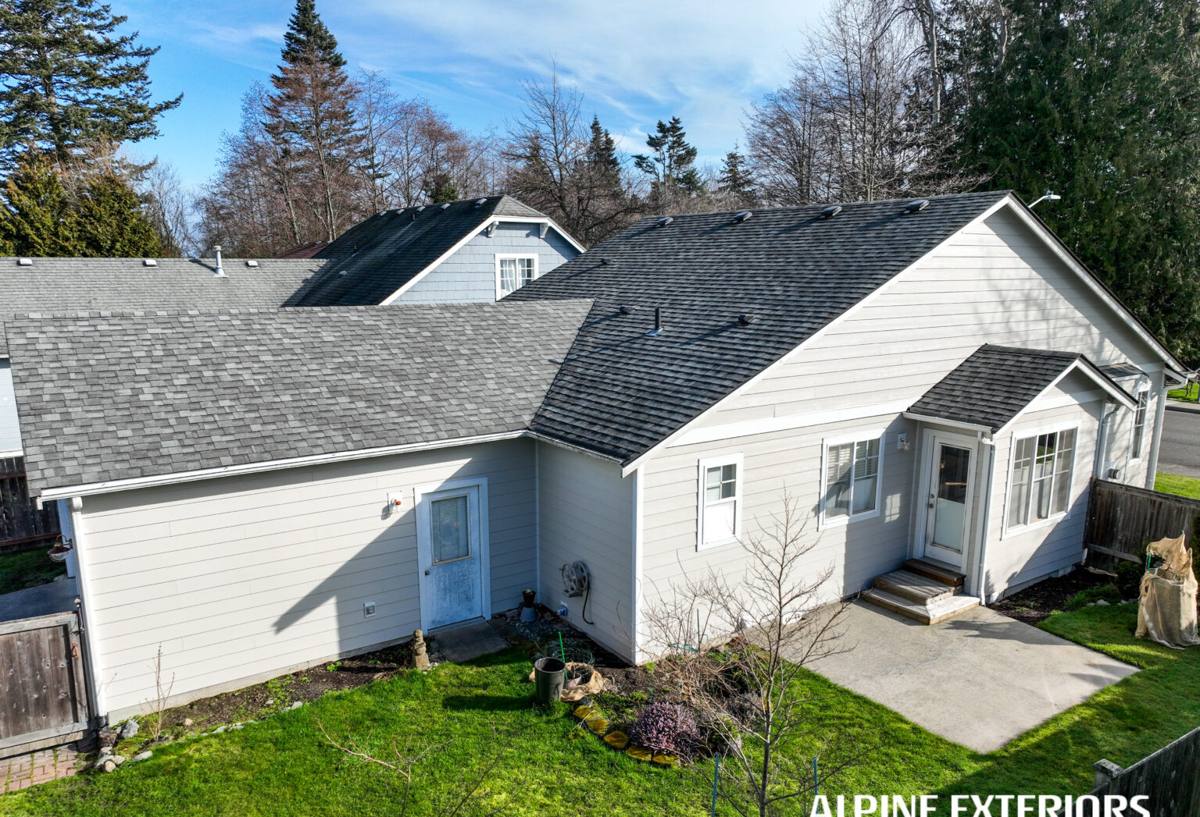
What "Correct" Asphalt Shingle Roofing Means Here
A shingle roof is a system, not just a layer of shingles nailed to plywood. In a climate like ours, every layer matters more than it would somewhere dry.
Underlayment and Ice-and-Water Protection
We install synthetic underlayment across the full roof deck as a secondary water barrier, and we run self-adhering ice-and-water shield membrane at the eaves, valleys, and any roof-to-wall transitions — the spots where wind-driven rain is most likely to work its way backward under a shingle course. In a neighborhood that gets sustained driving rain off the Sound, this detail is not optional; it's the difference between water staying on top of the roof and water finding its way into the sheathing.
Flashing
Chimneys, skylights, dormers, and sidewall intersections fail more often at the flashing than at the shingles themselves. We use new step flashing and counterflashing at every penetration and wall intersection rather than reusing old metal or relying on caulk to bridge a gap. Caulk is a maintenance item, not a waterproofing system — if a roof depends on a bead of sealant to stay dry, it's a roof that will eventually leak.
Nailing Pattern and Fastening
Correct nail placement and count directly affect wind resistance and manufacturer warranty coverage. We follow the shingle manufacturer's nailing specification exactly — not a shortcut pattern — because under-nailed shingles are one of the most common causes of blow-off during winter windstorms.
Starter Course and Ridge Detailing
A proper starter course at the eaves and rakes seals the first row of shingles against wind uplift, and ridge caps need their own ventilation-compatible installation. These are small details that a rushed job skips and that a homeowner has no way to see once the roof is finished — which is part of why the crew doing the work matters as much as the shingle brand on the invoice.
Installation Standards Checklist
- Full synthetic underlayment across the deck, not just felt paper patches
- Ice-and-water membrane at eaves, valleys, and wall transitions
- New step flashing and counterflashing at every penetration
- Manufacturer-specified nailing pattern, not a shortcut count
- Proper starter strip at eaves and rakes for wind resistance
- Balanced intake and exhaust ventilation at the ridge and soffits
- Drip edge at eaves and rakes to direct water away from fascia
Why Moss and Algae Are a Bigger Deal in Sehome
Whatcom County's long wet season and Sehome's shaded, tree-lined lots create ideal moss conditions on any roof that doesn't dry out quickly between rains. Moss isn't just cosmetic — as it grows, it lifts shingle edges, holds moisture directly against the granule surface, and accelerates the wear that eventually leads to leaks. Algae streaking is a separate issue, usually appearing as dark streaks running down north-facing slopes; it's unsightly but generally slower to cause structural damage than moss.
Many asphalt shingle lines are now manufactured with algae-resistant granules, which slow staining but don't eliminate the need for periodic roof cleaning in a climate like this. We're upfront with Sehome homeowners that no shingle is maintenance-free here — the goal is choosing a product and installation that minimizes the work, not one that promises to erase it.
Ventilation: The Detail That Prevents Interior Problems
Attic ventilation matters more in the Pacific Northwest than in drier climates because trapped moisture doesn't just threaten the roof deck — it condenses. Warm, humid indoor air that migrates into a poorly ventilated attic during our cool, wet months can condense on the underside of the roof sheathing, leading to sheathing rot, mold, and reduced insulation performance, all before a single drop of rainwater ever gets through the shingles.
We check and balance intake ventilation (typically at the soffits) against exhaust ventilation (typically at the ridge) on every reroof. If the attic isn't breathing correctly, we'll tell you before we close up the roof — not after a callback six months later.
Signs a Sehome Roof Needs Attention
Because moss and shade delay visible wear, many homeowners in this area don't notice a failing roof until there's already interior damage. Watch for these signs between inspections:
- Granules collecting in gutters or at downspout outlets
- Shingle edges curling, cupping, or lifting, especially on north-facing slopes
- Visible moss mats or thick algae streaking across shingle courses
- Dark spots or sagging on interior ceilings, particularly after a heavy rain
- Daylight visible through the roof deck from inside the attic
- Missing or displaced shingles after a windstorm
- Flashing that looks rusted, lifted, or gapped around chimneys and vents
Any one of these is worth a look before the next wet season, not after.
Comparing Shingle Options for This Climate
| Shingle Type | Typical Lifespan Here | Wind/Moisture Performance | Best Fit |
|---|---|---|---|
| 3-tab strip shingle | 15-20 years | Lower wind rating; less mass to shed water | Budget-focused reroofs, rentals |
| Architectural (laminated) shingle | 25-30+ years | Higher wind rating, better water shed with dimensional layers | Most Sehome homes; best balance of cost and durability |
| Premium/designer architectural shingle | 30+ years | Highest wind rating tier, thickest mat | Steep-slope, high-exposure, or historic-style homes |
Architectural shingles are what we recommend for the majority of Sehome reroofs. The added mat thickness and dimensional profile shed our steady rain more effectively than a flat 3-tab shingle, and the higher wind rating matters when a hillside lot catches more exposure than surrounding streets.
What Drives the Cost of a Reroof
| Factor | Why It Matters |
|---|---|
| Roof size and number of layers to remove | Tear-off labor and disposal scale with square footage and existing layers |
| Roof pitch and access | Steep or hard-to-access roofs require more safety setup and slower work |
| Deck condition | Rotted or soft sheathing found during tear-off needs replacement before shingles go on |
| Number of penetrations | Chimneys, skylights, and multiple vents each need individual flashing |
| Shingle tier chosen | 3-tab, standard architectural, and premium lines carry different material costs |
| Ventilation upgrades needed | Adding or correcting intake/exhaust venting is easiest to do during a full reroof |
We give a written, itemized estimate before any work starts so you know exactly what's driving the number — no vague lump sums.
Our Process, Start to Finish
1. On-Site Inspection
We walk the roof (or use a ladder/drone where pitch or access makes that unsafe), check the attic for ventilation and moisture signs, and look at flashing, valleys, and penetrations up close rather than estimating from photos or satellite imagery alone.
2. Written Estimate
You get a clear, itemized proposal covering tear-off, deck repair allowances, underlayment, flashing, shingle selection, and ventilation — with the reasoning behind each line, so you can compare it against any other bid on equal footing.
3. Scheduling Around Weather
We don't start a tear-off with rain in the forecast. Roofs in this area get scheduled with enough buffer to complete a section — or the whole roof — dry, using temporary protection if conditions shift mid-job.
4. Tear-Off and Deck Inspection
Old material comes off down to the deck so we can actually see the sheathing condition, not guess at it from above. Any soft or rotted plywood gets flagged and replaced before anything new goes down.
5. Installation
Underlayment, ice-and-water membrane, flashing, starter course, shingles, and ridge venting go in following manufacturer specifications, not a generic shortcut sequence.
6. Cleanup and Walkthrough
We magnet-sweep the yard and driveway for stray nails, haul away all debris, and walk the finished roof with you so you know what was done and what to watch for going forward.
Why Hiring a Crew That Already Works in Sehome Matters
A roofing crew that regularly works this neighborhood already knows how shaded, hillside lots behave differently than an open, sunny lot across town — where moss tends to build up fastest, which roof orientations hold moisture longest, and how much wind exposure a given slope actually sees. That local pattern recognition shows up in small decisions: where to add extra ice-and-water protection, whether a north slope needs a different maintenance conversation than the rest of the roof, and how to sequence work around Whatcom County's weather rather than fighting it.
It also matters for accountability. A local, licensed, and insured contractor is easy to reach if a question comes up after the job, and has a reputation in the community worth protecting — not just a one-time invoice to collect.
Maintaining Your Roof After Installation
Even a correctly installed roof benefits from basic upkeep in this climate:
- Keep gutters clear so water doesn't back up under the eaves during heavy rain
- Trim overhanging branches to reduce shade, debris, and moss-friendly conditions
- Have moss physically removed rather than pressure-washed, which can strip granules
- Schedule a roof check after major windstorms, not just on a fixed calendar
- Address small flashing or sealant issues early, before a wet season turns them into a leak
If your Sehome roof is showing moss buildup, granule loss, or you're just not sure how much life is left in it, we're happy to take a look and give you a straight, no-pressure assessment. Use the form below to request a free estimate.