 Bellingham
 Board & Batten Siding Built for Barkley's Weather, Not Just Its Look
Barkley is one of Bellingham's newer planned neighborhoods, and it's no accident that board and batten shows up on so many of its craftsman and contemporary-style homes — the strong vertical lines suit the architecture. But in Whatcom County, board and batten isn't just a style choice. Installed correctly, it's a durable siding profile that sheds our wind-driven rain well. Installed without the right prep, the same vertical battens that give a home its clean look can trap moisture behind the wall and cause problems that don't show up until years later. This page covers what board and batten needs to hold up specifically in Barkley, what a correct installation looks like, and why we install it in James Hardie fiber cement and nothing else.
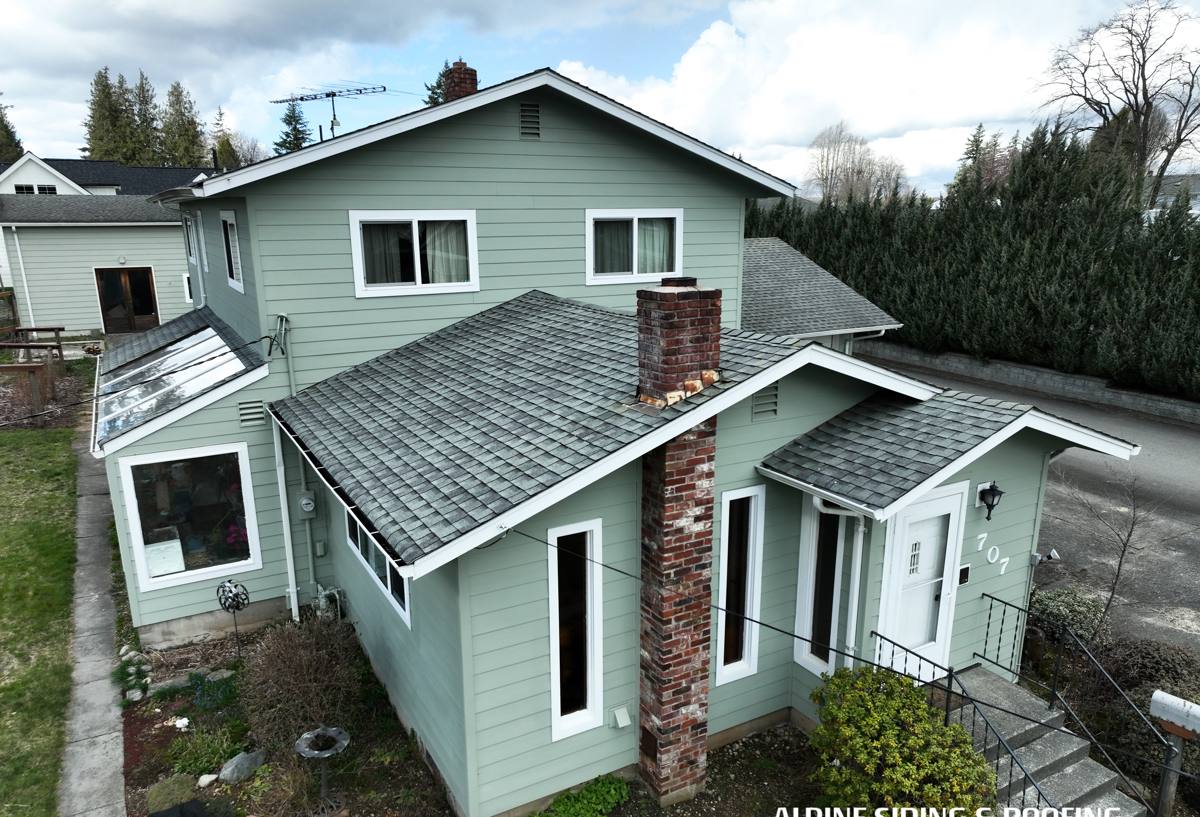
What Bellingham's Climate Does to Vertical Siding
Salt Air
Barkley sits inland of the immediate waterfront, but Bellingham as a whole sits on Bellingham Bay, and marine air off the Salish Sea moves through the whole city, not just the shoreline neighborhoods. Salt-laden moisture accelerates corrosion on fasteners, flashing, and any metal trim, and it finds its way into seams and joints faster than dry-climate builders often expect. On a board and batten wall, that means the vertical joints between boards and the fasteners holding the battens are exposed to more corrosive moisture, over more months of the year, than a homeowner moving here from a drier region would assume.
Driving Rain
Storms coming off the Pacific through Whatcom County rarely fall straight down. Wind pushes rain sideways into wall assemblies, which is exactly the condition board and batten siding needs to be detailed for. Horizontal lap siding relies on overlap and gravity to shed water; vertical board and batten relies more heavily on correct flashing at every horizontal transition — window heads, door heads, roof-to-wall intersections — and on a drainage plane behind the boards that can carry away whatever moisture does get past the surface.
A Long Moss Season
Bellingham's wet season runs long compared to most of the country, and shaded, north-facing walls in tree-lined neighborhoods like Barkley stay damp for extended stretches. That's the environment moss and algae need to establish themselves. On board and batten, the battens create additional horizontal ledges and shadow lines where organic growth gets a foothold if the finish doesn't resist it.
What a Correct Board & Batten Installation Actually Involves
Board and batten looks simple from the street — wide boards, narrower strips covering the seams — but the assembly behind it is where the siding either performs for decades or fails early. A correct installation in this climate includes:
- A drainage gap (rain screen) behind the boards so any moisture that gets past the surface has somewhere to go instead of sitting against the sheathing
- A continuous, correctly lapped weather-resistive barrier underneath, with all penetrations sealed before the first board goes up
- Metal flashing at every window head, door head, deck ledger, and roof-to-wall transition — the horizontal breaks in a vertical siding pattern are where leaks start
- Fastening at the spacing and location specified by the manufacturer, not "close enough" — over- or under-fastening both cause problems over time
- Batten placement and reveal kept consistent, since board and batten has nowhere to hide an uneven layout the way some other profiles do
- Sealant used only where the manufacturer's installation instructions call for it, not as a substitute for correct flashing
None of this is visible once the job is finished, which is exactly why it matters who does the work. Two board and batten installations can look identical from the sidewalk and perform completely differently five winters from now.
Material Options for Board & Batten Siding
Board and batten can be built in several materials, and homeowners in Barkley ask us about all of them. Here's an honest comparison of how they hold up in this climate:
| Material | How It Handles Our Climate | Long-Term Maintenance |
|---|---|---|
| James Hardie fiber cement | Non-combustible, dimensionally stable in wet-dry cycling, factory finish resists moisture and organic growth | Occasional washing; no repainting needed for the life of the factory finish |
| Cedar board and batten | Traditional look, but wood absorbs moisture and moves seasonally; end grain and seams are vulnerable in driving rain | Regular refinishing, ongoing sealant and rot inspection, especially on shaded walls |
| Engineered wood (e.g. LP-style) | More stable than solid wood but still wood-based; edges and cut ends need diligent sealing to resist moisture intrusion | Manufacturer-specified caulking and touch-up maintenance to protect exposed edges |
| Vinyl board and batten | Won't rot, but can warp or fade in UV and temperature swings, and seams rely on the panel system rather than true flashing detail | Low maintenance but limited repair options if a panel is damaged; color can't be refreshed |
Why We Install Only James Hardie Board & Batten
We don't install vinyl, engineered wood, or cedar board and batten, even though all three have honest strengths — cedar has real character, engineered wood is budget-friendly, vinyl is low-maintenance. Our standard is James Hardie fiber cement, for reasons specific to Bellingham's climate:
- Non-combustible material — fiber cement doesn't contribute fuel to a fire, unlike wood-based sidings
- ColorPlus factory finish — baked on in a controlled environment, it resists the fading, chalking, and mildew staining that field-applied paint struggles with through a long wet season
- HZ5 climate-engineered formulation — Hardie's HZ5 product line is engineered for the wet, moderate Pacific Northwest climate zone Bellingham sits in, rather than a one-size-fits-all formula
- Dimensional stability — fiber cement doesn't swell and shrink with moisture the way solid or engineered wood does, which matters most at the vertical seams a board and batten profile depends on
- A transferable warranty backed by the manufacturer, not just the installer
Hardie fiber cement isn't the cheapest board and batten material on the list above, and we're upfront about that. It's what we've standardized on because it's the one that holds up to salt air, driving rain, and moss season without asking the homeowner to keep up with refinishing or edge-sealing on a recurring schedule.
Our Process for Board & Batten Projects in Barkley
- On-site assessment — we look at wall orientation, shade patterns, existing moisture damage, and how the home's current siding is performing before recommending anything
- Tear-off and sheathing check — removing the old siding lets us actually see the wall assembly instead of guessing what's behind it
- Weather-resistive barrier and drainage plane — installed or repaired to current standards, since this layer does more long-term work than the visible siding itself
- Flashing at every transition — windows, doors, rooflines, and any other horizontal break in the wall
- Board and batten installation — boards, then battens, fastened and spaced to Hardie's specifications
- Final walkthrough — checking reveals, seams, and trim details before we consider the job finished
Living With Board & Batten Through a Long Moss Season
Correctly installed Hardie board and batten needs very little from a homeowner, but a little seasonal attention keeps it looking like new:
- Rinse shaded, north-facing walls once or twice a year to keep moss and algae from establishing before they've had a chance to take hold
- Keep gutters clear so overflow doesn't run down the siding face during heavy fall and winter storms
- Trim back vegetation that keeps a wall section shaded and damp longer than the rest of the house
- Have caulking at trim and penetrations checked every few years — not because Hardie's finish fails, but because sealant is the one component with a shorter service life than the siding itself
- Walk the exterior after major windstorms to check for any loose trim or fasteners, especially on street-facing or corner walls that catch the most wind
Why Hiring a Crew That Already Works in Barkley Matters
Barkley's homes were largely built to a consistent planned-community aesthetic, and many are governed by design guidelines that affect siding color, profile, and trim details — a crew unfamiliar with the neighborhood can end up proposing something that doesn't fit those requirements. Beyond that, Whatcom County permitting and Bellingham's building department have their own process, and a contractor who already works in the area moves through it without the delays an out-of-town crew often hits on their first Barkley project. Just as important, a crew that has already installed and serviced siding on Barkley homes has seen firsthand how the salt air, driving rain, and moss season here actually affect a wall over time — not just in a training manual, but on houses down the street.
If you're considering board and batten siding for a home in Barkley, we're happy to take a look and talk through what your specific walls need — no pressure, no obligation. Fill out the form below to schedule a free estimate.