 Bellingham
 Roof Repair in Barkley: What Bellingham's Weather Actually Does to a Roof
Barkley sits close enough to Bellingham Bay that salt-laden air is a real factor in how roofing materials age here, not just a talking point. Salt air speeds up corrosion on exposed fasteners, flashing, and metal roof panels, and it works alongside near-constant moisture to break down the protective coatings on asphalt shingles faster than they'd wear in a drier inland climate. Add in driving rain that comes off the water at an angle during fall and winter storms, and you get wind-driven water finding its way under flashing and shingle edges that would stay dry in a straight-down rain.
Then there's moss. Whatcom County's long, mild, wet season gives moss and algae months at a time to establish themselves on any roof slope that doesn't get much direct sun, which describes a lot of tree-shaded lots in and around Barkley. None of this means a Barkley roof is doomed to constant problems. It means repairs here need to account for salt exposure, wind-driven moisture, and moss growth specifically, not just patch whatever is leaking and move on.
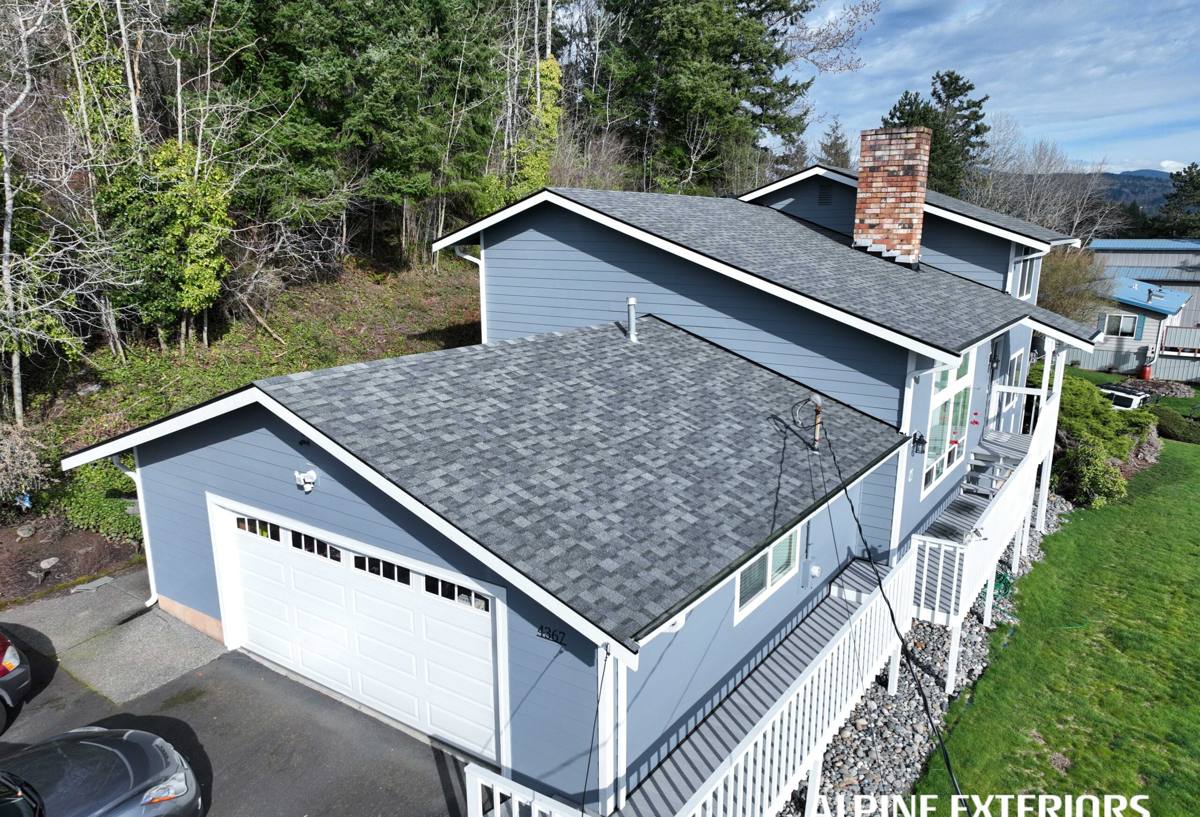
Signs a Barkley Roof Needs Repair, Not Just a Look
Most roof problems give warning signs well before there's a leak inside the house. Catching them early is almost always cheaper and less disruptive than waiting for a ceiling stain to show up.
- Granules collecting in gutters or at the base of downspouts, a sign asphalt shingles are wearing thin
- Moss forming in patches on shaded or north-facing slopes, especially along the lower edge of the roof
- Curling, cracking, or lifted shingle edges, particularly on slopes that catch the most wind
- Dark streaking or discoloration that doesn't wash off with rain
- Rust staining or soft spots around chimney flashing, vent boots, or skylight edges
- Water stains, sagging, or a musty smell in the attic or on ceilings below the roof
- Visible daylight through the roof deck when viewed from inside the attic
- Sagging or ponding water in valleys or along low-slope sections
If you're seeing more than one of these, it's worth getting a roof looked at before the next storm system moves through, rather than after.
What a Correct Roof Repair Actually Involves
A repair that actually solves the problem starts with finding where water is truly getting in, which is often several feet away from where the stain shows up on your ceiling. Water travels along rafters, decking seams, and underlayment before it finally drips somewhere visible, so a repair based only on the interior stain location can miss the real entry point entirely.
Diagnosis before repair
A proper inspection includes walking the roof surface itself, not just viewing it from the ground, along with checking the attic for water trails, damp insulation, or daylight gaps. Flashing around chimneys, skylights, vent pipes, and roof-to-wall transitions gets particular attention, since these transition points fail far more often than the open field of shingles or panels.
Fixing the cause, not just the symptom
Once the source is confirmed, the repair should address the decking underneath if it's soft or delaminated, not just the visible roofing material on top. Replacing shingles or panels over rotten decking is a short-term fix that will fail again, often sooner than expected in a climate this wet. Flashing gets replaced or re-sealed with materials matched to what's already on the roof, valleys get cleared and re-lined if needed, and fasteners get checked for the corrosion that salt air accelerates.
Common repair scope
- Locate and confirm the actual leak path, working from both the roof surface and the attic side
- Remove and inspect the decking around the affected area
- Replace damaged decking, underlayment, and roofing material to match existing coverage
- Rebuild or reseal flashing at chimneys, vents, skylights, and wall transitions
- Clear and correct any moss, debris, or gutter issues contributing to the problem
- Confirm the repair holds under the next rain before calling the job complete
Roofing Materials Common on Barkley Homes
Barkley includes a mix of newer construction and older homes, which means we see a range of roofing materials, each with its own repair considerations in this climate.
| Material | Typical Repair Needs | Local Considerations |
|---|---|---|
| Asphalt composition shingle | Granule loss, curling, cracked or missing shingles, nail pops | Most common material; moss and algae growth on shaded slopes is the main added maintenance issue |
| Cedar shake or shingle | Splitting, moss and moisture intrusion, individual shake replacement | Needs regular moss removal and ventilation checks; damp climate shortens service life without upkeep |
| Standing-seam metal | Fastener corrosion, sealant failure at penetrations, panel seam issues | Salt air accelerates fastener and seam corrosion near the bay; quality of original install matters a lot |
| Low-slope membrane or torch-down (additions, porches) | Seam separation, ponding water, membrane punctures | Flat and low-slope sections are the most leak-prone spots in a high-rainfall area and need close attention |
Moss, Algae, and the Ongoing Maintenance Side of Repair
Tree cover is common around Barkley, and shaded roof sections stay damp far longer than sections that get regular sun. That extended dampness is exactly what moss needs to take hold, and once it does, moss doesn't just sit on the surface. It roots into the texture of shingles and shakes and physically lifts edges as it grows, opening a path for water underneath the roofing material.
Moss removal has to be done carefully. Aggressive pressure washing strips protective granules off asphalt shingles and can do more damage than the moss itself, so we use lower-pressure methods and appropriate treatments instead. On roofs with a chronic moss problem, zinc or copper strips installed near the ridge can help slow regrowth over time, since rain washes trace metal down the slope in a way that discourages moss without constant re-treatment. Keeping gutters and downspouts clear matters just as much, since a clogged gutter holds water against the lower edge of the roof and gives moss and rot an easy foothold.
Our Roof Repair Process in Barkley
We keep the process straightforward, because homeowners dealing with a leak don't need extra complexity added on top of it.
- Inspection. We assess the roof surface and, where accessible, the attic, to find the actual source of the problem rather than guessing from the ground.
- Diagnosis and scope. We explain in plain terms what's failing, why, and what the repair needs to include, so you understand the reasoning, not just the price.
- Written quote. You get a clear scope of work and cost before anything starts, including options if there's more than one reasonable path forward.
- Scheduled repair. We work around Bellingham's weather windows so the roof isn't left open to rain mid-repair.
- Cleanup. Old materials, debris, and fasteners are cleared from the roof, gutters, and ground before we consider the job done.
- Follow-up. We stand behind the work and want to hear from you if anything about the repair doesn't perform as expected.
Repair vs. Replacement: How We Help You Decide
Not every roof problem calls for a full replacement, and not every roof is worth continuing to patch. The honest answer depends on a handful of factors we walk through with you rather than defaulting to the more expensive option.
| Factor | Favors Repair | Favors Replacement |
|---|---|---|
| Roof age | Roof is well within its expected service life | Roof is at or past the typical lifespan for its material |
| Extent of damage | Damage is localized to one area or component | Damage is spread across multiple slopes or systemic (widespread granule loss, brittle shingles) |
| Repair history | First or infrequent repair needed | Repeated repairs in the same areas over recent years |
| Decking condition | Decking is sound where checked | Decking shows rot or soft spots in multiple locations |
| Attic ventilation | Ventilation is adequate; no chronic moisture issues | Poor ventilation is contributing to moss, mold, or premature wear |
When a roof is genuinely on the fence between the two, we'll say so directly and lay out the trade-offs rather than pushing one option.
Why a Crew That Already Works in Barkley Matters
Roofing crews unfamiliar with this specific area sometimes treat every job the same way, regardless of local conditions. A crew that already works around Barkley and Bellingham more broadly knows which slopes tend to hold moss the longest based on tree cover and sun exposure, understands how salt air factors into fastener and flashing choices near the bay, and has seen firsthand how wind-driven rain off the water behaves differently than a straight-down storm. That local pattern recognition shortens the diagnosis process and reduces the odds of a repair that looks right but misses a Bellingham-specific failure point.
There's also a practical side: a crew already working in Whatcom County can typically respond faster after a storm, has established relationships with local suppliers for matching materials on partial repairs, and is familiar with what City of Bellingham and county permitting requires for larger repair or reroof projects.
Scheduling, Weather Windows, and Permits
Timing matters more here than in drier climates. Any repair that involves opening up the roof, even temporarily, needs a reasonably dry window to do properly, which is why we plan around forecasts rather than rigid schedules during Bellingham's wetter months. If a leak needs an immediate stopgap before a full repair can be scheduled, temporary weatherproofing to stop active water intrusion is a normal first step, followed by the permanent fix once conditions allow.
Most individual repairs, such as fixing flashing, replacing a section of shingles, or addressing a localized leak, don't require a permit. Larger-scope repairs or a full re-roof typically do, and requirements can differ depending on whether a property falls within Bellingham city limits or unincorporated Whatcom County. We'll tell you upfront if your project needs a permit and handle that step as part of the job rather than leaving it for you to sort out.
If you're dealing with a leak, moss buildup, or damaged flashing on a Barkley home, we're happy to take a look and give you a straight answer about what's actually needed. Request a free, no-pressure estimate using the form below and we'll walk the roof, explain what we find, and give you options in plain language.